Travel blog OnTourWorld
  • HOME
  • TRAVEL REPORTS
    • Europe
      • Spain
      • Portugal
      • France
      • Ireland
      • Italy
      • Croatia
      • Netherlands
      • Austria
    • Africa
      • South Africa
      • Mauritius
      • Seychelles
      • Egypt
    • America
      • Hawaii
      • New England
      • New York
      • Arizona
      • Ecuador
      • Galapagos
      • Canada
      • California
      • Mexico
      • Dominican Republic
      • Puerto Rico
      • Bermudas
      • Bahamas
    • Asia
      • Bali
      • Hong Kong
      • Java
      • Maldives
      • Philippines
      • Singapore
      • Sri Lanka
      • Thailand
      • Turkey
    • Oceania
      • Australia
      • New Zealand
      • South Sea
  • CITY TOURS
  • Forum
  • SERVICE
    • Videos
    • Imprint
    • Data protection
  • German
  • English
Galapagos - Puerto Ayora - Harrys Bar
Galapagos

Galapagos – Puerto Ayora – Harry’s Bar

by Joe OnTour 25. August 2017
written by Joe OnTour

Galapagos – Puerto Ayora – Harry’s Bar

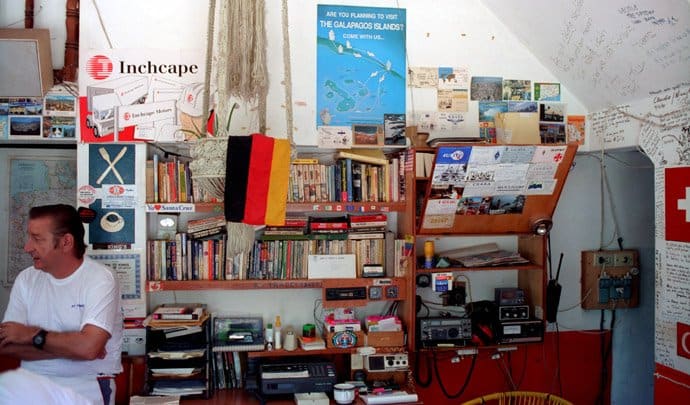
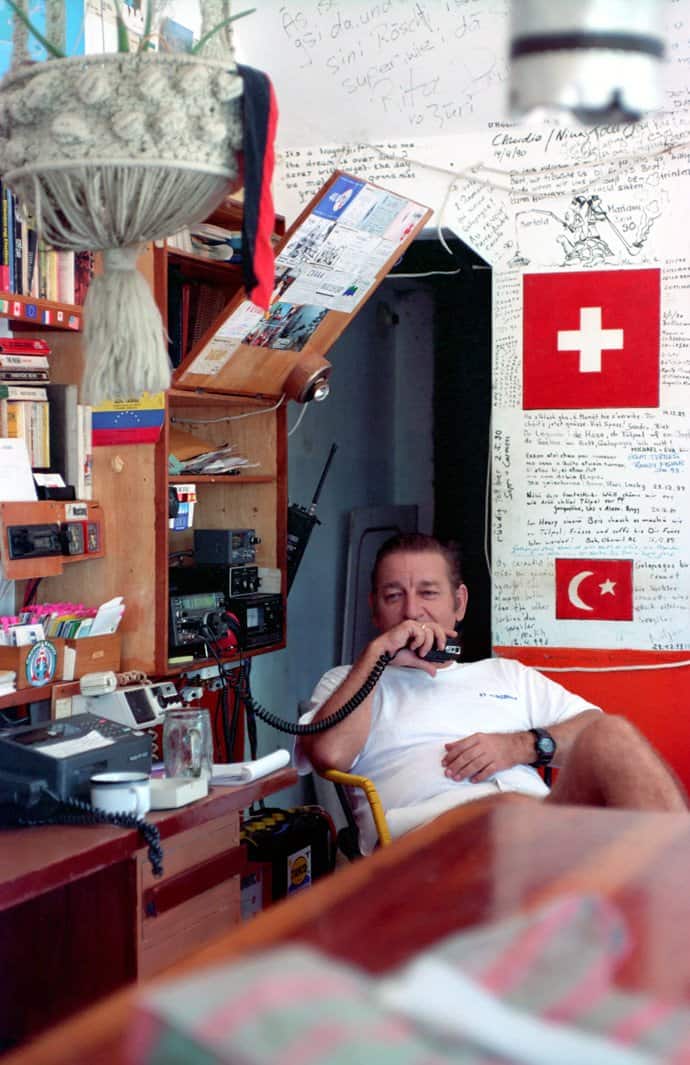
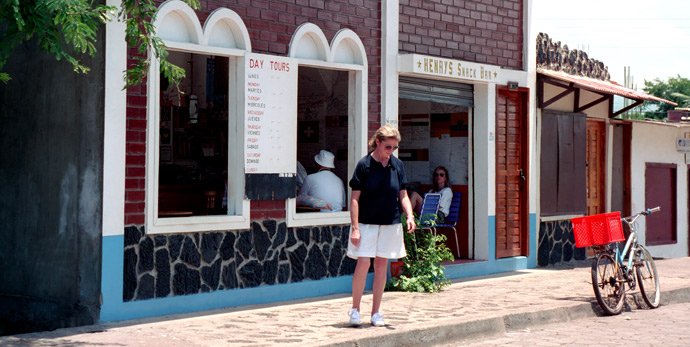
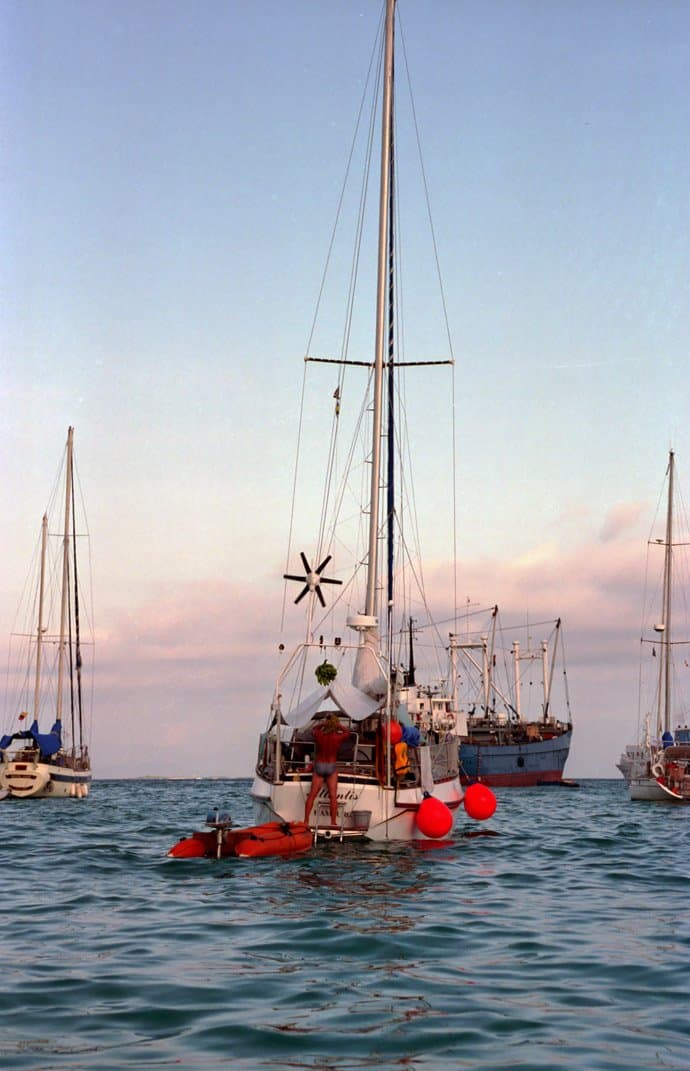
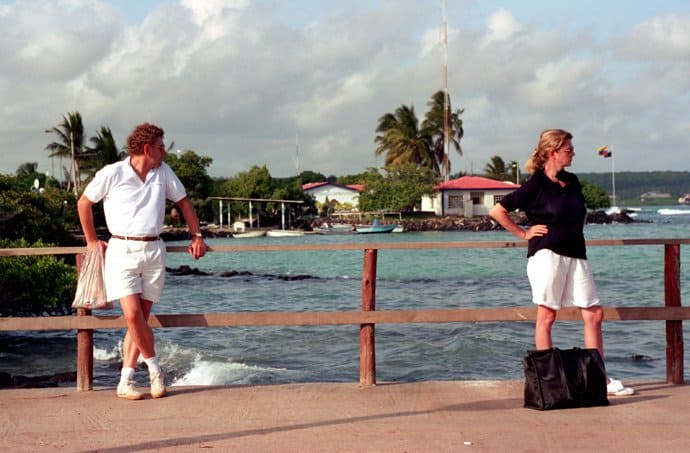
The port of call for all globetrotters, globetrotters, sailors and castaways who cross this latitude and/or longitude is Harry’s Bar. It is run by a Swiss man who has stepped out of his regular life and built his very own communications centre in this abandoned patch of earth.

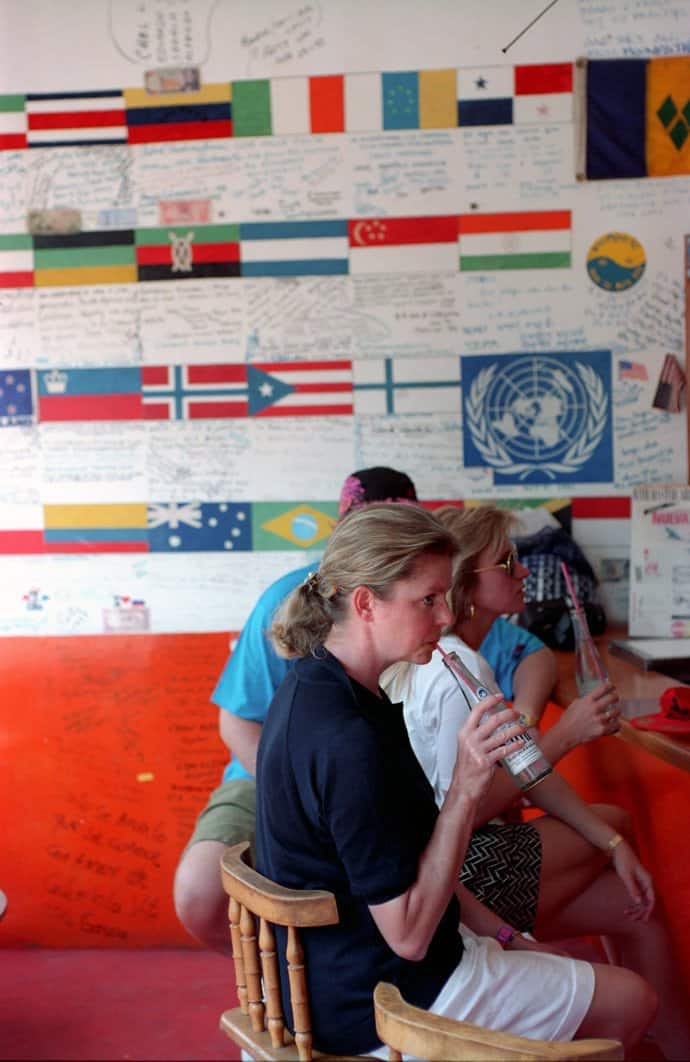
An institution on the island of Sta. Cruz is, of course, Harry’s Bar. The bar is a hodgepodge of library, information centre, radio station, café and bar. Above all, the important information of sailors and globetrotters is exchanged here.

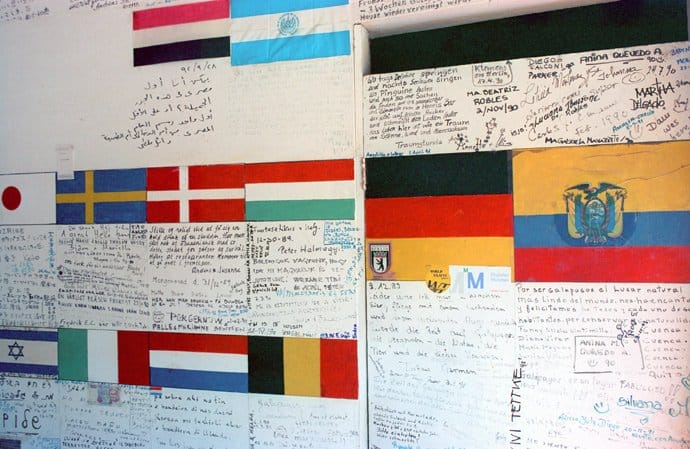
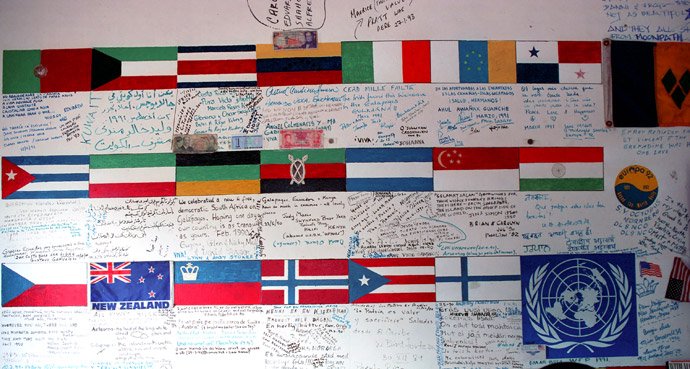
Harry is sitting at one of his radios and is communicating with a sailboat that wants to call at the Galapagos Islands in two days. All important information about the weather and also about the latest entry requirements will be exchanged. You can find out who else is anchored in the harbor or will be here soon. Messages for discreet forwarding to those at home or friends on the road are left here. Harry manages all this without a fee….. If you call at the islands, you should first stop at Harry’s Bar and immortalize yourself with a saying on your wall. We use the short visit to refresh ourselves and collect the latest information for our onward journey.

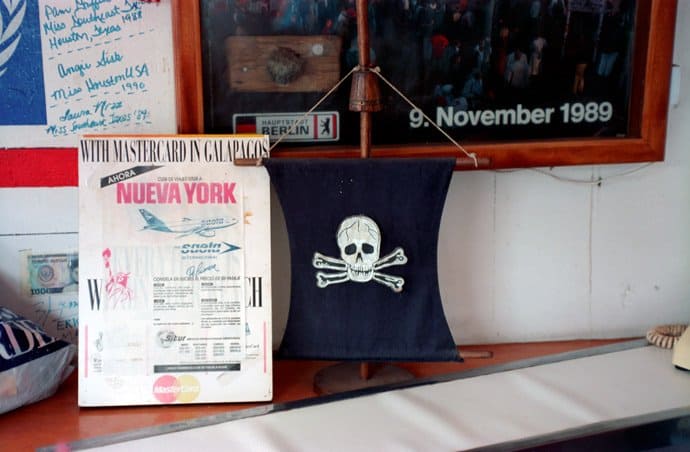
Harry shows us the most important and interesting entries, because it would take too long to study all the entries on the walls. Harry’s Bar is simply unique and definitely worth seeing. By the way, he was not a buccaneer of the seas, although one can have the impression….

GalapagosGeneral country information

Galapagos – General info

by Joe OnTour 26. August 2017
Galapagos

Galapagos – Arrival

by Joe OnTour 26. August 2017
Galapagos

Galapagos – Isabela Island

by Joe OnTour 26. August 2017
Galapagos

Galapagos – Birds of Prey

by Joe OnTour 26. August 2017
Galapagos

Galapagos – Birds – Red-footed Boobies

by Joe OnTour 26. August 2017
Galapagos

Galapagos – Frigate Birds II

by Joe OnTour 26. August 2017
Galapagos

Galapagos – Frigate Birds I

by Joe OnTour 26. August 2017
Galapagos

Galapagos – Rails, Herons, Pelicans

by Joe OnTour 26. August 2017
Galapagos

Galapagos – Gannets

by Joe OnTour 26. August 2017
Galapagos

Galapagos – Blue-footed boobies

by Joe OnTour 26. August 2017
Galapagos

Galapagos – Penguins

by Joe OnTour 26. August 2017
Galapagos

Galapagos – Flamingos

by Joe OnTour 26. August 2017
Galapagos

Galapagos – Turtles

by Joe OnTour 26. August 2017
Galapagos

Galapagos – Crayfish

by Joe OnTour 26. August 2017
Galapagos

Galapagos – Seals and Sea Lions

by Joe OnTour 26. August 2017
Galapagos

Galapagos – Seals and Sea Lions

by Joe OnTour 26. August 2017
Currently PopularGalapagos

Galapagos – Iguanas & Lizards

by Joe OnTour 26. August 2017
Galapagos

Galapagos – Coasts & Beaches II

by Joe OnTour 26. August 2017
Galapagos

Galapagos – Coasts & Beaches

by Joe OnTour 26. August 2017
Galapagos

Galapagos – Evolution III

by Joe OnTour 26. August 2017
Galapagos

Galapagos – Evolution II

by Joe OnTour 26. August 2017
Galapagos

Galapagos – Evolution I

by Joe OnTour 25. August 2017
Galapagos

Galapagos – Volcanic Lake

by Joe OnTour 25. August 2017
Galapagos

Galapagos – Flora

by Joe OnTour 25. August 2017
Galapagos

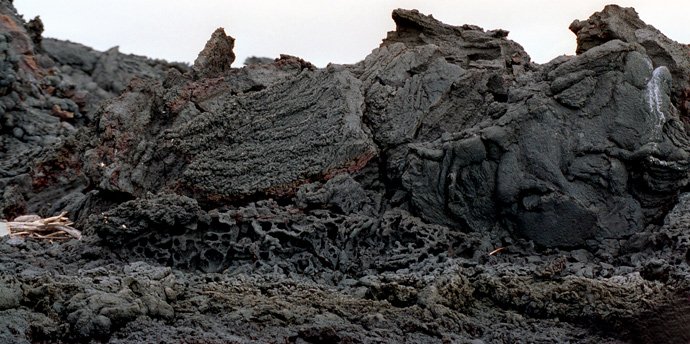
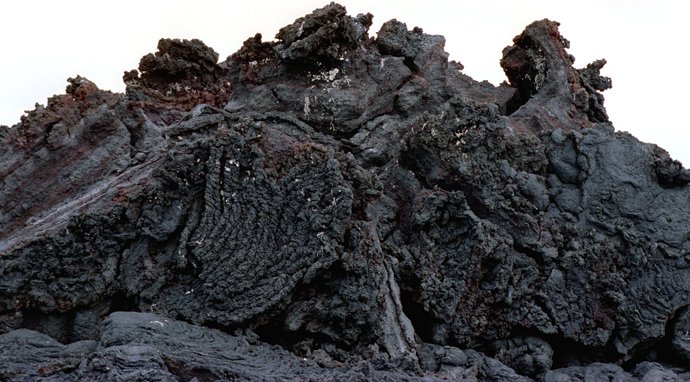
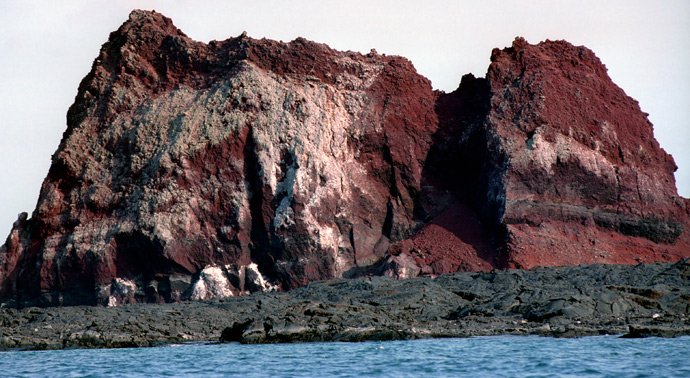
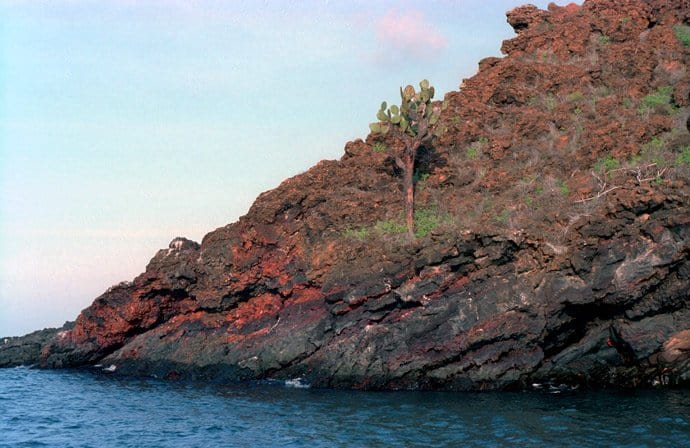
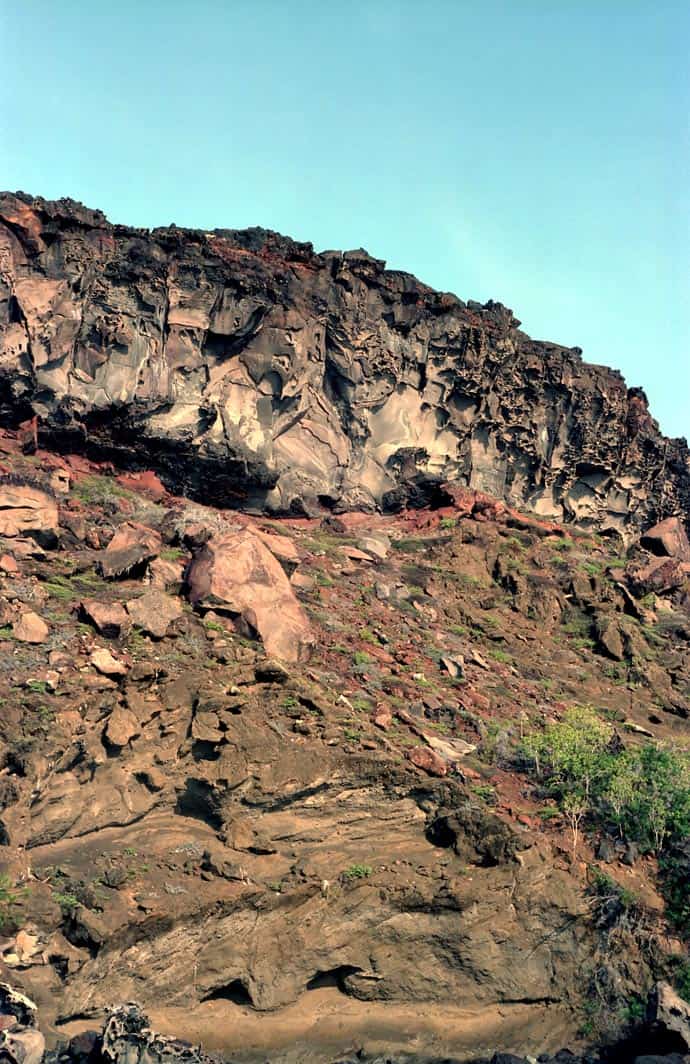
Galapagos – Volcanic Islands
by Joe OnTour 25. August 2017
Galapagos

Galapagos – Kicker Rock

by Joe OnTour 25. August 2017
Galapagos

Galapagos – Puerto Ayora – Harry’s Bar

by Joe OnTour 25. August 2017
Galapagos

Galapagos – Puerto Ayora II

by Joe OnTour 25. August 2017
Galapagos

Galapagos – Puerto Ayora I

by Joe OnTour 25. August 2017
Galapagos

Galapagos – Bartolome Island II

by Joe OnTour 25. August 2017
Galapagos

Galapagos – Bartolome Island I

by Joe OnTour 25. August 2017

Pictures Galapagos – Puerto Ayora – Harry's Bar

Galapagos - Puerto Ayora - Harrys Bar

Questions about the destination Galapagos

In the South America forum you will get the answers!

25. August 2017 0 comments
0 FacebookTwitterPinterestEmail
Galapagos - Puerto Ayora II
Galapagos

Galapagos – Puerto Ayora II

by Joe OnTour 25. August 2017
written by Joe OnTour

Galapagos – Puerto Ayora – Travelogue 2

The first destination of the yachts anchored here is the famous Charles Darwin Station. Due to the large number of tourists, it is recommended to visit the Charles Darwin Research Station as early as possible. It is open on weekdays from 8 a.m. to 12 p.m. and from 1 p.m. to 4 p.m.

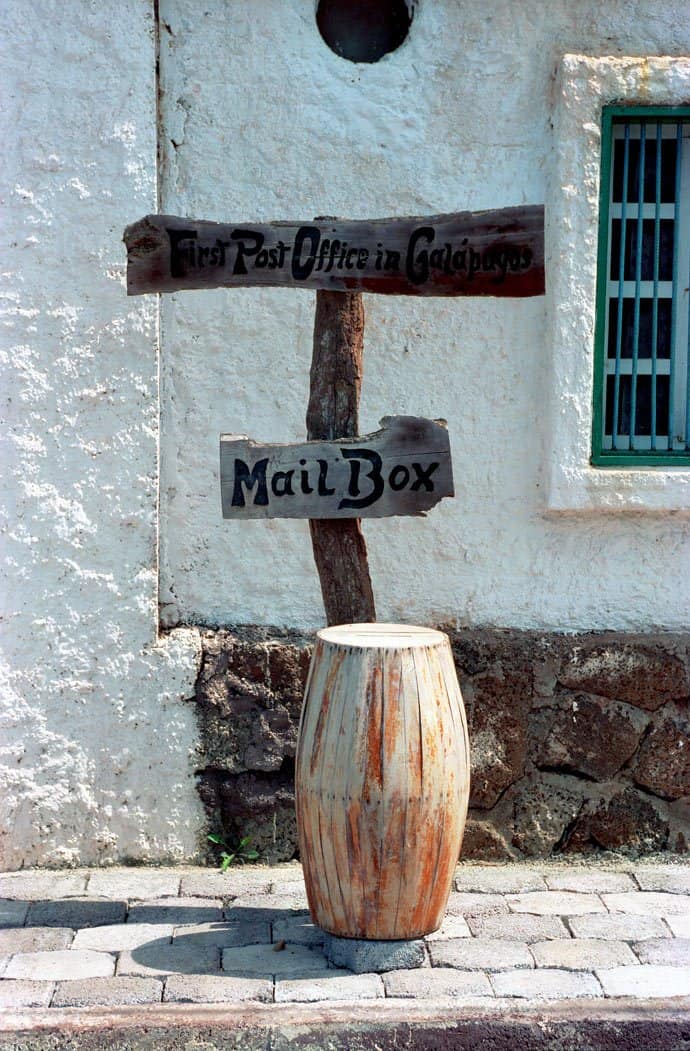
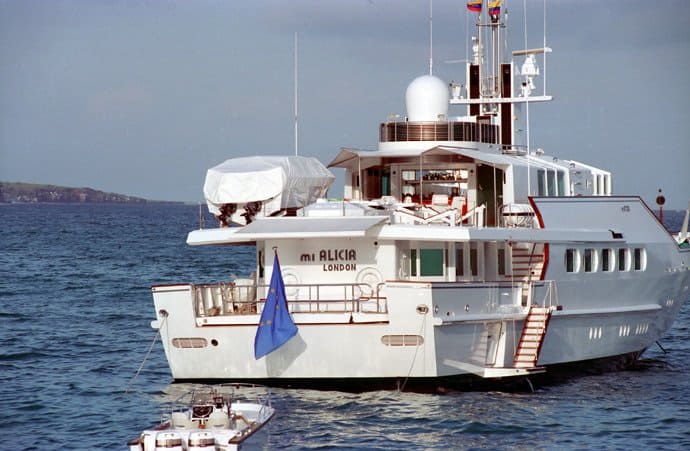
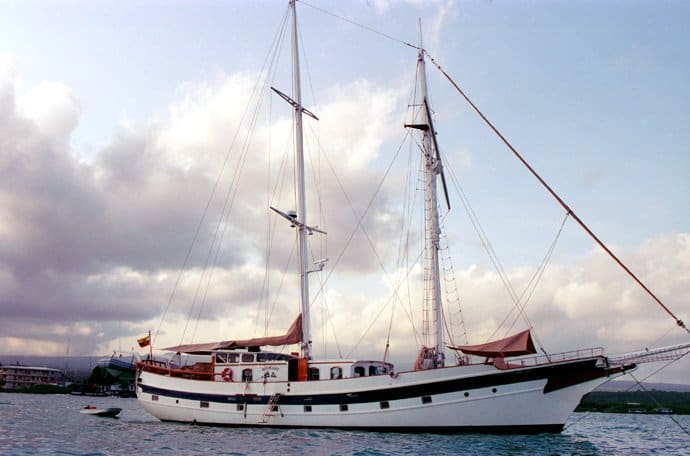
Puerto Ayora is a small but clean town with partly paved streets. Along the curving waterfront promenade Avenida Charles Darwin are the marina, tour offices, souvenir shops, restaurants, pubs, discos and hotels. The town, which has grown rapidly in recent years, is the main starting point for island excursions lasting several days. World sailors from all continents rested in Academy Bay. From simple small boats to half-rusted fishing boats and pompous luxury yachts equipped with all chicanes, everything can be found here in the bay. The hotel comfort offered in Puerto Ayora can be divided into three price ranges: expensive, very expensive, or economical. There are already decent overnight accommodations from about 10 US dollars. However, those who value a little more comfort often have to dig deep into their pockets. The 80 to 100 USD hotels are often not worth the high expense. There are no luxury hotels on Galápagos yet. Below right is a picture of the main post office in Puerto Ayora.

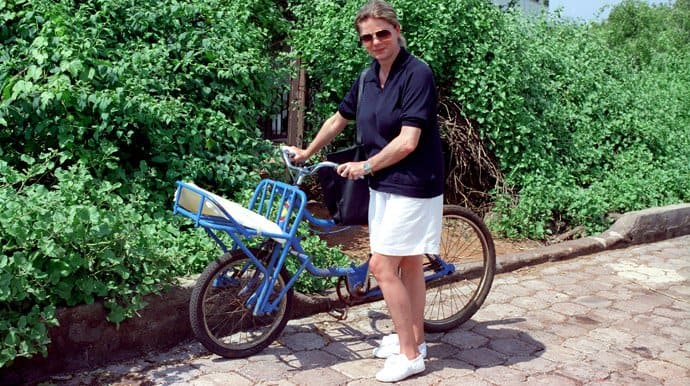
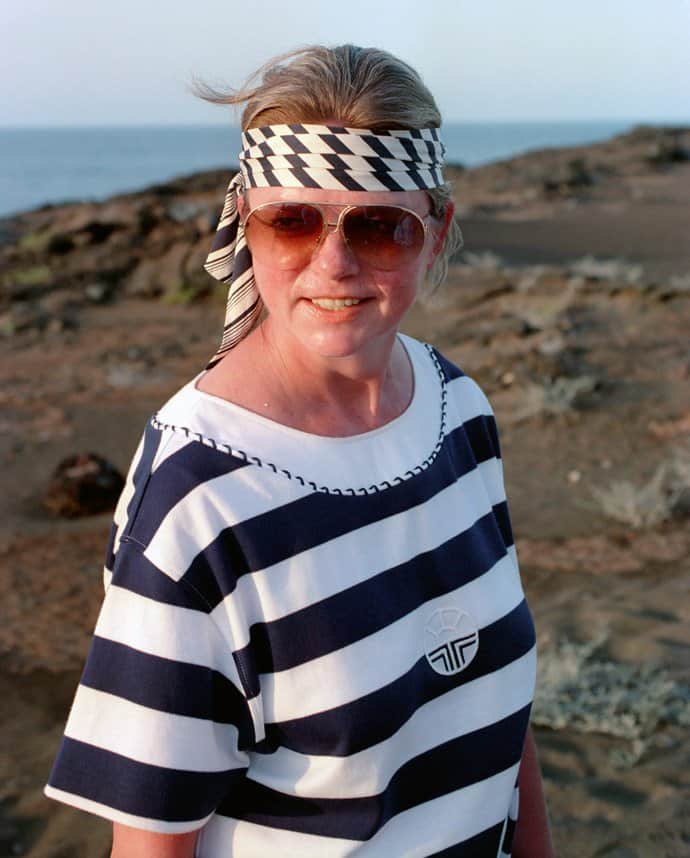
The visit to Darwin Station is informative and interesting, but should only provide the basic framework of first impressions of our further excursions. There is also an informative visitor center, a museum, and a turtle breeding station. The greatest attention, however, belongs to the station’s crowd favorite, the lonely George (“Lonesome George” or “Jorge Solitario”). George is the only sad survivor of a giant tortoise species. All attempts to cross the over 50-year-old male with a female of a similar subspecies have so far failed. George shows no particular interest. Meanwhile, Brigitte is already testing the most used means of transport from the Galapagos Islands. The preservation of the Darwin Station is constantly being worked on, as you can easily see in the left picture below.

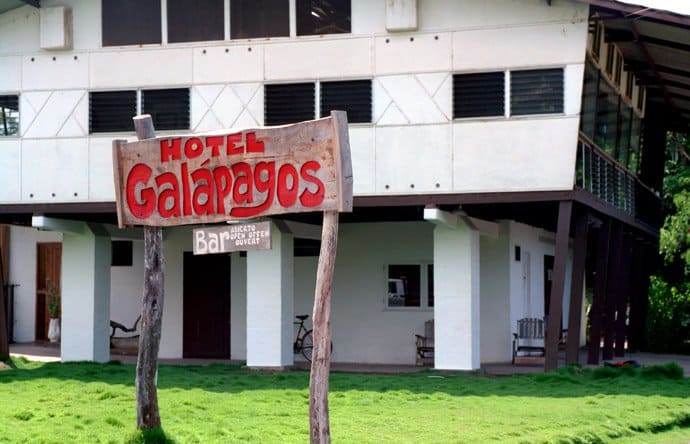
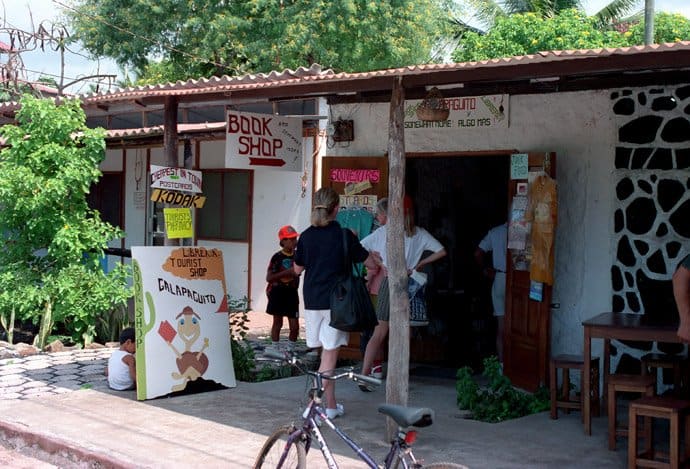
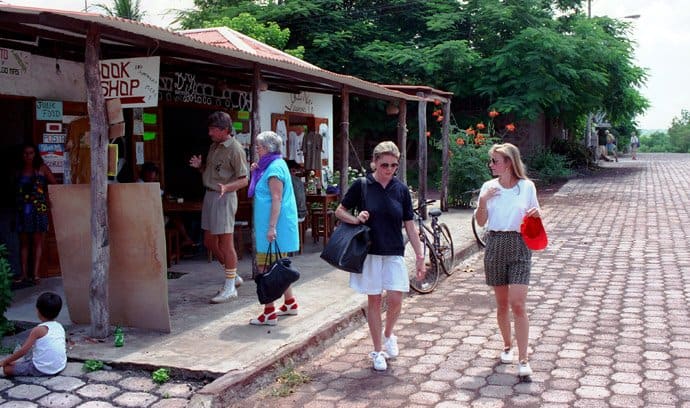
Salty prices are primarily paid for the gourmet cuisine of Puerto Ayora. Nevertheless, there are also some inexpensive restaurants that also offer tasty meals. Here you should definitely try local fish. Often you eat best in the hotels. Due to the filtered water, the Hotel Galápagos is particularly recommended. You can even eat salads there without hesitation. A small shopping centre, which consists of a low-rise building with a corrugated iron roof, is also available.

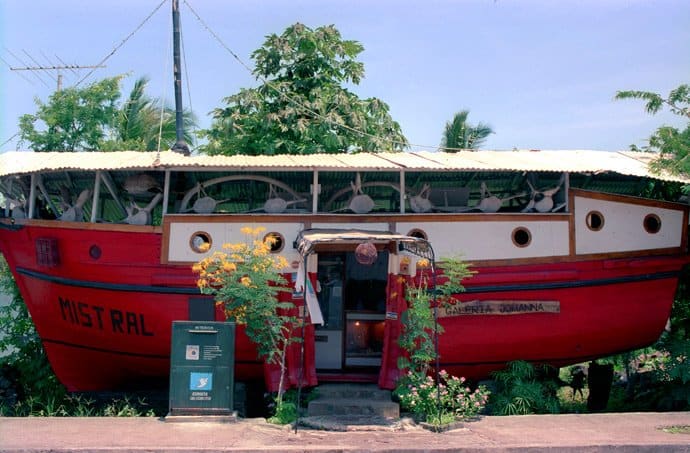
The Mistral was misused and is now a small restaurant.

Photos Galapagos – Puerto Ayora

Galapagos - Puerto Ayora II
Galapagos - Puerto Ayora

Questions about the destination Galapagos

In the South America forum you will get the answers!

25. August 2017 0 comments
0 FacebookTwitterPinterestEmail
Galapagos - Puerto Ayora
Galapagos

Galapagos – Puerto Ayora I

by Joe OnTour 25. August 2017
written by Joe OnTour

Galapagos – Puerto Ayora – Travelogue 1

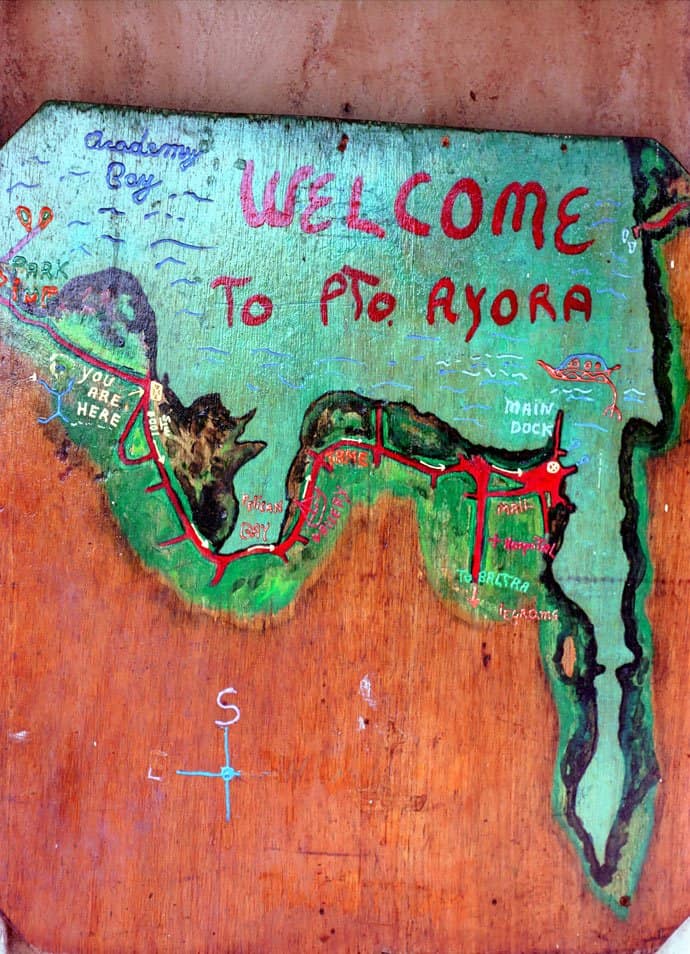
Sta. Cruz with its adherence Puerto Ayora is the most populated island in the archipelago. Here is the national park administration and the Charles Darwin research station. The station has some small museums that show the history of the islands. In addition, there are some breeding enclosures of the various turtle species, some of which are threatened with extinction. The well-known Lonesome George, the last of his species, is also at home here. The map shows the port facility Pto. Ayora. 80 percent of all Galápagos cruises depart from the capital Puerto Ayora, which is located on the southern side of the

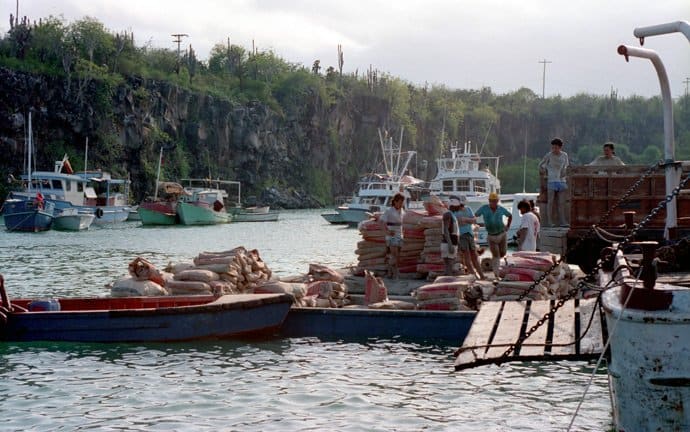
All tourist boats sailing on the Galapagos Islands sooner or later end up in Academy Bay (the natural harbour basin of Puerto Ayora), the largest town in the island kingdom with over 10,000 inhabitants. In the port, goods are being transferred to smaller boats that sail to the inhabited islands off the coast. We wait for the dinghy to take us back to our small motor yacht to explore the other islands of the archipelago. The motor ship is our floating hotel.
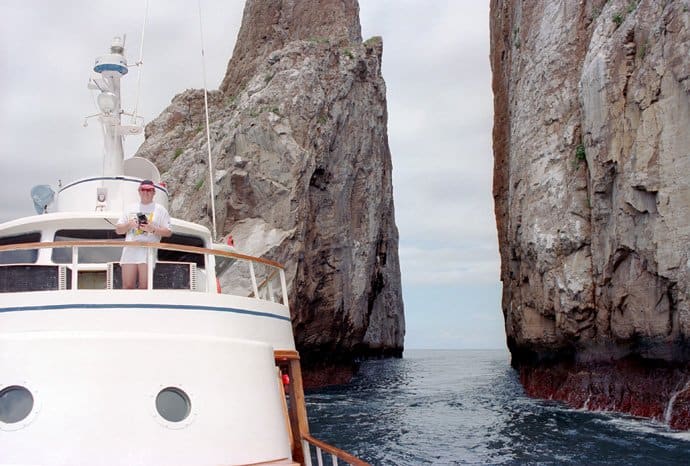
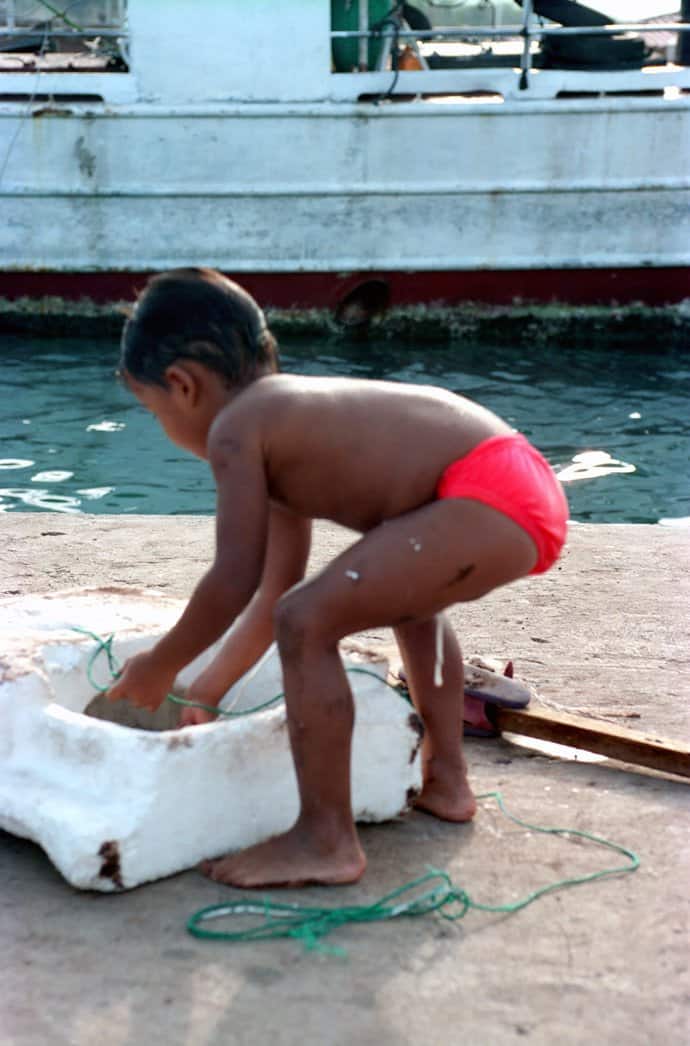
Not only the public advertising here is still from the 19th century. Life also has its own rhythm. Everything is slow and relaxed on the Galapagos Islands. We explored the island sufficiently on foot. A visit to Darwin Station is of course an absolute must. We watch a little boy helping his father unload the fish. If you want to become a real fisherman, you practice early…….

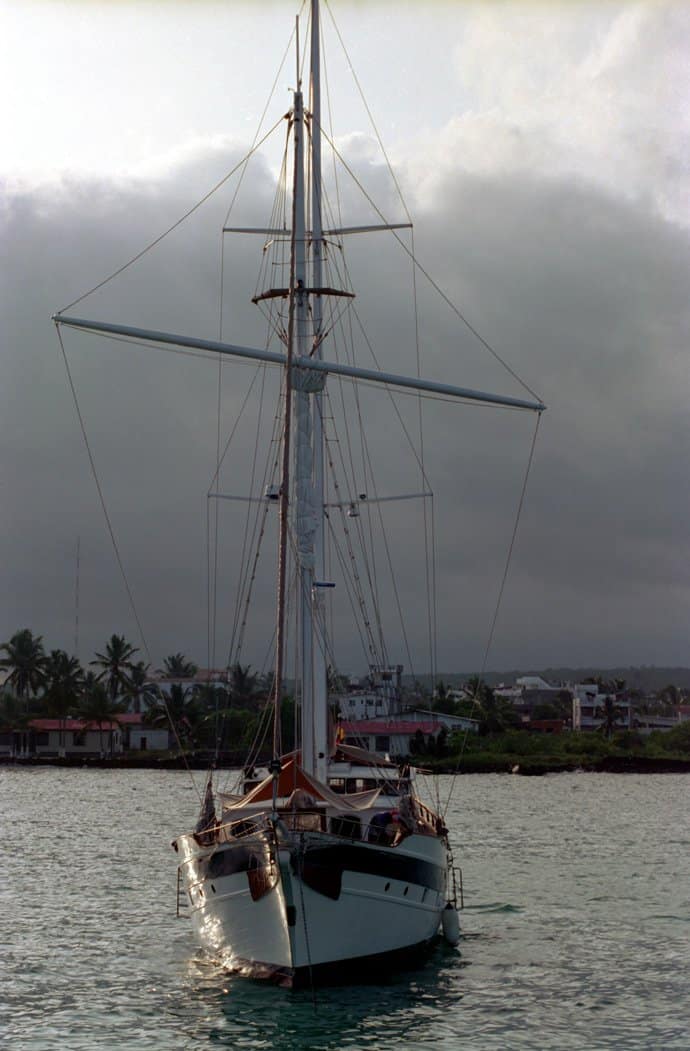
There are a few motor ships and sailing yachts in the harbour, which take a break here for a few days before heading to the more distant islands. Opposite is a circumnavigator who is stopping here. A larger cruising sailor is also refreshing his Vörräte in the port of Ayora.

A thunderstorm front will move in in the evening, which will hopefully be over the next morning. Before setting sail in the morning, we notice that another motor yacht has anchored next to us during the night. As it turns out after an extensive smaltalk from railing to railing, it is a Brit on a trip around the world who has been forced to take an involuntary break by the thunderstorm.

Photos Galapagos – Puerto Ayora

Galapagos - Puerto Ayora II
Galapagos - Puerto Ayora

Questions about the destination Galapagos

In the South America forum you will get the answers!

25. August 2017 0 comments
0 FacebookTwitterPinterestEmail
Galapagos - Bartolome Island
Galapagos

Galapagos – Bartolome Island II

by Joe OnTour 25. August 2017
written by Joe OnTour

Galapagos – Bartolome Island – Travelogue 2

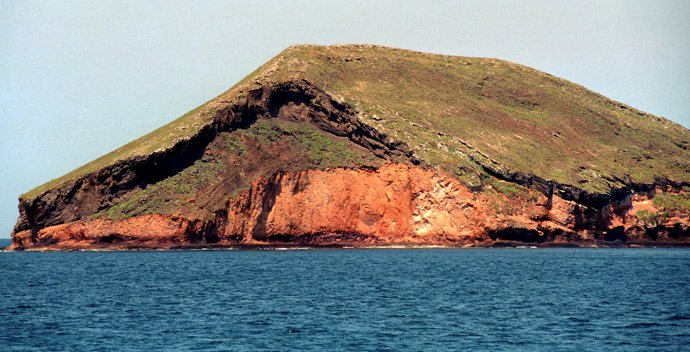
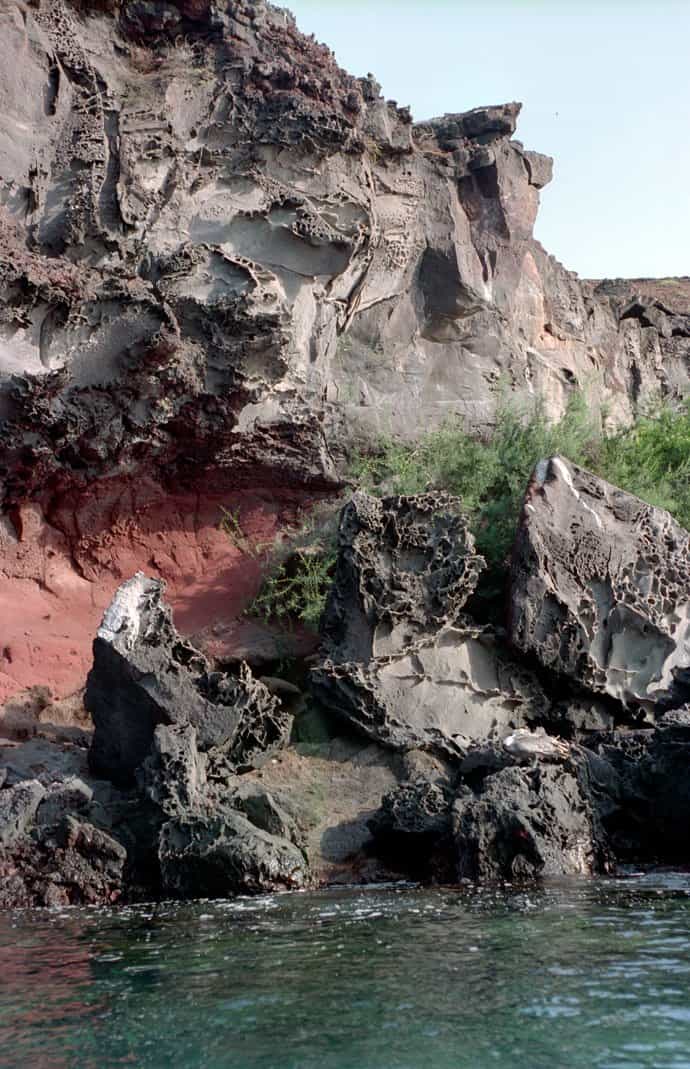
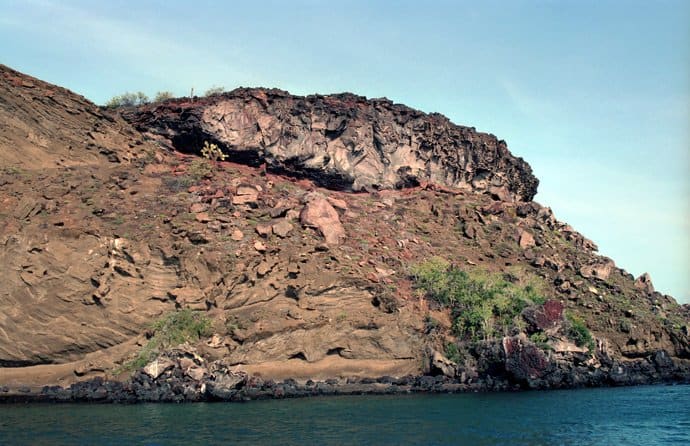
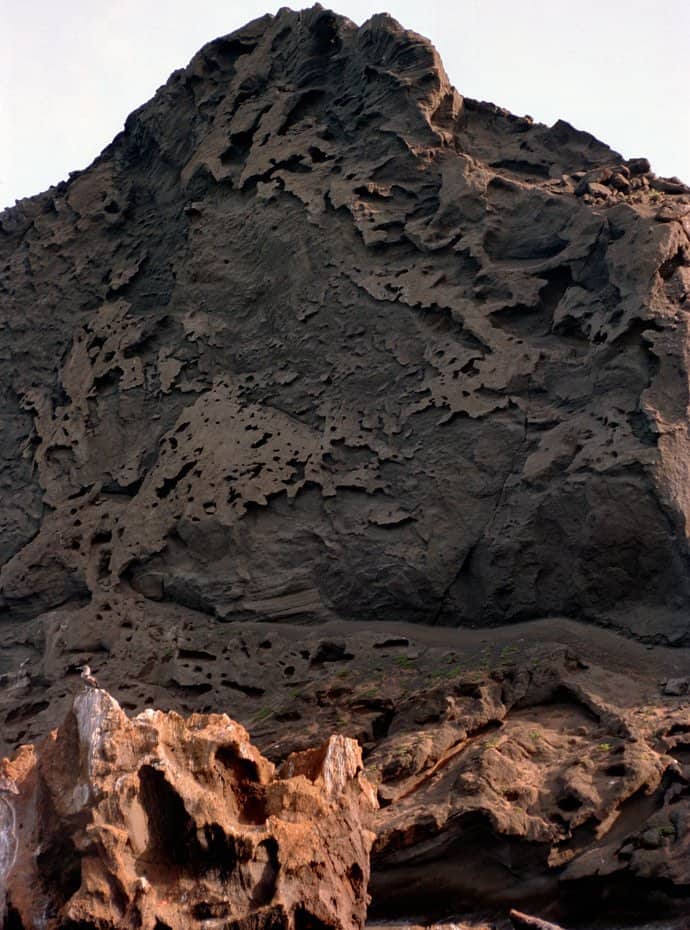
On the island of Bartolome we climb the 114 m high volcano.

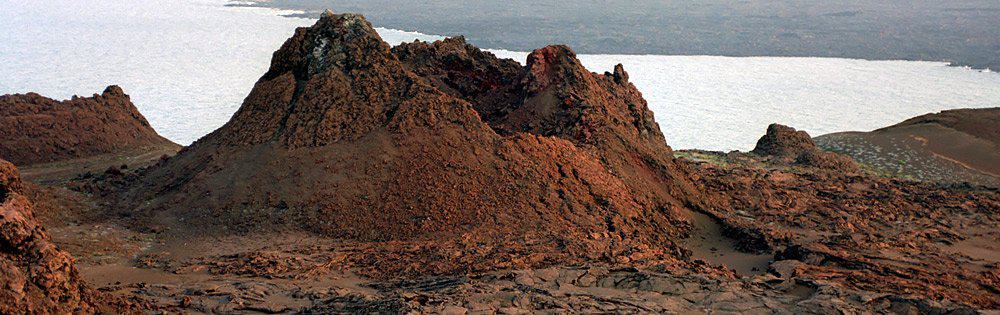
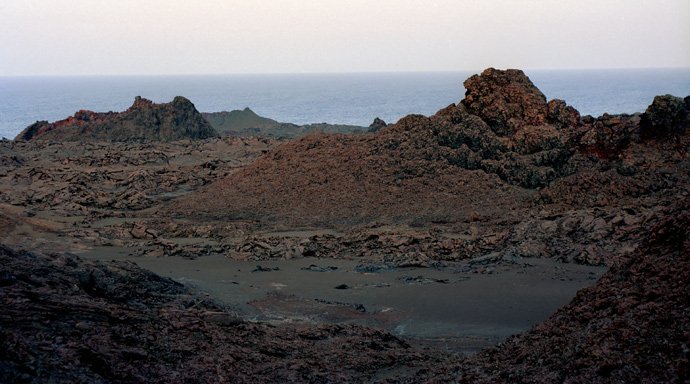
We are rewarded with an unforgettable view over the crater landscape with its bizarre beauty. Here you can understand how the formation of the earth took place.

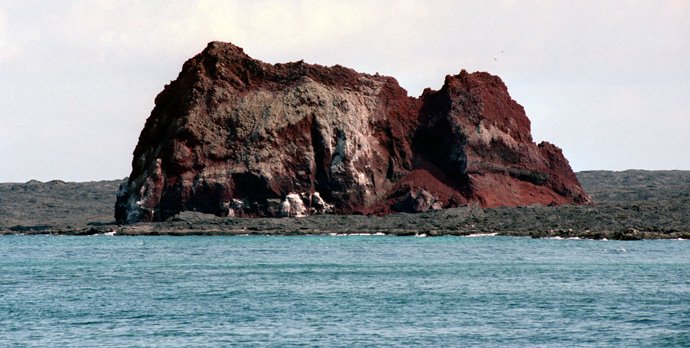
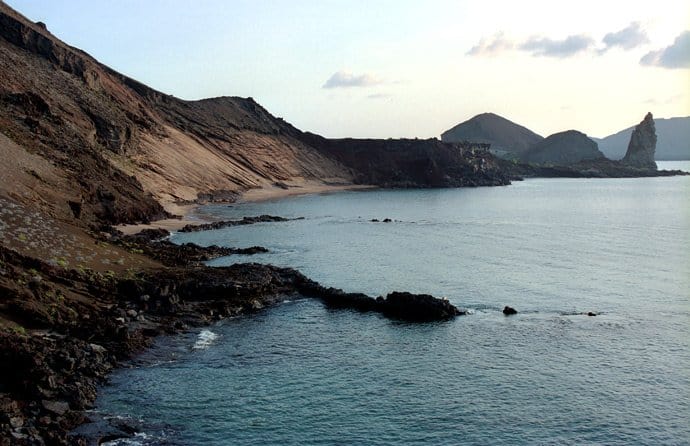
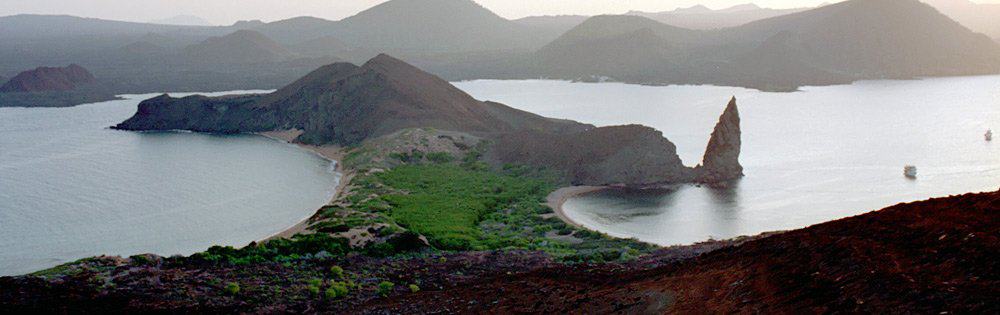
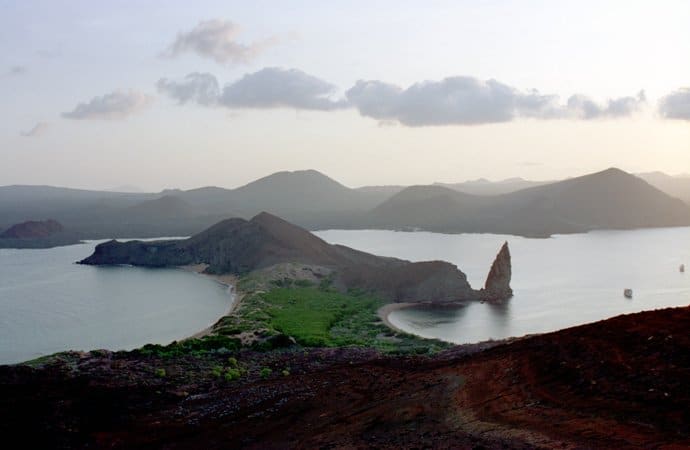
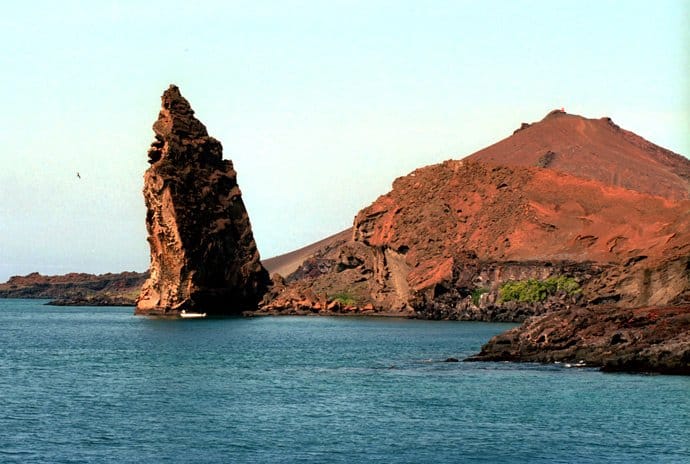
From up here you have a wonderful panoramic view of the neighboring islands. The landmark of the island is Pinnacle Rock, the pointed rock needle, which is probably the remnant of a tuff cone.

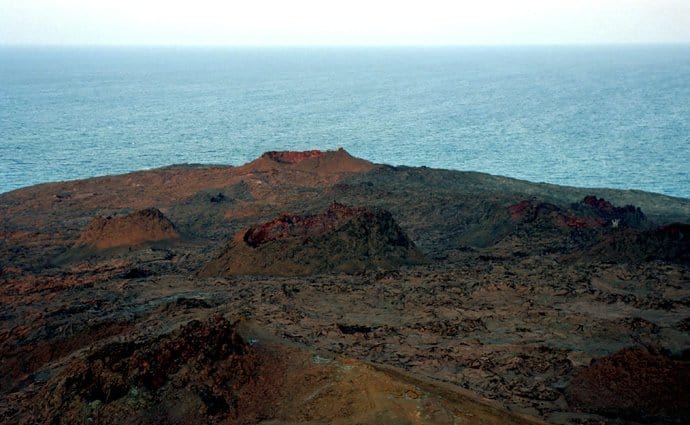
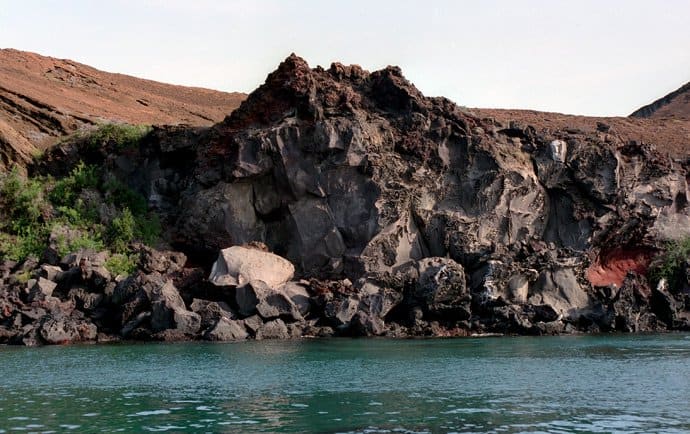
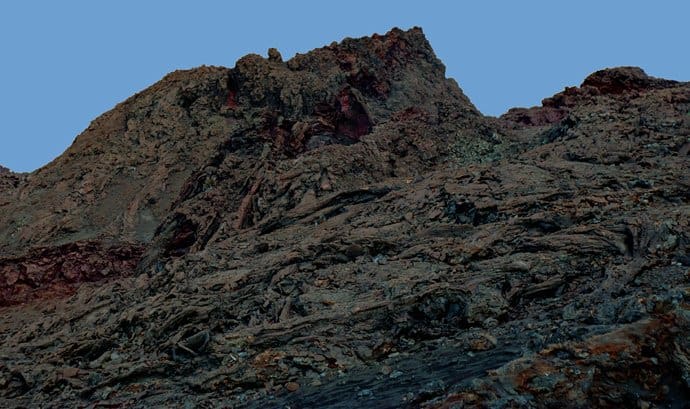
Again and again you can see the explosion craters, which look as if huge projectiles have hit. The day is coming to an end. We enjoy the last moments in this unique landscape, where you feel very close to evolution. The descent is a little faster than the steep ascent.

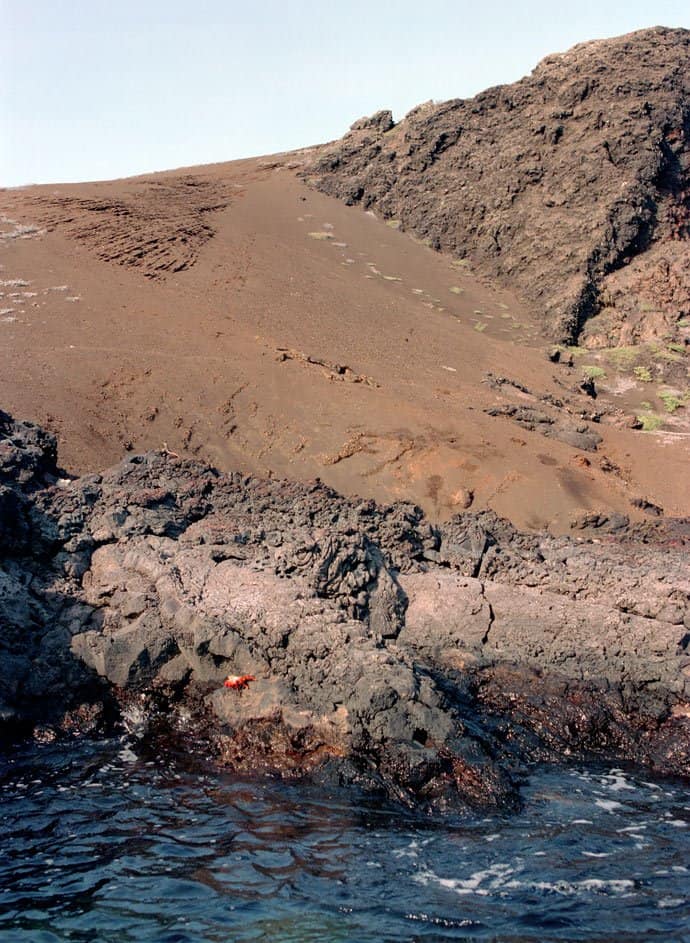
We are still too impressed by this bizarre world, which has no basis for life for humans. A steep descent of volcanic rock takes us to our boat mooring. We say goodbye to the island and to Pinnacle Rock, the steep rock needle. On the descent, we leave behind the black lava fields and grey-brown cinder cones, which contrast with green islands of vegetation and bright white sandy beaches.

Slowly the island moves away from our field of vision. We still need a long time to process the experience.

Photos Galapagos – Bartolome Island

Galapagos - Bartolome Island

Questions about the destination Galapagos

In the South America forum you will get the answers!

25. August 2017 0 comments
0 FacebookTwitterPinterestEmail
Galapagos - Bartolome Island
Galapagos

Galapagos – Bartolome Island I

by Joe OnTour 25. August 2017
written by Joe OnTour

Galapagos – Bartolome Island – Travelogue 1

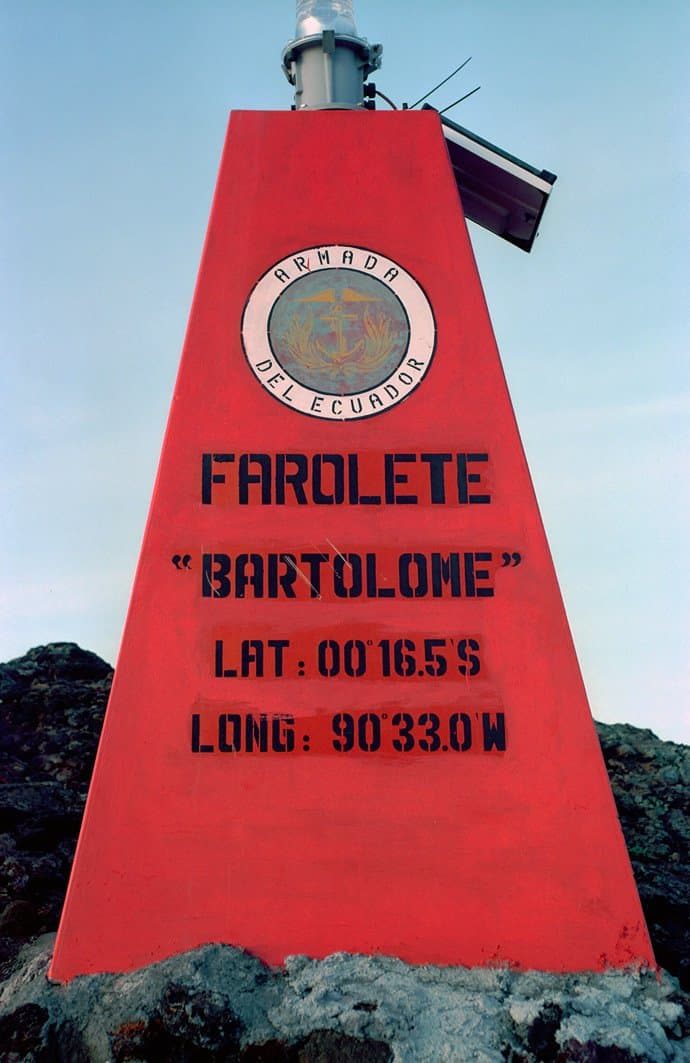
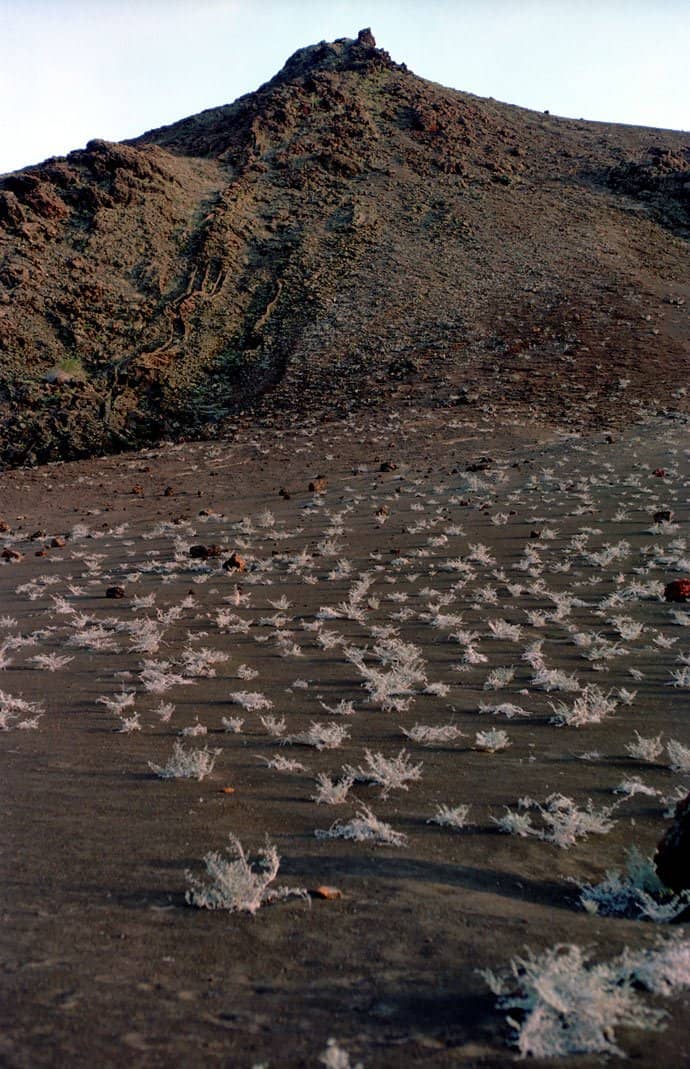
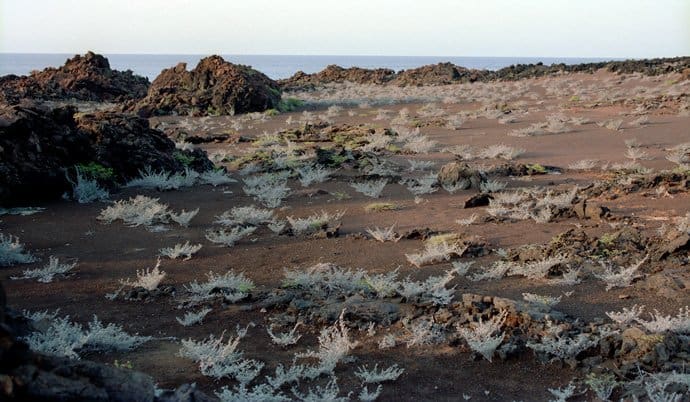
Today we plan a shore excursion on Bartolome and the ascent of the 114 m high volcano. From here you have a beautiful view over Pinnacle Rock, a 45 m high rock needle and the island of Santiago. This is said to be the most beautiful place in the entire archipelago. In the surrounding area we can find interesting pioneer plants such as tiquilia and wild explosion craters. In the updrafts at the volcano, buzzards often stay for hours.

The island of Bartolomé is only 1.2 km² in size and is located near the east coast of Santiago. Because of its breathtaking scenery, the island is one of the most visited in the archipelago. The island is ideal for in-depth study of volcanic formations, there is the Panhoehoe lava, small hornitos, welding cinder cones, remains of lava tunnels and tuff cones to see. We are already a bit late today. The day is already coming to an end. So we have to hurry to climb the summit in time to get back to the boat in daylight.

Everywhere you can find the white salt bushes that have conquered the lava rock. The scenery is unreal and you have the impression of being transported back to the age of the dinosaurs.

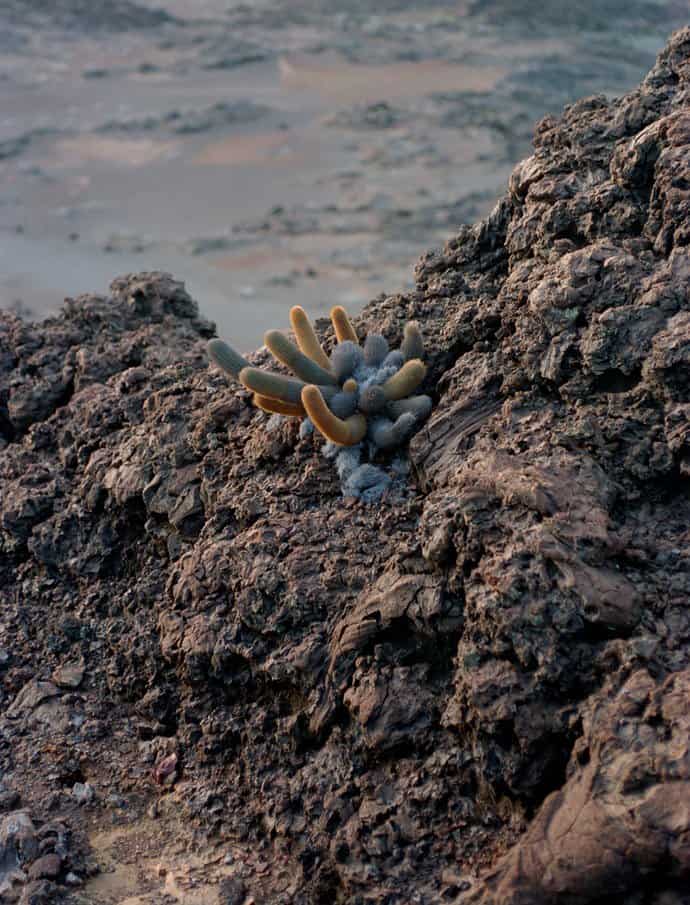
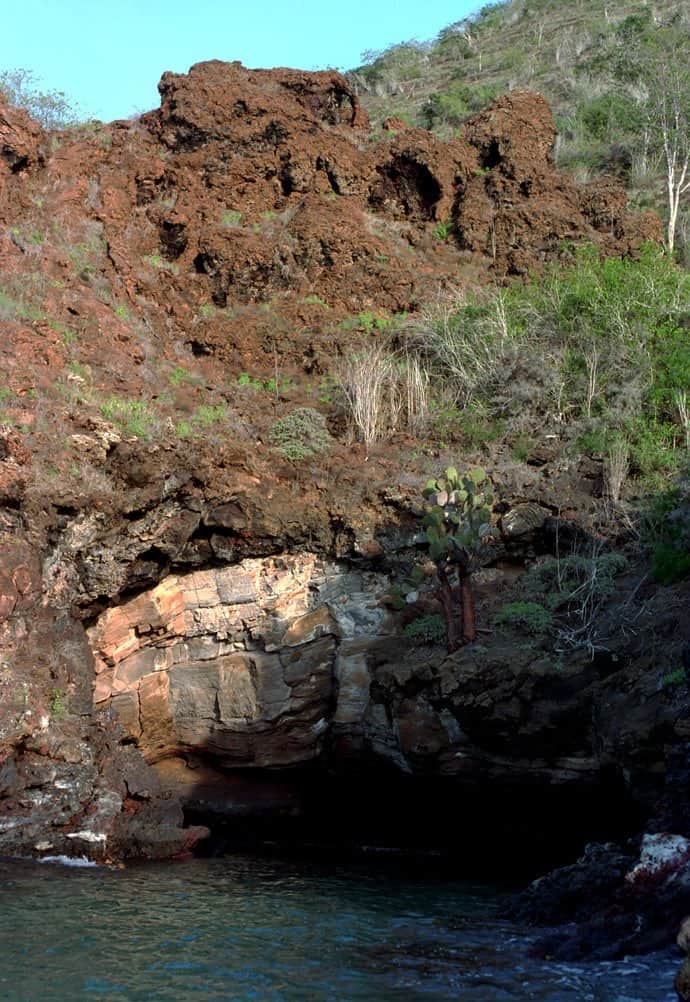
You should definitely stay on the path as the tuffs are very fragile. The lava cactus, which thrives on naked lava rock, can only be understood as an erotic whim of nature. It usually occurs in erectile groups and can be admired in this lunar-like volcanic landscape of Bartolomé.

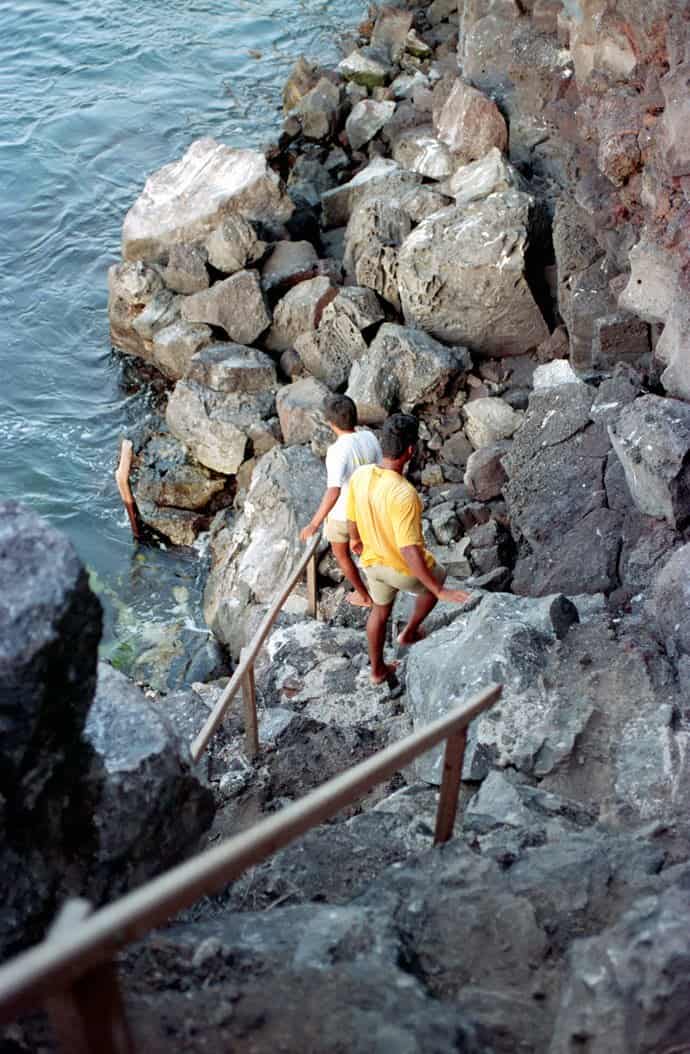
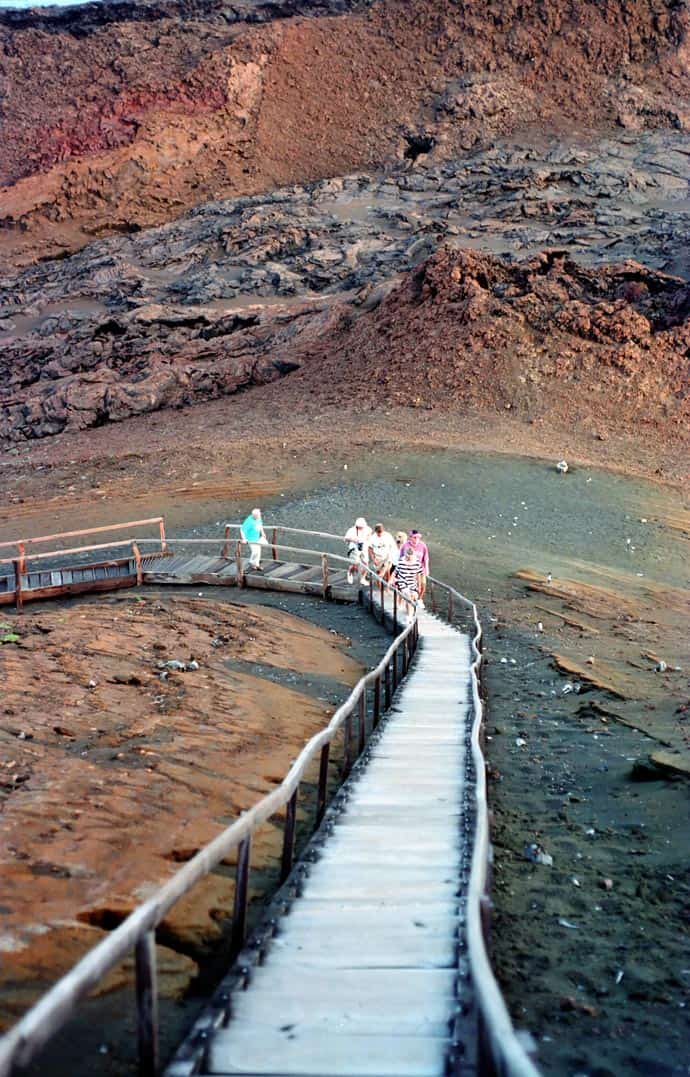
The explosion craters look wild and dangerous. Their shape is extremely bizarre and one can imagine the elemental forces that contributed to its creation. Our lava hike over a long and steep wooden staircase to the highest peak of the island is rewarded with an unforgettable panorama. From here you can see the neighboring islands of Pinzón and Isabela, sometimes even Marchena and Pinta.

Photos Galapagos – Bartolome Island

Galapagos - Bartolome Island
Galapagos - Isabela Island

Questions about the destination Galapagos

In the South America forum you will get the answers!

25. August 2017 0 comments
0 FacebookTwitterPinterestEmail
Galapagos
EcuadorGeneral country information

Ecuador – General info

by Joe OnTour 24. August 2017
written by Joe OnTour

Ecuador – General information

Form of government:
Presidential Republic, independent from Spain since 1822. President: Lucio Gutiérrez.

State name:
República del Ecuador.

State flag:
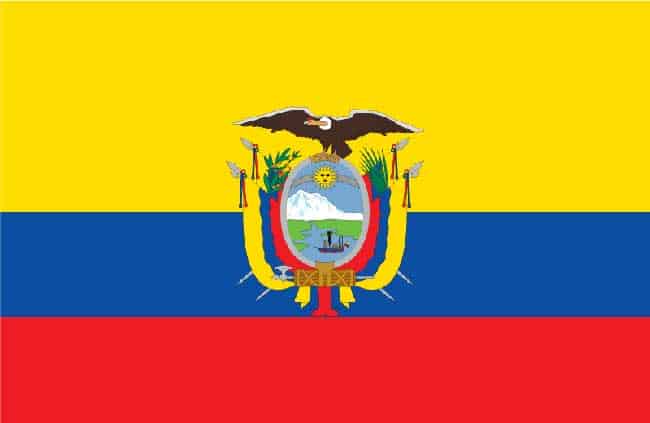
Yellow/blue/red with a national coat of arms in the middle, consisting of sun, condor, chimborazo, Río Guayas and steamship.

State borders:
To the north with Colombia, to the south and east with Perú, to the west the Pacific Ocean.

State area:
About 272,000 sq km (including the Galápagos Islands / 8,010 sq km), which are divided into 21 provinces.

State language:
Officially Spanish, in the highlands also Quechua (almost 2 million people), in Amazonia as well as in the northern coastal area still isolated tribal languages (especially Shuar in the southern Oriente).

Currency:
US Dollar. US notes and coins are in circulation, as well as Ecuadorian coins (1, 5, 10, 25 and 50 cents).

Population:
The total population is almost 13 million inhabitants.

The capital is Quito (1.8 million inhabitants), the largest city is Guayaquil (2.8 million inhabitants, overseas port and industrial center).

Other important cities are Machala (450,000 inhabitants, banana port), Manta (400,000 inhabitants, fishing port and automotive industry), Cuenca (350,000 inhabitants, cultural and tourist stronghold). Other cities over 100,000 inhabitants are Durán (opposite side of the Guayaquil river), Portoviejo (Manabí / coast), Santo Domingo (inner coast), Ambato (central highlands), Esmeraldas (northern coast), Loja (southern highlands), Babahoyo (inner coast), Quevedo (inner coast), Milagro (inner coast), Daule (inner coast), Chone (Manabí / coast), Riobamba (central highlands), Ibarra (northern highlands).

About 60% of Ecuadorians live in these metropolitan areas! The rest is distributed among small towns, villages and hamlets, with a third of the total population employed in agriculture.
Average population density:
46 inhabitants per sq km. Growth rate: 2.2% per year, with about 40% of the population under 15 years old!

Life expectancy:
For men 67 years, for women 72 years. Illiteracy rate: 10 % (large urban-rural divide).

Gross national product:
About $1,200 per capita.

Inflation rate:
Annual average over 50% (1988-92).

Unemployment rate:
10-15% (underemployment rate about 30%). Working population: 30% university graduates, 18% lower secondary school leavers, 50% with no or very short school leaving certificates. The minimum wage required by law is around $150 per month!

Healthcare:
Avg. 12 doctors and 20 hospital beds per 10,000 inhabitants.

Racial distribution:
30 % Indians (mainly living in the highlands and Amazonia), 50 % mestizos and cholos, 8 % blacks, mulattoes and zambos, 10 % whites, Asians and Arabs (including 5,000 Germans, 3,000 Swiss and 20,000 Koreans). Despite religious freedom (since 1904), 93% of the population is exclusively Roman Catholic!

Social structure:
Almost 2% of all Ecuadorians belong to a rich white upper class. Another 10% can be described as wealthy or at least wealthy. Together, these family minorities have over two-thirds of the total national income!

The middle class share has decreased noticeably in recent years and now represents just 25%. More than 60% of the population can be described as poor, of which a good third vegetates practically below the subsistence level!

Provinces in the Andean Highlands (sierra):
Azuay (8,100 sq km, 650,000 inhabitants, capital Cuenca), Bolívar (4,000 sq km, 200,000 inhabitants, capital Guaranda), Cañar (3,100 sq km, 200,000 inhabitants, cap. Azogues), Carchi (3,600 sq km, 240,000 inhabitants, cap. Tulcán), Cotopaxi 6,000 sq km, 350,000 inhabitants, cap. Latacunga), Chimborazo (6,600 sq km, 480,000 inhabitants, cap. Riobamba), Imbabura (4,600 sq km, 350,000 inhabitants, cap. Ibarra), Loja (11,000 sq km, 500,000 inhabitants, cap. Loja), Pichincha (13,000 sq km, 2.5 million inhabitants, cap. Quito), Tungurahua (3,340 sq km, 450,000 inhabitants, cap. Ambato).

On the coast (costa):
El Oro (5,850 sq km, pop. 700,000 inhabitants, cap. Machala), Esmeraldas (15,200 sq km, 450,000 inhabitants, cap. Esmeraldas), Guayas (20,500 sq km, 3.6 million inhabitants, cap. Guayaquil), Los Ríos (7,200 sq km, pop. 750,000 inhabitants, cap. Babahoyo), Manabí (19,000 sq km, 1.6 million inhabitants, cap. Portoviejo).

In Amazonia (oriente):
Morona Santiago (25,700 sq km, 100,000 inhabitants, cap. Macas), Napo (34,000 sq km, 150,000 inhabitants, cap. Tena), Pastaza (30,000 sq km, 100,000 inhabitants, cap. Puyo), Sucumbios (18,300 sq km, 120,000 inhabitants, cap. Lago Agrio), Zamora Chinchipe (23,000 sq km, 100,000 inhabitants, cap. Zamora).

Galápagos Island Region:
8,010 sq km, 30,000 inhabitants, cap. Puerto Baquerizo Moreno).

Highest elevations:
Chimborazo 6,310m, Cotopaxi 5,897m, Cayambe 5,790m, Antizana 5,704m, El Altar 5,320m, Illiniza Sur 5,260m, Sangay 5,230m, Illiniza Norte 5,126m, Carihuayrazo 5,020m, Tungurahua 5,016m, Cotacachi, 4,944m, Sincholagua 4,900m, Quilindaña 4,878m, Guagua Pichincha 4,794m, Corazón 4,788m, Chiles 4,768m, Rumiñahui 4,712m, Rucu Pichincha 4,698m, Sara Urcu 4,676m, Imbabura 4,609m.

Largest river systems:
Towards the Pacific, the Río Guayas (confluence of the Babahoyo and Daule, largest water catchment system on the American Pacific coast), Río Esmeraldas, Río Cayapas / Santiago, Río Mataje, Río Chone, Río Jubones. Towards the Amazon the Río San Miguel / Putumayo, Río Aguarico, Río Napo, Río Cononaco / Curaray, Río Pastaza, Río Santiago (confluence of Zamora, Paute and Upano).

Transport, Communication & Utilities:
40,000 km of road network. 965 km of railway lines. 2 international airports in Quito and Guayaquil. 1 telephone per 20 inhabitants, 1 television per 12 inhabitants, 1 radio per 3 inhabitants.

Estimated hydroelectric power potential 100,000 megawatts, used electricity potential over 2,000 megawatts (mainly due to the von Paute and Agoyan dams), with nationwide power outages lasting up to 10 hours in the absence of rainfall being the order of the day. Almost 600 km of trans-Ecuadorian oil pipeline, from the Oriente over the Andes to the refinery in Esmeraldas (coast).

Ecuador – Climate

In principle, the equatorial country of Ecuador can be visited all year round. Every season has its certain advantages, at least for pronounced nature lovers.

In the months from July to September, as well as December to January, the country is visited by most foreign tourists. Since Ecuador belongs to the inner tropical belt, the prevailing temperatures mainly correspond to the different altitudes with a pronounced microclimate.

While it can be quite cold in the highlands and snowstorms sweep over the Páramo peaks, the port city of Guayaquil lies under an almost unbearable tropical-humid heat dome and only a room with air conditioning provides refreshing refreshment.

On the Santa Elena peninsula, which is pushed forward to the Pacific, however, the cold Humboldt Current also plays an important role. Otherwise, there are no notable temperature fluctuations over the course of a year, so there are no seasons like in the northern and southern hemispheres.

The rainy season in Galapagos, on the coast and in the highlands runs from late January to early May.

In the hot and humid Amazon lowlands, the months of June, July and August are usually the wettest, even if the actual rainy season begins in February. Floods and landslides are often the result.

However, there is a high degree of humidity throughout the year. By the way, sudden, heavy tropical rain showers are not uncommon even during the “dry season”. The annual average precipitation values here are the highest in the country. Some of them are 5000 mm.

In the highlands, it is usually most beautiful from mid-June to early September, when the equatorial sun often shines all day long.

However, a temporary “Indian summer” (veranillo), sometime between October and January, sometimes brings the sunniest hours in the afternoon.

The veranillo is usually interrupted around November, when torrential rain and hail showers are tantamount to a premature “onset of winter”. Between the end of January and the end of May, it rains the most.

“Scottish” weather conditions often affect the mood in April and almost make you forget that you are in tropical South America. In order to make the slightly confusing climate of the highlands a little more understandable, there is a general rule of thumb in the capital: spring in the morning hours, summer at noon, autumn and rain in the afternoon, as well as balmy winter nights up to five degrees. At altitudes above 4,000 metres, there may even be snowfall.

On the coast, in the rainy months from the end of January to the beginning of May, a rise in temperatures and a sudden increase in mosquitoes and other pests can be expected.

In the northern, humid and hot coastal area around Esmeraldas, this usually means nightly rainfall and strong sunlight in the late morning. The summer months from June to December are much drier, but the sky is often cloudier in the morning.

In the southern, dry-hot coastal area, the months of July, August and September can be relatively cool. A light jacket is then usually necessary. In Salinas, the otherwise dry and hot temperatures can sometimes drop to a whopping 12 degrees, especially at this time of year. December and January usually bring sunnier days and long-lasting tans.

Ecuador – Fauna & Flora

Ecuador can boast almost 25,000 different plants and trees. Almost 10,000 species and subspecies are native to Amazonia, another 10,000 to the Andean region, and over 5,000 to the coast. About 20% of the total flora is endemic. In order to better understand the multifaceted spectrum of Ecuadorian flora and fauna, it is first necessary to follow the thermal stages mentioned above. Only in this way can the observer get a coherent picture of the complicated interactions between climate, temperature and humidity, their associated biological habitats, and their diverse species population.
Primeval forests
In the evergreen tropical rainforests of the Amazon lowlands, as well as its hilly peripheral zones, the evergreen tropical mountain jungles of the eastern Cordillera foothills, heavy periods of precipitation ensure a relatively balanced flora and fauna.

The flat rainforest consists mostly of nutrient-poor, washed-out solid earth, constantly swampy pantanos, or temporally flooded deciduous and palm forests, which are crossed by brown-colored rivers and quiet lagoons. In the mountain primeval forests at the foot of the Andes Cordillera, the frequency of precipitation is even higher than in the lowlands. Here, the dammed Amazon clouds rain down on the slopes. The biodiversity is even higher in these hilly areas.

Only 1% of the sunlight can penetrate the dense treetops, where a large part of the jungle animals are hidden. Below this carpet of leaves of jungle cathedrals up to 60m high, herbs, shrubs, bushes and tree ferns struggle for the sparse light. The fight for sun, water and nutrients for photosynthesis usually takes place at altitude! Strangler figs wrap around the thickest trunks until they suffocate, die, and thus make room for new life. Lianas hang down from the treetops. Bromeliads sit completely detached from the ground on the thickest branches.

Rainwater collects in their pineapple-like calyxes, which in turn is used by insects and frogs as miniature ponds for further development. The latter are often haunted by equally well-camouflaged tree snakes.

Just 100 years ago, the entire coastal region was also covered by dense primeval forests, which have now almost completely disappeared with the advance of large-scale plantation cultivation (first cocoa, then bananas). Only in the northern province of Esmeraldas are there still contiguous hot and humid jungle areas.

The tidal, saltwater-bound mangrove forests in the shore area between the sea and the hinterland have also been wiped out in the last 25 years. Over 80% of the manglares have now fallen victim to the camaroneras (shrimp farms).

The south of the coastal province of Manabí is still largely covered with savannah-like dry primeval forests, which turn into green, impenetrable thickets in the rainy season from May to November. During the dry season, the trees and shrubs gradually shed all their leaves, giving the appearance of a thornbush steppe. The only tree visible from afar that protrudes from this low bush and cactus forest is the up to 50m high, bottle-necked ceibo (kapok tree).

The evergreen subtropical cloud forest, which is located on both the western and eastern Andes Cordillera at altitudes between 1,000 and 2,500 m, occupies a special position. As the name suggests, the cloud forest is characterized by low-lying, constantly rising and descending cloud masses as well as an increased temperature gradient.

Only a few patches of intact highland primeval forests can still be found today at average altitudes between 3,000 and 4,000 m. The proud remainder had to make way for agricultural land in the course of centuries of deforestation history. One of the few remaining primeval forest zones is, for example, the Pasochoa Reserve near Quito.

The plant growth in the high mountains is considered unique in tropical America, not least because of the prevailing strong temperature fluctuations (up to 30 degrees). The Andean flora has evolved over the last 60 million years, and is characterized mainly by smaller, thicker leaves that can easily withstand frosty nights, sharp winds, and intense solar radiation. Typical highland trees are the fast-growing, fragrant eucalyptus, cedars, cypresses, and now rare, deformed-looking, dark red-stemmed quinua trees as well as the pine trees reforested everywhere in the Cotopaxi National Park.

Ecuador – History – Culture – Art

In pre-Inca times, the present-day territory of Ecuador comprised several small, largely independent tribal areas between the empires of the Chimu in the south and the Chibcha in the north.

In the 15th century, the Incas overran the entire area up to the Pasto area and established the capital of Quito as the northern capital of their empire. From here, the last Inca emperor Atahualpa gained power in a short civil war against his brother Huáscar.

In the course of the Conquista, Sebastian de Benalcazar, a captain of Francisco Pizarro, conquered the territories between today’s Peru and the Chibcha Empire and founded today’s capital San Francisco de Quito in 1534. From here, the expedition of Gonzalo Pizarro discovered the Amazon in 1546, which is why Ecuador has repeatedly claimed access to this river in vain.

As a forerunner of today’s Ecuador, the Real Audiencia de Quito existed throughout the colonial period, which was counted alternately and often with indeterminate status and even less definite borders to the Viceroyalty of Perú or the Vicechy of New Granada (‘Colombia’).

In 1802, Alexander von Humboldt traveled and explored the area and climbed Pichincha and the slopes of Chimborazo.

The end of colonial rule came when Marshal Antonio José de Sucre, a lieutenant of Simón Bolívar, defeated the Spanish in 1822 at the Battle of Pichincha near Quito and drove them out of the country.

On May 24, 1822, the territory of present-day Ecuador became independent from Spain as the southern part of Gran Colombia (now Ecuador, Colombia, Venezuela and Panama)

The Republic of Ecuador was created in 1830 by the disintegration of Gran Colombia. The name goes back to the Franco-Spanish expedition (with the participation of Charles-Marie de La Condamine, Pierre Bouguer, Louis Godin, as well as Jorge Juan and Antonio de Ulloa), which had measured the exact position of the equator for the first time in the 18th century. The first president of the Republic of Ecuador was General Juan Jose Flores.

In 1832, Ecuador occupied and annexed the Galápagos Islands, which were more or less uninhabited and ownerless and are located about 1000 km off the coast of the country. Three years later, in 1835, Charles Darwin visited the famous archipelago as part of the British expedition of the Beagle and gained knowledge there that later led him to the development of the theory of evolution.

The entire further history of the country was characterized by the sharp contrasts between liberals and conservatives, large landowners and the indigenous landless population, mestizos and Indians, the backward provinces and the cities, the highlands and the coast, as well as the competition between the capital Quito and the largest port city Guayaquil. These contrasts caused a political development that has been more or less chaotic to this day, which was repeatedly characterized by coups and counter-coups, short civil war episodes and regional particularism in quick succession. At times, up to three ‘presidents’ ‘ruled’ in Ecuador at the same time, the last time in 1997.

In the last third of the 19th century, President García Moreno established a rigid Catholic dictatorship, which was replaced at the end of the 19th century by the liberal-revolutionary rule of civil war general Eloy Alfaro. In the 20th century, military dictatorships and civilian governments alternated rapidly. On average, the respective government was overthrown by a military coup or civil coup d’état about every year and a half, which earned Ecuador the reputation of the classic banana republic.

In the second half of the 20th century, the conservative Velasco Ibarra, who had been president a total of five times since the 1940s and was finally overthrown in 1972 by the coup of General Rodríguez Lara, played a more important role in connection with the discovery of larger oil reserves in the Amazon lowlands. Ecuador joined OPEC. The successors of this initially relatively stable self-proclaimed revolutionary military dictatorship were later replaced by the freely elected social-democratic-oriented President Jaime Roldós Aguilera, who himself died in a mysterious plane crash in 1981. The later presidency of his corrupt heir Abdalá Bucaram also ended in fiasco in 1997, when the president had to flee the country for Panama after a conservative coup d’état, completely discredited.

A new constellation arose when left-wing military officers in a rare coalition with Indian groups staged another coup in 2000 and overthrew President Jamil Mahuad Witt. The old antagonism between liberal and conservative forces is still reflected today in the power struggle between the urban elites and the new social movements of the Indian population, whose representative is the former coup leader of 2000 and current president Lucio Gutiérrez.

Foreign powers have also repeatedly taken advantage of the country’s notorious political instability, not least because known or suspected oil deposits lured in the largely undeveloped jungle areas in the east of the country. In 1904, Ecuador lost large parts of its nominal territory in the north and east to its neighbors Peru and Colombia, although it had never really controlled these territories.

In 1941, the Peruvian army invaded southern Ecuador, burned down the city of Santa Rosa, occupied the important banana port of Machala and threatened Guayaquil. As a result, Ecuador had to cede half of its remaining territory to Peru in the Treaty of Rio de Janeiro in 1942, whereby again largely territories were affected, especially in the east and southeast of the Amazon, in which an Ecuadorian administration had de facto never existed since the colonial era.

The last border war with Peru over the area of the Cordillera del Condor on the Río Cenepa was sparked in 1995 by disputes over the interpretation of this treaty and was only officially ended in 1999 by a border and peace treaty, which is now referred to as ‘final’.

From 1995 onwards, the Americans carried out the covert operation “Safe Border” here to secure oil production facilities and pipelines against the effects of the border skirmishes.

Recently, Ecuador has been threatened with involvement in the Colombian civil war through no fault of its own, as the rebels of the FARC repeatedly cross the northern border of the country in order to misuse the impassable areas south of the Putumayo as a resting place. Furthermore, in 2000 the USA built a naval base on the Pacific coast in Manta in order to destroy Colombian coca fields from the air and fight the guerrillas.

Ecuador is part of the Andean Community, founded in 1969, which has established a free trade area between the member states since 1995.

Ecuador – Food & Drink

Ecuadorian cuisine, comida criolla or comida nacional, is a relatively young gastronomy. If this is hardly of any significance in the international cusine, there must be no doubt about its independence.

In addition to the regionally different staple foods, whose simple main dishes are often made up of traditional peasant recipes, the ekuad. gastronomy, European, especially Spanish and North American influences play a decisive role.

By the Spanish conquistadors, Indian foods such as guinea pigs and llamas were largely replaced by other meat carriers such as pigs and cattle. For example, the guinea pig (cuy), which has become expensive today, is still preferably eaten in rural areas of the highlands, while the almost extinct ekuad. Nowadays, llama is only used for wool production. The population has recently increased sharply again due to imports from Chile and Perú.

On the other hand, the life of the coastal inhabitants has been determined almost exclusively by the abundance of fish since time immemorial. A tender, juicy steak is therefore still a rarity in most towns and small towns, except in large cities.

Ecuador is a third world country! Central European hygiene requirements can therefore not always be met.

Ecuador is a decidedly “soup country”. Perhaps nowhere in the world is so much soup (sopa) consumed as in the cool Ecuadorian highlands. The list ranges from the popular chicken broth (caldo de gallina), hearty fish soups (sopa de pescado), vegetable soups (sopa de verduras), a kind of “black pudding stew” (yaguarlocro), tasty potato and cottage cheese soups with avocado fruit (locro de queso), to caldo de patas (in its most traditional form: potato soup with pork knuckle, boiled cassava root, boiled corn, milk, onions, garlic and possibly peanuts or culandro (coriander), an extremely strong herbal spice. A protein-rich sopa marinera (seafood soup) is one of the more exquisite culinary delights, especially in the coastal area.

Another popular soup dish is called sancocho. It consists mainly of beef or pork, cooked cassava root, plantains and peas. Originally from the coast, the dish is now also widespread in the highlands.

If you are lucky enough to be invited by Ecuadorians to one of these last two culinary specialties, you should not miss it. Homemade, these simply prepared national dishes usually taste much more delicious than in any restaurant.

The “cebiche”, which originates from the Pacific Ocean, is simply the Ecuadorian national dish in the down-to-earth sense. The raw seafood cocktail of white fish, crabs, mussels or lobsters, marinated in vinegar, oil, lemon and orange juice, usually dressed with tomato slices, onion rings and herbs, is of course only a small but fine figurehead of independent culinary art.

Ají is a hot sauce made from red chili peppers, which is served separately in almost every restaurant and is prepared differently depending on regional conditions or personal tastes. The degree of spiciness ranges from mild to devilishly burning spice. The purpose of the matter is not only to cheer up the taste buds, but also to clean up the patient’s stomach, free of amoeba.

The most common Ecuadorian main and side dishes include:

Churrasco usually means a generous portion of white-peeled rice, under a more or less large piece of meat with two fried eggs on top, a few greasy fries, fried onion rings, and a little vegetable salad.

Apanado is a Wiener Schnitzel with French fries, rice and vegetable salad.

Lomo a la Plancha is a flattened piece of beef fillet with French fries or mashed potatoes, served with a little vegetables.

Seco de Chivo, a kind of spicy goat meat goulash with dry rice.

Seco de Pollo (also seco de gallina), boiled chicken with dry rice and a sliced avocado fruit.

Menestra (con carne y patacones), grilled piece of meat with lentils, rice and small, mashed roast banana pancakes.

Locro is one of the most authentic ekuad. National dish. It is a soup made from potatoes and cheese.

The red spots on the soup come from the spice achiote, which is often added. Locros can be enriched with meat, eggs, pumpkin and also cabbage.

Guatita, stew of offal, usually with a peanut sauce, boiled potatoes and an avocado fruit.

Fritada, in a deep pan, sometimes almost a metre in diameter, pieces of pork are braised in their own juice. There is usually a corn side dish (e.g. mote).

Hornado, baked, sweetly spiced pork (also skin), served with mashed potatoes or llapingachos (small cheese-filled potato pancakes), usually with a little salad.

Pescado frito (fried fish), camarones al ajíllo or camarones apanado (shrimp in garlic sauce, or breaded shrimps), calamari (a type of squid), and cangrejo (crab), are now among the most common dishes throughout the country.

Viche, thick fish soup with pieces of plantain. A popular snack not only on the coast!

Humitas, sweet corn and egg dough pickled in a banana leaf. Additional ingredients, such as ground peanuts or grated cheese, are usually regional.

Quimbolitos are sweet corn pockets with raisins, often rounded off with a dash of sugar cane schnapps.

Empanadas are a type of pie in the shape of dumplings with filling and baked in lard. There are different varieties, depending on the filling: e.g. meat (de carne), banana (de verde), or cheese empanadas (de queso).

Tapao, also a very typical dish from the green province of Esmeraldas, consists mainly of boiled fish and plantains.

Breakfast is called desayuno in Spanish, and usually consists of coffee (café), rolls (pan), margarine (margarina), jam (mermelada) or a piece of white cheese (queso), as well as fried eggs (huevos fritos), scrambled eggs (huevos revueltos), or two almost hard eggs in a cup (huevos a la copa).

A mostly two-course lunch menu served in almost all popular restaurants is called almuerzo in Ecuador. It consists of a usually tasty soup (sopa), el segundo (the second course) of rice with e.g. chicken and a halved plantain, or a tiny piece of meat with a few lentils. There is also a juice, or a colada, a whipped mixed drink made of “Köllnflakes” and cornmeal! But the 1 to 2 dollar meals are not always filling.

A complete dinner, like a two-course lunch, is called a merienda. The evening meal from the menu (a la carta) of a restaurant or at home is called cena.

Food stalls and snack stands:

The puestos de comida, which are widespread on all roads of the country, are an inexpensive alternative for restaurants for many locals. A wide variety of dishes are prepared at these snack stands. However, since hygiene does not meet European standards, it is not advisable to consume the meals there. It is preferable to spend a few thousand sucres more in a clean restaurant than to spend the rest of your vacation days with stomach colic, or even catch hepatitis.

Drinks:
Mineral water (agua mineral) is available with carbon dioxide (con gas) and non-carbonated (sin gas), and is now offered everywhere. With the many brands in plastic and glass bottles, attention should be paid to the sealing on the bottle cap. Even with these products, “counterfeits”, i.e. unfair refills, have crept in.

Freshly squeezed juices (jugos) are offered with more or less water, or with milk, depending on the case.

Pipas Heladas (“Ice Pipes”) are giant ice-cold coconuts filled with delicious juice, with a long straw inside!

Alcohol is also a widespread disease in Ecuador with all its devastating effects on family life, traffic and the economy. At the end of 1996, this even led to the then President Abdalá Bucaram Ortiz passing a new law regarding unrestricted consumption. Recently, alcohol may no longer be officially served on Sundays. Even though this is different in the countryside, and some restaurants in the big cities serve cerveza (beer) on Sundays and public holidays, the ban is largely observed, especially in the metropolitan areas. Even during the week, a curfew is announced in the entertainment districts. All bars, discos and nightclubs have to close at 2 a.m. from Monday to Saturday, at least officially.

The most consumed alcoholic drink is, in addition to the “burning” punta (a homemade sugar cane liquor in mainly rural areas), the cerveza (beer), which is available everywhere. At the national level, there are two local brands: the pale Pilsener, and the slightly more beery club. A chilled Nevada, which is almost only available in the south of Ecuador in practical liter bottles, probably corresponds most closely to European. Brewing standards.

Good wine (vino), especially red wine from Chile, but also from Argentina, California or Spain, is not only available in the large supermarket chains. Many better-stocked retail stores sometimes have a few quite usable brands.

At village festivals in the Andean highlands (fiestas del pueblo), and district festivals in the south of Quito, canelazo, a spicy hot sugar cane liquor, is sometimes served cheaply in small drinking cups. Caution is advised when handling the devil’s stuff before all the metal sheets fly away!

Ecuador – Accommodation

Ecuador has numerous hotels, so that accommodation is available in almost every town.

Hotel (hotel), Hostal (small hotel), Hostería (country inn), Residencial (guest house), Pension (pension), Posada (accommodation in the style of “Bed & Breakfast”), Albergue (hostel), Parador (rest stop), or Cabañas (holiday cabins and holiday cottages of all price classes), are the name of the numerous, very different types of sleeping accommodations in Ecuador. An aparthotel has more spacious rooms or many more suites to offer than a conventional hotel.

In the Andean highlands there are still many colonial and historic manors from the 18th and 19th centuries, some of which have been converted into stately hacienda hotels (hosterías) or luxuriously furnished ranchos. Some of these haciendas used to have thousands of hectares of land, which over time was divided among the heirs of the large landowner as well as the Indian communities in the surrounding area.

By the way, a motel is always a neon-lit hourly hotel with a parking lot, and a high wall around it, usually located in the outskirts and on the arterial roads of larger towns.

From the windowless “one-and-a-quarter-dollar abode” infested with cockroaches and bugs, to the noblest posh hotel with panoramic views, the country offers a colorful spectrum of accommodation options.

Most hotels have double and multi-bed rooms. Single rooms, on the other hand, are rarer. Especially during the high season (June to September in the highlands, or Christmas to April on the coast), this usually means paying almost the same price for single travellers as for a double room.

Reservations can be advantageous in high season. Especially in August (highlands, Galápagos) and around New Year’s Eve (coast, Galápagos), renowned hotels and holiday villages are often fully booked. In addition, in many tourist resorts on the coast, double to triple prices are charged for overnight stays in the high season. Even on certain holidays and local celebrations, the existing number of beds in a city can be suddenly utilised.

In most upscale hotels, and in many mid-range hotels, 20% impuestos (VAT and service taxes) must be added to the overnight price.

EcuadorGeneral country information

Ecuador – General info

by Joe OnTour 24. August 2017
Ecuador

Ecuador – People

by Joe OnTour 24. August 2017
Ecuador

Ecuador – Markets III

by Joe OnTour 24. August 2017
Ecuador

Ecuador – Markets II

by Joe OnTour 24. August 2017
Ecuador

Ecuador – Markets I

by Joe OnTour 24. August 2017
Ecuador

Ecuador – Hacienda II

by Joe OnTour 24. August 2017
Ecuador

Ecuador – Hacienda

by Joe OnTour 24. August 2017
Ecuador

Ecuador – Highlands II

by Joe OnTour 24. August 2017
Ecuador

Ecuador – Highlands I

by Joe OnTour 24. August 2017
City tripsEcuador

Ecuador – Quito III

by Joe OnTour 24. August 2017
City tripsEcuador

Ecuador Quito II

by Joe OnTour 24. August 2017
City tripsEcuador

Ecuador – Quito I

by Joe OnTour 24. August 2017

Questions about the destination Galapagos

In the South America forum you will get the answers!

24. August 2017 0 comments
0 FacebookTwitterPinterestEmail
Ecuador - People
Ecuador

Ecuador – People

by Joe OnTour 24. August 2017
written by Joe OnTour

Ecuador – People

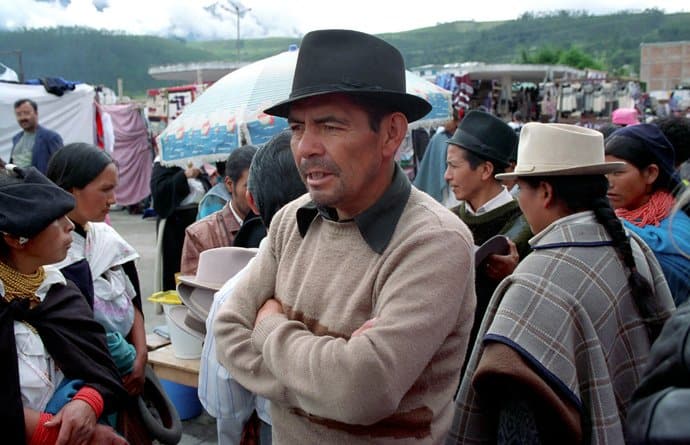
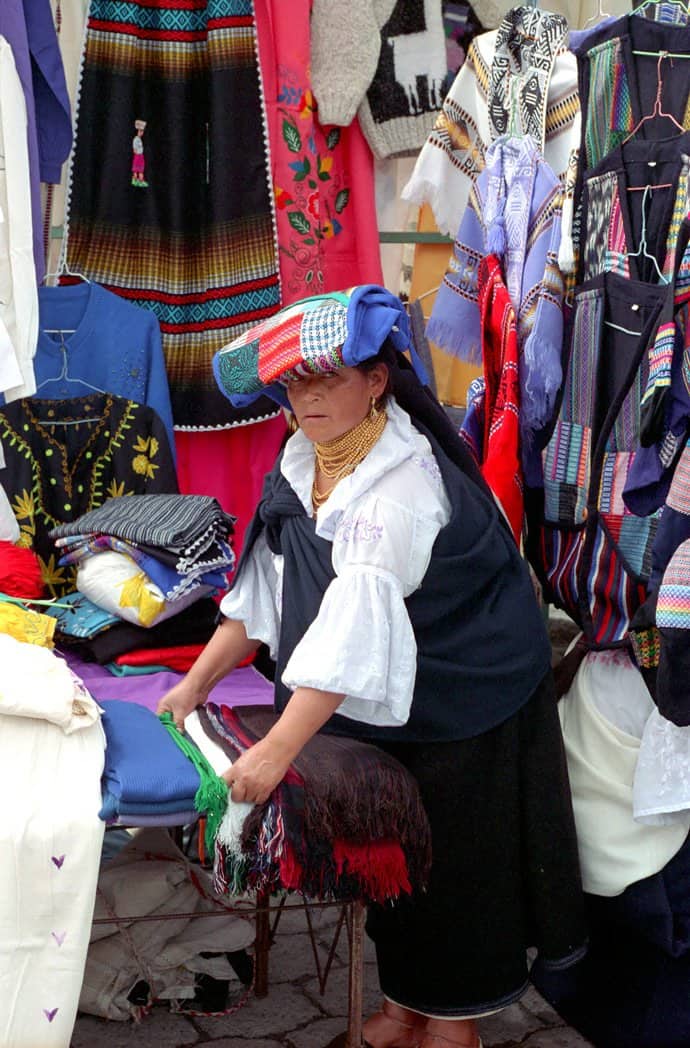
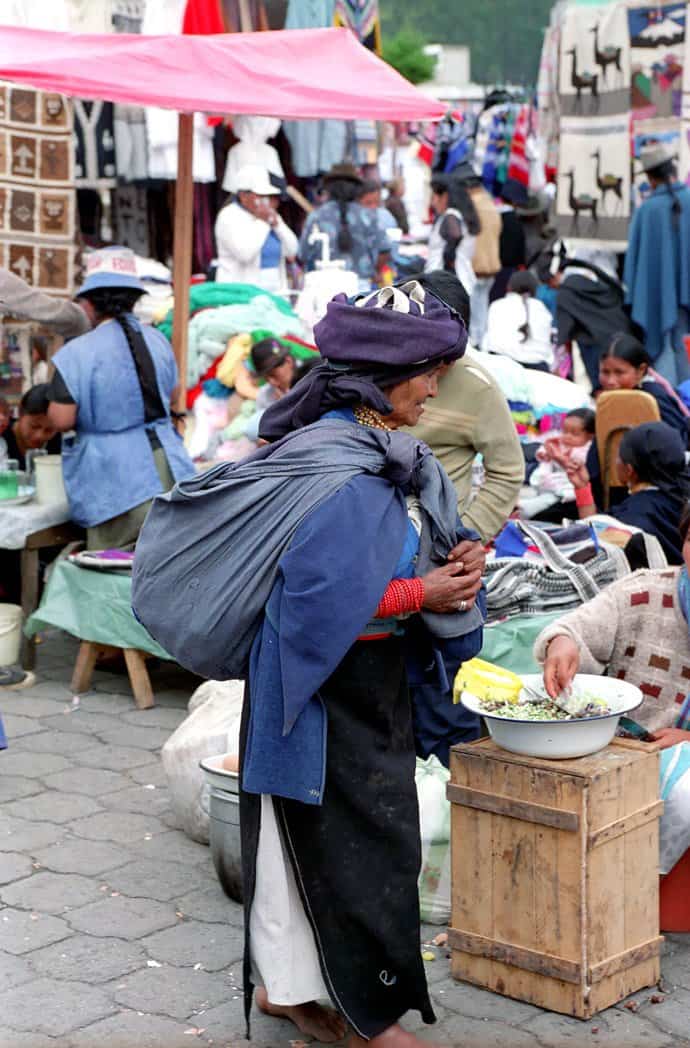
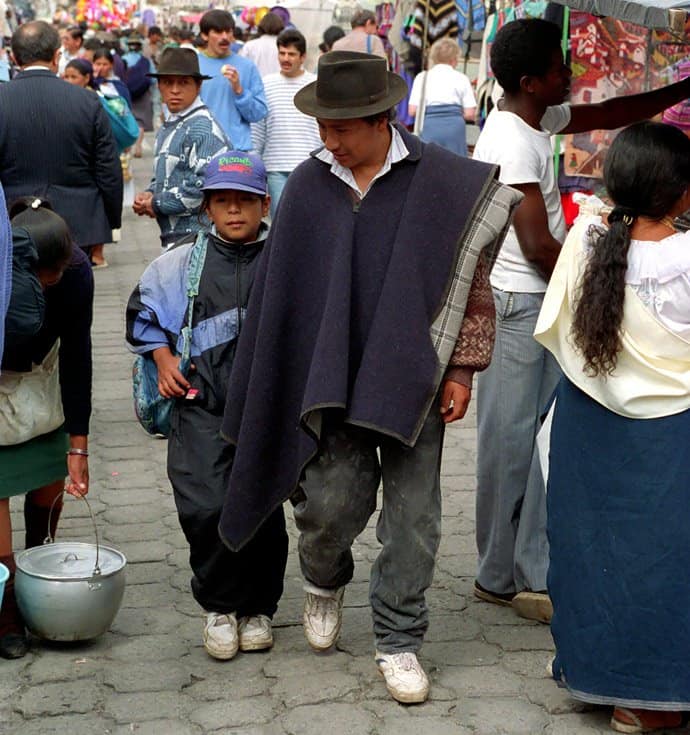
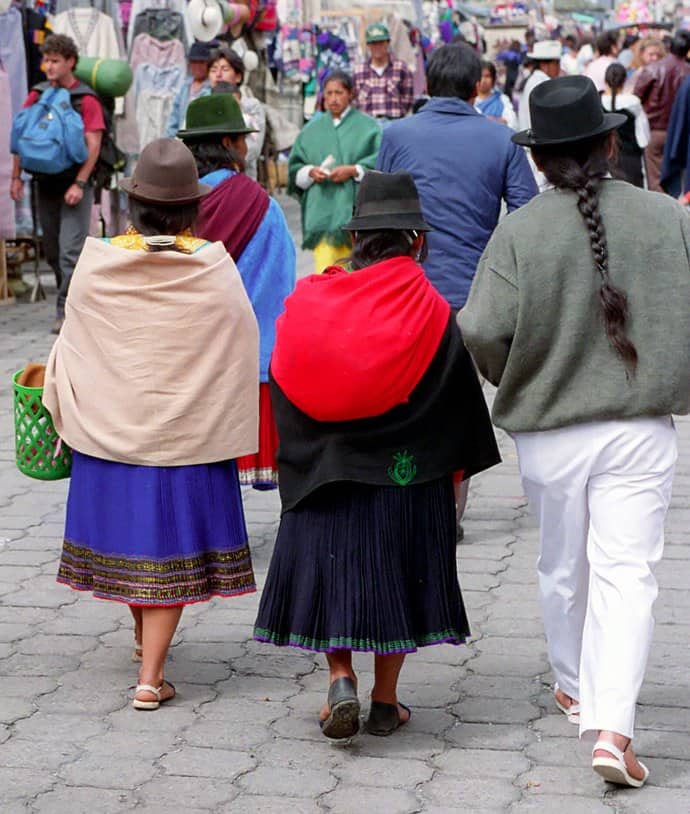
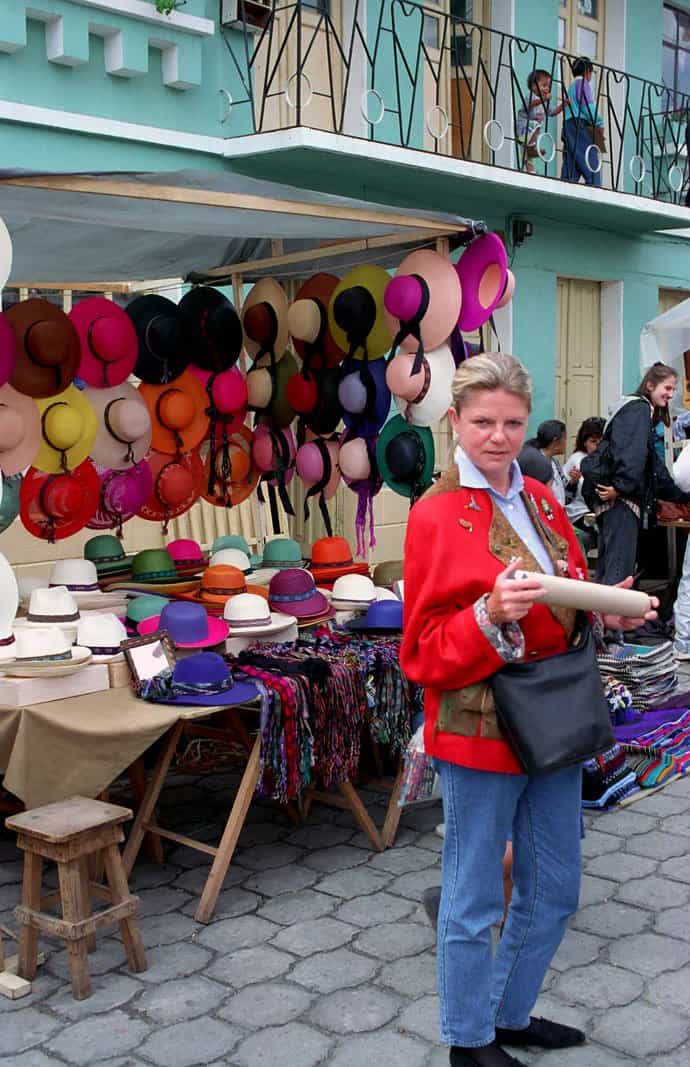
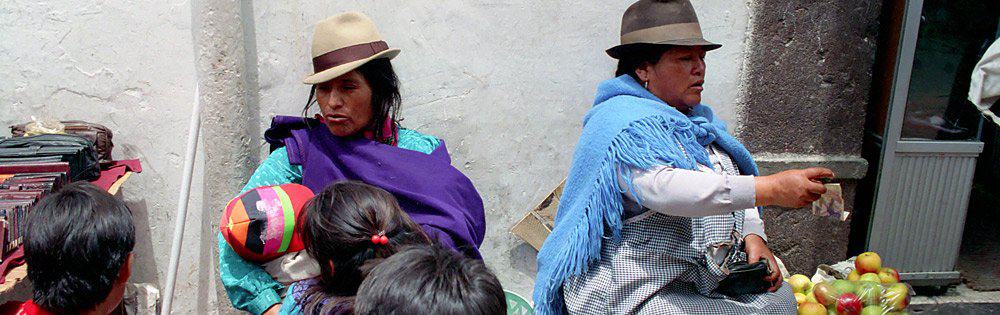
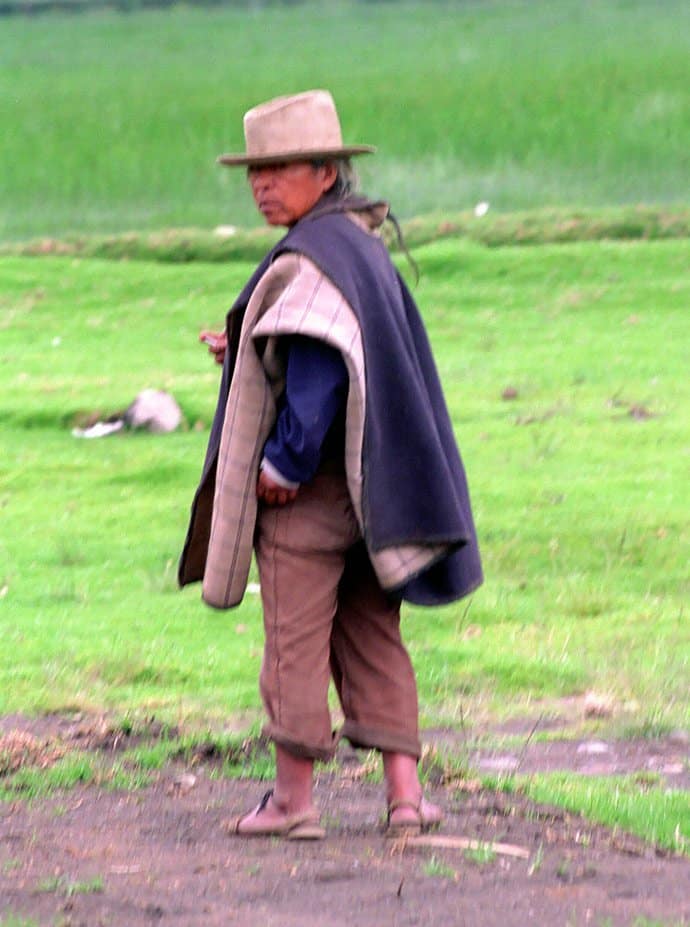
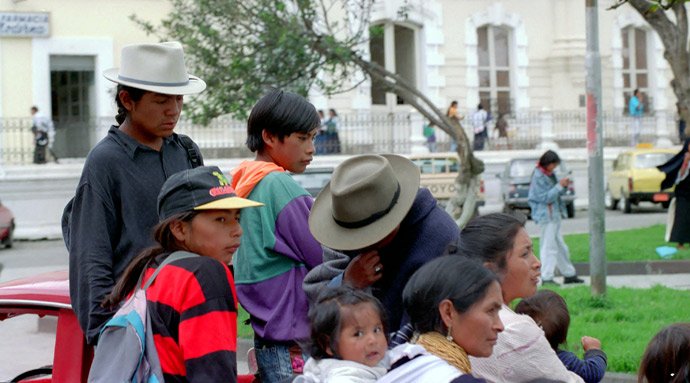
We were in the highlands of Ecuador with the camera to capture some impressions of the Indians living there. On this page we have documented some typical everyday scenes. The men usually wear dark blue double-sided ponchos, white trousers and a black hat with a shoulder-length braid of hair peeking out from underneath.

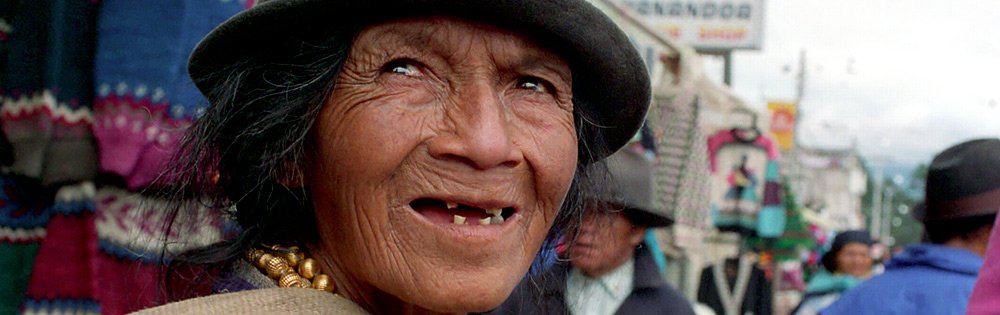
Worn by both sexes, the lace-up sandals are made from the Cabuya cactus. Elegant gringas appreciate the soft kicks especially in combination with long wide skirts. The middle picture shows: father and son…… or brothers?…..sometimes it’s hard to see. The faces of the people are unmistakably marked by the often hard everyday work.
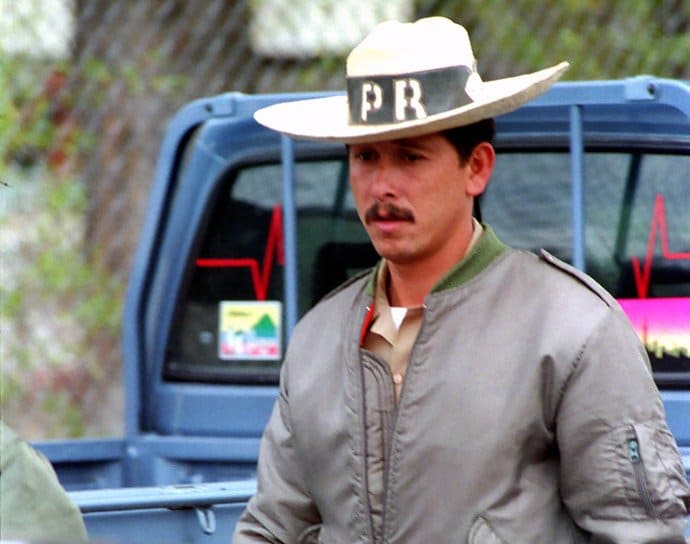
Ecuador – Market scene with gaucho

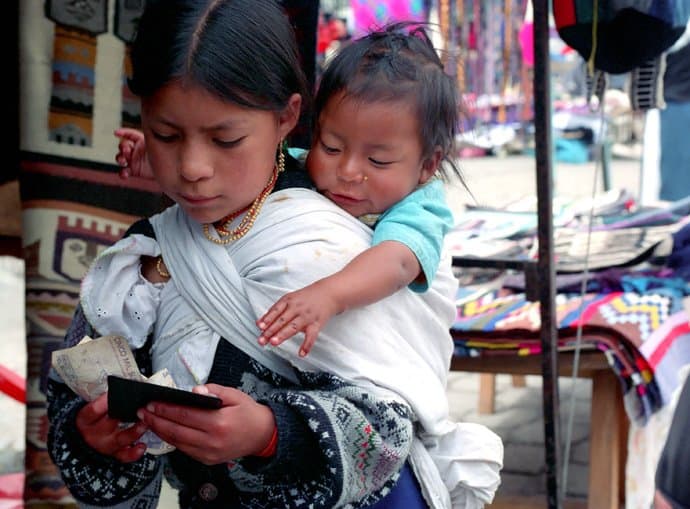
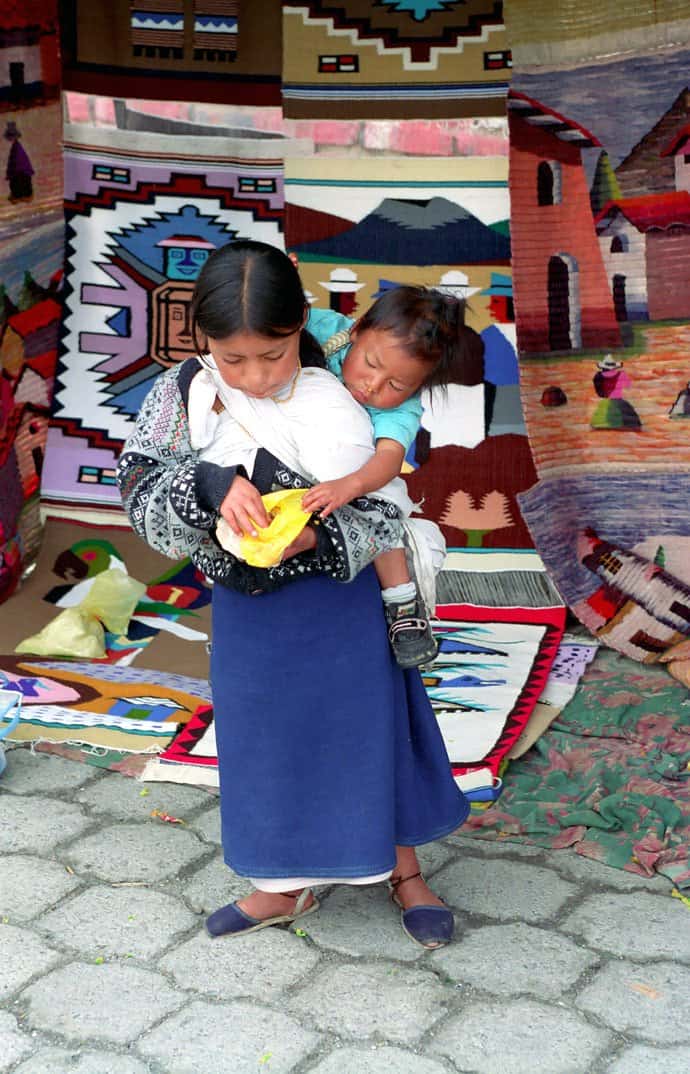
A young girl takes care of her sister…..? or is it mother with child? Here the boundaries of knowledge become blurred. In any case, she has just settled her business and receives the negotiated price for the goods. However, she does not seem to be completely satisfied with the trade.

The dark side of life……… or just a short nap at lunchtime? The impressions are so diverse…….you could take thousands of photos…… and always finds a new motif….

Pictures Ecuador – People

Ecuador - People
Ecuador - People
Ecuador - People
Ecuador - People
Ecuador - People
Ecuador - People
Ecuador - People
Ecuador - People
Ecuador - Markets
Ecuador - Markets
Ecuador - Markets
Ecuador - Markets
Ecuador - Markets
Ecuador - Markets
Ecuador - Markets
Ecuador - Markets
Ecuador - Markets
Ecuador - Markets
Ecuador - Markets
Ecuador - Markets
Ecuador - Markets
Ecuador - Markets
Ecuador - Quito
Ecuador - Quito
Ecuador - Quito
Ecuador - Quito
Ecuador Highlands
Ecuador - Highlands

Questions about the destination Galapagos

In the South America forum you will get the answers!

24. August 2017 0 comments
0 FacebookTwitterPinterestEmail
Ecuador - Markets
Ecuador

Ecuador – Markets III

by Joe OnTour 24. August 2017
written by Joe OnTour

Ecuador – Markets – Travelogue 3

One of the best ways to get to know Indian cultural customs is to visit one of the many markets, which are often only a few hours’ drive or a day trip away from the capital Quito.

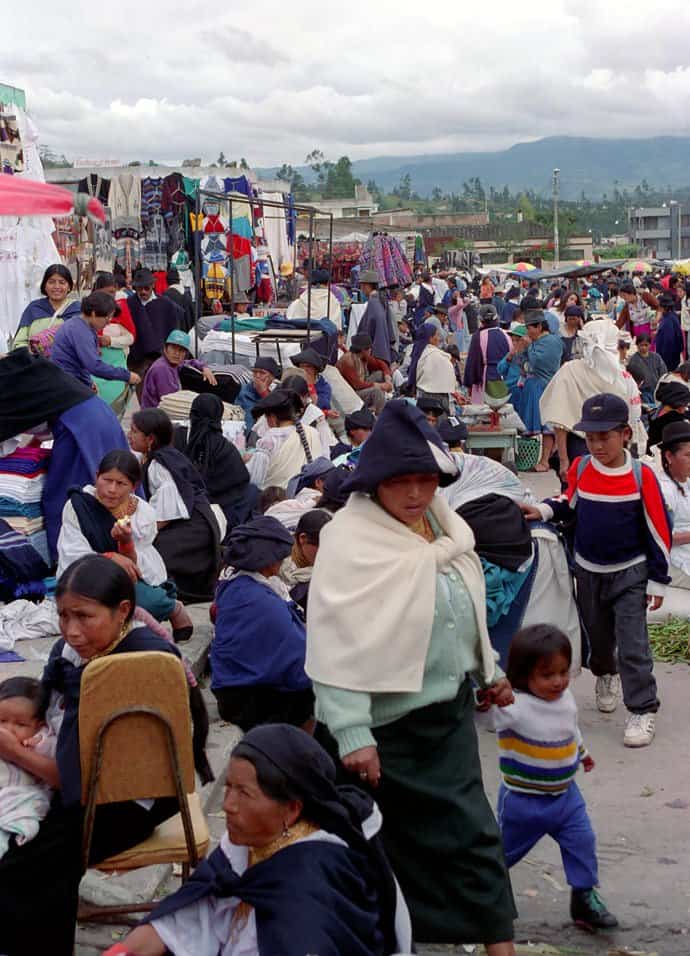
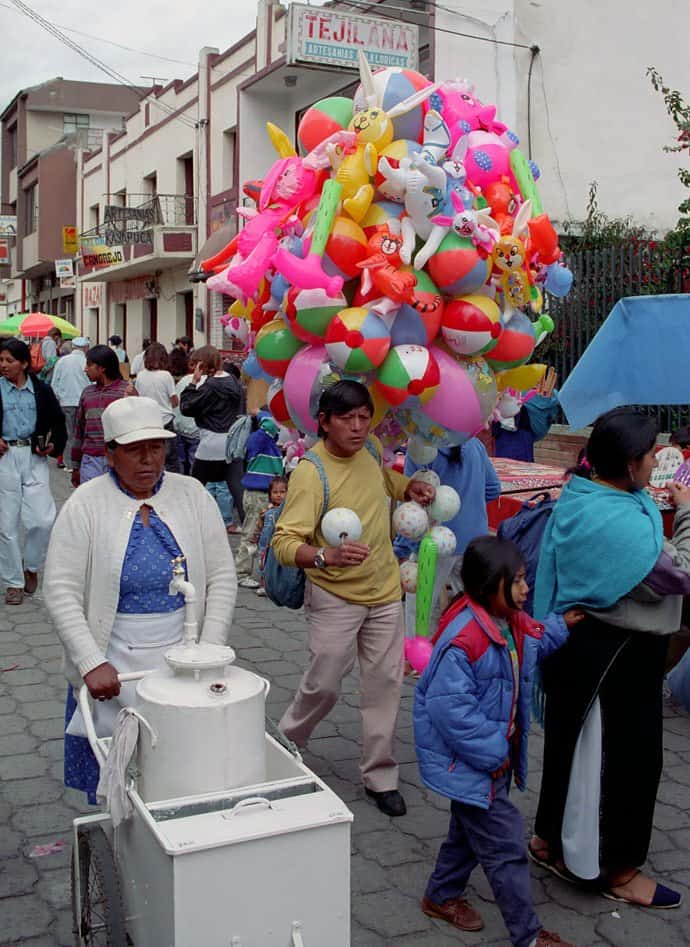
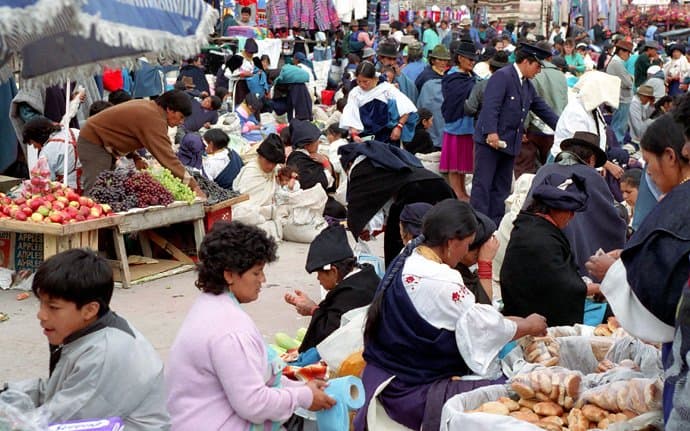
There is a colourful hustle and bustle at the markets. The stalls offer such a variety of products and goods that it is easy to lose track. Here we have an excellent opportunity to study the customs and traditions of the country and its inhabitants. In the pictures below you can admire a typical market scene, in which entire clans act at the stalls.

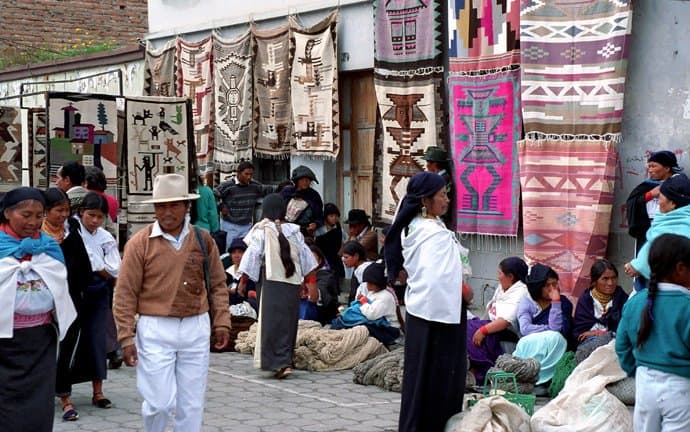
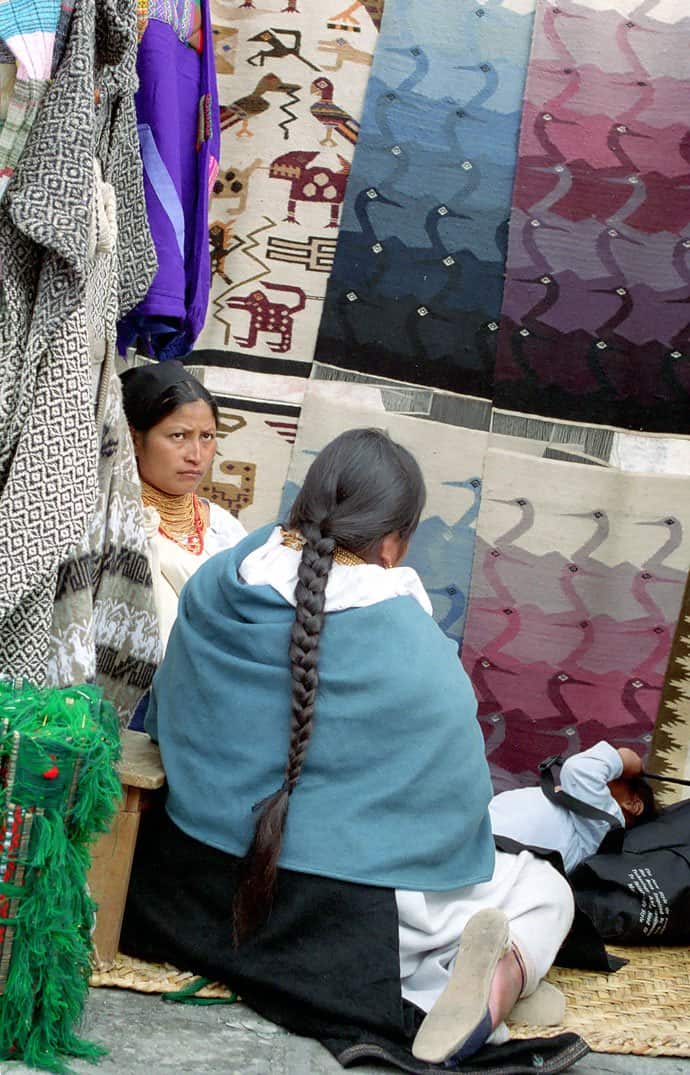
Everywhere you can admire the Indians in their colorful traditional costumes. The men often wear a layered braid under the black hats. In the picture below right, the Indian is wearing the country’s typical poncho. In the middle of the picture is a resident of the highlands, who sells her colorful carpets at the market.

The goods or purchases are transported on the back in a linen bag/cloth. The young siblings are currently calculating whether the sale of the tapestry was a good deal. The offer is colourful and varied.

Pictures Ecuador – Markets – Travelogue 3

Ecuador - Markets
Ecuador - People
Ecuador - People
Ecuador - People
Ecuador - People
Ecuador - People
Ecuador - People
Ecuador - People
Ecuador - People
Ecuador - Markets
Ecuador - Markets
Ecuador - Markets
Ecuador - Markets
Ecuador - Markets
Ecuador - Markets
Ecuador - Markets
Ecuador - Markets
Ecuador - Markets

Questions about the destination Galapagos

In the South America forum you will get the answers!

24. August 2017 0 comments
0 FacebookTwitterPinterestEmail
Ecuador - Markets
Ecuador

Ecuador – Markets II

by Joe OnTour 24. August 2017
written by Joe OnTour

Ecuador – Markets – Travelogue 2

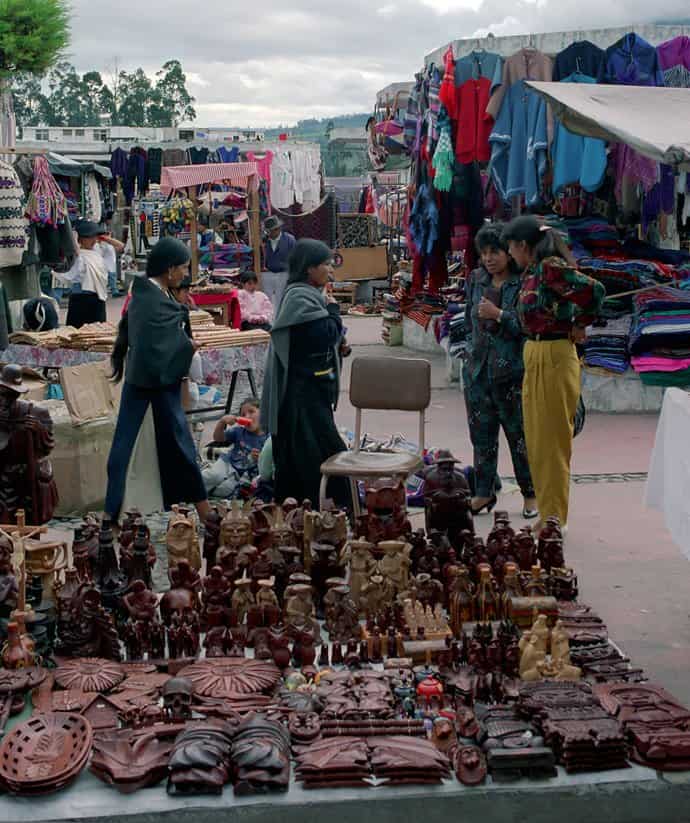
Otavalo visitors usually come to experience the famous and economically most important Indian market in South America. On Saturdays, and to a lesser extent also on Wednesdays, the otherwise extinct city center is transformed into a huge, yet relatively manageable market zone. The central point of the colorful sales activity is the Plaza de los Ponchos.

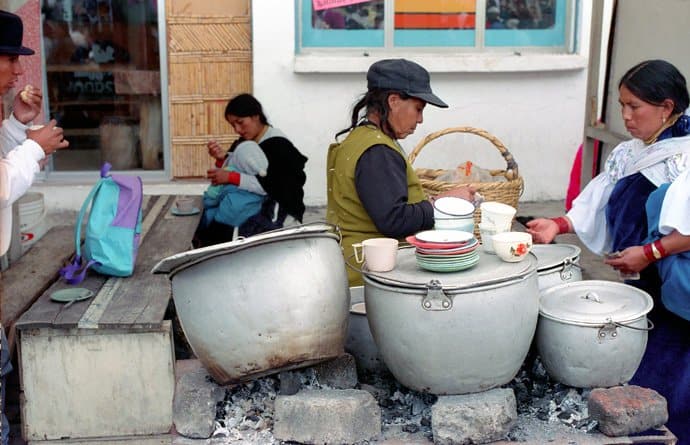
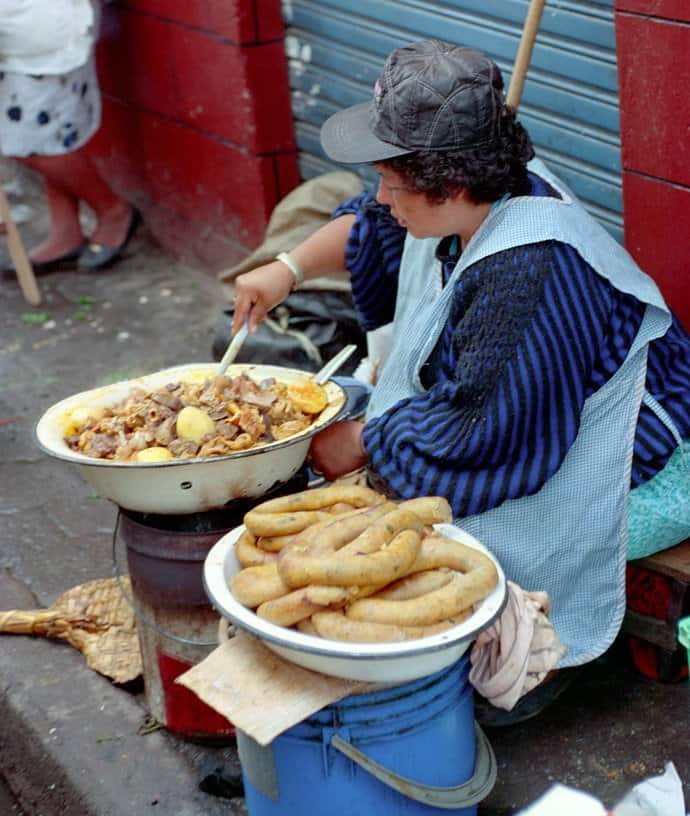
The Otavalo Indians, who are tradition-conscious in their traditional costumes, are industrious members of a cultural society based on a total of 75 independent communities. They are considered wealthy and respected. Traditional weaving art, which was combined with appropriate commercialization, allows the inhabitants of Otavalo to occupy a special position within Ecuador today. However, the modest prosperity did not lead to a neglect of Indian identity. Again and again we find food stalls, as they are typical for the highlands of Ecuador. Large pots are placed on two or three stones. A lively fire is lit underneath. Then the ingredients are cooked in the cooking pots and then immediately sold from the street to the hungry guests.

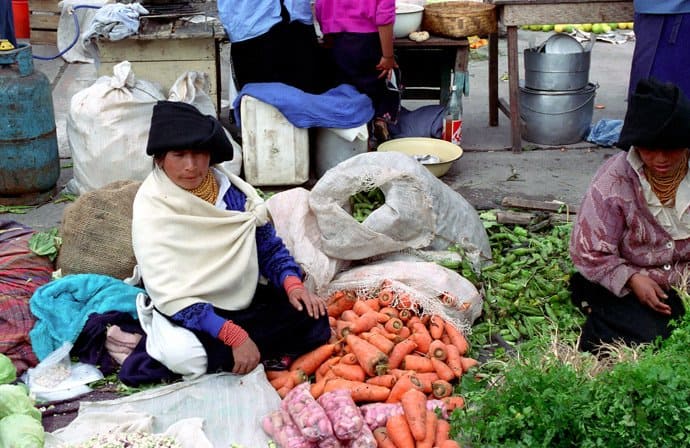
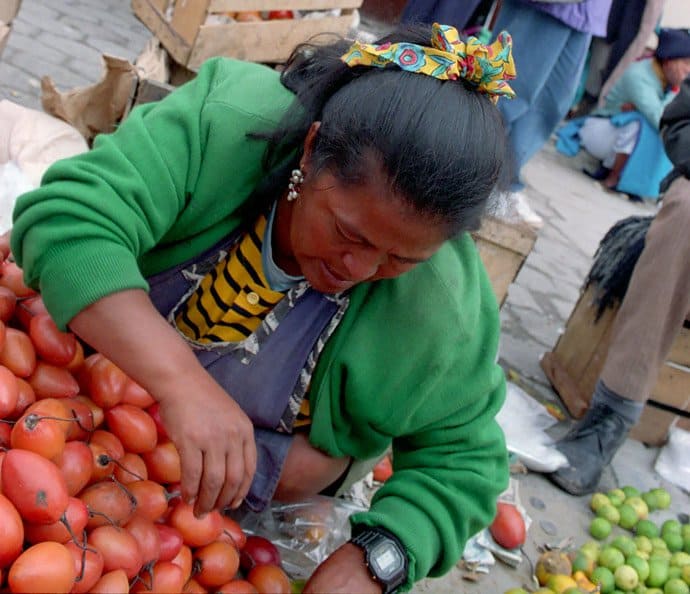
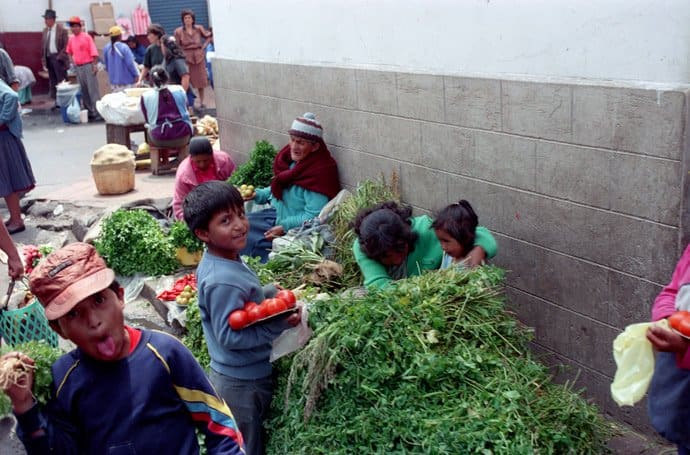
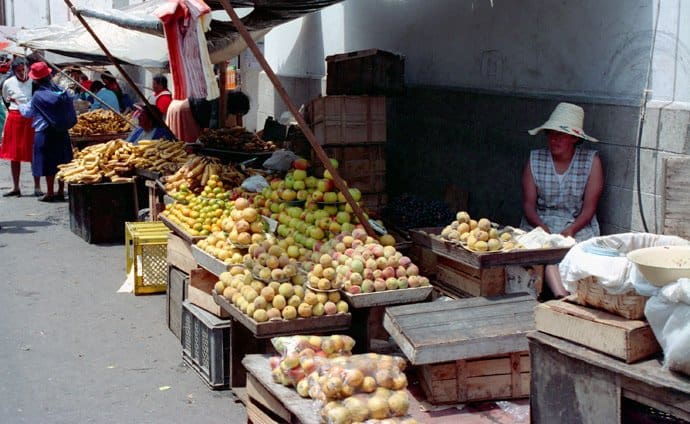
The harvested fruit and vegetables are decorated on a tarpaulin directly onto the street. Some good pictures can only be taken handheld in passing…..

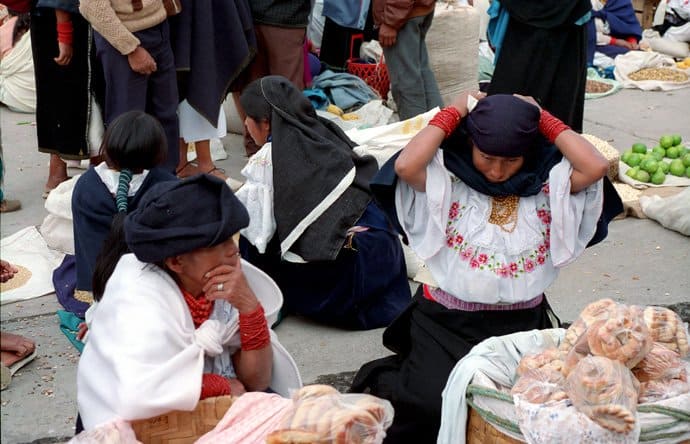
South America – Ecuador – Women sit on the floor and offer their goods at the market
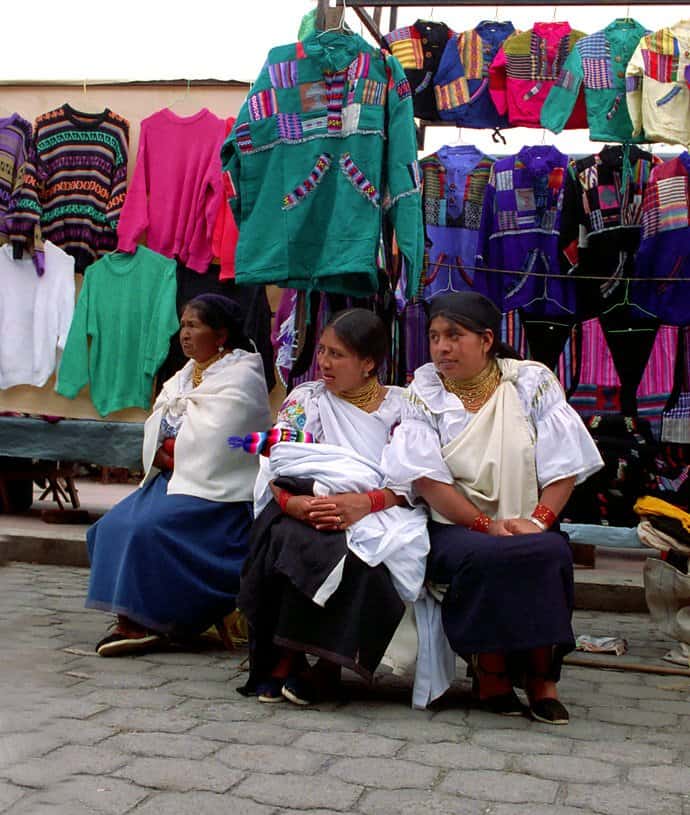
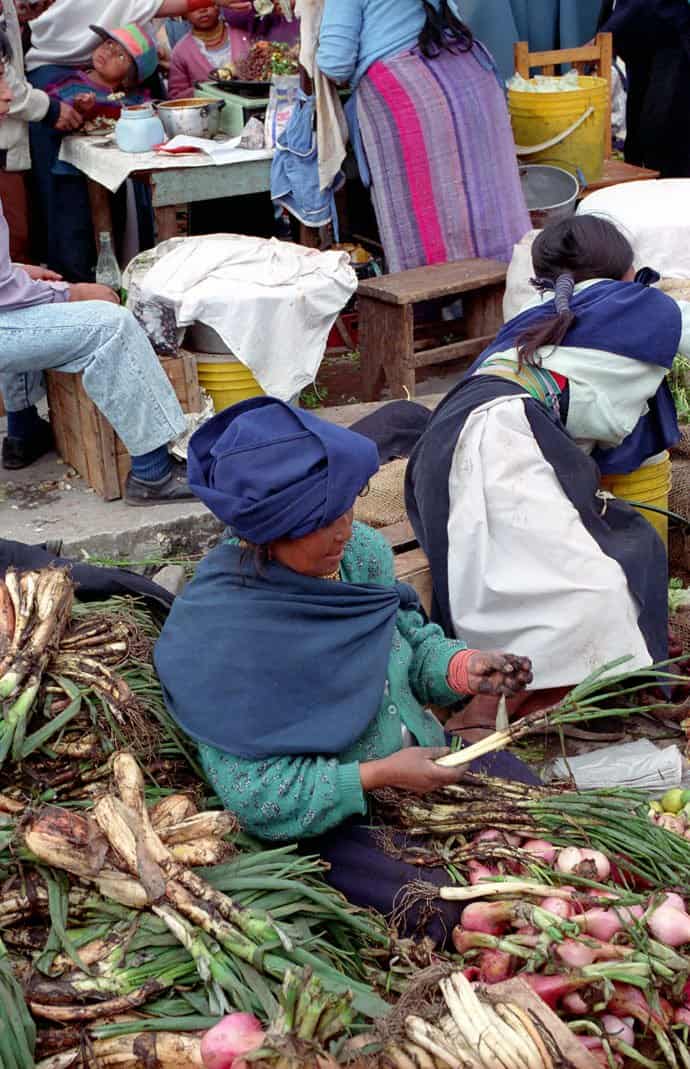
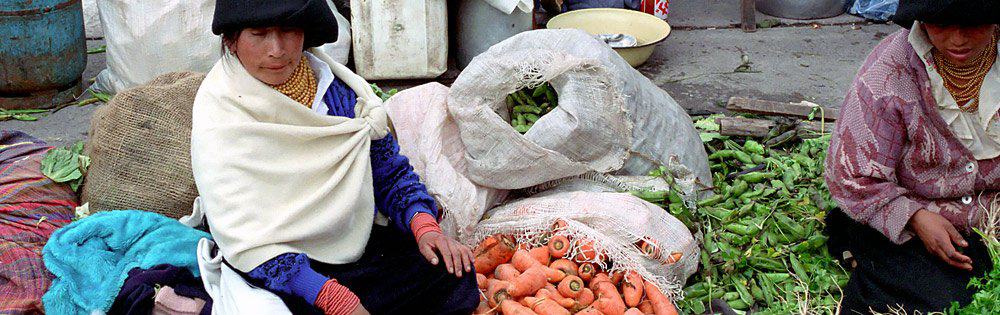
The impressions are breathtaking, as are the various smells from the products on offer. The clothing of the inhabitants corresponds to their very own customs. The women of Otavalo wear long black skirts and white colorfully embroidered blouses. Many have several gold-shimmering glass bead necklaces around their necks and red coral ribbons around their wrists. Others don’t wear shoes to stay in touch with Pacha Mama – “Mother Earth”. Almost all women have long wide scarves thrown over their shoulders.

Some particularly beautiful souvenirs for those who stayed at home can also be purchased by tourists. Passionate photographers will also get their money’s worth in the swarm of people and material. You can find people in Indian costumes, fruit stands, bundles of wool, market criers, sacks of potatoes and vegetables, pigs ready for transport, agile porters. Special attention should be paid to the nimble pickpockets.

Mainly inexpensive woven articles of all kinds, but also other textile articles are offered for sale. Bargaining is common and fun. However, the quality of the goods on display is often not of high quality. Mass production is the order of the day in Otavalo these days, although the same thing is almost always offered everywhere.

Pictures Ecuador – Markets

Ecuador - Markets
Ecuador - Markets
Ecuador - Markets
Ecuador - Markets
Ecuador - Markets
Ecuador - Markets
Ecuador - Markets
Ecuador - Markets
Ecuador - Markets
Ecuador - Markets
Ecuador - Markets

Questions about the destination Galapagos

In the South America forum you will get the answers!

24. August 2017 0 comments
0 FacebookTwitterPinterestEmail
Ecuador - Markets
Ecuador

Ecuador – Markets I

by Joe OnTour 24. August 2017
written by Joe OnTour

Ecuador – Markets – Travelogue 1

The colourful Indian market is one of the many tourist attractions in the highlands of the Andes. The traditional Indian markets in the Sierra reflect old traditions and lifestyles that have their place in a consistently multicultural society like the Ecuadorian one.

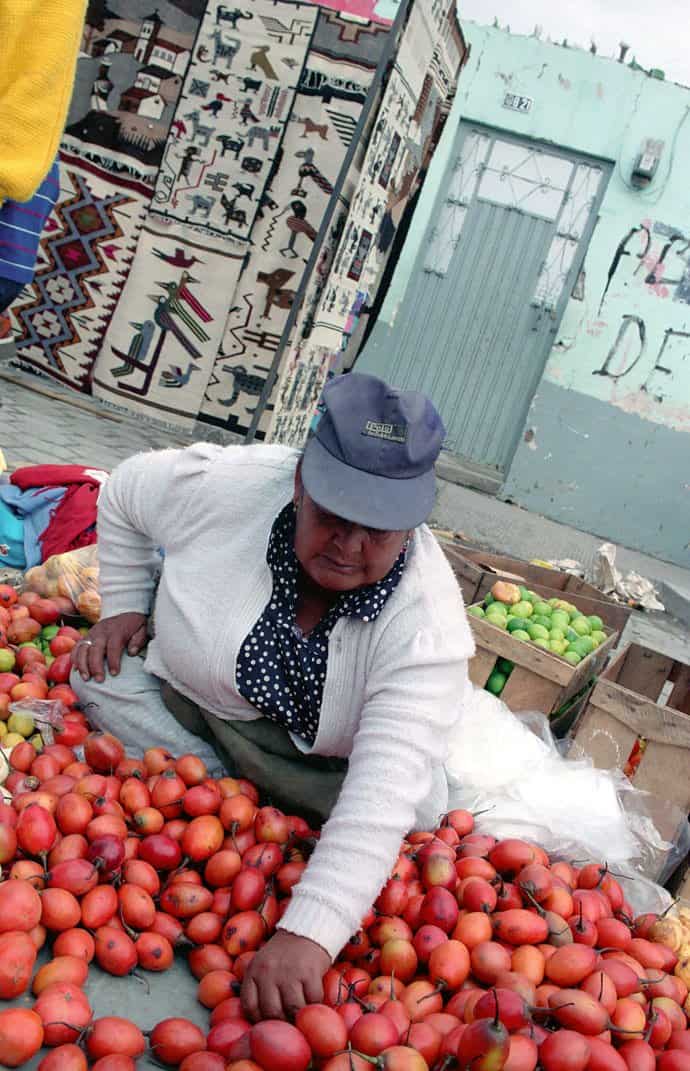
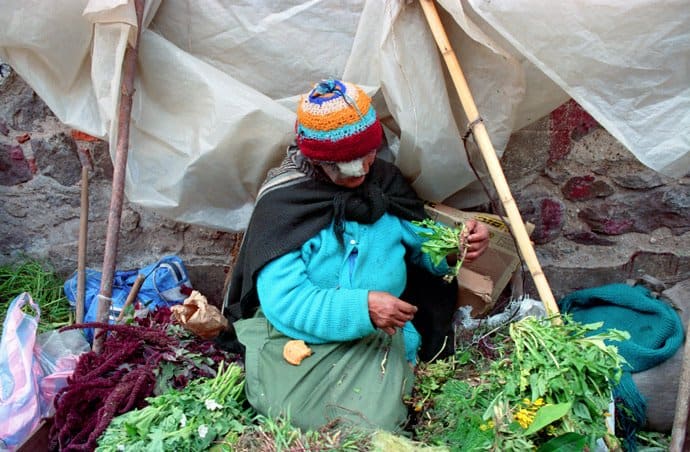
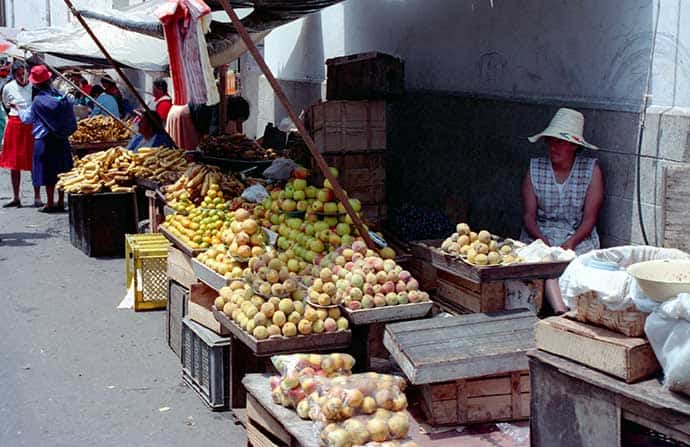
At a day market in the highlands we find the typical vegetable stews. On a house wall we see a market woman under her provisionally assembled tarpaulins, which are supposed to protect against the sun, but also against the occasional heavy downpours. In many places of the market, simple local specialties are offered for lunch.

On a house wall we see a market woman under her provisionally assembled tarpaulins, which are supposed to protect against the sun, but also against the occasional heavy downpours

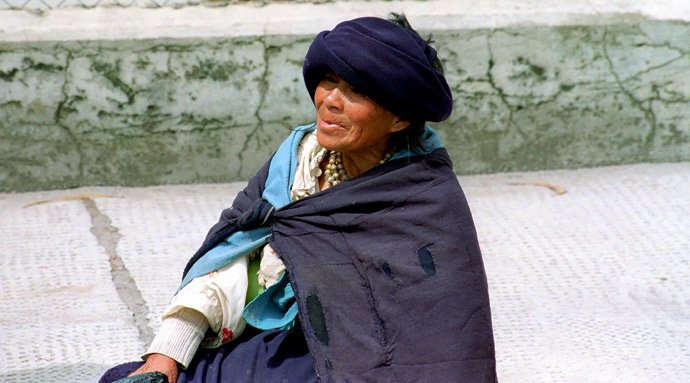
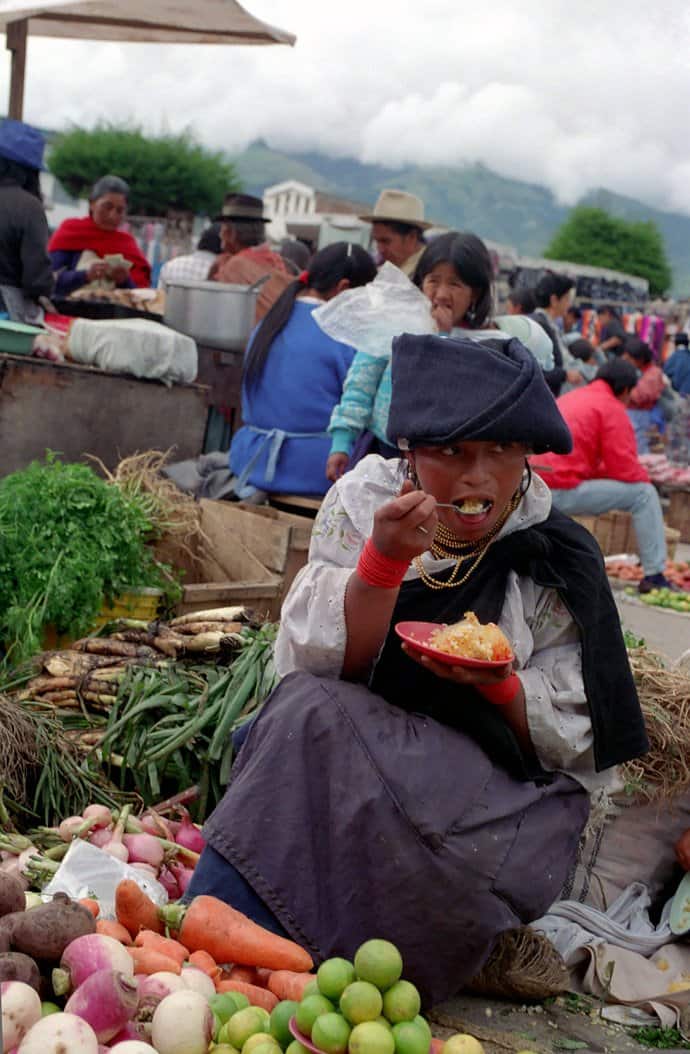
It is not uncommon for the entire family to be involved in the marketing of their own products. The original costumes are worn by the tradition-conscious women. The older women are often seen in their traditional headgear. They sit on the bare floor and advertise their goods skilfully and not too loudly.

For the European eye, the market is often impenetrable and difficult to oversee. Something different is offered on every corner. A vegetable seller sits in the middle of her products.

Pictures Ecuador – Markets

Ecuador - Markets
Ecuador - Markets
Ecuador - Markets
Ecuador - Markets
Ecuador - Markets
Ecuador - Markets
Ecuador - Markets
Ecuador - Markets
Ecuador - Markets
Ecuador - Markets
ecuador maerkte 001
Ecuador - Quito
Ecuador - Quito

Questions about the destination Galapagos

In the South America forum you will get the answers!

24. August 2017 0 comments
0 FacebookTwitterPinterestEmail
Ecuador - Hacienda - Impressions
Ecuador

Ecuador – Hacienda II

by Joe OnTour 24. August 2017
written by Joe OnTour

Ecuador – Hacienda – Impressions

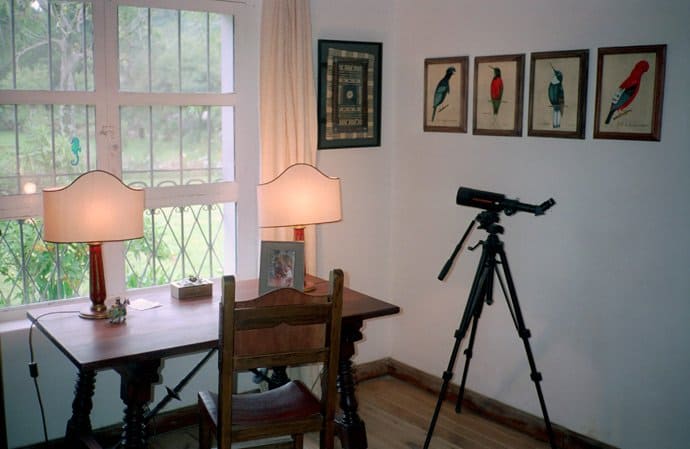
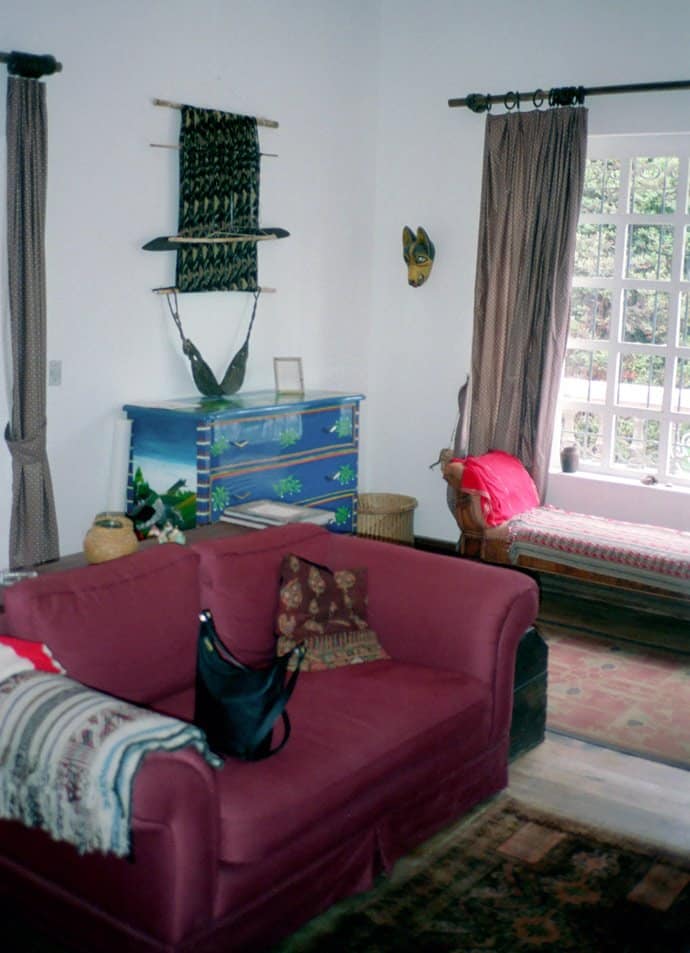
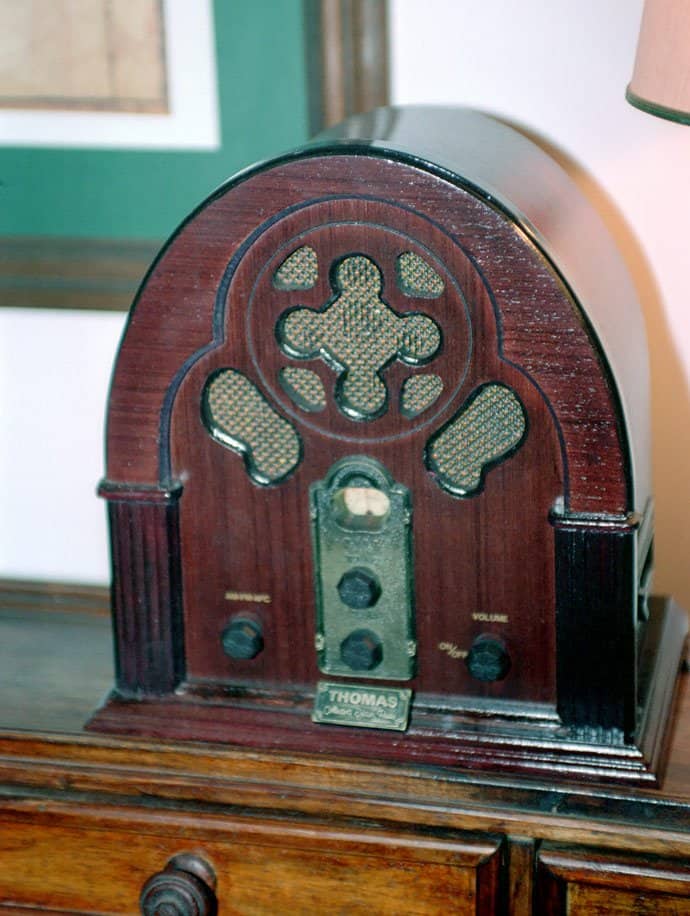
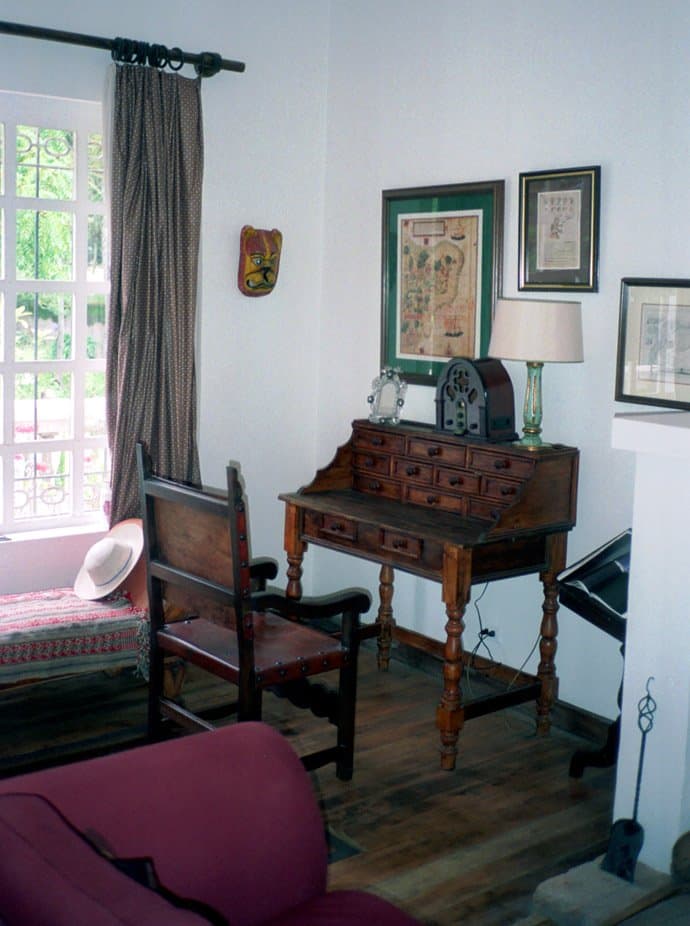
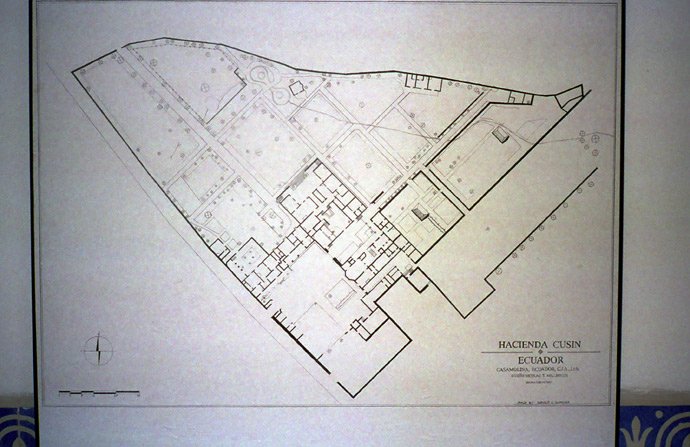
The hacienda is equipped with many old collectibles in the rooms. You feel like you’ve been transported back in time to the 19th century. The floor plan of the hacienda shows the dimensions of the large building.

Many individual pieces have apparently been lovingly collected. Next to the fireplace is an old secretary. On it stands a radio from the early days of radio.

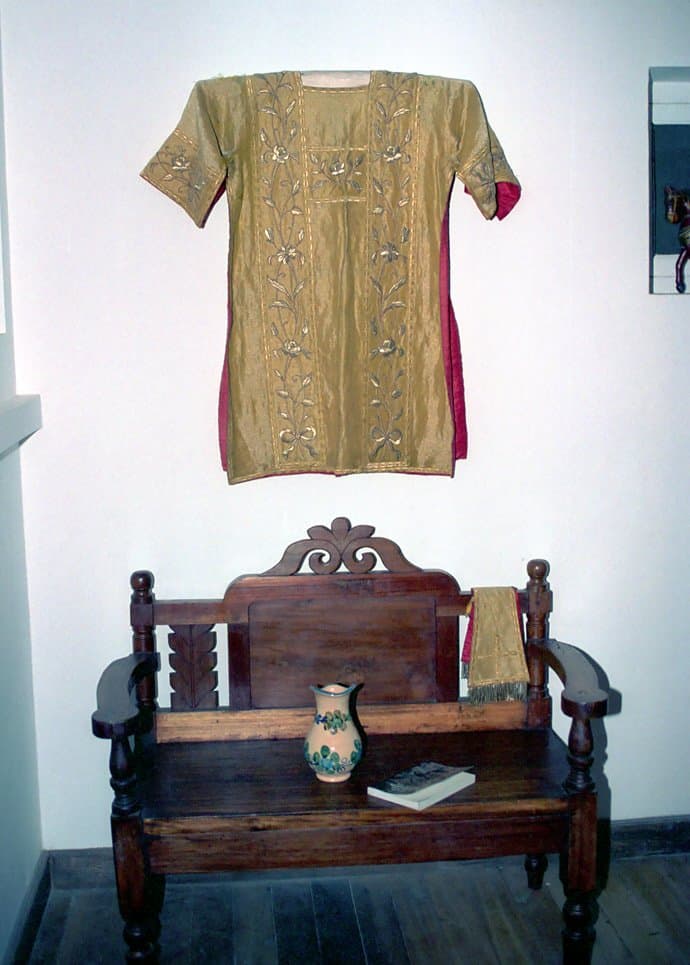
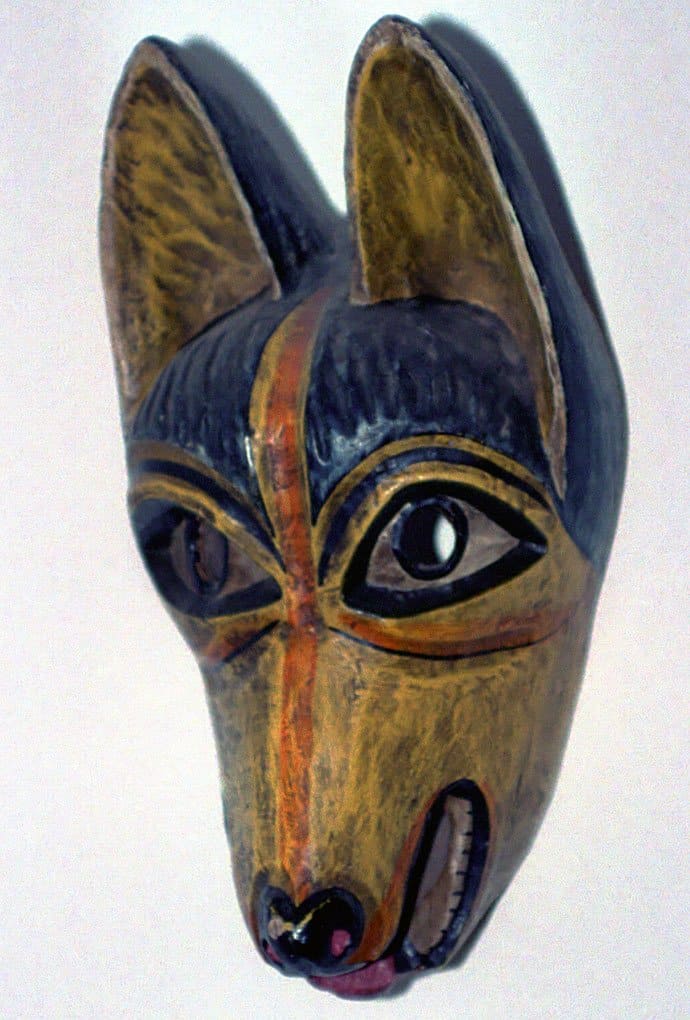
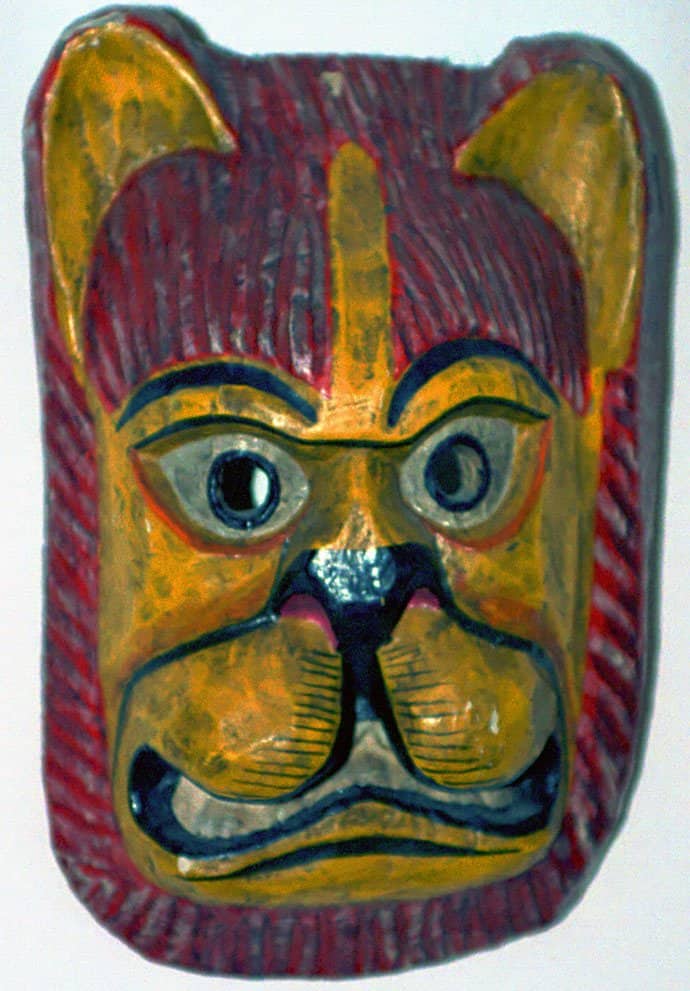
On the walls we admire old masks typical of the country with different symbolic statements. On the wall hangs a typical Ecuadorian festive dress as decoration.

Pictures Ecuador – Hacienda – Impressions

Ecuador - Hacienda - Impressions

Questions about the destination Galapagos

In the South America forum you will get the answers!

24. August 2017 0 comments
0 FacebookTwitterPinterestEmail
Ecuador - Hacienda
Ecuador

Ecuador – Hacienda

by Joe OnTour 24. August 2017
written by Joe OnTour

Ecuador – Hacienda

In the Andean highlands there are still many colonial and historic manors from the 18th and 19th centuries. Some of these have been converted into stately hacienda hotels (hosterías) or luxuriously furnished ranchos. Some of these haciendas used to have thousands of hectares of land, which over time was divided among the heirs of the large landowner as well as the Indian communities in the surrounding area.

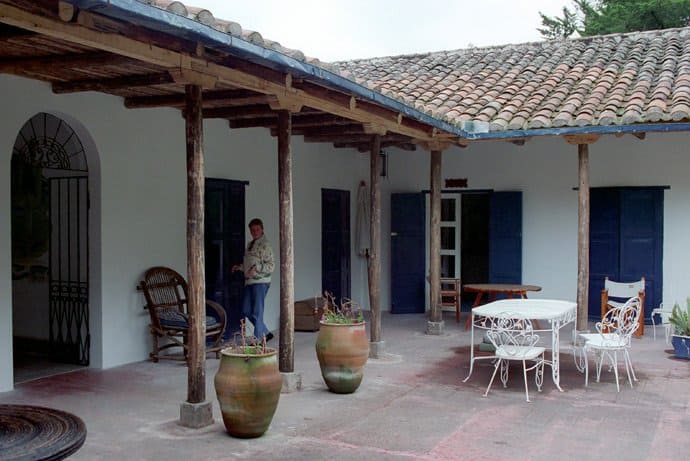
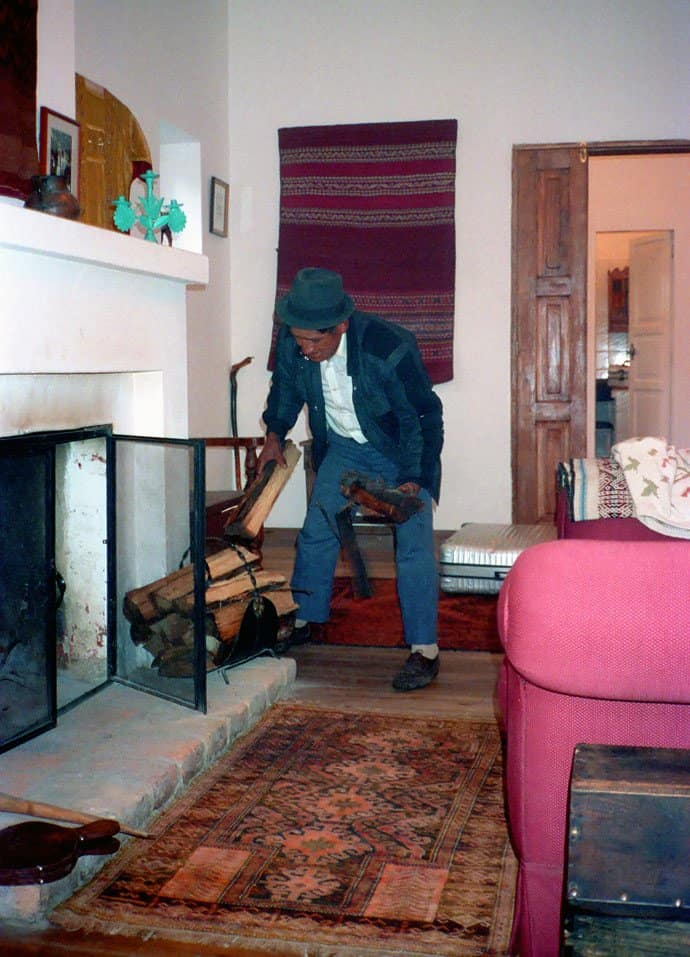
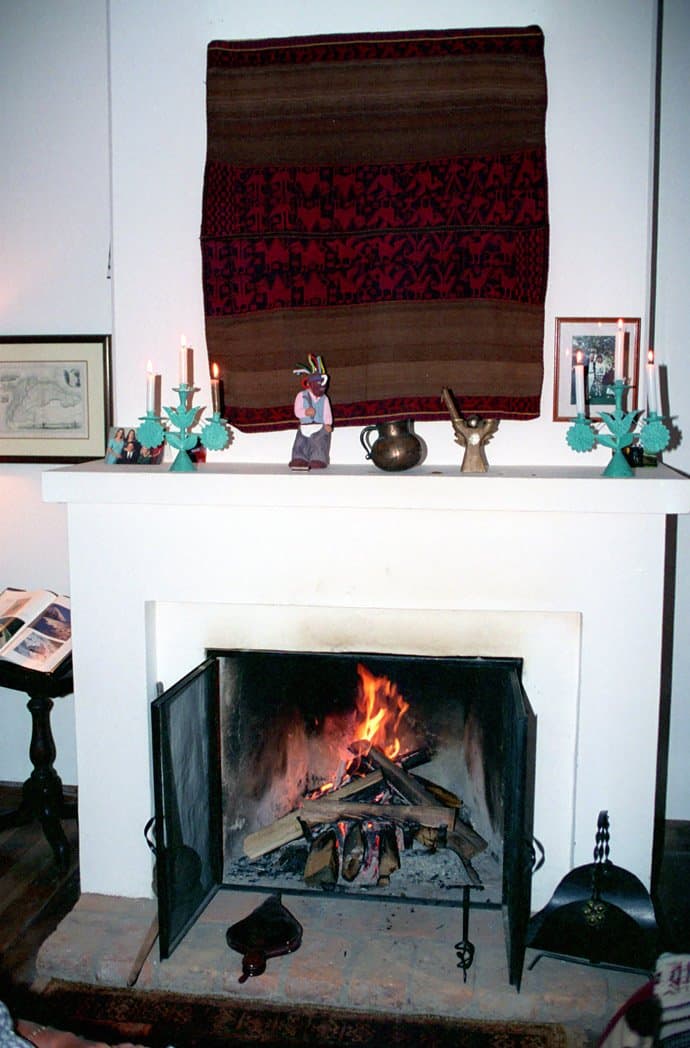
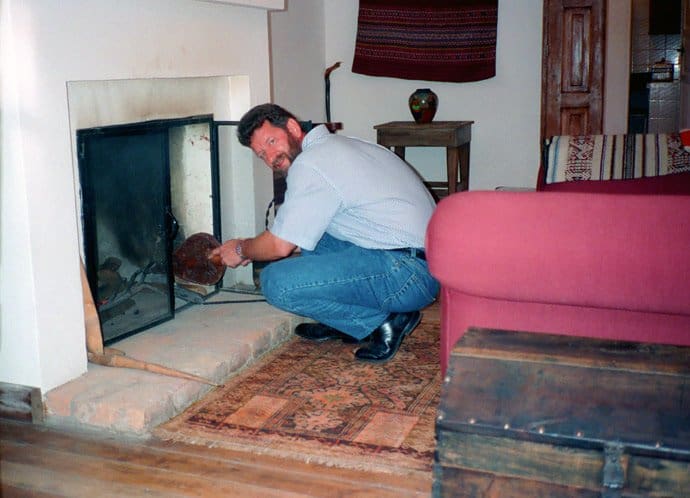
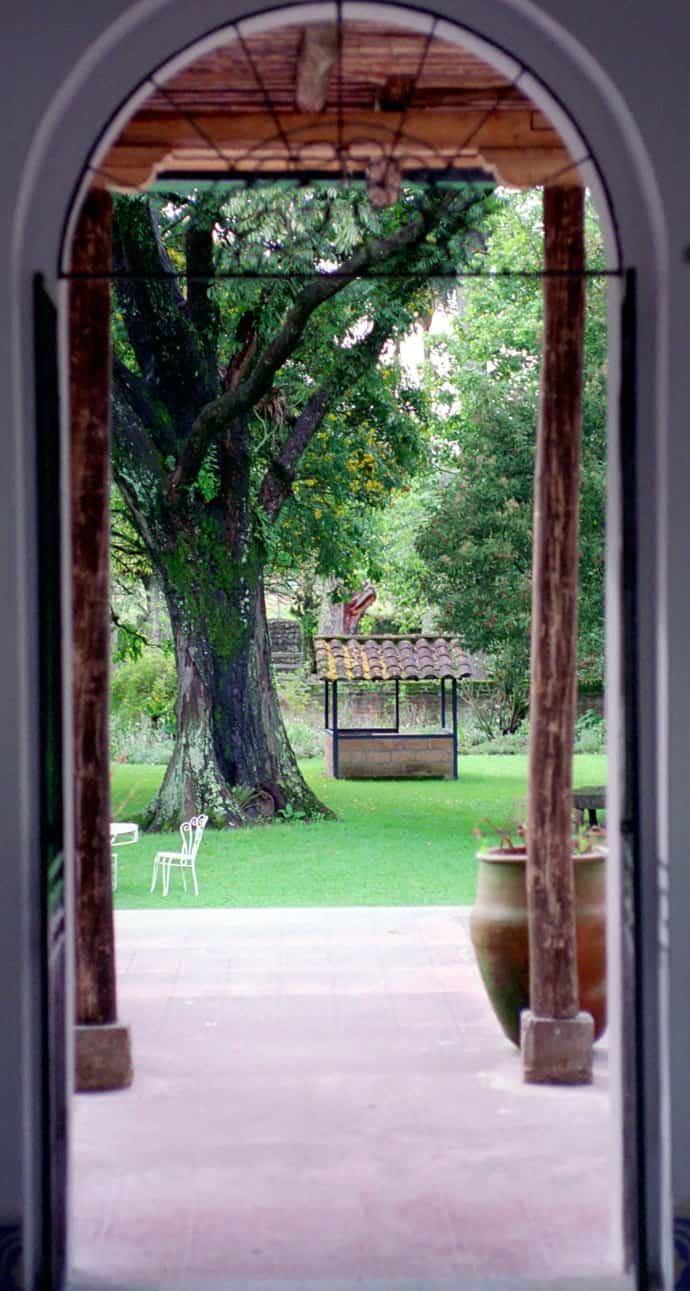
We spend the night in one of these farms on our tour through the highlands of Ecuador. Our accommodation consists of a living room with a separate sleeping wing. The living room is equipped with an open fireplace, as it can get very cold at night in the highlands. The administrator first provides us with plenty of wood for the evening and night. So a small fire is lit before dinner, so that it is all the more cozy afterwards.

After the exhausting day’s drive through the highlands, we now treat ourselves to some rest. The hacienda is decorated with old (antique?) furniture and accessories. On the Hacienda Impressions page, we show some of these interesting items.

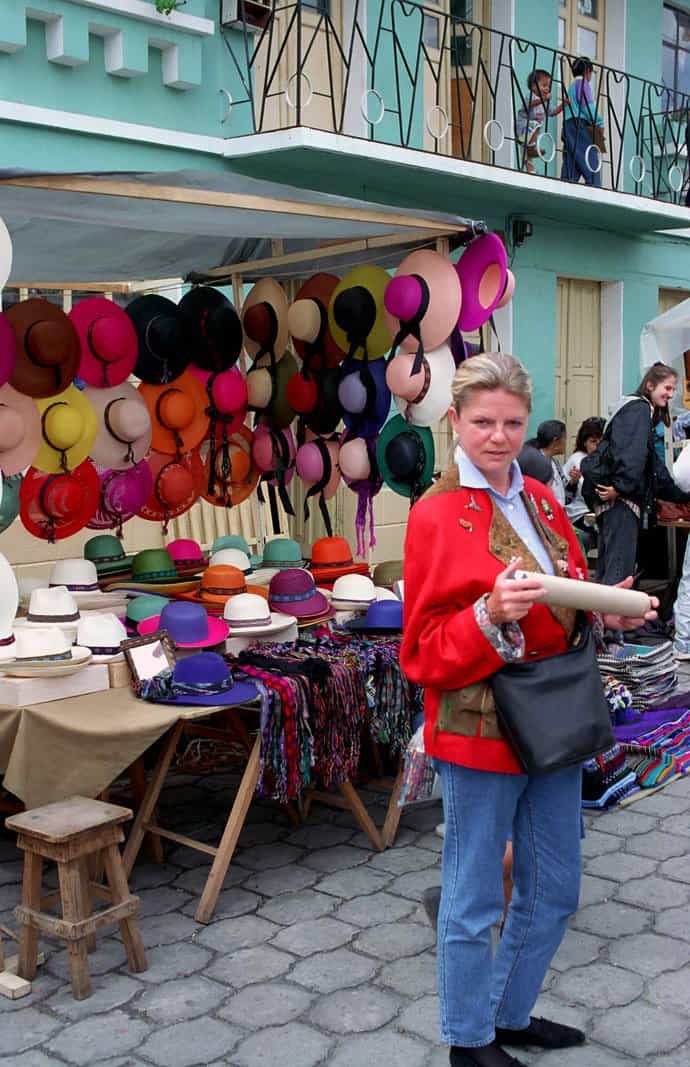
Jürgen has bought a typical hat at the market, which he wants to try out tomorrow. On the terrace we enjoy the last rays of sunshine of the day. The hacienda is surrounded by a heavenly tranquility as it is a bit off the beaten track.

Photos Ecuador – Hacienda

Ecuador - Hacienda - Impressions
Ecuador - Hacienda
Ecuador - Hacienda
Ecuador - Hacienda
Ecuador - Hacienda
Ecuador - Hacienda
Ecuador - Hacienda
Ecuador - Hacienda
Ecuador - Hacienda
Ecuador - Hacienda
Ecuador - Hacienda
Ecuador - Hacienda

Questions about the destination Galapagos

In the South America forum you will get the answers!

24. August 2017 0 comments
0 FacebookTwitterPinterestEmail
Ecuador - Highlands
Ecuador

Ecuador – Highlands II

by Joe OnTour 24. August 2017
written by Joe OnTour

Ecuador – Highlands – Travelogue 2

The highland crops are far from the oldest. However, because of their geographical location in the Andean highlands and their good accessibility, they are the best known and most visited. Many of these communities share their habitat with other Ecuadorian cultures. Despite all external influences, they hold on to their cultural traditions and traditions in clothing, language and festivals.

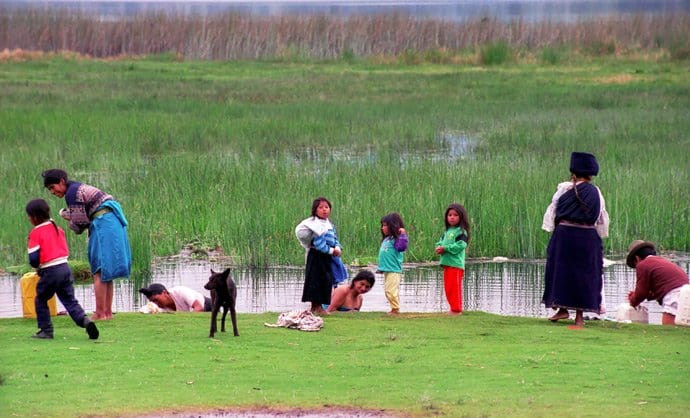
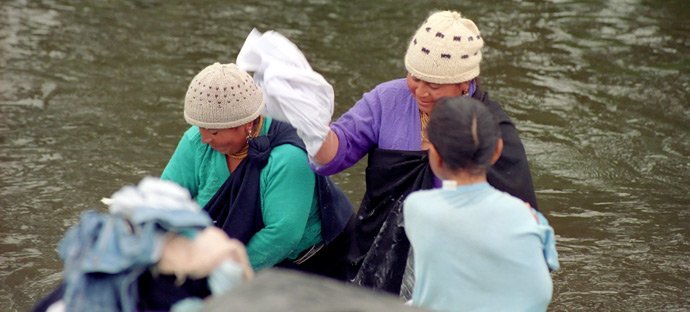
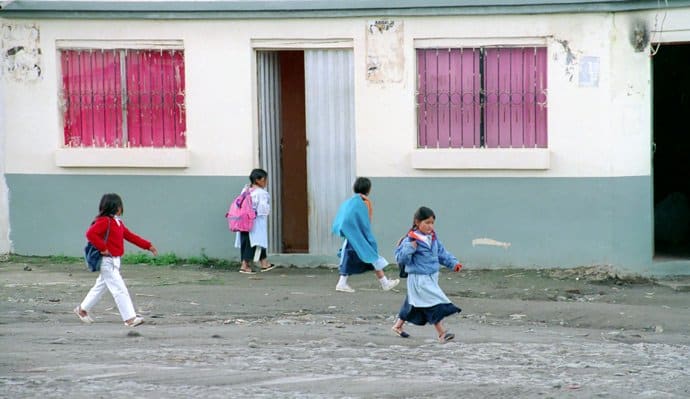
Only 100 km north of Quito you will find the Indian Market of Otavalo, a must for every visitor to Ecuador. This market offers beautiful hand-woven textiles, tapestries, bags, dresses and other products of the majority Native American population. These products are also manufactured and delivered from the surrounding villages of Peguche, Illuman, Imbaya, Natabuela and San Pablo. In the plateaus, washing day becomes a family event. Several generations more or less help with the washing work on the river. A typical village scene in the highlands of Ecuador. The children, with their school bags on their backs, are on their way home. They often have to travel for hours to the next larger city.

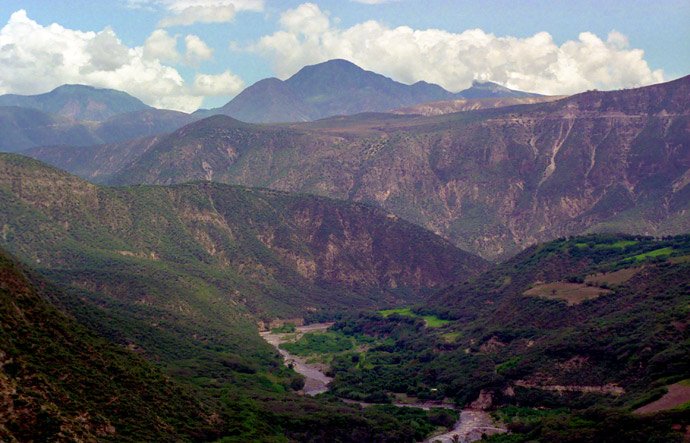
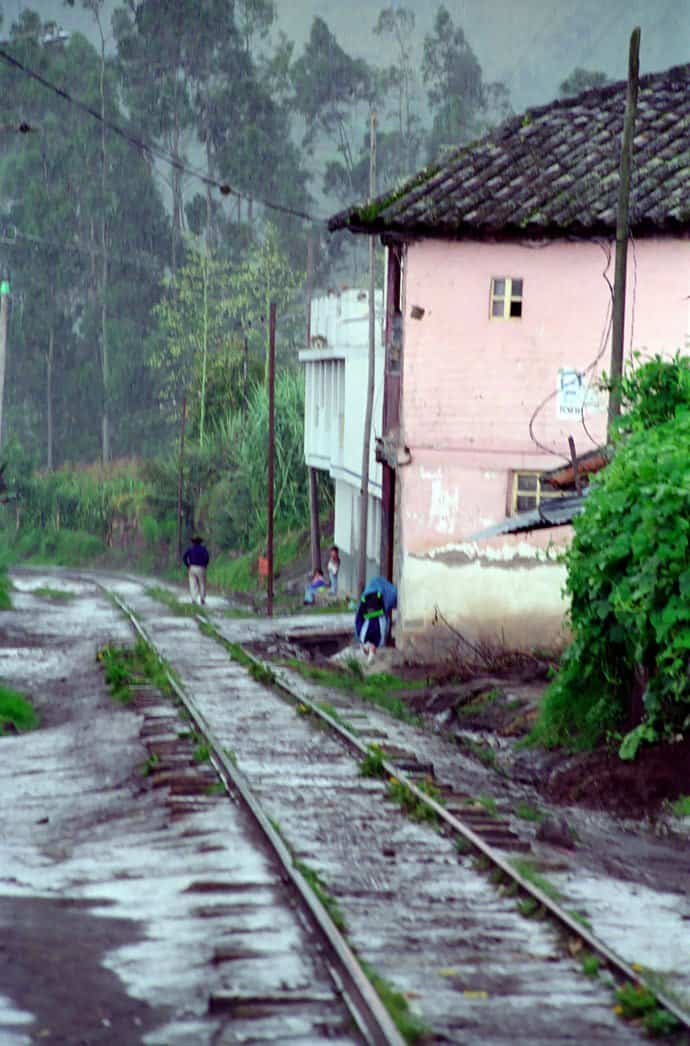
The picture below in the middle shows a main train station in a small village in the highlands of Ecuador. The scenery looks staged, the station and the rails as if they have been abandoned for years……… on request, we are told that the train comes once a week. The highlands of the Andes are impressive in every way. A magnificent landscape opens up to us. The people do their part. These people are very proud and have not lost their cultural identity.

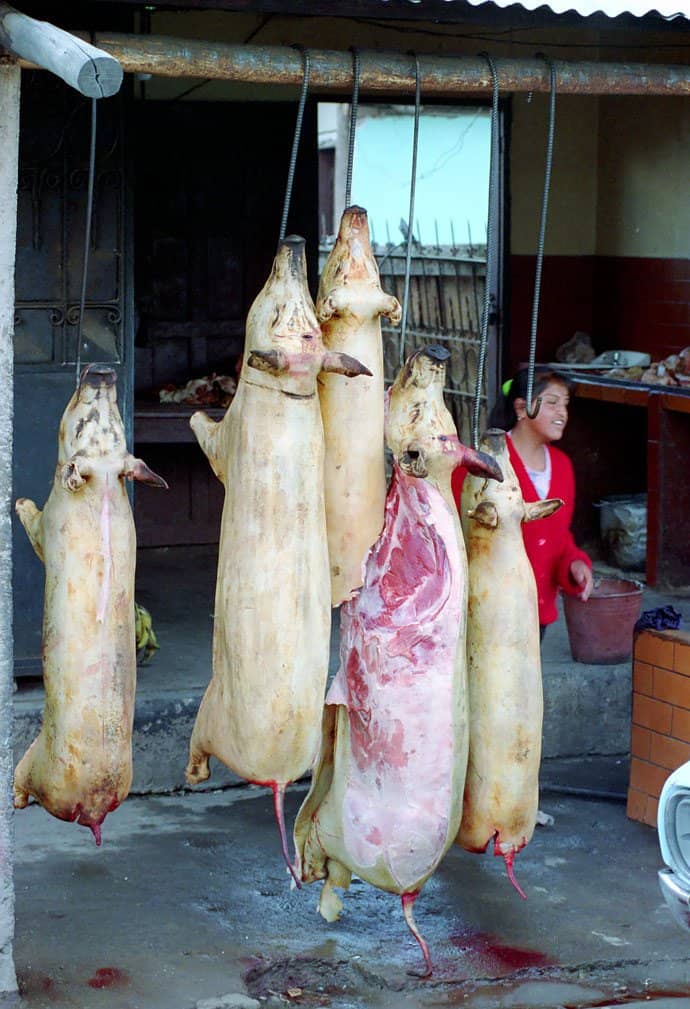
In the remote villages, the families still slaughter themselves several times a year. This happens, as all life does here, on the open road. On our drive through the highlands, we are often at or above the cloud line. Many paths are not paved and you can never plan concretely in advance how many kilometers you can cover. It is therefore important not to look for accommodation too late.

Pictures Ecuador – Highlands – Travelogue 2

Ecuador - Highlands
Ecuador - Highlands
ecuador hochland 054
Ecuador - Highlands
Ecuador - Highlands
Ecuador - Highlands
Ecuador - Highlands
Ecuador Highlands
Ecuador Highlands

Questions about the destination Galapagos

In the South America forum you will get the answers!

24. August 2017 0 comments
0 FacebookTwitterPinterestEmail
Ecuador Highlands
Ecuador

Ecuador – Highlands I

by Joe OnTour 24. August 2017
written by Joe OnTour

Ecuador – Highlands – Travelogue 1

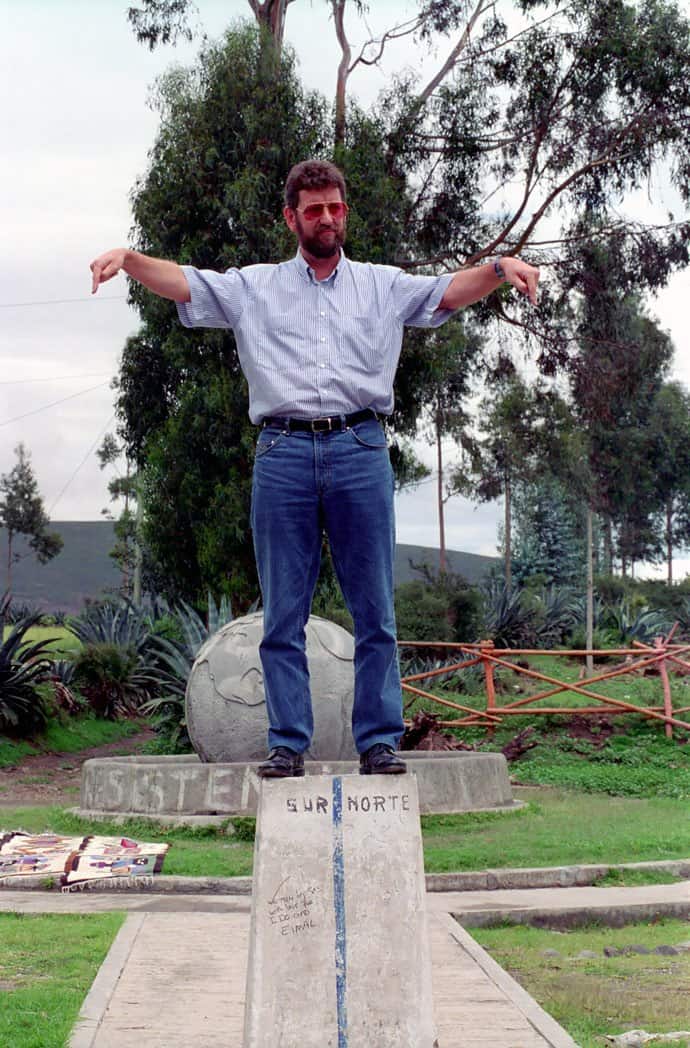
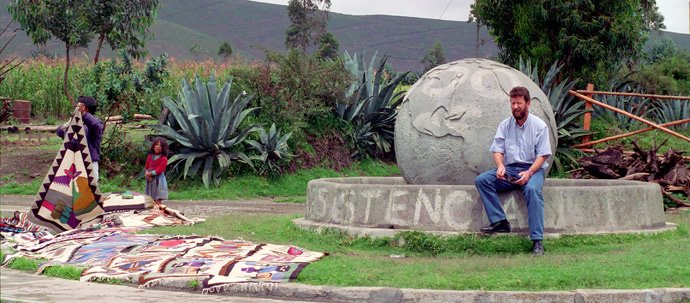
25 km north of the city center is the monument where the French-Spanish Geodetic expedition by Charles de la Condamine, Luis Godin and Pedro Bouguer (1736-1744) determined the position of the equator. They had miscalculated by 180m with the measuring instruments that were limited at the time. We are right on the equatorial line here. It is possible to stand with one foot in the northern hemisphere and the other in the southern hemisphere. Jürgen proves it.

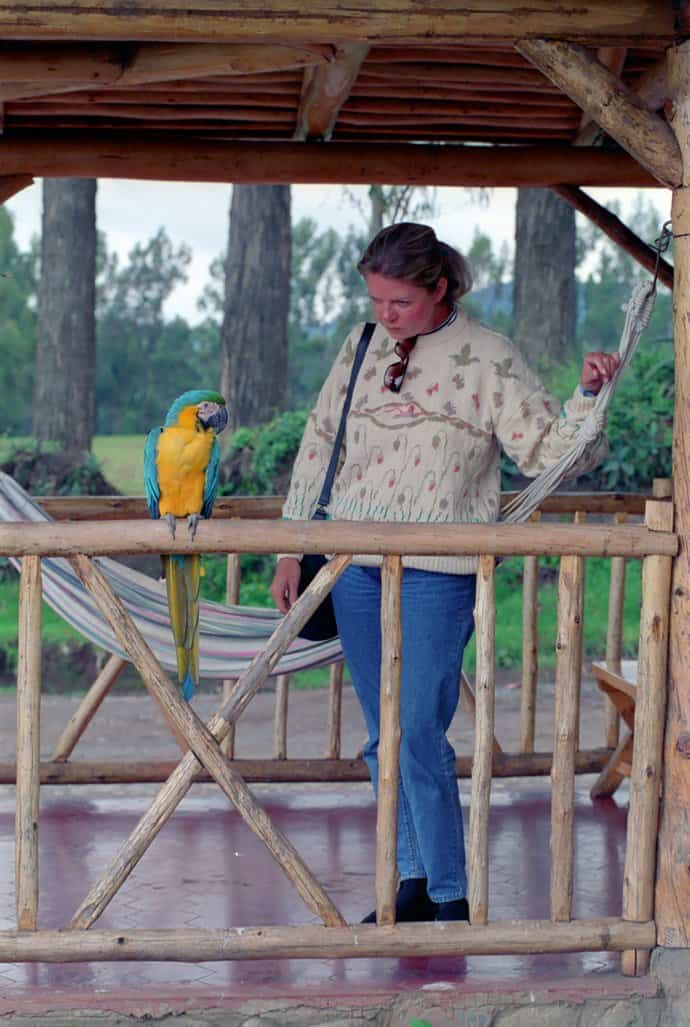
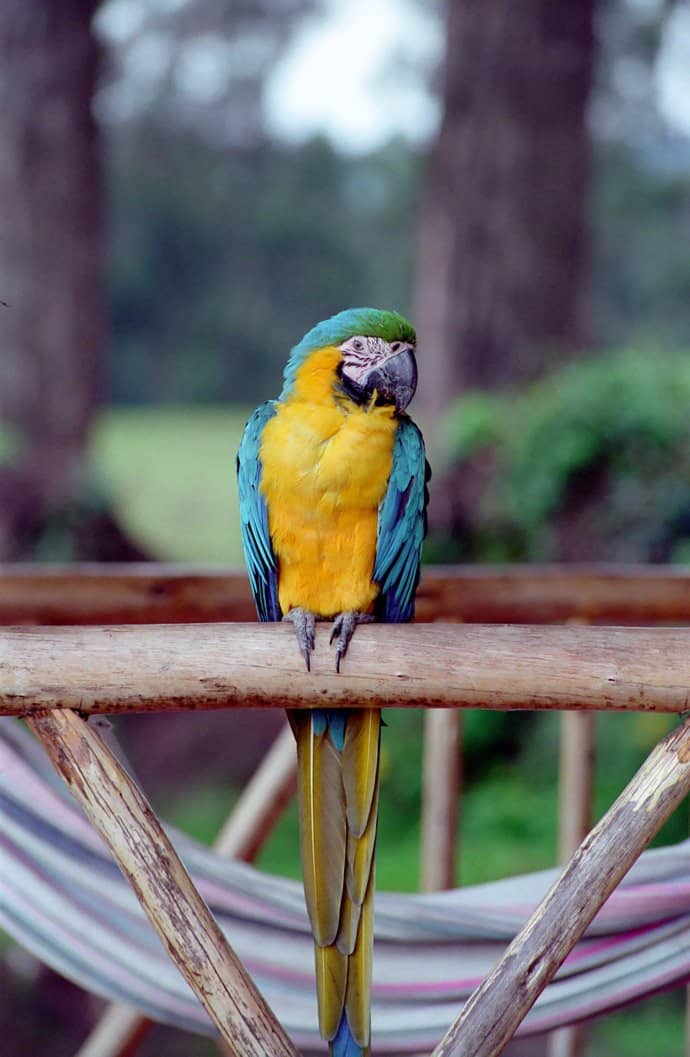
Rarely is the housework also done by men. A beautifully colorful specimen of parrot that we encounter in the highlands of Ecuador. He even endures the photo shoot without flying away.

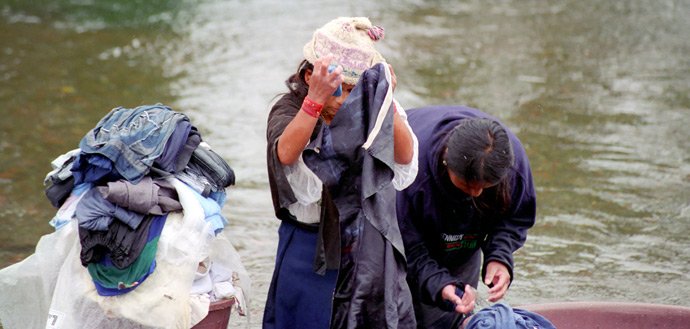
The daily work and the struggle for survival in the plateau is hard. We photographed women doing their daily laundry by the river. Of course, everything is done by hand. The whole family, except for the men, who devote themselves to other tasks, of course helps.

Pictures Ecuador – Highlands – Travelogue 1

Ecuador - Highlands
Ecuador Highlands
Ecuador Highlands
Ecuador Highlands
Ecuador Highlands
Ecuador Highlands
Ecuador Highlands
Ecuador Highlands

Questions about the destination Galapagos

In the South America forum you will get the answers!

24. August 2017 0 comments
0 FacebookTwitterPinterestEmail
Ecuador - Quito
City tripsEcuador

Ecuador – Quito III

by Joe OnTour 24. August 2017
written by Joe OnTour

Ecuador – Quito – Travelogue 3

Quito was the capital of the Cara Indian people until the end of the 15th century, when the city was conquered by the Incas. In 1534, Quito was conquered by the Spanish conqueror Sebastián de Belalcázar. The South American commander Antonio Jose de Sucre liberated the city in 1822. Notable structures include a 16th-century cathedral and the churches of San Francisco, San Agustín, La Compañía, and Santo Domingo. The city is home to the University of Ecuador, a Catholic University and the Technical College.

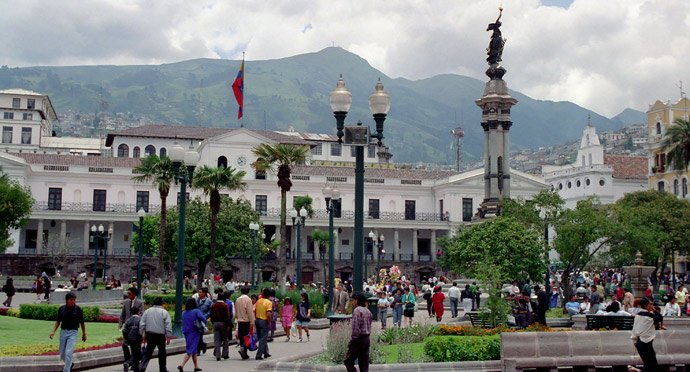
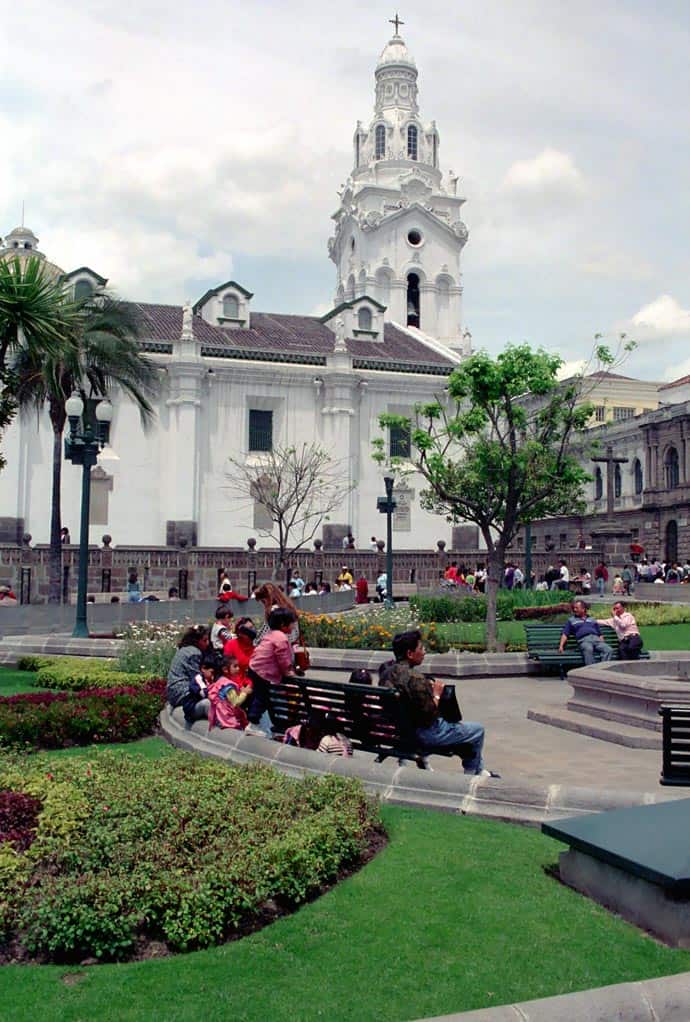
Quito is the oldest among the capitals of South America. With over 100 churches and 55 monasteries, town houses, streets and squares, it has retained its appearance and ambience of a colonial city. The church was always involved in the development of the New World. The Franciscans were the first to settle in Quito and began building their monastery just one year after the conquest. The monastery became a centre of education and art with its own school of painting and sculpture. The Augustinians, Dominicans and Jesuits also shaped the face of the city with their monasteries. “La Compania”, built by the Jesuits, is probably the richest church in South America with its golden main altar. The “Plaza de la Independencia” is the center and meeting point in the old town of Quito.

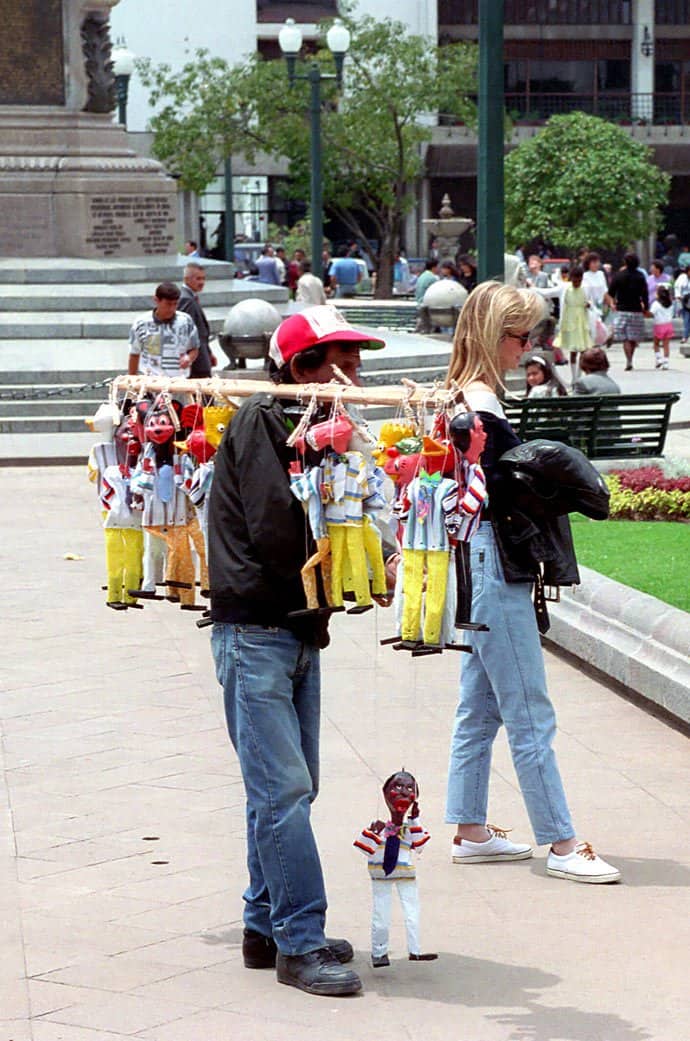
Quito’s monasteries and churches show the classical styles of the Renaissance, Baroque and Classicism, but mostly modified by a fusion of Moorish and Gothic formal elements. Everywhere you can find street vendors with their goods, which have to be emphatically sold to the man or woman in order to secure their livelihood. The objects are usually created at home and are usually also made in the country. Most of them are of high quality craftsmanship.
Ecuador – In the capital Quito

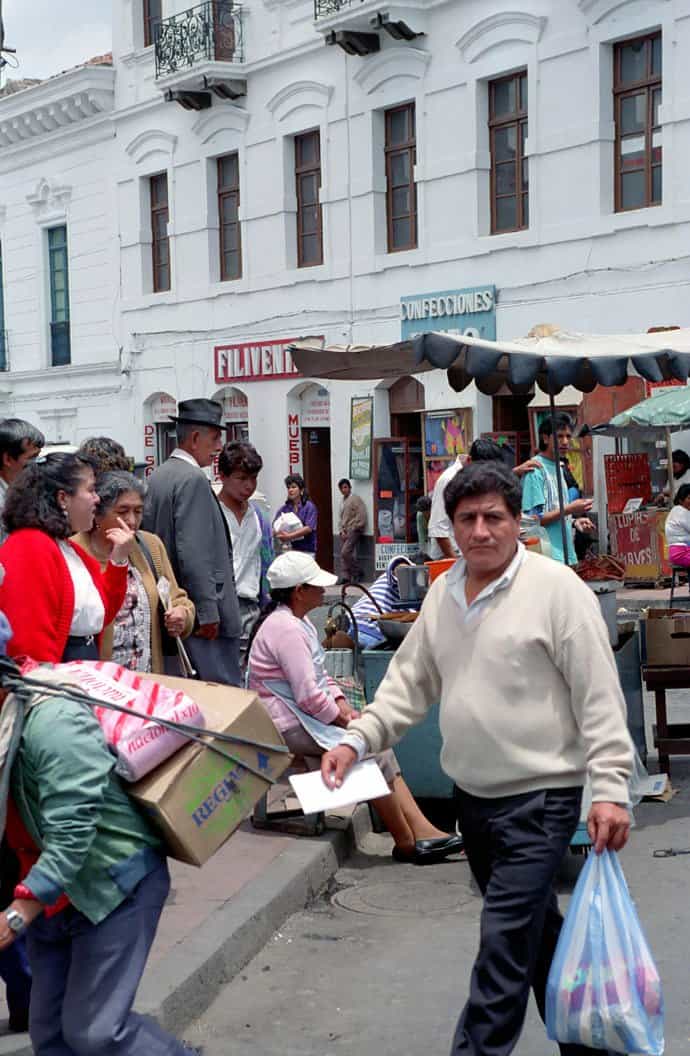
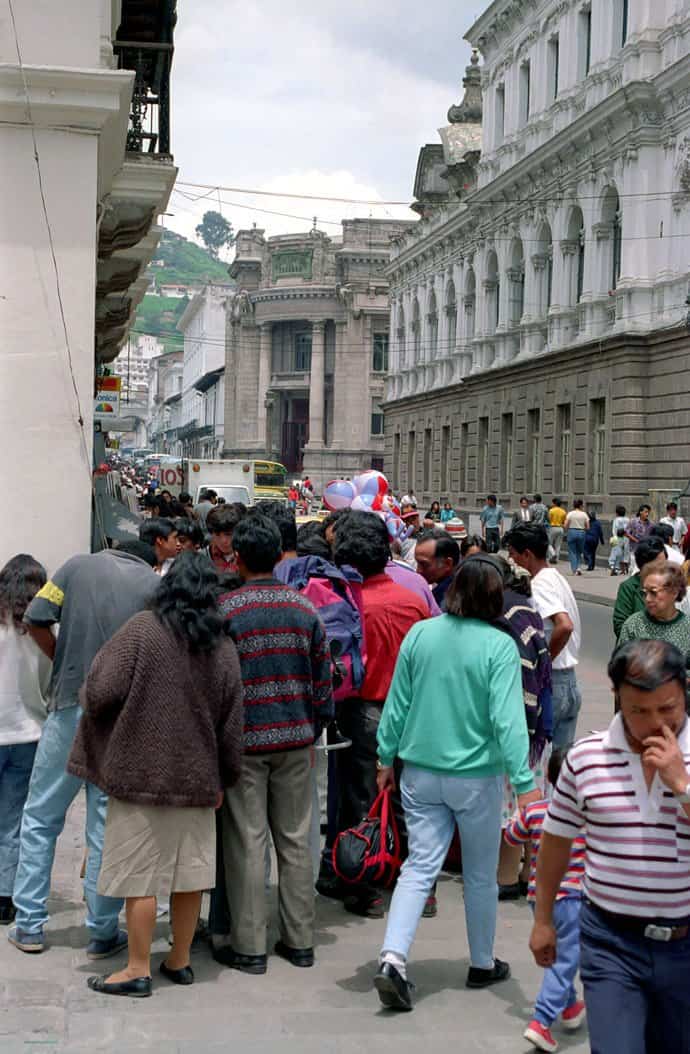
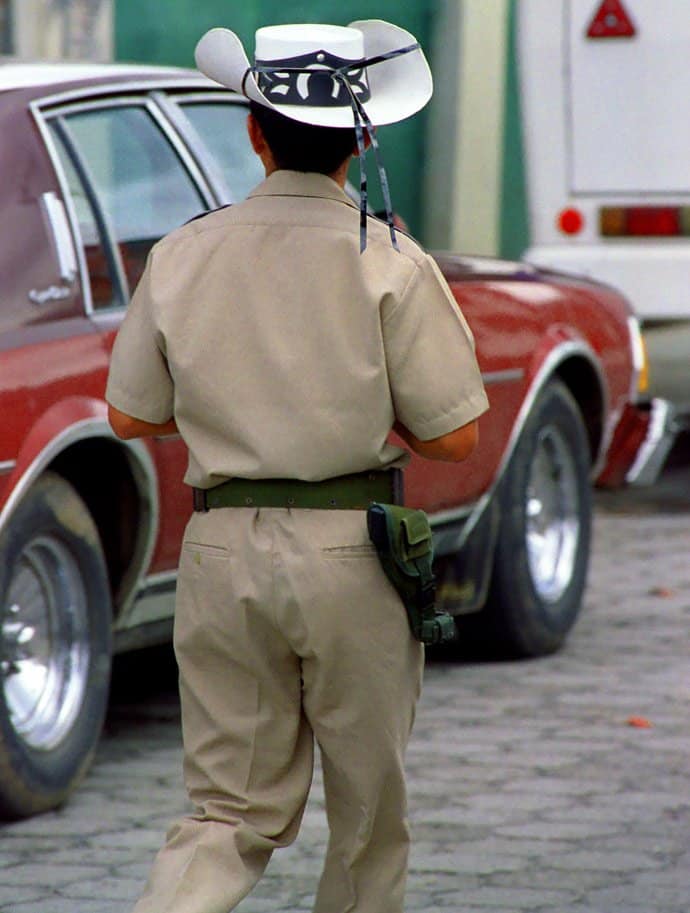
The narrow side streets are often jammed with traffic, accompanied by loud honking and the gestures of passers-by. The work of the police officers seems hopeless in this confusion. Again and again, larger gatherings of people form on the streets, usually queuing at banks or public institutions.

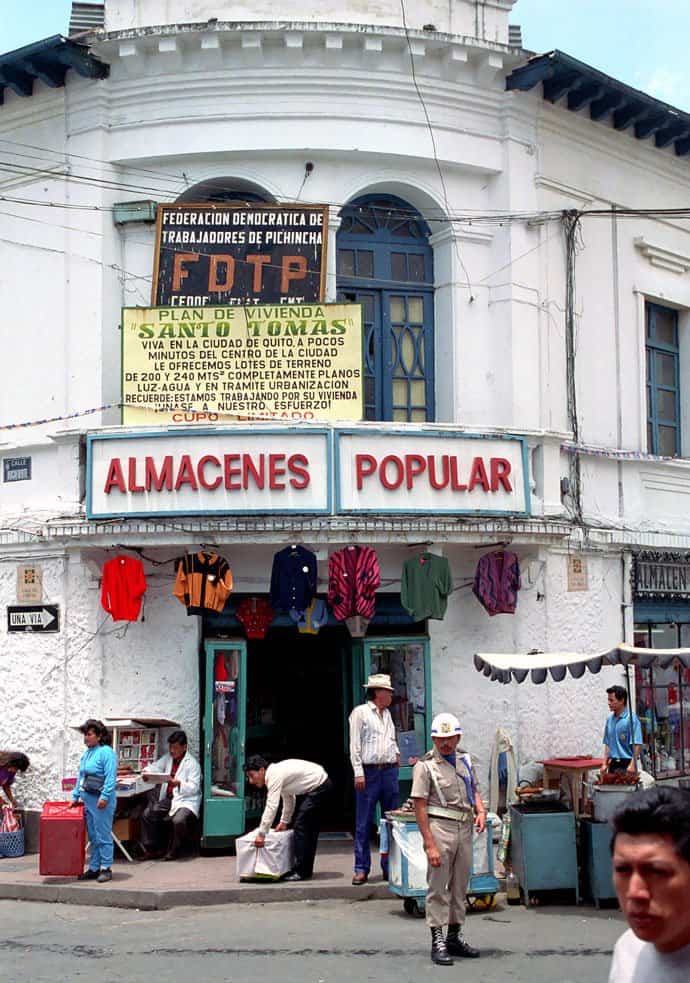
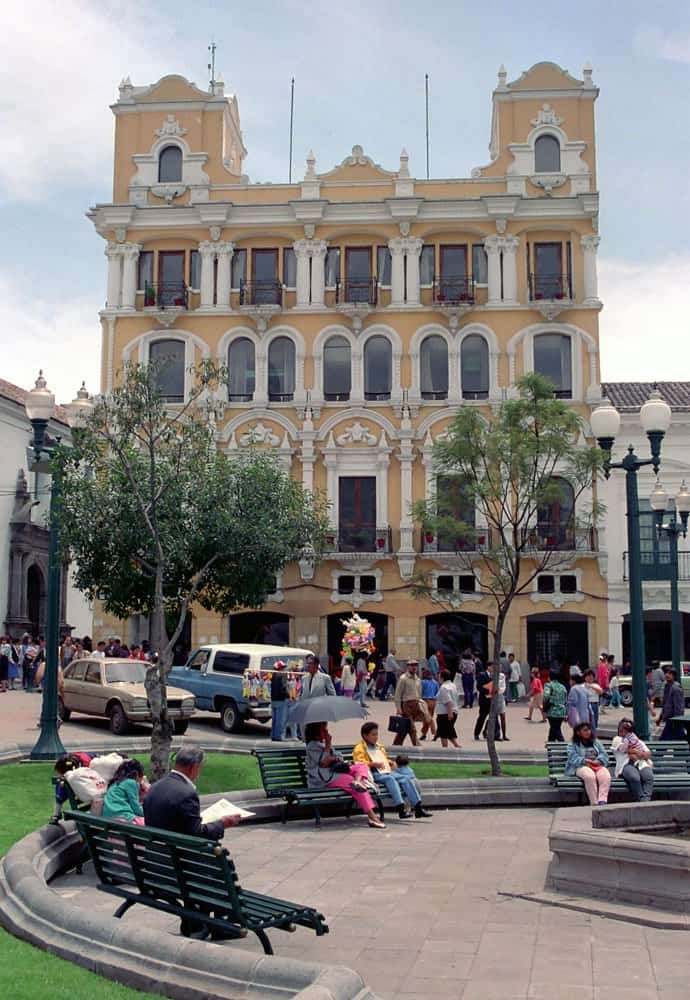
There is always something going on in the Plaza de la Independencia. This is where people meet to exchange information or just to hold a Smaltalk. Market stalls can be found in many streets of the city center. In terms of goods, everything is offered for sale here from fruit, vegetables, textiles, shoes, furniture, etc. You only have to stroll through the smaller side streets of the city center and you will find the most interesting motifs. Everything that has no more space in the shops is simply put on the street. In this way, the often missing shop windows of the shops are replaced. On every corner you will find small stalls of hawkers selling all kinds of things. Often, small snacks and snacks made from local specialties are prepared and offered directly on the street.

Photos Ecuador – Quito

Ecuador - Quito
Ecuador - Quito
Ecuador - Quito
Ecuador - Quito
Ecuador - Quito
Ecuador - Quito
Ecuador - Quito
Ecuador - Quito
Ecuador - Quito
Ecuador - Quito
Ecuador - Quito
Ecuador - Quito
Ecuador - Quito

Questions about the destination Galapagos

In the South America forum you will get the answers!

24. August 2017 0 comments
0 FacebookTwitterPinterestEmail
Ecuador - Quito
City tripsEcuador

Ecuador Quito II

by Joe OnTour 24. August 2017
written by Joe OnTour

Ecuador Quito – Travelogue 2

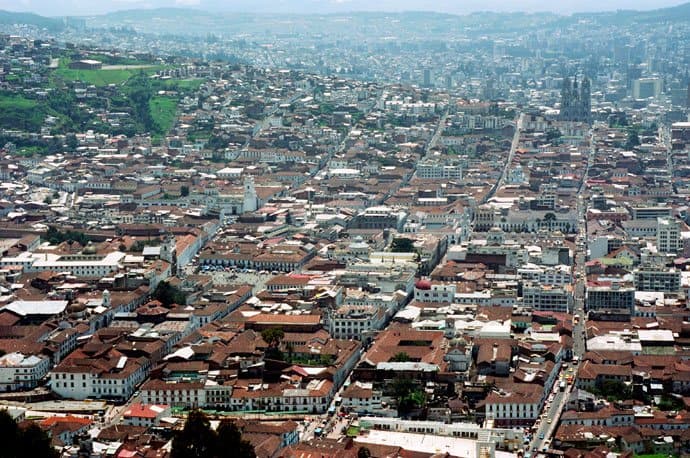
Quito is the oldest capital in South America and still retains much of its colonial cityscape. The city is laid out according to a rectangular scheme and has an extensive central plaza, many quiet parks and countless narrow, steep streets. The architecture of Quito mainly corresponds to the architectural style of the Spanish Baroque.

On the Panecillo lookout hill you have a good view over the city of Quito. The view extends far to the Andes and the surrounding volcanoes. The drive to the lookout hill is short and extremely worthwhile.

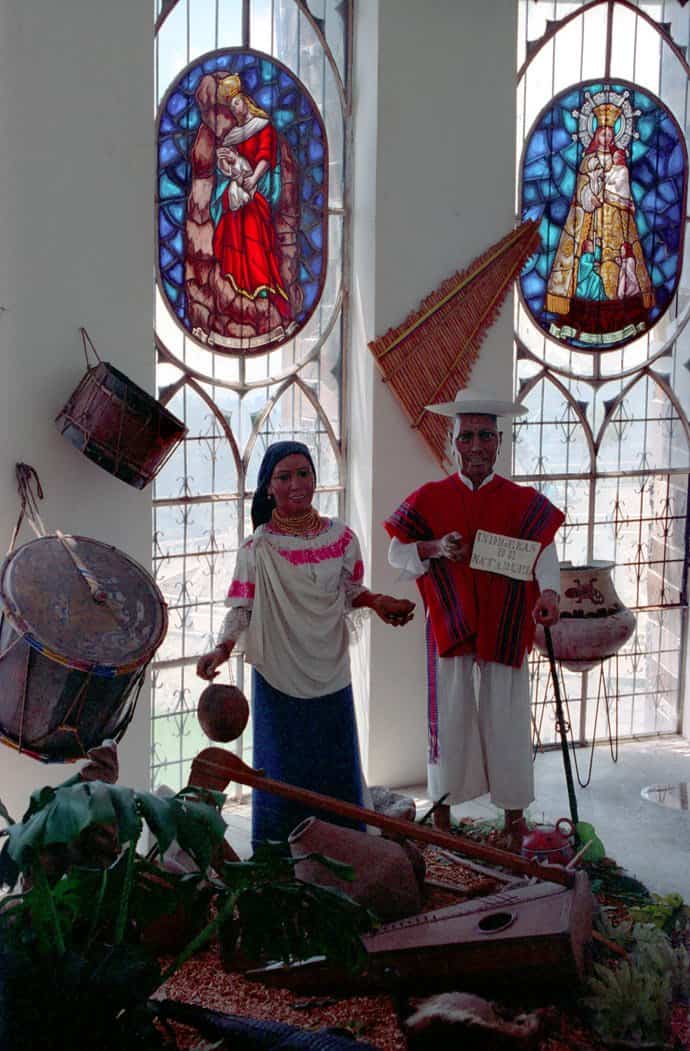
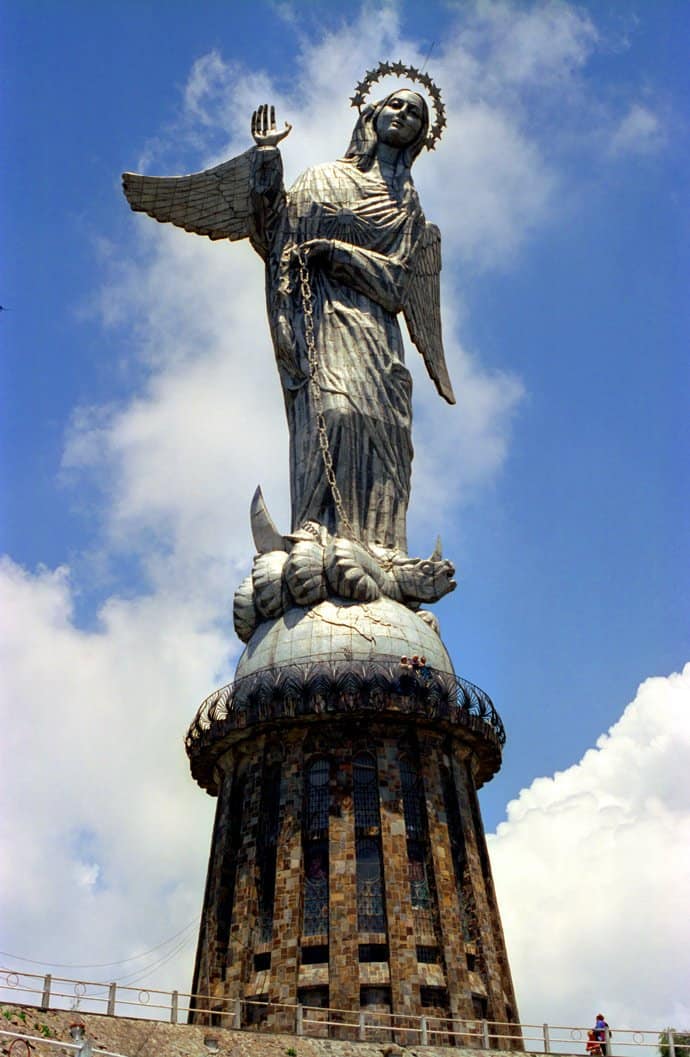
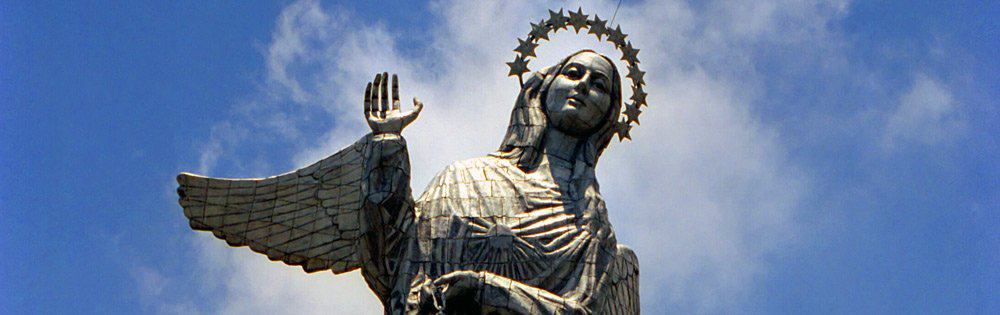
From up here, you can get a good impression of the structure and arrangement of the city. You can clearly see the rectangular scheme with which the city was planned. The Virgin of Quito is the symbol of the city and is located on the Panecillo lookout hill, where we are right now. In the small museum you can admire the typical costumes. In addition, local musical instruments and folkloric objects are on display.

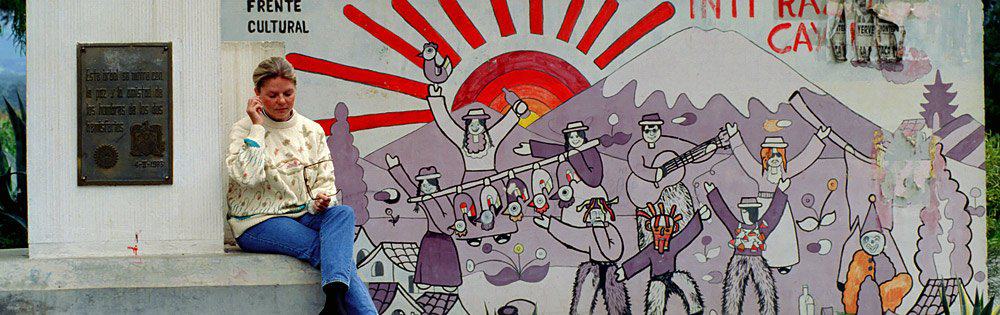
Colorful murals can be found in many places in the city.

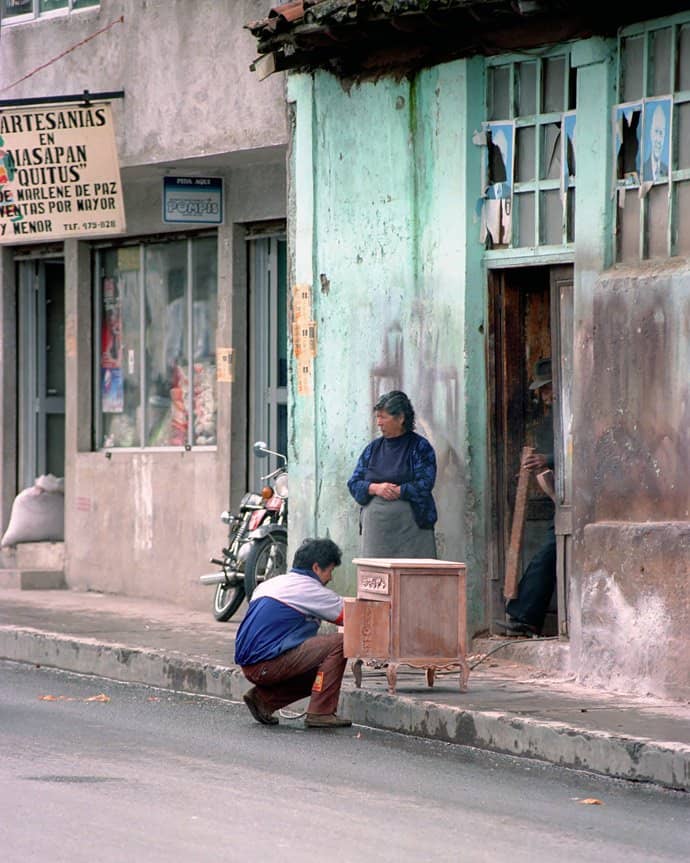
On the way back to the city of Quito, you can see many small craft businesses on the access roads, which are often run by only one person. Next to it is a small carpentry or furniture joinery.

Photos Ecuador – Quito

Ecuador - Quito
Ecuador - Quito
Ecuador - Quito
Ecuador - Quito
Ecuador - Quito
Ecuador - Quito
Ecuador - Quito
Ecuador - Quito
Ecuador - Quito

Questions about the destination Galapagos

In the South America forum you will get the answers!

24. August 2017 0 comments
0 FacebookTwitterPinterestEmail
Ecuador - Quito
City tripsEcuador

Ecuador – Quito I

by Joe OnTour 24. August 2017
written by Joe OnTour

Ecuador – Quito – Travelogue 1

Quito is the capital of the Republic of Ecuador. It is in a state of limbo between colonial times and the modern city, which is expanding day by day. Modern urban structures mixed with mestizo and colonial heritage.

Quito, the capital of Ecuador and the province of Pichincha, is located on the lower slopes of the Pichincha volcano in a narrow, fertile valley of the Andes at an altitude of 2,850 m. There is little heavy industry in Quito. The most important industrial products include textiles, foodstuffs, leather, furniture and handicrafts made of gold and silver. The city, which is located on the Pan-American Highway, is connected to the Pacific Ocean by roads and a railway line.

Located in the Andes at an altitude of 2,800 meters, Quito occupies an area of almost 12,000 km². Average temperatures range from 10 to 25 degrees Celsius, with large temperature fluctuations that allow residents and visitors to Quito to experience all four seasons in a single day. The city is located on the Pichincha, Cotopaxi, Antizana and Cayambe volcanoes, which represent the majestic Andean backdrop. San Francisco de Quito, as it was once called, is the most Spanish city in the New World. You will find a colorful mixture of peoples in Quito. The family from the countryside drives into the city on the back of a truck to sell their goods and buy other things of daily life for themselves.

The city’s sheriffs are present at the most important points of the city. Even though the inner city area and the nightlife districts of the former “Pearl of the Pacific” have become safer through repressive police methods, more and more miserable slum settlements have sprung up in the extensive peripheral zones, hundreds of brutal youth gangs have the scepter in their hands, robbery and murder are the order of the day. Also in other cities of the coastal area (mainly Esmeraldas and Manta), as well as in the Amazonian-Colombian border area (especially Lago Agrio), the crime rate is far above the national average. The women are often dressed in a black cape and a head covering.

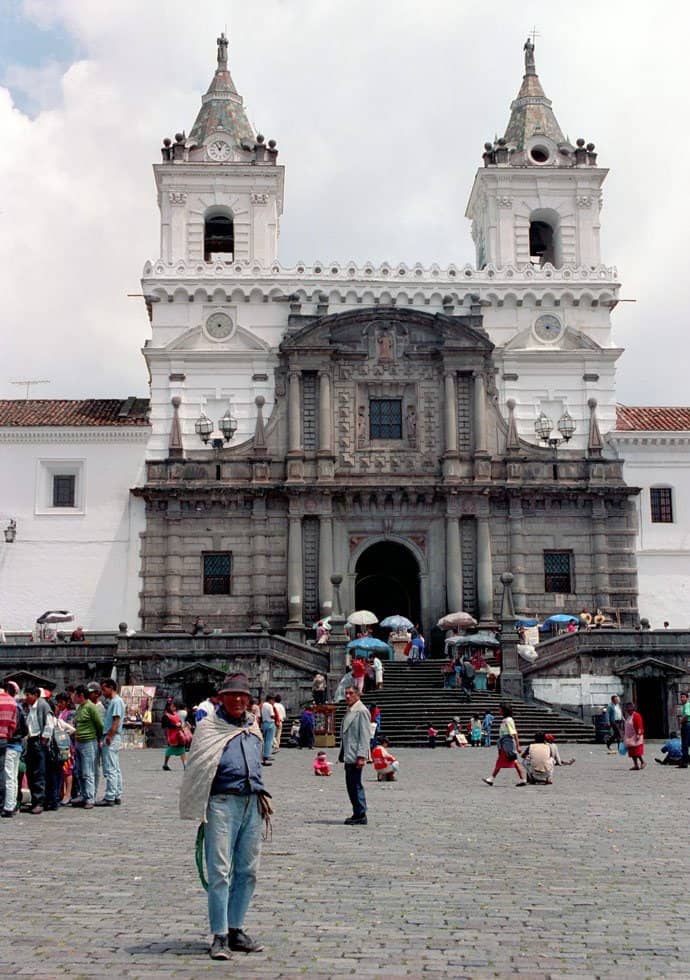
A popular meeting place is the Plaza San Francisco with the church of the same name. La Campania is considered the most magnificent church building in the city of Quito.

Photos Ecuador – Quito

Ecuador - QuitoEcuador - Quito
Ecuador - Quito
Ecuador - Quito
Ecuador - Quito
Ecuador - Quito
Ecuador - Quito
Ecuador - Quito
Ecuador - Quito
Ecuador - Quito
Ecuador - Quito
Ecuador - Quito
OnTourWorld Travel blog - Travel Report Ecuador

Questions about the destination Galapagos

In the South America forum you will get the answers!

24. August 2017 0 comments
0 FacebookTwitterPinterestEmail
General country informationMexico

Mexico – General info

by Joe OnTour 23. August 2017
written by Joe OnTour

Mexico – General information

Area:
1,972,550 sq km.

Population:
106.202.900 (2005).

Population density:
54 per sq km.

Capital:
Mexico City (Ciudad de México).

Population:
20.0 million (2005)
Geography:
Mexico is bordered by the United States to the north, the Gulf of California to the northwest, the Pacific Ocean to the west, Guatemala and Belize to the south, and the Gulf of Mexico and the Caribbean Sea to the east. In the south, Mexico occupies half of the Central American land bridge. Mexico’s landscape diversity ranges from wetlands to deserts and jungle-covered plains to alpine vegetation.

Much of the country consists of a 1000-2500 m high highland, bordered by the Pacific and Atlantic Oceans by the Sierra Madre Occidental and Sierra Madre Oriental mountain ranges. The northern part of the plateau, which accounts for 40% of Mexico’s total area, is barren and sparsely populated. In the south of the highlands runs a volcanic mountain range that stretches from the Sierra Volcánica in the west through the valley of Mexico to Veracruz on the east coast. Mighty mountains rise here, some of which, such as the 5700 m high Pico de Orizaba and the Popocatépetl, are still active volcanoes. 50% of the population lives here.

Further south, on the slopes and plains of the sparsely populated Tehuantepec isthmus, agriculture is practiced. The east and the Yucatán Peninsula are flat, 75% of the annual rainfall falls in this area. There are many lagoons and wetlands on the northwest coast, opposite the Baja California peninsula, on the southwest coast of Bahía de Campeche and on the Yucatán Peninsula.

Form of government:
Presidential Federal Republic since 1917, constitution of 1917, last constitutional amendment in 1994. The 128 members of the Senate (Camara de Senadores) are elected for six years, the 500 members of the Chamber of Deputies (Camara Federal de Diputados) for three years. Head of state and government: Vicente Fox Quesada, since 2000. Executive power lies with the president, who appoints the cabinet. His term of office overlaps with that of the Senate. Each state has its own governor and an elected House of Representatives. Proclamation of independence in 1810 (former Spanish colony).

Language:
The official language is Spanish, as a colloquial language it is interspersed with Aztec loanwords. In addition, there are over 80 Indian languages; the most important are Náhuatl, Maya and Mixteco. About 8% of the population speaks only Indian languages. English is spoken in the larger cities.

Religion:
89% Roman Catholic; Protestant, Jewish and Baha’i minorities.

Local time:
Mexico spans three time zones:
Southern, Central and Eastern Mexico, Mexico City (Central Standard Time): CET – 7th First Sunday in April to last Sunday in October: CET – 6 (Daylight Saving Time = Standard Time CET (Winter Time in Central Europe) – 6 hours.

Baja California Sur and the west coast to Puerto Vallarta – (Mountain Standard Time): CET – 8. First Sunday in April to last Sunday in October: CET – 7 hours (Daylight Saving Time = Standard Time CET (Winter Time in Central Europe) – 7 hours.

Baja California Norte – (Pacific Standard Time): CET – 9th First Sunday in April to last Sunday in October: CET – 8 (Daylight Saving Time = Standard Time CET) – 8 hours.

Mains voltage:
110/120 V, 60 Hz; American two-pin flat plugs. Adapter necessary.

Money – Currency:
Mexican Peso

National anthem:
Mexicanos, al grito de guerra

License plate:
MX

Posts and telecommunications:
Phone:
International direct dialing.
Country code:
52. A 24-hour, free hotline is available for tourists, which can be reached at 91 800 903928 (information of any kind in English and Spanish).
Mobile phone:
AMPS network, operator: IUSACELL (Internet: www.iusacell.com.mx). A GSM network (GSM 1900) is provided by Telcel (Internet: www.telcel.com). Mobile phones can be rented.
Fax connections:
Are available in many larger hotels.
Internet/E-Mail:
Internet provider is e.g. Internet Mexico (Internet: www.internet.com.mx). Internet cafes can be found in all regions, especially in the main tourist areas.
Internet TLD = .mx
Post:
Airmail letters to Europe take about six days to travel. Shipping by land and sea takes much longer. An express service is available in the capital (Entrega Immediata), which allows delivery within two to three days.
Deutsche Welle:
Since the use of shortwave frequencies changes several times over the course of a year, it is advisable to request the current frequencies directly from Deutsche Welle’s customer service (Tel: (+49) (0228) 429 32 08. Internet: www.dw-world.de).

Mexico – Climate

In spring and summer, Mexico is very warm, but not extremely hot. Mexico is located at an altitude of 2300 m. The hottest months are March, April, May. 27 to 30 degrees. Light summer clothing is the order of the day.

In the rainy season between August and October, it can get wet and cold. The temperatures will then be around 20 degrees and less. Then you can put on a protective rain jacket and a light sweater.

In winter, temperatures drop to below 8 degrees in the morning and evening. Thick sweaters are appropriate.

When the rainy season is over, it will be sunny and during the day the temperatures can climb to 23 to 25 degrees.

Up to 1,000m altitude it is tropical, from 1,000m to 2,000m it becomes subtropical and above 2,000m the temperatures are moderate.

in the north there are cold winters and hot summers. In the central plateau, strong thunderstorms are to be expected in the rainy season from May to September. The hottest months in Mexico City are April to June.

Mexico – Fauna & Flora

Mexico’s wildlife is just as rich in species as its flora. The fauna includes many species of monkeys such as howler monkeys and spider monkeys.

Then there are bears, beavers, flamingos, deer, jaguars, iguanas, lynxes, coyotes, crocodiles, ocelots, peccaries, pelicans, prairie wolves, pumas, herons, giant ants, scorpions, spiders, green sonora toads, turtles, tapirs and snakes.

There are thirteen different species of rattlesnakes alone. The birds are particularly diverse and species-rich. You can find many seabirds here because the coastal waters have a great abundance of fish.

Wolves and coyotes, for example, can be found in the north of the country. The forests on the mountain slopes are home to ocelots, jaguars, pumas, coatis, peccaries and monkeys.

In lagoons and swamps you can meet crocodiles and turtles.

Seals, flamingos, herons and pelicans can be found on the coasts.

In the tropical rainforests, the various bird species such as parrots and hummingbirds are extremely numerous.

FLORA:

Mexico is one of the countries with the greatest biodiversity. Due to the size of the country and the different altitudes and the various climate zones, the vegetation is very diverse.

There are over 30,000 species of plants. Of the 6,000 species of cacti known worldwide, about 4,000 species exist in Mexico. The nopal cactus is the symbol of Mexico. The north of the country is home to the candelabra cactus. It grows up to 15 m high and up to 70 centimeters thick.

Slash-and-burn agriculture and timber utilisation as well as the diversion of many rivers and agriculture and livestock farming are causing major changes in vegetation. The tree populations have been decimated in the past, but there are still large and wide forest areas. The tree line in Mexico is about 3,500 m.

Different regions of Mexico have a predominant form of vegetation. Particularly noteworthy here are the rainy slopes of the Cordillera as well as the rainforest, which at higher altitudes turns into mixed forests such as pine, oak, juniper and then coniferous forests. Then there is Baja California, which is characterized by its cactus steppe.

In the north of the country, thorn bush vegetation prevails with countless species of cacti, agaves, yucca palms and mesquite plants.

In the south of the country (Oaxaca, Chiapas, Tabasco) there is the tropical rainforest and jungle. Here you can find precious woods such as the mahogany and zapote tree.

In the state of Chiapas, there are about 200 different types of oaks and 40 different types of pine. In the lowlands of Tabasco, wide swamps predominate. The Yucatán Peninsula shines with predominantly dry forest and thorn bush savannahs.

The “Tierra Caliente” (hot land) can be found at an altitude of up to about 900 meters. There are temperature differences of 15 to 48°C.

In the south, palm trees and mangroves predominate. In the north you will find coniferous forests and savannahs. Bananas, tropical fruits, cocoa, vanilla, sugar cane, tobacco and cotton are grown here.

The “Tierra templada”, the temperate land, ranges from about 900 to 1800 meters altitude. Here, the average temperatures of 16 to 21°C are predominant. This climate zone is home to most of all Mexican states. Here you will find deciduous forests, sugar cane cultivation, cotton cultivation and coffee cultivation.

The “Tierra Fria” is the cold land. It ranges from an altitude of about 1800 to 2700 meters above sea level. The average temperatures here are 15 to 17°C. This is also true of Mexico City and Chiapas.

Mexico – History – Culture – Art

The first Spanish expeditions under Francisco Hernández de Córdova and Juan de Grijalva reached the Yucatán Peninsula in 1517 and 1518 .

The newly discovered advanced civilizations and the abundant gold objects make the mainland interesting for the Spaniards.

In the years 1519 to 1521, Hernán Cortés succeeded in overthrowing the Aztec Empire with the help of numerous allied Indians. Mexico becomes the Viceroyalty of New Spain.

In 1815, independence from Spain was declared. This resulted in a long war. It led to final independence in 1821.

After that, the Mexican territory lost size, partly due to sales to the USA and also due to the American invasion.

In the 1860s, the country was occupied by France. During this time, the Emperor Maximilian of Mexico was installed. President Benito Juarez, who had been expelled by the French, ended the imperial era by executing Maximilian.

The dictatorship of Porfirio Díaz led to the Mexican Revolution in 1911. The revolutionary forces defeated the army, but lost themselves in internal strife. The country fell into constant turmoil for twenty years. At the end of this revolution, the Institutional Revolutionary Party (PRI) controlled the country. This went on until the end of the 20th century.

Mexico – Food & Drink

Mexican cuisine is so particularly tasty and good that it is easy to have weight problems. Thanks to the variety of spices and ingredients, the city is one of the metropolises of gastronomy at an international level. The famous tacos and quesadillas are offered everywhere in the streets.

Mexican cuisine is characterized by the synthesis of Aztec and Spanish-colonial traditions, including Mayan traditions in the south.

Regionally, there are big differences in Mexico between the coast and the central highlands, the chili-loving south and the beef-oriented north.

The most important meal of the day is lunch. The lunch break of a normal working day is correspondingly long.

In the evening, they usually only eat a small snack, a few fruits, a taco or the like.

A highly recommended restaurant is La Cantina, a bar-restaurant, with many typical Mexican food and drinks. For those who want it more refined, the San Angel Inn, which is dedicated to “high Mexican gastronomy”, is recommended.

In between or as appetizers, you can of course try the tacos and quesadillas that are offered at the street stalls at any time of the day or night. For fans of international cuisine, the Winston Churchill restaurant can be recommended, which offers English and international cuisine, then La Mansión, with excellent meat dishes, the Thai Gardens with Thai cuisine and of course Casa Italia, an Italian trattoria. If you appreciate the magaritas, you will probably not be able to avoid a visit to the Villa María in the south of the city, as there are over 20 different margaritas on offer.

In a hot and tropical country like Mexico, with largely lush vegetation, fruits and certain vegetables play a paramount role.

Drinking water is sold in water bottles or canisters. Water from the water pipes is dirty and undrinkable.

Horchata, a sweet rice-cinnamon drink introduced by the Spaniards, which is served chilled, is popular.

The other common alcoholic beverages are beer, tequila, mezcal and pulque.

General country informationMexico

Mexico – General info

by Joe OnTour 23. August 2017
Mexico

Mexico – Impressions

by Joe OnTour 23. August 2017
City tripsMexico

Mexico – Acapulco

by Joe OnTour 23. August 2017
City tripsMexico

Mexico – Mexico City

by Joe OnTour 23. August 2017

Questions about Mexico

In the America Forum you will get the answers!

23. August 2017 0 comments
0 FacebookTwitterPinterestEmail
Mexico - Impressions
Mexico

Mexico – Impressions

by Joe OnTour 23. August 2017
written by Joe OnTour

Mexico – Impressions

Manzanillo is located on the Costa de Oro directly on the sea. The beautiful beaches are surrounded by lush nature. The Gold Coast is one of the most beautiful stretches on the Mexican Rivera. It stretches between Mazatlan and Acapulco.

The lively port city is also a naval base. It stretches on a narrow isthmus between the crescent-shaped Bahia de Manzanillo with its 10km wide playa. Here is Playa Azul with its central beach area and Cuyutlan Lagoon. The more beautiful beaches are the Bahiha Manzanillo and the Bahia Santiago. The peninsula is also home to the internationally renowned luxury hotel Las Hadas (The Fairies), designed by the architect Jose Luis Ezquerra.

The complex is an absolute sight. If you can arrange it, you should plan a few days stopover here. The rooms are huge and you have a wonderful view of the bay and the sea (book with sea view).

Bullfighting is a veritable national sport in Mexico. It was probably imported by the Spaniards during the conquest of Mexico.

Bullfighting in Mexico

Arenas can be found everywhere in the larger cities. These events are not for everyone. You get strangely touched when you see the matter-of-factness with which the Torreros kill the bulls. We leave the arena later with mixed feelings…… The views and opinions on whether this is a cultural asset or simply animal cruelty differ widely.

A real cult is formed around bullfighting. The better-known Torreros are often stylized here as downright folk heroes. A whole “industry” (or should we say mafia) lives from this business. At the edges of the arenas there are cattle dealers and observers who evaluate the best bulls. From the character and the defensiveness of the bull one can derive the success of the breeder.

Pictures Mexico – Impressions

Mexico - Impressions
Mexico - Acapulco
Mexico - Impressions

Questions about Mexico

In the America Forum you will get the answers!

23. August 2017 0 comments
0 FacebookTwitterPinterestEmail
Mexico - Acapulco
City tripsMexico

Mexico – Acapulco

by Joe OnTour 23. August 2017
written by Joe OnTour

Mexico – Acapulco

Acapulco, for a long time Mexico’s most famous seaside resort, is not for friends of dreamy fishing villages.

Initially, it was the American holidaymakers who discovered the run-down harbour town on the beautiful Horseshoe Bay as a holiday destination for themselves. In the late fifties, the international tourist rush began. A large number of hotel towers have been built between the beach and the green hills. This created a coastal region completely covered in concrete. Today, Acapulco is an ideal place for vacationers who want to be burned black on the twenty different beaches and are looking for nocturnal fun.

Since the 1930s, the famous rock divers of La Quebrada have been attracting large crowds of visitors. With a huge jump from a suicidal height of 45 m, you dive into a narrow pool. A daring undertaking, because the water in which they immerse themselves seems to be only a puddle. Before the jump, a short prayer is performed at a small altar. There is a beautiful view of the divers from the bar of the El Mirador Hotel.

Less crowded beaches can be found at Pie de la Cuesta, 8 km northwest of the city centre. An impressive view over the bay of Acapulco can be found from the road to Puerto Marqués, 16 km southeast of the city. South of the Península de las Playas is the Underwater Shrine, a bronze statue of the Virgin of Guadalupe that stands on the bottom of the sea.

In the meantime, however, Cancún is contesting Acapulco’s reputation as Mexico’s most famous and feudal holiday resort. Cancún is a holiday centre with a more modern design. The island off the northeast coast of Yucatán is 21 km long and about 400 m wide. At the northern and southern tip, roads lead to the mainland. In 1970, a maximum of 200 people lived here, but now more than 200,000 people live here. Almost all of them live from tourism. One million holidaymakers flood the area every year. The predominantly North American holidaymakers are offered endlessly long and white Caribbean beaches combined with turquoise lagoons.

You can practice every conceivable sport here. The hotel buildings are designed in a modern way. There are air-conditioned shopping malls with high-end boutiques and plenty of gourmet restaurants. Most things are considerably more expensive than on the mainland. It is always cheaper and less hectic on Isla Mujeres, the “Women’s Island”, a few kilometers to the east. It can be reached either by ferry from Puerto Juaréz or by hydrofoil from Cancún. Here you can still find a little of the idyll of the Caribbean, as it still hovers in people’s heads, with simple hotels on the white palm beach and a coral reef at the southern tip.

Photos Mexico – Acapulco

Mexico - Acapulco
Mexico - Acapulco
Mexico - Acapulco

Questions about Mexico

In the America Forum you will get the answers!

23. August 2017 0 comments
0 FacebookTwitterPinterestEmail
Mexico - Mexico City
City tripsMexico

Mexico – Mexico City

by Joe OnTour 23. August 2017
written by Joe OnTour

Mexico – Mexico City

The city of Mexico City is absolute madness par excellence. In its dried up lake bed at an altitude of 2240 m lies the city. Mexico City has the largest urban area in the world with about 2600 km². Mexico City is home to over 20 million people! Chaotic traffic conditions, unbelievable smog and a high crime rate do not invite you to linger for a long time at first glance. But there is a reason why you absolutely have to experience this city: Mexico City is the cultural center of the country and has an eventful history.

The high valley over which Mexico City stretches is a veritable reservoir of the most beautiful and best, worst and ugliest that the country has to offer. The result of this mixture is a lively, polluted giant city full of music and noise, smog and green lungs, full of colonial palaces, world-famous museums and unmanageable slums.

The historic center of Mexico City is the Plaza de la Constitución, better known as the Zócalo. The square was laid out in the 1620s under Cortés, who had it paved with stones from the ruins of the temples and palaces of the Aztec city of Tenochtitlán, on whose foundations Mexico City was built. Tenochtitlán was located in the middle of a lake, so many of the older buildings and churches of today’s city are slowly but surely sinking into the swampy ground. We have only booked Mexico City for a few days and start our city tour on the second day of our stay at the Zócalo, the central square of the city.

The entire east side of the Zócalo is occupied by the Palacio Nacional (National Palace). It was built on the foundations of an Aztec palace. Today it is the president’s offices. There is also a museum with murals by Diego Rivera documenting the history of Mexico. The Catedral Metropolitana is located on the north side of the Zócalo. It was built there in the 20s of the 16th century by the Spaniards. There used to be an Aztec tzompantli or skull wall (an altar on which the skulls of sacrificed people were laid out).

The Cathedrale Metropolitana is definitely a must-see. In 250 years of construction, from 1563 to 1813, the largest church on the entire continent was built. To the east of the cathedral are the remains of the Templo Mayor. It is the most important of the Aztec temples. The Alameda, formerly an Aztec marketplace, is now a small park. The streets around the Alameda are lined with colonial mansions, skyscrapers, cafes, restaurants, shops and markets.

Another must-see for visitors is the Bosque de Chapultepec. It is the largest park in the city. It’s home to a handful of museums, fairgrounds, and the president’s residence. The Basilica de Guadalupe is a church built on the site where the Mexican patron saint is said to have appeared. Also worth seeing are the colonial houses of San Ángel, as well as the Cuicuilco pyramid and the canals of Xochimilco. We also planned to “climb” the tallest building in Mexico, the Torre Latinoamericana. There is a restaurant on the 41st floor and there is an observation deck above the restaurant.

The view is really worth seeing. From here you have a wonderful view of Mexico City. A visit in the late afternoon is particularly nice, when the lights go on in Mexico City. Mexico City is a modern and cosmopolitan city located on the shores of a lake surrounded by volcanic mountains. The different cultures that have been at home in this place over the centuries have produced a special and extremely idiosyncratic and interesting architecture of different styles. But Mexico City is not only the largest city in the world, it is also the cradle of Aztec culture.

If you want to have activities throughout the day, Mexico City is certainly the place to be. You can get museum visits, a never-ending nightlife, culture and entertainment here. The city offers art and cultural exhibitions from all eras, from the pre-colonial period (Museum of Anthropology) to the modern era (Museum of Modern Art), but also the traditional, as can be seen in the Frida Kahlo Museum. Not far from Mexico City are the Pyramids of the Sun and Moons in Teotihuacán. The pyramid of Cuicuilco in the south of the city is a special construction. It is semi-hidden and covered by the lava from an eruption of the Xitle volcano over 3,000 years ago. The whole history and transformation of this city over the course of different eras can be traced in the Anthropology Museum.

The main attractions are the Palace of Fine Arts, a monument made of white marble built by a French architect, and the Square of the Three Cultures. On the second day of our arrival in Mexico, we come back from visiting the museums in the evening and are completely exhausted. The exhaust-laden air and the unfamiliar altitude of Mexico City (or both together) are causing us a lot of trouble. So we are glad to have arrived back at the Hotel Alameda to relax a little. The hotel is centrally located and you can do (almost) everything on foot. We also have a beautiful view of the city from the roof terrace of the hotel.

Photos Mexico – Mexico City

Mexico - Mexico City
Mexico - Impressions

Questions about Mexico

In the America Forum you will get the answers!

23. August 2017 0 comments
0 FacebookTwitterPinterestEmail
California - General Information
CaliforniaGeneral country information

California – General info

by Joe OnTour 23. August 2017
written by Joe OnTour

California General Information

Area:
410,000 sq km.

Population:
36.000.000 (2005).

Population density:
88 per sq km.

Capital:
Sacramento

Largest city:
Los Angeles

Nickname:
The Golden State (Der Goldene Staat)

Geography:
California is bordered by Oregon to the north, Nevada and Arizona to the east, the Mexican state of Baja California Norte to the south, and the Pacific Ocean to the west. The Colorado River forms the border with Arizona. California has a share of several large scenic areas. The Coast Ranges are adjacent to the narrow coastal plain and are followed to the east by the California Longitudinal Valley, which is bounded to the east by the Sierra Nevada and to the north by the Cascade Range and the Klamath Mountains. The coastal area is tectonically very unstable, and earthquakes often occur here. In the southeast, California is part of the Great Basin, which includes Death Valley and the Mojave Desert.

The longest rivers in California are the Sacramento River and the San Joaquin River. Both rivers, together with their numerous tributaries, drain the Sierra Nevada, parts of the Cascade Range and the Californian Longitudinal Valley. The largest lakes include Lake Tahoe, Clear Lake, Honey Lake and Mono Lake. The highest mountain in the USA outside Alaska, Mt. Whitney at 4,418m, is located in California. At the foot of the mountain is the village of Lone Pine, where a well-known film festival takes place every year. About 170 kilometers away is the desert area of Death Valley, which got its name from the time of the first settlers on the west coast, who often had to experience the agony of heat and thirst when crossing the “Valley of Death”. There are numerous nature parks and beaches of various types. One of the most famous parks is Yosemite National Park.

Form of government:
California is governed by the Constitution of 1879. The executive branch is headed by the governor, who is elected by the people for a four-year term. He can only be re-elected once. The legislature consists of a bicameral parliament composed of the Senate and the House of Representatives. The 40 members of the Senate are elected by the people for a four-year term, and the 80 members of the House of Representatives for a two-year term. At the federal level, California is represented by two senators and 52 representatives. In presidential elections, the state has 54 votes. Since 2003, the governor of the state has been the Austrian-born film actor Arnold Schwarzenegger, who belongs to the Republican Party.

Population:
The population is about 36 million. California is the most populous state in the USA. The average population density is about 80 inhabitants per square kilometre. The proportion of whites fell from 75 percent in 1990 to 47 percent in 2000. According to the results of the most recent census, Hispanics are the second largest population group with a share of 32 percent, 12 percent are of Asian descent, and 7 percent are black. The proportion of the urban population is about 90 percent.

Education and culture:
In 1866, the first state schools were established in California. The most important university is the University of California, founded in 1868, whose institutions are spread throughout the state. It is one of the largest universities in the world. Stanford University was founded in 1891 by Leland Stanford. Some of the most visited cultural institutions include the Los Angeles County Museum of Art and Museum of Contemporary Art, as well as the J. Paul Getty Museum in Malibu, a replica of an ornate Roman mansion that houses a collection of antiques and European paintings. Also worth seeing are the Griffith Observatory in Los Angeles and the Mount Palomar Observatory, which is located 80 kilometers northeast of San Diego.

Economy:
In addition to crude oil and natural gas, important raw materials include mercury, tungsten, asbestos, gravel, copper and iron ores. Agriculture and forestry are of great economic importance: California produces larger quantities of agricultural products than any other state. The most important crops include grapes, cotton, rice, wheat and maize. California accounts for about one-tenth of the total timber production in the United States, and fishing accounts for about 4 percent of the total catch in the United States. The most important fish species are swordfish, salmon, tuna and herring. Important industrial sectors include the aerospace industry as well as the computer and electronics industry.

Language:
The official language is English.

Time zone:
Pacific: UTC -8/-7

Mains voltage:
110/120 V, 60 Hz; American two-pin flat plugs. Adapter necessary.

Money – Currency:
American dollar

California – Climate

In California, there are three climate zones:

On the coast, temperatures are lower than in the interior due to the influence of the cool Pacific. North of San Francisco, winters are usually very rainy. San Francisco and large parts of the northern and central California coast are usually foggy and cool in summer.

In the Sierra Nevada, it can get quite hot during the day in summer: However, due to the altitude, temperatures drop quickly after sunset. Large amounts of snow fall here from November.

In the deserts, it is sunny and pleasantly warm even in winter with 20 °C and more. In the evening and at night, however, it cools down very much, as in almost all desert areas. Los Angeles and San Diego are also favoured by mild climates. The climate in San Diego is almost perfect and you can enjoy outdoor activities all year round.

The third highest temperature ever measured on earth was recorded in Death Valley in 1913 at 56.7 °C.

North of Lake Tahoe, the lowest temperature in California was recorded at -42.8 °C (1937).

A common phenomenon in California is coastal fog.

Best time to travel:

California’s peak season is clearly in summer. However, even in winter you have very mild, moderate weather from LA south. Long trousers and a jacket are still necessary. Further south in San Diego you will find the climate that is often described as perfect. The winters are also pleasantly warm here.

San Francisco’s weather is often foggy, especially in the morning hours. In summer, when it gets almost too hot further south, you will find a wonderful spring-like climate in SF.

The best time to travel is April and May as well as September and October. Not only because of the climate, but also to avoid the American travel season between Memorial Day (end of May) and Labor Day (beginning of September).

California – Fauna & Fauna

About 40 percent of all plant species in the USA are native to California.

Common tree species include the sequoia and the Douglas fir.

The oldest tree in the world, an awn pine in the Great Basin, is over 4,900 years old. The stands of the sequoia tree in the Sierra Nevada are up to 2,000 years old.

In the deserts of the southeast, indigo shrubs, various cactus and shrub species, creosote shrubs and the Joshua tree can be found.

In addition to numerous other animals, skunks and rattlesnakes live in the forests, of which there are six different species in the state.

Bears find a suitable habitat mainly in the north and in the remote mountain regions.

California – History – Culture – Art

California was the first of about 105 Indian tribes to be settled.

Hernán Cortés marked the beginning of the Spaniards’ efforts to establish a colony in California. In 1542, the Viceroy of New Spain, Antonio de Mendoza, ordered Juan Rodríguez Cabrillo to explore the territories north of Mexico.

Spanish explorer Sebastián Vizcaíno explored the entire California coast in 1602 and 1603, but it wasn’t until 1769 that a supply port was built in San Diego. In 1776, the Spaniards founded San Francisco. When Mexico gained independence in 1821, California became a Mexican province.

In June 1846, a group of American settlers captured the city of Sonoma. On the occasion of the outbreak of the Mexican War, California declared itself independent. In 1848, Mexico ceded its claims to the territory to the United States in the Treaty of Guadalupe Hidalgo.

The discovery of gold by James W. Marshall in Coloma in January 1848 led to a large influx of people. On September 9, 1850, California became the 31st state to join the United States. In 1854, Sacramento became the state’s capital. The completion of the transcontinental railroad line in 1869 brought growing prosperity to the state.

Economic development was further advanced by improved railway connections. In 1890, San Francisco became the largest city on the Pacific coast and a trading center of worldwide importance.

In Los Angeles, the economic upswing reached its peak in 1887. The 1893 fall in the stock markets led to a serious economic crisis in California. A new economic upswing began before the beginning of the First World War.

After the war, the number of jobs initially fell sharply. Nevertheless, around two million immigrants poured into the state in the 1920s. By 1924, the population of Los Angeles had risen to one million. Oil production and the associated branches of production gained in importance, and in 1925 more than a fifth of the world’s oil production came from California. During this time, the film industry in Hollywood also developed.

During World War II, numerous aircraft factories and shipyards were built in California. An influx of workers led to an increase in the number of inhabitants by almost two million between 1940 and 1945.

After the war, the influx continued, and in some cases there was even a shortage of housing. Between 1950 and 1990, the state’s population tripled, and since 1962 California has been the most populous state in the USA.

In October 1989, San Francisco and in June 1992 the region east of Los Angeles were shaken by severe earthquakes. In the fall of 1993, more than a dozen bushfires ravaged Southern California, destroying over 80,000 acres of land and more than 1,000 homes.

In January 1994, Los Angeles was hit by an earthquake that reached 6.7 on the Richter scale. The damage was estimated at 15 to 30 billion US dollars.

California – Food & Drink

Just as false as the prejudice that Americans only eat pizza and fast food is the claim that Californians have reinvented cooking with their “Californian cuisine”. In the cooking pots of many top restaurants in the L.A. area, you can find influences from European, Asian and Creole cuisine. The ingredients usually come fresh from the fertile fruit and vegetable growing areas of the north. On the coasts, you can often find seafood on the menu, such as crabs, crabs and all kinds of saltwater fish.

The culinary diversity of North America comes mainly from the pots of ethnic cuisines, which can be divided as follows:

Creole, Chinese or Thai, southern, Tex-Mex or Californian cuisine, the range of delicacies is inexhaustible. Not everywhere, but at least in some big cities like New York, Philadelphia, Montreal, Toronto, New Orleans, Los Angeles, San Francisco, and Vancouver. Many fast food outlets, the fast restaurant chains and snack stations on the highway, are better than their reputation. In the east of the country, Wendy’s is praised for its solid chili con carne. In the west, the food branches of Denny’s (with the 24-hour motto “never closes” or “always open”) have established themselves and offer a reliable and inexpensive breakfast and lunch menu as well as salads and light dishes.
Meatless
The trend towards meatless food has now also reached North America. It is not only in the fine white table cloth restaurants that fruit and vegetables are being served more and more often. Even fast food outlets and truck stops are bringing the new trend to the table with salad bars, veggie (vegetable) burgers, veggie sandwiches, veggie fajitas.
Closed on Sundays
Since the serving of alcoholic beverages on Sundays is restricted by law in some southern states, prohibited altogether or only allowed on the basis of special licenses, many restaurants are closed on Sundays.
Etiquette
Before there is anything to eat in the restaurant, the guest usually has to undergo a small cultural entrance exam. Usually there is already a sign WAIT TO BE SEATED at the entrance, which means nothing other than that you should not rush straight to the next empty table, but wait for the receptionist(s) who assigns a table.

If other guests are already waiting, one of the most conspicuous Anglo-Saxon rituals comes into force: the patient queuing, the standing in line. If you don’t, you will be gently admonished: “You have to stand in line”. Something like this can easily happen, especially to Europeans (except British), because it is not always immediately clear that the smallest gathering of people is basically already a line. So when in doubt, it’s better to ask: “Excuse me, is this a line?” Americans love lines – in the inn, at the post office, at bank counters, box offices, at the reception in the hotel. They hate jostling and clumping. With good reason, because lines are easy on the nerves and save unnecessary friction.
Doggy Bag
In addition to the sumptuous breakfast, the lunch dishes in particular are varied, tasty and inexpensive. All portions, especially in the evening, are quite large. You are by no means looked at strangely if you share large portions or have the unmanaged rest (doggy bag) packed (Could you wrap this, please?).
Tips
Compared to Europe, people in North America eat dinner early. Especially in smaller towns, you can sit down at the table until 9 p.m. at the latest. Even in the cities, restaurants are often closed after 10 p.m.

For a picnic or to take food to your hotel room, it is advisable to buy a sufficiently spacious cooler for the trunk (from 20 liters) right at the beginning of the trip. There is plenty of ice cream in supermarkets and gas stations. (Tip: The cooler can also be used as heat protection for slide films in a waterproof bag).

If you already spend enough money on parking, tolls, entrance fees, taxes, tips, etc., you should take advantage of the “happy hour” (free snacks, freebies or munchies and drinks) offered in many bars and lounges, usually between 5 and 7 pm.

Young people are usually strictly controlled when visiting bars, discos and casinos (minimum age 21 years). Normally, the US driver’s licence is considered ID, identification. Since there are no identity cards in the USA, it can sometimes be difficult to prove that you are 21 years or older.

Most supermarkets are real treasure troves for snacks and snacks because they offer vegetables, fruit, sandwiches, pastries, etc. fresh, delicious and inexpensive – often at any time of the day or night. The shops of the gas stations are also not to be sneezed at as supply stations.

Non-smoking zones are common practice in the vast majority of restaurants and coffee shops. Disregarding the non-smoking rule is not a trivial offense. The USA has developed into a non-smoking country. Smoking is completely prohibited on all domestic flights. In California, smoking is no longer allowed in any restaurant, bar, office or public space!

US drinks are almost always overflowing with ice. Ice tea, ice water, coke or other soft drinks are always small ice cream bombs.

Americans are currently in an absolute coffee frenzy. Especially in the West, initiated by the Seattle, Washington-based coffee roasting company “Starbucks”, numerous fragrant coffee houses have sprung up in recent years, where espresso, cappuccino, café latte, etc. are offered alongside fresh baked goods and sandwiches. The facilities are mostly cozy and have become important social meeting places.
Restaurant recommendations:
Domenico ́s on the Wharf

The excellent dining restaurant can boast several awards for its cuisine and exquisite wine list. The speciality of the house is freshly prepared pasta and – how could it be otherwise with a harbour restaurant – seafood dishes.

Address:

50 Fisherman’s Wharf
93940 Monterey
Tel: 001-831-372-3665
Fax: 001-831-372-2073
Homepage: http://restauranteur.com/domenicos

Heidi ́s Restaurant
Families can enjoy breakfast or lunch in the child-friendly restaurant. The American-European dishes are good and inexpensive.
Address:
3485 Lake Tahoe Blvd.
96150 South Lake Tahoe
Tel: 001-530-544-8113

Jonesy ́s Famous Steak House
In the unpretentious Steak House, there are also good dishes with fish and chicken. Many locals come mainly because of the low prices. The window seats overlook the Napa Valley Airport.
Address:
2044 Airport Rd.
94558 Napa
Phone: 001-707-255-2003

Maccallum House Restaurant
Not only the guests of the Maccallum Inn meet in a cozy atmosphere in the hotel’s own restaurant. The cuisine is continental-oriented.
Address:
45020 Albion St.
95460 Mendocino
Tel: 001-707-937-0289
E-mail: unfo@maccallumhouse.com
Homepage: http://www.maccallumhouse.com

Manta Rey Restaurant
As in many places in California, the serving of alcoholic beverages at Manta Rey is limited to wine and beer. The fish and pasta dishes are freshly prepared.
Address:
9240 Castillo Dr. (El Rey Garden Inn)
93452 San Simeon
Tel: 001-805-924-1032

Musso & Frank Grill
In an old tradition, breakfast and American specialties have been served since 1919. If you want, you can sit at the same table as Ernest Hemingway once did.
Address:
6667 Hollywood Blvd.
CA 90028 Los Angeles, Hollywood
Tel: 001-323-467-7788

Spago
Gourmet chef Wolfgang Puck conjures up exquisite pizza and pasta variations for his guests. Due to its popularity among L.A.’s high society, a reservation is absolutely necessary.
Address:
8795 W. Sunset Blvd.
CA 90069 Los Angeles, West Hollywood
Tel: 001-310-652-4025

The Narrow Gauge Inn
Because of the friendly service and home-style cuisine, the hotel restaurant is very popular with both tourists and locals.
Address:
48571 Hwy. 41
93623 Fish Camp
Tel: 001-559-683-7720
Fax: 559-683-2139
Homepage: http://narrowgaugeinn.com

California – Sightseeing

Big Sur
The coastal strip about 100 miles south of Monterrey is known as Big Sur. Here the coastal mountains fall directly into the Pacific. A breathtaking landscape of rocks and tiny beaches, hidden in small bays. Highway 1, which winds around the slopes of the mountains, surprises with new beauties around every bend.
Yosemite National Park
The magnificent Yosemite Valley is located about 150 miles east of San Francisco in the Sierra Nevada Mountains. This fascinating valley is only 12 miles long and only about 1 mile wide, but has more than 2000 feet-high granite walls tumbling over the 9 waterfalls, including the 2400 feet high Yosemite Falls. An extraordinarily popular meeting place for tourists, hikers and mountaineers.
Sequoia National Park
These two nature parks are located in the Sierra Nevada Mountains, between Los Angeles and San Francisco. Less known than Yosemite and not as crowded, they are ideal for hiking and visiting California’s nature.
Lake Tahoe
Surrounded by dense forests, snow-capped slopes and mountain peaks, Lake Tahoe (1900 meters above sea level) is one of California’s most popular vacation destinations. In summer you can go motorboating or jet skiing, sunbathing, sailing, hiking, fishing and in winter you can go skiing. The lake’s incredible blue waters straddle the California and Nevada state borders. The best time to visit Lake Tahoe is from June to September, as the average daytime temperature at this time is 26°C and there are 27 cloudless days on average. May and October are also still months with pleasant temperatures (19° C).
Death Valley
About 150 miles east of Los Angeles, near the Nevada border, Death Valley features some of the most deserted scenery in the U.S. In this narrow and shallow basin in the middle of bare mountains, daytime temperatures climb to more than 140° F. The valley is almost devoid of any life. And yet, the rugged, colorful rock formations and the bright white salt lakes give the landscape a fascinating magic.
Joshua Tree National Park
East of Palm Springs, this park features the unusual flora and fauna of the Mojave Desert, including thousands of unusual-looking Joshua trees. This park is not very well known and little visited, except by serious mountaineers and campers.
San Diego
On the southern border of California, near the Mexican border, lies San Diego. Known for its extraordinarily pleasant climate and warm, tropical beaches. With significantly less traffic than its huge neighbor Los Angeles, this city offers a quieter atmosphere. San Diego has one of the best zoological gardens in the world. The distance to the Mexican border city of Tijuana is short.
California Wine Country – Das Weinland
As the largest wine producer in the USA, California has a reputation for exceptionally good wines. Napa Valley and Sonoma Valley, about 50 miles north of San Francisco, are the most well-known growing areas. The central coast between Monterrey and Santa Barbara is almost as famous. In addition, there are a number of smaller and lesser-known cultivation areas scattered throughout the state. Many wineries can be visited free of charge and take part in wine tastings.

Palm Springs

The city of Palm Springs, located in a desert valley 100 miles east of Los Angeles, has long been the winter hideaway of movie stars and wealthy Californians who are drawn here by the warmth and year-round sunshine. Numerous golf courses, exclusive shops and excellent restaurants are just right for the pampered public.

Palm Springs and its neighboring communities are all located on the Route 10 highway and the parallel thoroughfare known as Highway 111. It is also known as Palm Canyon Drive.

Years ago, Palm Springs was the weekend getaway for many famous Hollywood movie stars and movie stars. Even in the days of silent films, this was the place where the rich and famous wanted to escape the dirty air and bustle of Los Angeles. Many Hollywood personalities built elegant pompous mansions here in the desert of Palm Springs. Some of these fantastic villas are still there, reminding us of the great days of Hollywood. Many streets, boulevards and city buildings still bear the names of famous residents such as Frank Sinatra Way, Dinah Shore Way, Gene Autry Trail and the Bob Hope Cultural Centre.

Palm Springs was created from a small desert bath. All around there are added places such as Palm Springs, Desert Hot Springs, Cathedral City, Rancho Mirage, Palm Desert, Indian Wells and Indio. The trail off Route 111 is peppered with many elegant grand houses, lush green golf courses, and elegant shopping malls with fine designer stores as well as expensive restaurants. Palm Springs is known as the vacation spot for rich seniors.

There is a very wide range of accommodations in Palm Springs. You can find elegant holiday hotels that offer large rooms with all comforts. But there are also enough cheap hotels. You can even find a number of very inexpensive motels. The main attractions in Palm Springs are the weather, the golf courses, and the elegant resort hotels. Temperatures can be quite hot in summer and cool in winter, but on the whole, it’s very pleasant all year round. Rain is rare and the sun shines all year round from a cloudless blue sky. January to May are usually very pleasant months with fewer tourist flows.

Golf is played all year round and there are more than a hundred courses in the area. More than 4 million litres of water are used every day to irrigate the Golp pitches. Swimming pools and tennis courts are as numerous as the palm trees in this area.

Questions about California as a travel destination?

In the America Forum you will get the answers!

23. August 2017 0 comments
0 FacebookTwitterPinterestEmail
California attractions
California

California – Impressions

by Joe OnTour 23. August 2017
written by Joe OnTour

California – Impressions

On this page, we have compiled some impressions that are characteristic of California, in our opinion…….

CaliforniaGeneral country information

California – General info

by Joe OnTour 23. August 2017
California

California – Impressions

by Joe OnTour 23. August 2017
California

California – Palm Springs

by Joe OnTour 23. August 2017
California

California – Sightseeing

by Joe OnTour 23. August 2017
CaliforniaCity trips

California – Los Angeles

by Joe OnTour 23. August 2017

Pictures California – Impressions

California - Impressions
kalifornien impressionen 002
California - Impressions
California attractions
California - Los Angeles

Questions about California as a travel destination?

In the America Forum you will get the answers!

23. August 2017 0 comments
0 FacebookTwitterPinterestEmail
California attractions
California

California – Palm Springs

by Joe OnTour 23. August 2017
written by Joe OnTour

California – Palm Springs

The city of Palm Springs, located in a desert valley 100 miles east of Los Angeles, has long been the winter hideaway of movie stars and wealthy Californians who are drawn here by the warmth and year-round sunshine. Numerous golf courses, exclusive shops and excellent restaurants are just right for the pampered public.

Palm Springs and its neighboring communities are all located on the Route 10 highway and the parallel thoroughfare known as Highway 111. It is also known as Palm Canyon Drive.

Years ago, Palm Springs was the weekend getaway for many famous Hollywood movie stars and movie stars. Even in the days of silent films, this was the place where the rich and famous wanted to escape the dirty air and bustle of Los Angeles. Many Hollywood personalities built elegant pompous mansions here in the desert of Palm Springs. Some of these fantastic villas are still there, reminding us of the great days of Hollywood. Many streets, boulevards and city buildings still bear the names of famous residents such as Frank Sinatra Way, Dinah Shore Way, Gene Autry Trail and the Bob Hope Cultural Centre.

Palm Springs was created from a small desert bath. All around there are added places such as Palm Springs, Desert Hot Springs, Cathedral City, Rancho Mirage, Palm Desert, Indian Wells and Indio. The trail off Route 111 is peppered with many elegant grand houses, lush green golf courses, and elegant shopping malls with fine designer stores as well as expensive restaurants. Palm Springs is known as the vacation spot for rich seniors.

There is a very wide range of accommodations in Palm Springs. You can find elegant holiday hotels that offer large rooms with all comforts. But there are also enough cheap hotels. You can even find a number of very inexpensive motels. The main attractions in Palm Springs are the weather, the golf courses, and the elegant resort hotels. Temperatures can be quite hot in summer and cool in winter, but on the whole, it’s very pleasant all year round. Rain is rare and the sun shines all year round from a cloudless blue sky. January to May are usually very pleasant months with fewer tourist flows.

Golf is played all year round and there are more than a hundred courses in the area. More than 4 million litres of water are used every day to irrigate the Golp pitches. Swimming pools and tennis courts are as numerous as the palm trees in this area.

Photos California – Palm Springs

California - Los Angeles
California
California - Los Angeles

Questions about California as a travel destination?

In the America Forum you will get the answers!

23. August 2017 0 comments
0 FacebookTwitterPinterestEmail
California attractions
California

California – Sightseeing

by Joe OnTour 23. August 2017
written by Joe OnTour

California – Sightseeing

Big Sur
The coastal strip about 100 miles south of Monterrey is known as Big Sur. Here the coastal mountains fall directly into the Pacific. A breathtaking landscape of rocks and tiny beaches, hidden in small bays. Highway 1, which winds around the slopes of the mountains, surprises with new beauties around every bend.

Yosemite National Park
The magnificent Yosemite Valley is located about 150 miles east of San Francisco in the Sierra Nevada Mountains. This fascinating valley is only 12 miles long and only about 1 mile wide, but has more than 2000 feet-high granite walls tumbling over the 9 waterfalls, including the 2400 feet high Yosemite Falls. An extraordinarily popular meeting place for tourists, hikers and mountaineers.

Sequoia National Park
These two nature parks are located in the Sierra Nevada Mountains, between Los Angeles and San Francisco. Less known than Yosemite and not as crowded, they are ideal for hiking and visiting California’s nature.
Lake Tahoe
Surrounded by dense forests, snow-capped slopes and mountain peaks, Lake Tahoe (1900 meters above sea level) is one of California’s most popular vacation destinations. In summer you can go motorboating or jet skiing, sunbathing, sailing, hiking, fishing and in winter you can go skiing. The lake’s incredible blue waters straddle the California and Nevada state borders. The best time to visit Lake Tahoe is from June to September, as the average daytime temperature at this time is 26°C and there are 27 cloudless days on average. May and October are also still months with pleasant temperatures (19° C).

Death Valley
About 150 miles east of Los Angeles, near the Nevada border, Death Valley features some of the most deserted scenery in the U.S. In this narrow and shallow basin in the middle of bare mountains, daytime temperatures climb to more than 140° F. The valley is almost devoid of any life. And yet, the rugged, colorful rock formations and the bright white salt lakes give the landscape a fascinating magic.

Joshua Tree National Park
East of Palm Springs, this park features the unusual flora and fauna of the Mojave Desert, including thousands of unusual-looking Joshua trees. This park is not very well known and little visited, except by serious mountaineers and campers.

San Diego
On the southern border of California, near the Mexican border, lies San Diego. Known for its extraordinarily pleasant climate and warm, tropical beaches. With significantly less traffic than its huge neighbor Los Angeles, this city offers a quieter atmosphere. San Diego has one of the best zoological gardens in the world. The distance to the Mexican border city of Tijuana is short.

California Wine Country – Das Weinland
As the largest wine producer in the USA, California has a reputation for exceptionally good wines. Napa Valley and Sonoma Valley, about 50 miles north of San Francisco, are the most well-known growing areas. The central coast between Monterrey and Santa Barbara is almost as famous. In addition, there are a number of smaller and lesser-known cultivation areas scattered throughout the state. Many wineries can be visited free of charge and take part in wine tastings.

Pictures California – Sightseeing

California attractions
California - Los Angeles
California
California - Los Angeles

Questions about California as a travel destination?

In the America Forum you will get the answers!

23. August 2017 0 comments
0 FacebookTwitterPinterestEmail
California - Los Angeles
CaliforniaCity trips

California – Los Angeles

by Joe OnTour 23. August 2017
written by Joe OnTour

California – Los Angeles

Los Angeles is located on the Pacific Ocean and the Los Angeles River and is located in the state of California. The city’s full name is actually El Pueblo de Nuestra Señora la Reina de los Ángeles del Río de Porciúncula. Colloquially, the abbreviation “L.A.” is generally used. Los Angeles is the capital of Los Angeles County and, with 3.9 million inhabitants in the city proper, it is the second largest city in the USA after New York. With a population of 17.5 million in the catchment area, the city is one of the largest metropolitan regions in the world.

The downtown core and suburbs of Los Angeles are located in a hilly coastal area at an average of 32 meters above sea level. Downtown Los Angeles, as is usual for American cities, is a business center with a skyline of glass and concrete. To the west and south, the city borders the Pacific Ocean. In the east and north it is surrounded by mountain ranges. To the north of the city is the San Fernando Valley, where about a third of the residents live mostly in single-family homes.

The valley is cut off from Hollywood and downtown by Griffith Park and the Santa Monica Mountains. Los Angeles is the car city par excellence. And although the motorways run through the city in ten to twelve lanes, often over four-storey intersections, these are usually hopelessly congested at rush hour. There is no longer any space for further expansion of the road network.

Smog and particulate matter pollution from car and industrial exhaust fumes has become an acute environmental problem. The city is very spacious, which is why it is also called horizontal city. For sightseeing, Saturdays, Sundays and public holidays are therefore preferable. Diverting to other roads off the freeways is very time-consuming for longer distances, even on the wide-developed and rarely congested main traffic boulevards due to countless traffic lights.

The most famous neighborhoods are Hollywood, home to the movie studios, and Beverly Hills, the residential area where the stars live. Hollywood is not just a suburb of Los Angeles, but a monument to the American film industry. In 1911, the first film studio was opened here. It is now a museum and houses a collection of interesting memorabilia from the silent film era. The southern neighborhoods, known as the California Surfing Spots, are Santa Monica Beach, Venice Beach, and Redondo Beach on the western edge of the city, and the original Disney Land can be found in the community of Anaheim.

On the eastern edge of the metropolitan region runs the San Andreas Fault. Since 1800, Los Angeles has been rocked by nine major earthquakes with an intensity of six and higher on the Richter scale and thousands of smaller quakes. The climate in LA is changeable. Daytime temperatures in summer are in the range between 23° C and 28°C. Provided that there is no smog, clouds or sea fog over the city. Clear weather prevails mainly between August and November, rain is mainly reserved for the winter months.

Outside the city is the Hollywood Bowl, a natural amphitheater. The Los Angeles Philharmonic Orchestra and the Hollywood Bowl Orchestra are based here. Famous artists such as the Beatles, Frank Sinatra have performed here. Even today, various concerts take place here in the summer months – admission free of charge.

There are numerous museums in the city, including the History Center of the California Historical Society, the Armand Hammer Museum of Art and Cultural Center, and the Southwest Museum, which has an important collection of Native American exhibits. In addition, a visit to the “Santa Monica Museum of Art” located in Santa Monica on Michigan Ave. (contemporary art) is also recommended. Don’t forget the Getty Center in Brentwood in the Santa Monica Mountains.

Film enthusiasts are recommended to visit Universal Studios in Universal City, Warner Bros. Studios in Burbank and CBS Television City in Hollywood. The Hollywood sign is located in the north of the city and can be seen nicely from the Griffith Observatory. Other sights include the famous Westin Bonaventure Hotel and the Library Tower, the tallest building in the USA west of the Mississippi River at 310 meters high. If you’re traveling Down Town, you should also visit the Staples Center, City Hall, and Watts Towers. The Capitol Records Building and Grauman’s Chinese Theater are both located in Hollywood.

Some of the most famous hotels in Los Angeles are the Beverly Willshire Hotel, The Beverly Hilton, the Chateau Marmont and the Mondrian. Also right in the center of Los Angeles is Echo Park, which served as a backdrop in the hit movie Chinatown. Los Angeles’ parks are home to numerous recreational and cultural facilities. In El Pueblo de Los Angeles State Historic Park is the Plaza Church, built in 1822.

One of the most popular beaches on the Pacific coast of Los Angeles is Venice Beach. This is also where the wide promenade called Ocean Front Walk is located. On weekends (daily in summer) numerous musicians, painters and artists work here for entertainment. Venice Beach is a dangerous place at night because of the street gangs and numerous dealers. After sunset, visiting the beach is prohibited.

The beach colony of Malibu is also famous because many celebrities live here. Palm-fringed beaches and hillsides over the Pacific Ocean can be found in Santa Monica, north of Venice. Santa Monica is the largest and best-known seaside resort in the metropolis. Many writers, rock stars and well-known personalities live here.

Pictures California – Los Angeles

California attractions
California - Los Angeles
California attractions
California - Impressions
kalifornien impressionen 002
California - Impressions
California - Los Angeles
amerika kalifornien 014
California
California
California
California

Questions about California as a travel destination?

In the America Forum you will get the answers!

23. August 2017 0 comments
0 FacebookTwitterPinterestEmail
Dominican Republic
Dom RepGeneral country information

Dom Rep – General Information

by Joe OnTour 23. August 2017
written by Joe OnTour

Dominican Republic – General Information

The Dominican Republic (Spanish: República Dominicana) is an island nation located on the island of Hispaniola east of Haiti, between the Atlantic Ocean and the Caribbean.

Official language:
Spanish

Capital:
Santo Domingo
Type of state:
Presidential Republic

Area
48,730 km²

Number of inhabitants:
9 million

Population density:
181 inhabitants per km²

Currency:
Dominican Peso

Time zone:
UTC -4

Tel area code:
+1809

The largest cities are the capital Santo Domingo (2,023,029 inhabitants) in the south and Santiago de los Caballeros in the interior (555,904 inhabitants). Other cities with more than 100,000 inhabitants are La Romana and San Pedro de Macorís in the south, La Vega in the interior and Puerto Plata in the north.

Language:
The national language is Spanish. There are about 159,000 people (Haitians or Haitians of Haitian descent) living in the Dominican Republic who speak Haitian Creole. In the northeast of the country, an English-speaking minority of about 8,000 people lives in the city of Samana. These are descendants of former slaves of the USA who settled here in 1824.

Religion:
Christians, mostly Catholics (80%), then Protestant free churches and sects.

Politics:
Presidential Republic. Constitution of 1966 (amended in 1994). Compulsory voting from the age of 18. Bicameral parliament (“Congreso Nacional”): Chamber of Deputies (“Cámara de Diputados”) with 149 members, Senate (“Senado”) with 32 members. Election every 4 years. Direct election of the head of state every 4 years. Parties: Partido Revolucionario Dominicano (PRD), Partido de la Liberación Dominicana (PLD), Partido Reformista Social Cristiano (PRSC).

Dominican Republic – Climate

The climate on the coast of the Dominican Republic is tropical with high humidity.

Even in winter, temperatures are never measured below about 15 degrees Celsius.

The average temperature is 27 °C.

The Dom. Rep. is in the area of effect of tropical cyclones (hurricanes).

It is a bit cooler in the mountains.

In the mountains of the Cordillera Central, for example in the town of Constanza, which is located 1,400 m above sea level, temperatures below freezing are possible in winter.

Questions about the destination Dominican Republic?

In the America Forum you will get the answers!

23. August 2017 0 comments
0 FacebookTwitterPinterestEmail
Dom Rep

Dom Rep – Impressions

by Joe OnTour 23. August 2017
written by Joe OnTour

Dominican Republic – Impressions

The Dominican Republic has a high poverty rate. What is striking, however, is that there is little direct misery. Unemployment is very high at around 30% and there is widespread underemployment.

There is compulsory schooling in the country, but this is not guaranteed everywhere. The illiteracy rate of the population is about 17%. The inhabitants are mostly Christians and mostly Catholics (about 80%).

The country is largely mountainous. A distinction is made between three mountain ranges. The Cordillera Central is located in the center of the island on the Haitian border. The Cordillera Septentrional lies to the north and the Cordillera Oriental to the east. The highest elevations in the country are Pico Duarte at 3,175 m (the highest mountain in the Caribbean, by the way) and Loma La Rucilla at 3,099 m. Both peaks are located in the Cordillera Central.

The flora in the Dominican Republic is incredibly diverse and, like almost everywhere else in the Caribbean, very colorful.

We encounter the tropical vegetation at every turn. Banana plantations alternate with delicately flowering plants. Everywhere the air is filled with the scents of flowers.

The local art products are a special experience. In the small shops, colourful pictures, figures and masks by local artists are offered.

Dom RepGeneral country information

Dom Rep – General Information

by Joe OnTour 23. August 2017
Dom Rep

Dom Rep – Impressions

by Joe OnTour 23. August 2017
Dom Rep

Dom Rep – Polo

by Joe OnTour 23. August 2017
Dom Rep

Dom Rep – Altos de Chavon

by Joe OnTour 23. August 2017
Dom Rep

Dom Rep – La Romana

by Joe OnTour 23. August 2017

Pictures Dominican Republic – Impressions

dominikanische republik impressionen 012
dominikanische republik impressionen 011
dominikanische republik impressionen 010
dominikanische republik impressionen 009
dominikanische republik impressionen 008
dominikanische republik impressionen 007
dominikanische republik impressionen 006
dominikanische republik impressionen 005
dominikanische republik impressionen 004
dominikanische republik impressionen 003
dominikanische republik impressionen 002
dominikanische republik impressionen 001

Questions about the destination Dominican Republic?

In the America Forum you will get the answers!

23. August 2017 0 comments
0 FacebookTwitterPinterestEmail
Dominican Republic - Polo sport
Dom Rep

Dom Rep – Polo

by Joe OnTour 23. August 2017
written by Joe OnTour

Dominican Republic – Polo

Polo is a sport for a small elite group, so we were all the more astonished when we found such a facility in this country. The horses are flown in by private jets.

On the huge grounds of the Campo there is also a polo facility. The elite sport here is mainly played by rich Americans. But players from all over the world also come to the big tournaments. We are lucky and can watch an international tournament on a Saturday. It is not so much the game itself that is so interesting for us, but rather the peripheral action. We visit the stables of the horses, which are treated like royal guests by the keepers.

Before the tournament, the horses are brought to the company temperature by the grooms. The young audience is enthusiastic about the wiry little horses and the proud riders.

Slowly, the illustrious audience gathers on the mobile grandstands, which provide some protection from the scorching sun.

The polo players present themselves and the horses to the audience before the game.

Then finally the game begins. In wild attacks, the ball is driven across the field. Polo is a sport that demands a lot of stamina from the horses and riders. After the first half, the horses are replaced.

The audience discusses every goal with a lot of expertise. The sport of polo is very complex and is therefore only practiced by a small community, which usually stays among itself. In a country as poor as the Dominican Republic, where most of the inhabitants live well below the poverty line, a sport as exclusive as polo makes the class differences all the more evident

Pictures Dominican Republic – Polosport

Dominican Republic - Polo sport

Questions about the destination Dominican Republic?

In the America Forum you will get the answers!

23. August 2017 0 comments
0 FacebookTwitterPinterestEmail
Dominican Republic - Altos de Chavon
Dom Rep

Dom Rep – Altos de Chavon

by Joe OnTour 23. August 2017
written by Joe OnTour

Dominican Republic – Campo – Altos de Chavon

Just above Campo and not far from La Romana is the idyllic artists’ village of Altos de Chavon, which has been largely rebuilt according to old plans. The village is equipped with spacious squares that invite you to linger.

The houses are a faithful replica of the historic buildings. Quaint restaurants and galleries are housed in various houses.

However, some houses still seem to be inhabited. The village is built on a hill above a river. From up here you have a wonderful view of the surrounding countryside.

A special feast for the eyes are the many small things preserved in the original such as doors, shutters, figures, etc. The eye can’t get enough of it.

Dominican Republic – Campo – Altos de Chavon

Dominican Republic - Altos de Chavon
Dominican Republic- La Romana

Questions about the destination Dominican Republic?

In the America Forum you will get the answers!

23. August 2017 0 comments
0 FacebookTwitterPinterestEmail
Dominican Republic- La Romana
Dom Rep

Dom Rep – La Romana

by Joe OnTour 23. August 2017
written by Joe OnTour

Dominican Republic – La Romana

La Romana is a city in the southeast of the Dominican Republic. Here you will find hotel complexes of simple style but also more exclusive resorts for the individual tourist.

The largest share of the Dominican Republic’s economic revenue comes from tourism. Most tourists come from the USA. This is followed by Europeans, mainly Germans. The main tourist areas are in the north and southeast of the Dominican Republic. The towns in the north are Puerto Plata, Sosua and Cabarete.

To the southeast are the towns of Punta Cana, Boca Chica, Juan Dolio and La Romana. The capital Santo Domingo is definitely worth a visit. Here you will find the oldest buildings of the New World. The Samana region has so far been spared from mass tourism, as many tourists do not accept the long journey of 3-5 hours. The most frequented tourist places are Las Terrenas and Las Galeras.

The tourist strongholds can be easily booked from Europe. However, if you want to make domestic flights or package bookings as an individual tourist to explore the island further and to travel to more distant areas, you have to make an effort in the country itself, as tour operators rarely cover this area.

We therefore organized our exploratory trips on our own on site. Our port of call was a resort complex in La Romana in the southeast of the island. From here we explored the island by rental car. The resort complex has comfortable rooms in small houses, each with two to three units, with a large communal living room on the ground floor.

The houses are embedded in a spacious and extensive park landscape. The complex also has its own golf course, a polo court and its own beach area.

The interior is cozy and homely. There was also no skimping on small accessories that make the stay pleasant. Of course, you will find the usual infrastructure such as restaurants, lobby, etc. in the main building.

Photos Dominican Republic – La Romana

Dominican Republic- La Romana

Questions about the destination Dominican Republic?

In the America Forum you will get the answers!

23. August 2017 0 comments
0 FacebookTwitterPinterestEmail
Puerto Rico
Puerto Rico

Puerto Rico 1

by Joe OnTour 19. July 2017
written by Joe OnTour

Puerto Rico

The Free State of Puerto Rico is one of the U.S. territories, an island state in the Caribbean associated with the United States, consisting of the island of Puerto Rico and the smaller neighboring islands of Vieques, Culebra, Culebrita, Palomino, Mona and Monito. Puerto Rico is the easternmost and smallest island of the Greater Antilles. Puerto Rico means “rich port”.
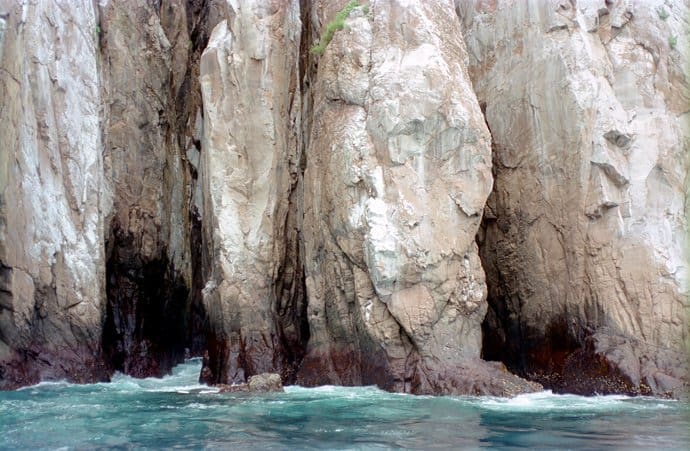
Puerto Rico was discovered by Christopher Columbus on his second voyage in 1493. As a result, Puerto Rico became part of the Spanish dominion. Fifteen years later, colonization began under Juan Ponce de León. This led to the extermination of the local Indians. After that, black slaves were introduced for work. Slavery was officially abolished in 1873. A year later, the Americans annexed Puerto Rico as a result of the Spanish-American War. With the passage of the Jones Act in 1917, Puerto Rico was once again granted internal self-government. In 1952, the island was granted the status of Dominion Estado Libre y Asociado de Puerto Rico (Commonwealth of Puerto Rico).

Satellite image with zoom: Read travel reportRead travel report Puerto Rico – Map
The island has a subtropical climate throughout the year, with average temperatures of around 28°C. The most frequent rainfall is recorded on the north coast and in the highlands. In the south of the island it is relatively dry. The island is mountainous with rainforests, deserts and beautiful long white sand beaches. More than 80% of the 4 million Puerto Ricans are Catholic. Although the island belongs to the USA, only about 10% describe themselves as Americans. 87% of Ricans see themselves as descendants of the Spaniards or as descendants of African slaves. Spanish is spoken as a first language by over 93% of the population, and universities mostly teach only in English. Agricultural products include sugar cane, bananas, coffee, pineapple, and tobacco. Another industry is fishing. In addition, there are such industries as the food, textile, cement and mechanical engineering industries. One of the other most important economic sectors is tourism.

Puerto Rico

Puerto Rico 1

by Joe OnTour 19. July 2017

Pictures Puerto Rico

Puerto Rico
Puerto Rico
Puerto Rico
Puerto Rico
Puerto Rico
Puerto Rico
Puerto Rico
Puerto Rico
Puerto Rico

Questions about Puerto Rico?

In the America Forum you will get the answers!

19. July 2017 0 comments
0 FacebookTwitterPinterestEmail
Newer Posts
Older Posts
  • Blog OntourWorld Travel Blog
  • GTC
  • Imprint
  • OnTourWorld
  • Privacy Policy
  • Useful links

@1993 - 2026 OnTour World | All Rights Reserved | Powered by OnTour World

Travel blog OnTourWorld
  • HOME
  • TRAVEL REPORTS
    • Europe
      • Spain
      • Portugal
      • France
      • Ireland
      • Italy
      • Croatia
      • Netherlands
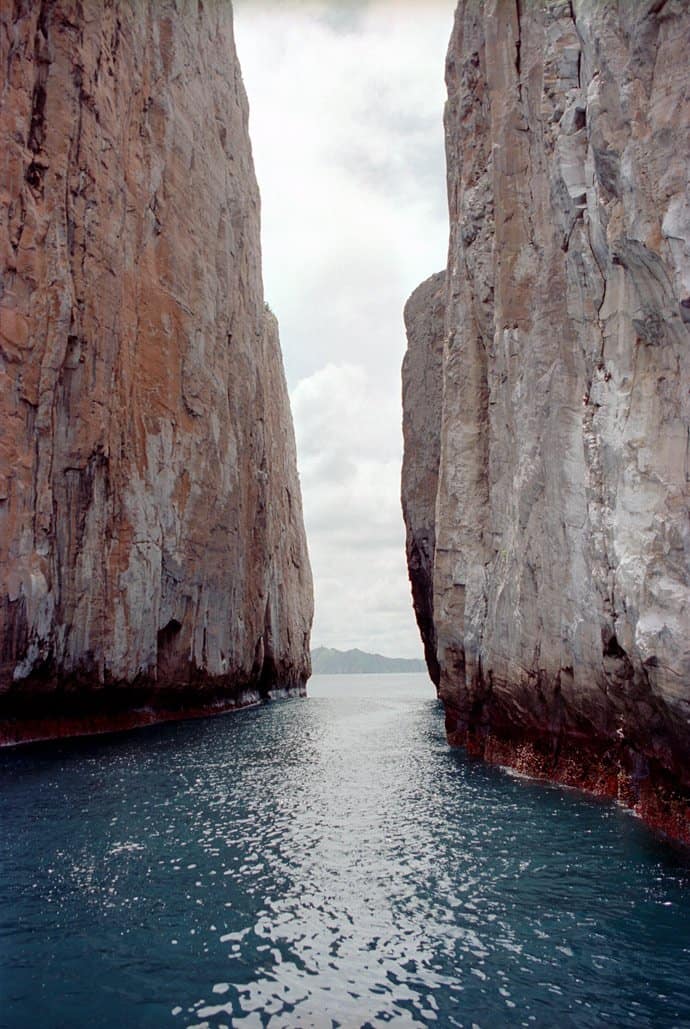
      • Austria
    • Africa
      • South Africa
      • Mauritius
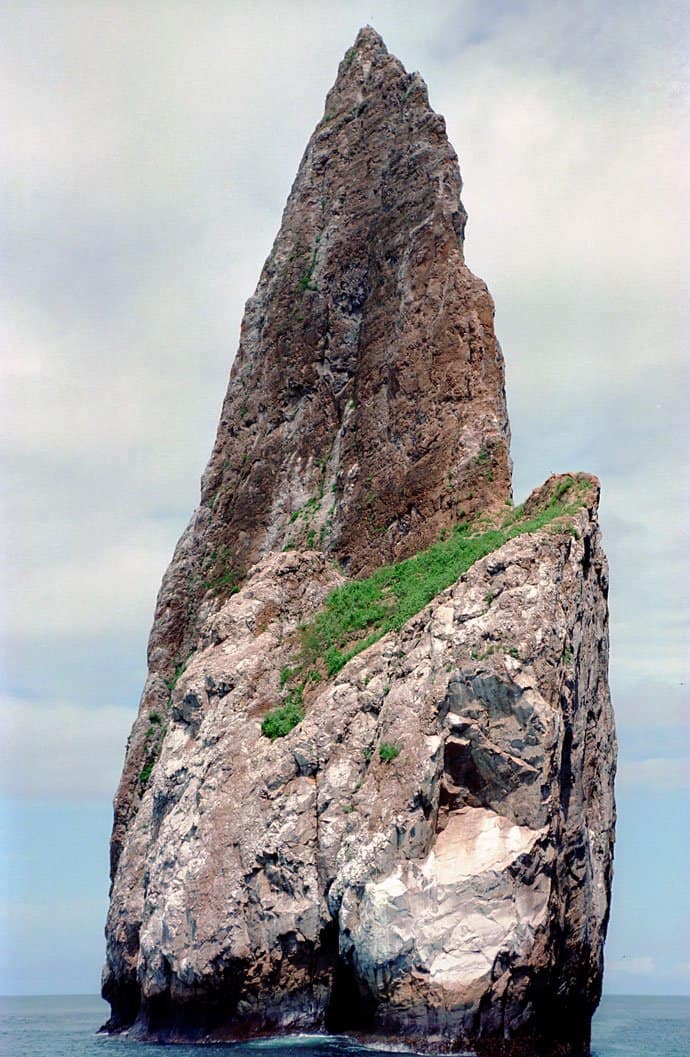
      • Seychelles
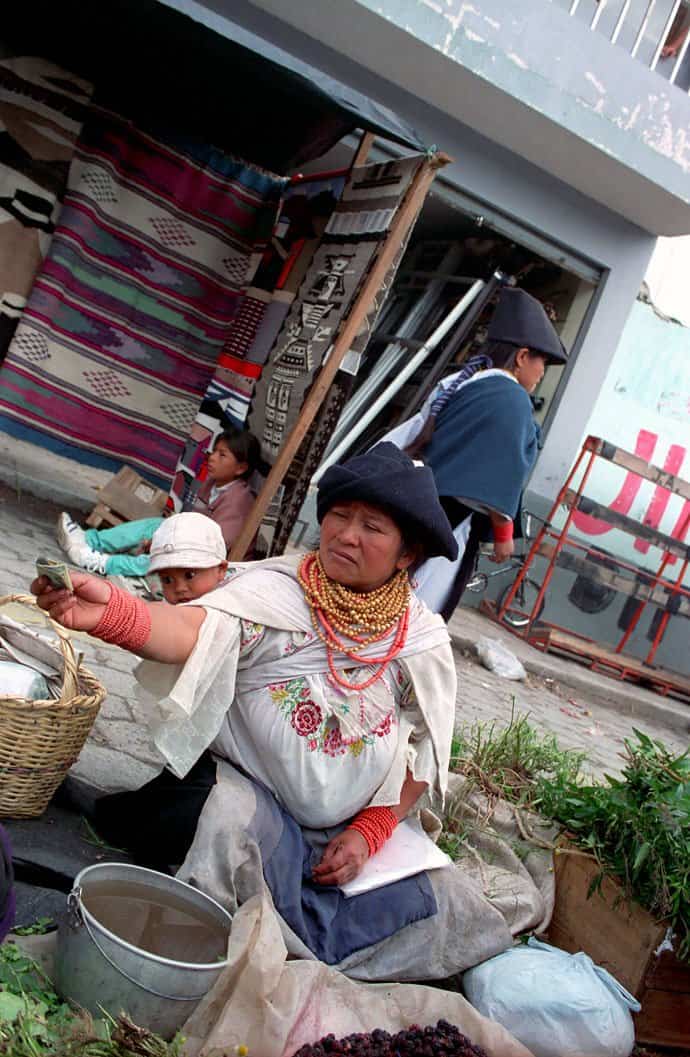
      • Egypt
    • America
      • Hawaii
      • New England
      • New York
      • Arizona
      • Ecuador
      • Galapagos
      • Canada
      • California
      • Mexico
      • Dominican Republic
      • Puerto Rico
      • Bermudas
      • Bahamas
    • Asia
      • Bali
      • Hong Kong
      • Java
      • Maldives
      • Philippines
      • Singapore
      • Sri Lanka
      • Thailand
      • Turkey
    • Oceania
      • Australia
      • New Zealand
      • South Sea
  • CITY TOURS
  • Forum
  • SERVICE
    • Videos
    • Imprint
    • Data protection
  • German
  • English