Travel blog OnTourWorld
  • HOME
  • TRAVEL REPORTS
    • Europe
      • Spain
      • Portugal
      • France
      • Ireland
      • Italy
      • Croatia
      • Netherlands
      • Austria
    • Africa
      • South Africa
      • Mauritius
      • Seychelles
      • Egypt
    • America
      • Hawaii
      • New England
      • New York
      • Arizona
      • Ecuador
      • Galapagos
      • Canada
      • California
      • Mexico
      • Dominican Republic
      • Puerto Rico
      • Bermudas
      • Bahamas
    • Asia
      • Bali
      • Hong Kong
      • Java
      • Maldives
      • Philippines
      • Singapore
      • Sri Lanka
      • Thailand
      • Turkey
    • Oceania
      • Australia
      • New Zealand
      • South Sea
  • CITY TOURS
  • Forum
  • SERVICE
    • Videos
    • Imprint
    • Data protection
  • German
  • English
South Sea - Samoa
South Seas

South Seas – Samoa – III

by Joe OnTour 26. August 2017
written by Joe OnTour

South Seas – Samoa – Travelogue 3

The former West Samoa has now become Samoa, one of the most stable democracies in the South Seas. There is even a Ministry for Women’s Affairs, and women traditionally have the say in the family. In every village there is a matai (chief) who oversees the most important rules of coexistence and also acts as a judge in case of simple violations and disputes. Social life is strongly dominated by traditions and old customs. For example, foreigners in Samoa usually cannot acquire land, which has the positive consequence that the beaches are largely free of hotel complexes and villas of rich foreign investors. When selling a property, the entire clan usually has to agree, which can lead to enormous difficulties because 2/3 of all Samoans live abroad (Australia, New Zealand, USA).

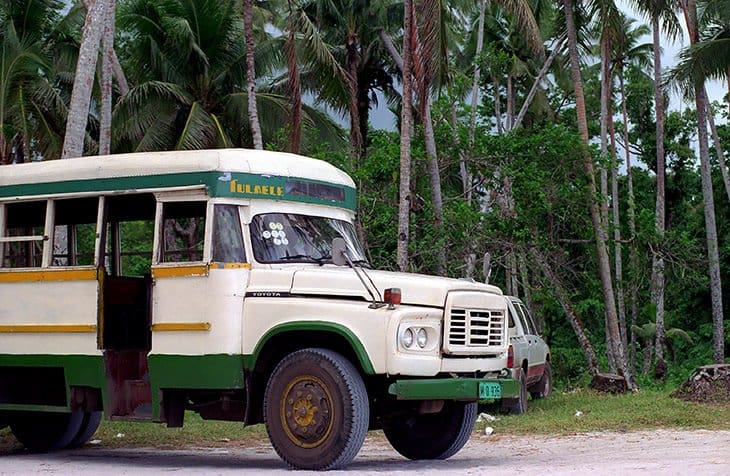
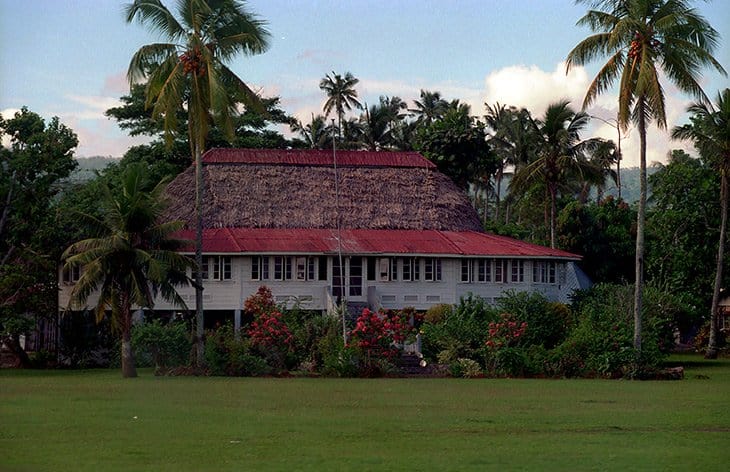
Transportation from island to island can be done by seaplane in urgent cases. The Samoans, however, prefer transport by ship, which is also considerably cheaper. Adjacent is one of the larger estates of a large landowner.

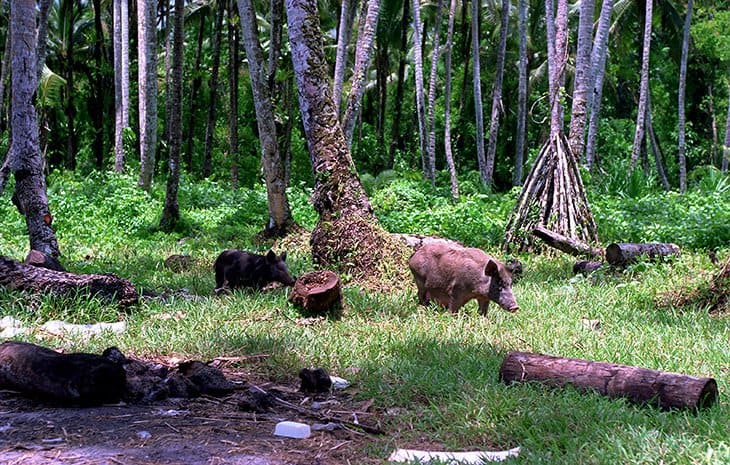
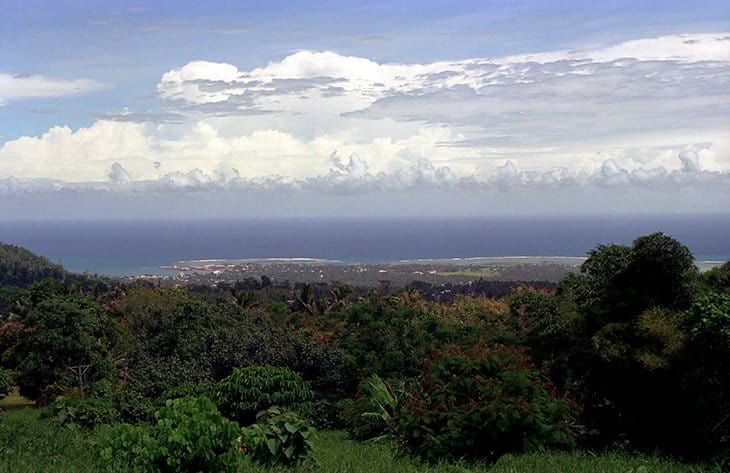
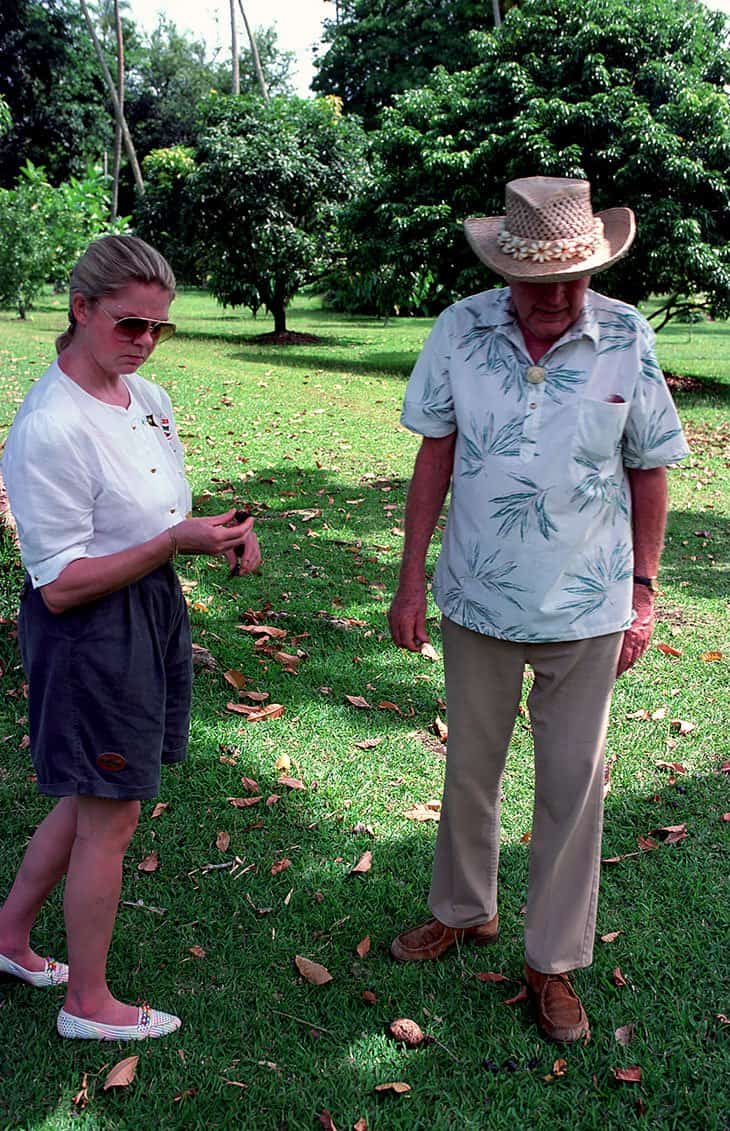
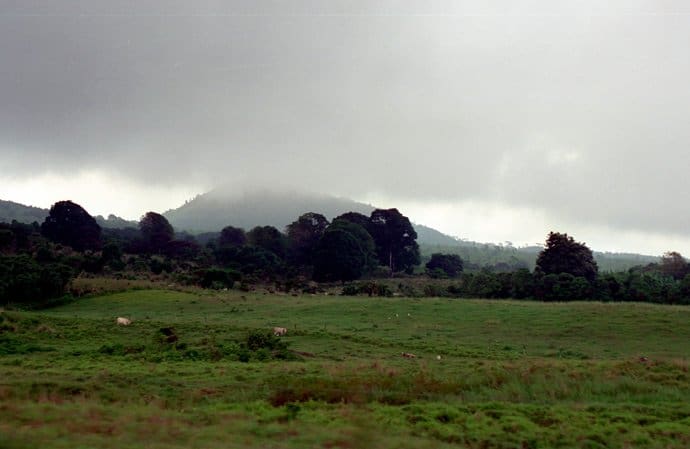
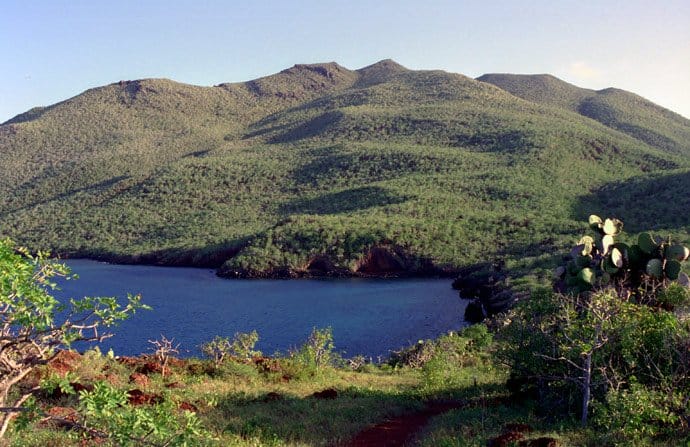
The island of Samoa is endowed with a rich flora. Again and again, new fantastic views open up on our tour of the island over a green landscape that suddenly opens up a view of the sea.

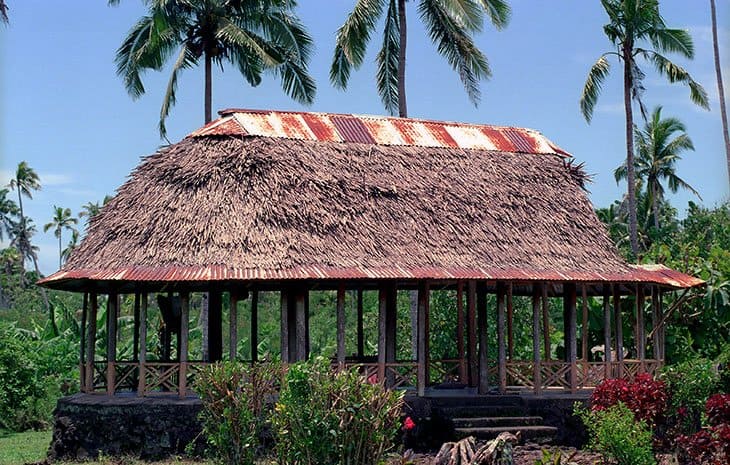
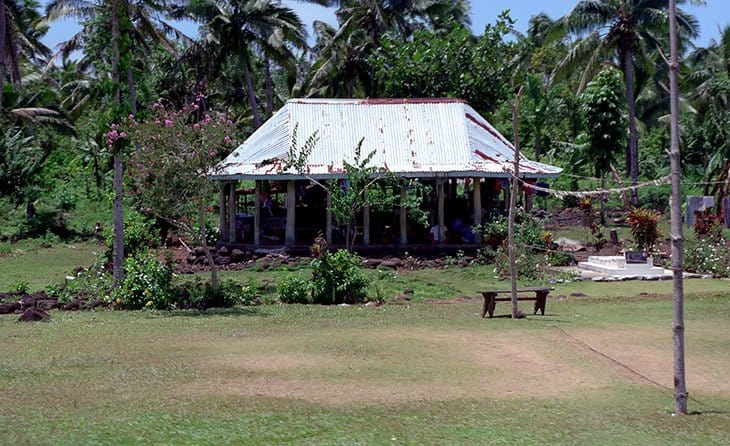
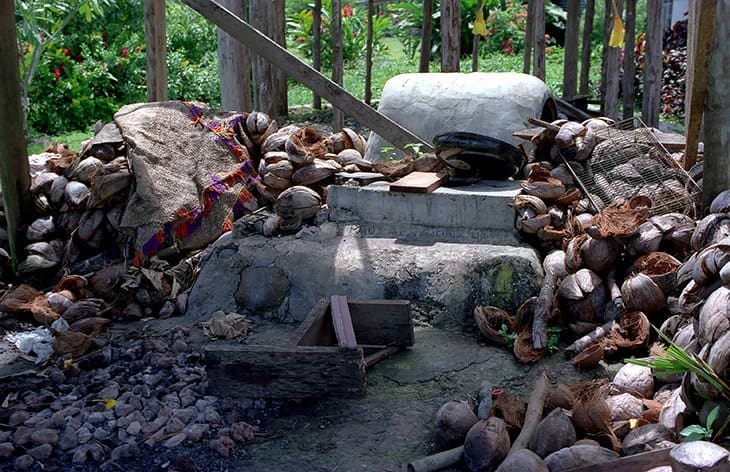
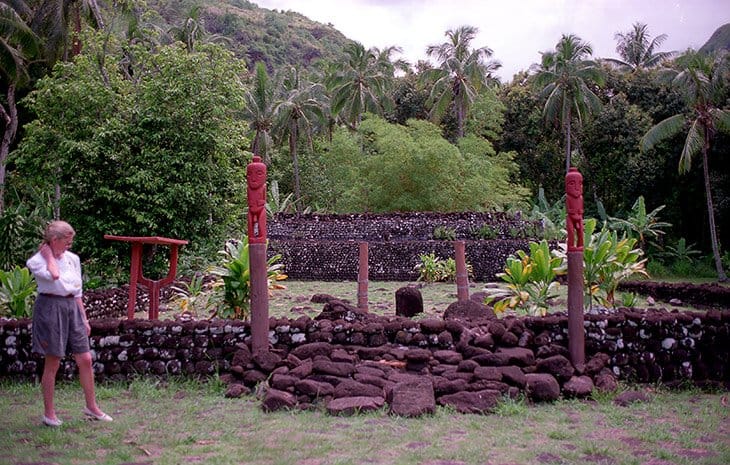
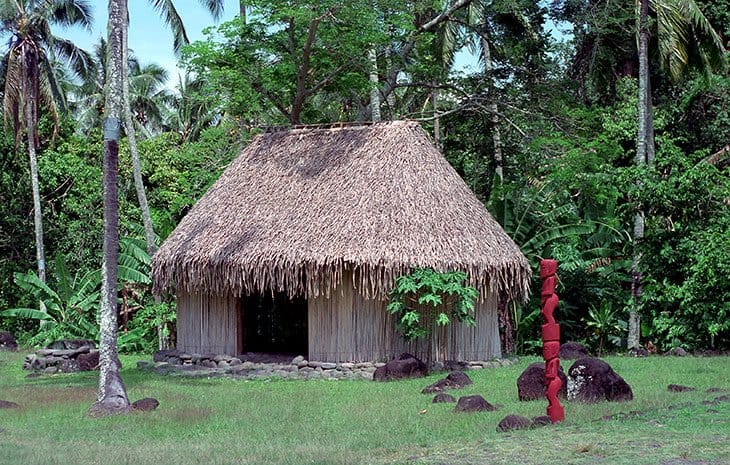
A communal storage and cooking area. Everything was also built open, as the ancestors did a thousand years ago.

Currently PopularSouth Seas

South Seas – Bora Bora

by Joe OnTour 7. April 2018
South Seas

South Seas – Bora Bora – II

by Joe OnTour 7. April 2018
South Seas

South Seas – Bora Bora – III

by Joe OnTour 7. April 2018
South Seas

South Seas – Samoa – Apia

by Joe OnTour 3. April 2018
South Seas

South Seas – Samoa – I

by Joe OnTour 3. April 2018
South Seas

South Seas – Samoa – Folklore – fia fia

by Joe OnTour 2. April 2018
South Seas

South Seas – Samoa – Beaches

by Joe OnTour 1. April 2018
South Seas

South Seas – Tahiti

by Joe OnTour 31. March 2018
South Seas

South Seas – Tahiti – Folklore

by Joe OnTour 31. March 2018
South Seas

South Seas – Cook Islands

by Joe OnTour 30. March 2018
South Seas

South Seas – Cook Islands – Roratonga

by Joe OnTour 30. March 2018
General country informationSouth Seas

South Seas – General information

by Joe OnTour 26. August 2017
South Seas

South Seas – Samoa – II

by Joe OnTour 26. August 2017
South Seas

South Seas – Samoa – III

by Joe OnTour 26. August 2017
South Seas

South Seas – Samoa – Aggie Greys

by Joe OnTour 26. August 2017
South Seas

South Seas – Samoa – People

by Joe OnTour 26. August 2017
South Seas

South Seas – Tahiti – Culture

by Joe OnTour 26. August 2017
South Seas

South Seas – Tahiti – People

by Joe OnTour 26. August 2017
South Seas

South Seas – Cook Islands – People

by Joe OnTour 26. August 2017

Pictures South Seas – Samoa

South Sea - Samoa
South Sea - Samoa
South Sea - Samoa
South Sea - Samoa
South Sea - Samoa
South Sea - Samoa
South Sea - Samoa

Questions about the destination South Seas

In the Südsee-Forum you will get the answers!

26. August 2017 0 comments
0 FacebookTwitterPinterestEmail
South Sea - Samoa - Aggie Greys
South Seas

South Seas – Samoa – Aggie Greys

by Joe OnTour 26. August 2017
written by Joe OnTour

South Seas – Samoa – Aggie Greys

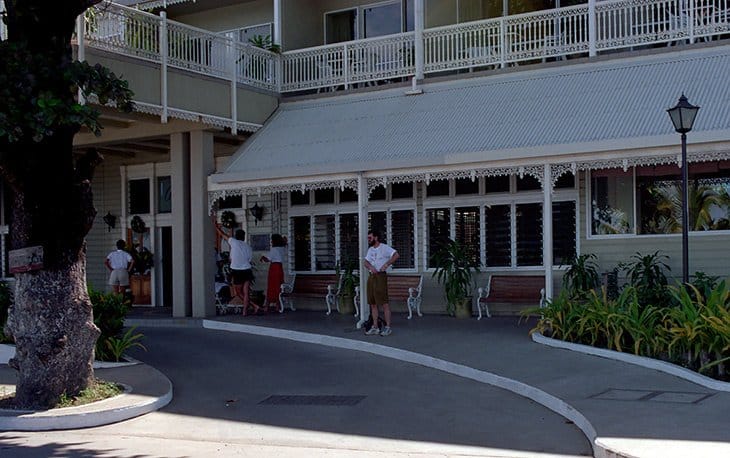
There is still a flair of charm, smiles and restrained gestures in the air when you enter Aggie Greys in Apia. The legendary hotel, named after its no less illustrious founder, is proud of its visitor list, which includes Gary Cooper, William Holden and Marlon Brando, as well as royal names. Aggie died in 1988 at the age of 91. Son Frederick continues her life’s work. His motto: No perfection like in a holiday club, but to convey kindness to every guest.

Today, there is a good mood among the business people, diplomats and travelers who stay in one of the 156 rooms or the two suites in the midst of lush tropical plants. Especially on Wednesday evenings, when the fia fia, the large buffet with Samoan dances, takes place and Apia’s wealthy elite mingles with the hotel guests, you can feel it.

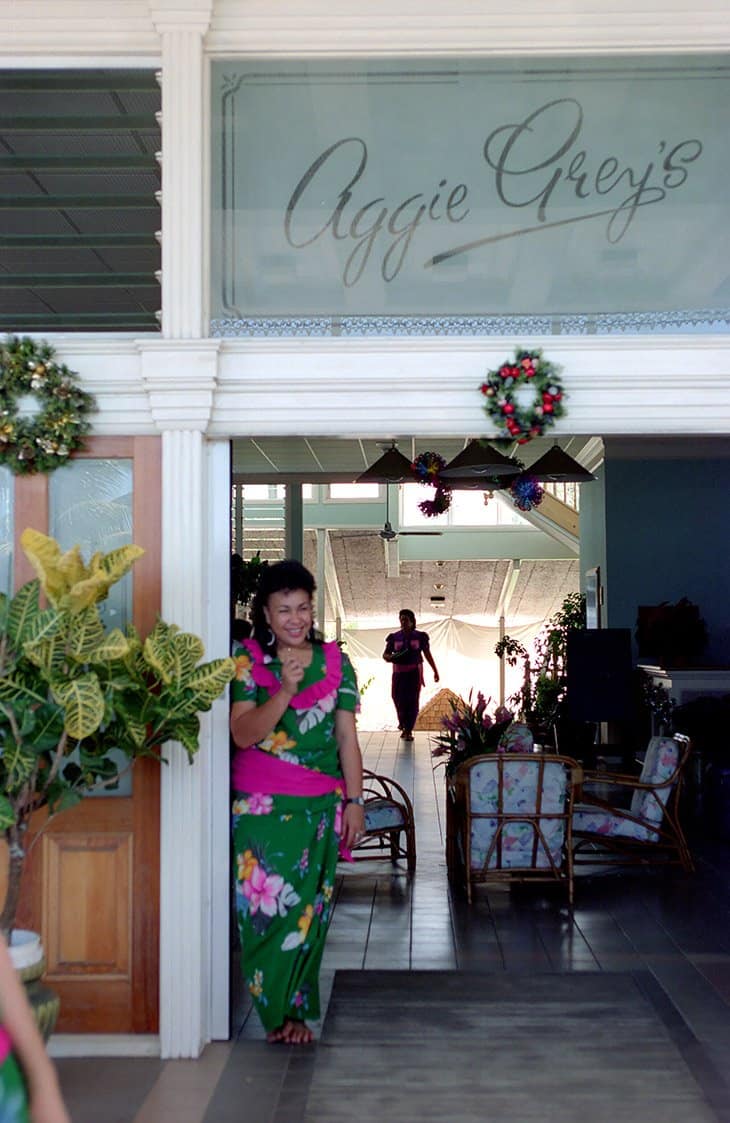
Friendly and helpful staff is always at your side. The daughter-in-law of the famous Aggie Grey now runs the hotel with her husband.

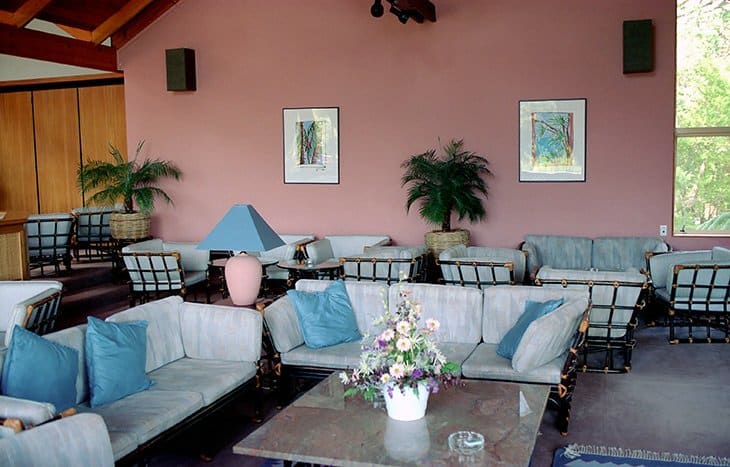
The décor of a typical room at Hotel Aggie Greys is simple, but bright and friendly.

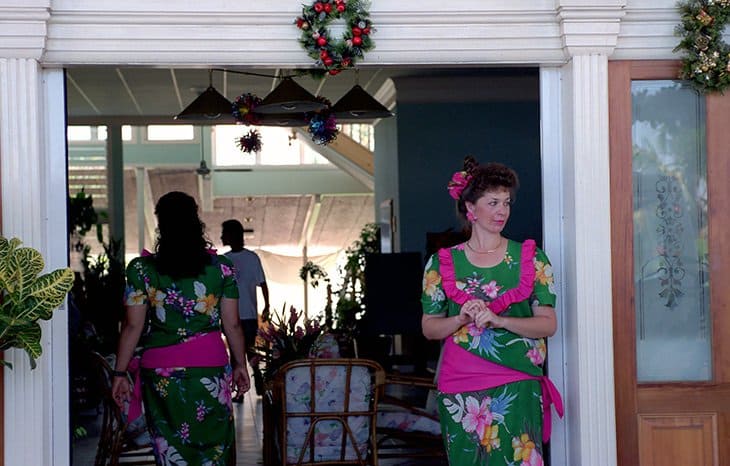
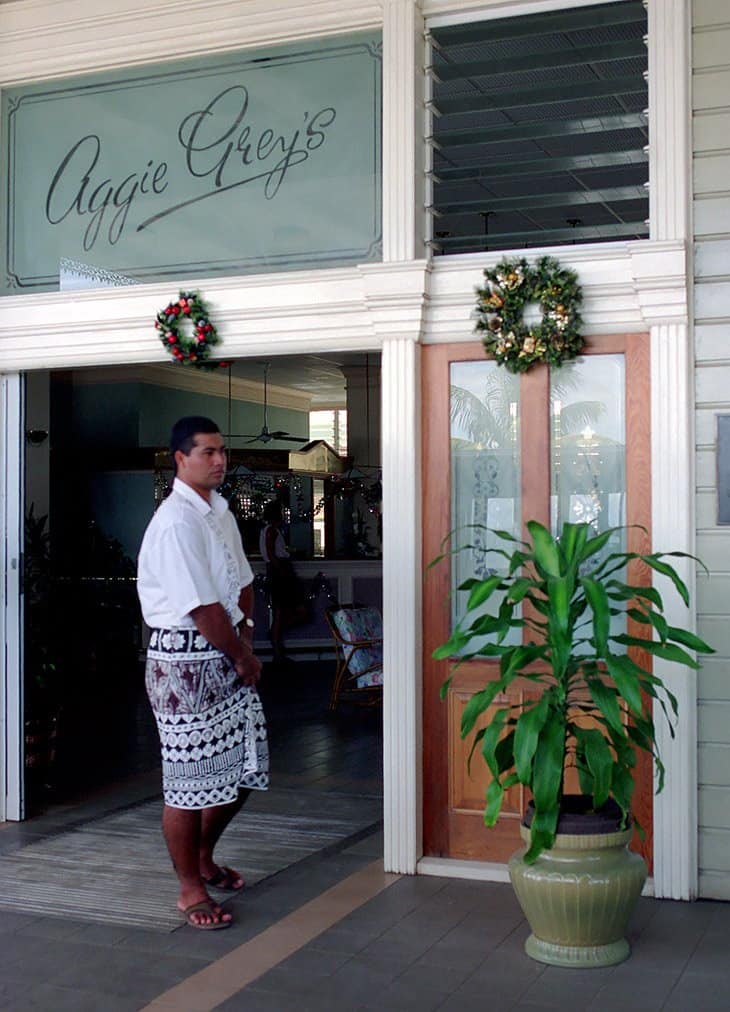
The lobby is festively decorated for Christmas. In keeping with the standard of the hotel, a porter in his typical national dress is waiting in front of the entrance.

Pictures South Seas – Samoa – Aggie Greys

South Sea - Samoa - Aggie Greys

Questions about the destination South Seas

In the Südsee-Forum you will get the answers!

26. August 2017 0 comments
0 FacebookTwitterPinterestEmail
South Sea - Samoa - People
South Seas

South Seas – Samoa – People

by Joe OnTour 26. August 2017
written by Joe OnTour

South Seas – Samoa – People

On March 1, 1900, the German flag was hoisted in western Samoa. Although the Germans protected their interests and even deported armed insurgents to the Mariana Islands, they were very popular with the population. They built schools, hospitals and the only road that existed in Samoa until 1942. And many Samoans still have German names today. The Minister of Tourism is called Hans-Joachim Keil and an employee named Huber works in his anteroom. Both speak little German, but have unmistakable European facial features. In the capital there is still a hotel called “Insel Fehmarn”. Like all colonial masters, the Germans also brought foreign workers with them to Samoa. In this case, there were 2000 Chinese.

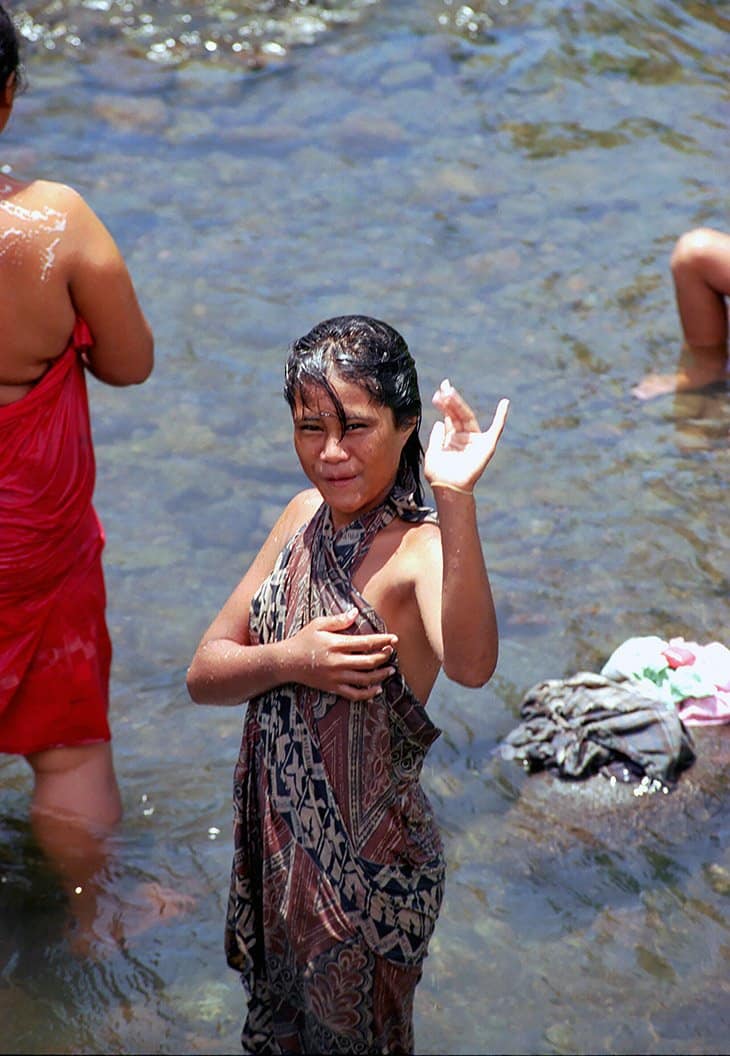
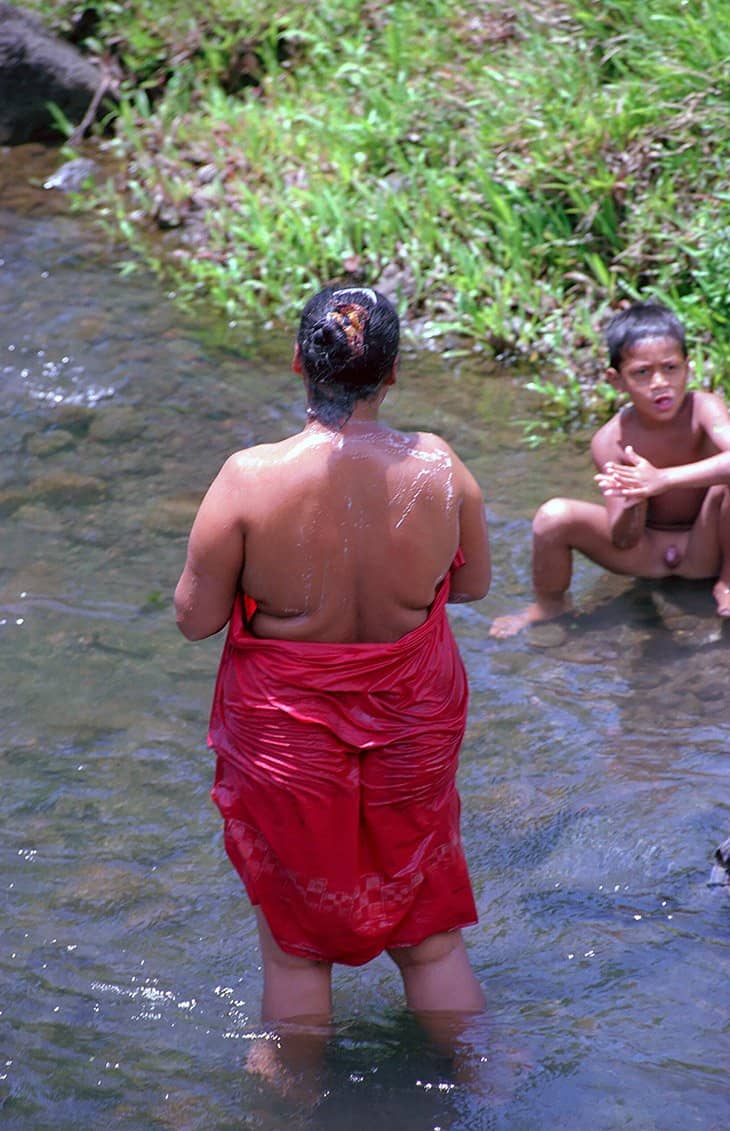
Planters taught the population how to create plantations and irrigation systems. Even today, you can admire palm groves that have been laid out accurately like espalier fruit. Laundry is still washed in the rivers, which also function as a bathing establishment.

Civilization dropouts have an extremely difficult time in Samoa, because they can practically only settle down if they marry into a Samoan family. This may sound funny and interesting, but it is only to a limited extent, because then you have the whole family on your neck, which expects financial advantages from the foreigner by marriage. Male singles will soon find that the local girls and women have little inhibitions about hooking up and matching. The age of the men also hardly plays a role. The main thing is wealthy foreigners. The inviting smile can therefore boomerang. Samoa is, to put it mildly, a state that is permanently on the verge of bankruptcy. The unemployment rate is the highest and the average income the lowest in the entire South Seas.
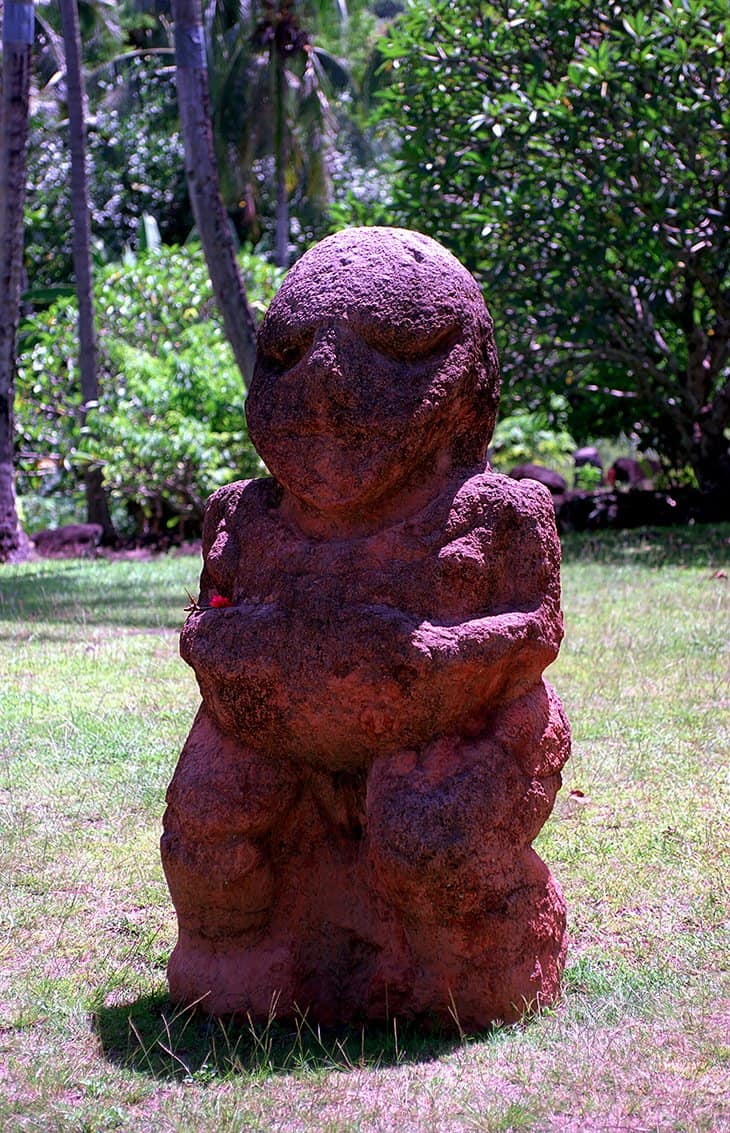
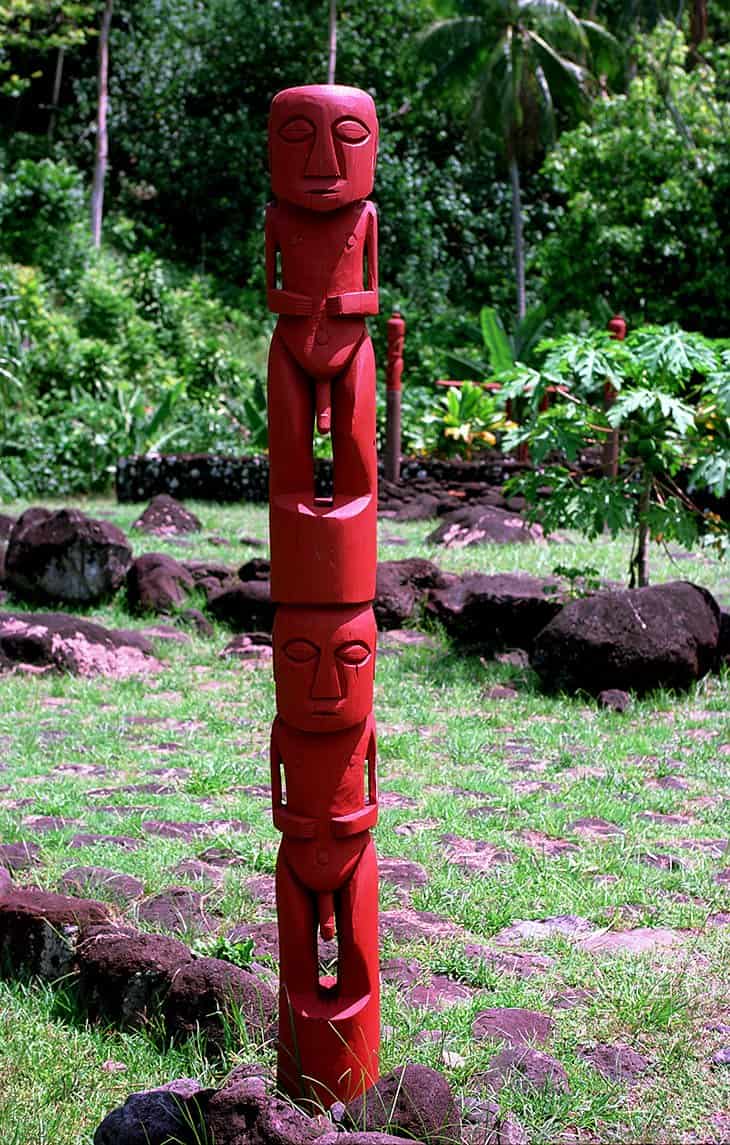
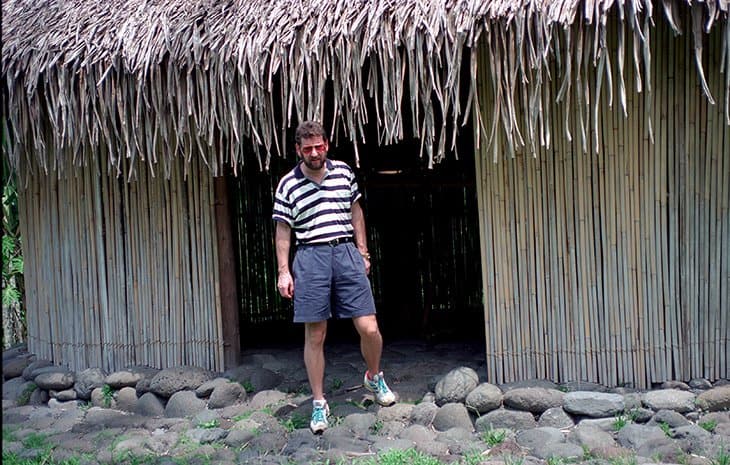
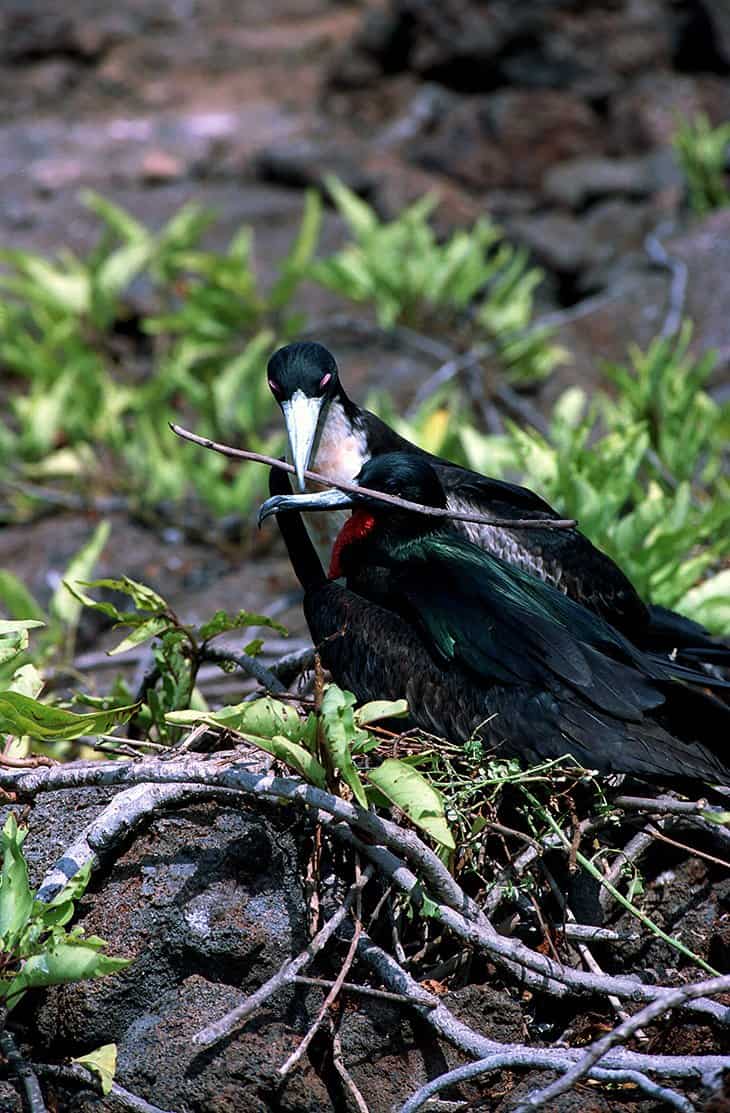
Without development aid, the country would have been bankrupt for some time. There is hardly any industry (coconut oil factory), boat building is primitive, skilled craftsmen are missing, only the beer factory “Vailima” (Samoan = water from the hand), which is under German supervision, is flourishing. In 1989, the banking system was liberalized. Since then, Samoa has been considered a tax haven for large companies. Tourism seems to be the country’s main source of income in the near future. About 60,000 foreigners visit Samoa every year for trekking, biking, cycling, diving, sailing, canoeing, volcano expeditions, deep-sea fishing and simple swimming. The smallest share comes from Europe. Only a few Germans have made it to Samoa so far. Mostly they are divers, hiking tourists or globetrotters.
Pictures South Seas – Samoa – People

South Sea - Samoa
suedsee samoa apia 261
South Sea - Samoa - People

Questions about the destination South Seas

In the Südsee-Forum you will get the answers!

26. August 2017 0 comments
0 FacebookTwitterPinterestEmail
South Sea - Tahiti - Culture
South Seas

South Seas – Tahiti – Culture

by Joe OnTour 26. August 2017
written by Joe OnTour

South Seas – Tahiti – Culture

The first European visitors were Spaniards in 1606 under the Portuguese Pedro Fernandez de Quiros, but since the island had no mineral resources, it was not interesting for the invaders. The island was called “Sagittaria”. The crews of the ships were welcomed by naked girls because they were believed to be gods.

The crews of the following ships under Wallis (1767) and James Cook (1774) left behind not only blond children, but also diseases previously unknown here such as syphilis and flu. The number of inhabitants at that time was estimated at about 200,000. In 1768, Tahiti became a French colony and a little later the first missionaries reached the island.

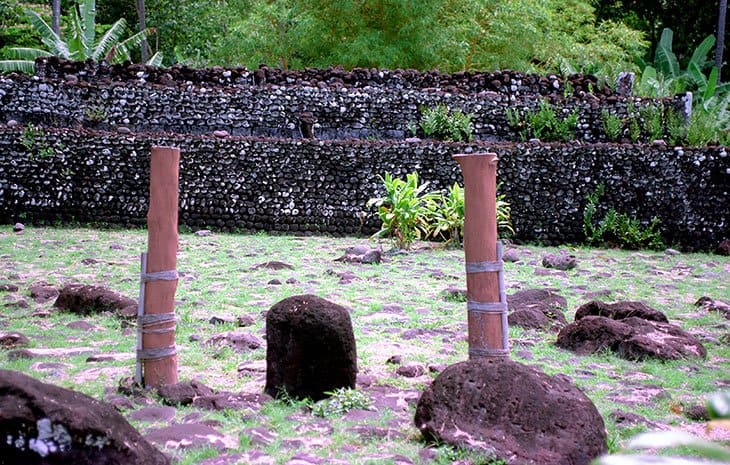
Through the subsequent Christianization, the original culture of the Polynesian immigrants was completely destroyed. However, some sites of this culture can still be seen today in replicas.

Pictures South Seas – Tahiti – Culture

South Sea - Tahiti - Culture
South Sea - Tahiti - People

Questions about the destination South Seas

In the Südsee-Forum you will get the answers!

26. August 2017 0 comments
0 FacebookTwitterPinterestEmail
South Sea - Tahiti - People
South Seas

South Seas – Tahiti – People

by Joe OnTour 26. August 2017
written by Joe OnTour

South Seas – Tahiti – People

Today, Tahiti enjoys the highest standard of living of all South Sea countries. Tourism is an important economic factor. France spends about 1 billion euros a year on its small overseas possessions, but the island has a hard time repaying this amount with 200 to 300% import duties on all goods. The island was populated by Polynesian immigrants in the period from 300 to 800. The fertile soil and the fish-rich ocean provided plenty of food for the immigrants.

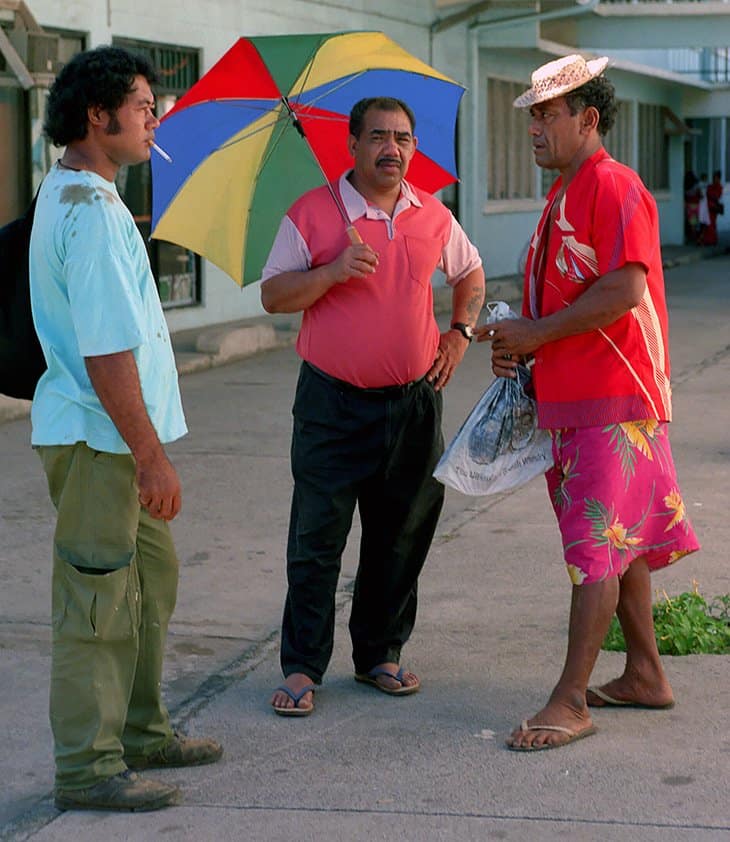
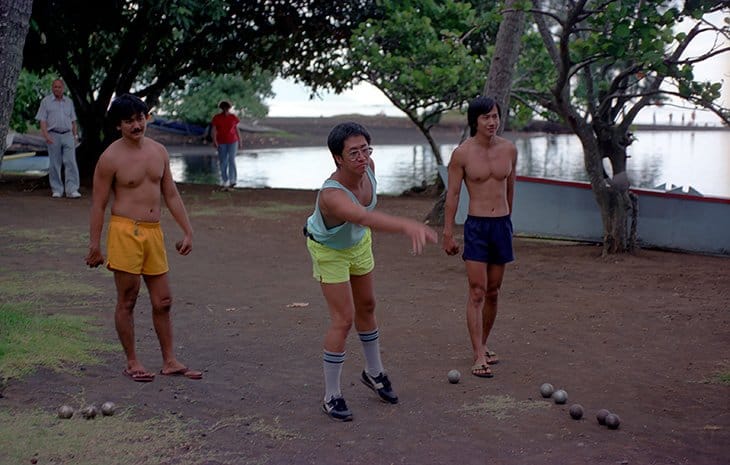
It is not difficult to study the life of the islanders. We just go to the beach or to the waterfronts, just where life happens. Three people have come together to form the Boggia. They have the time to talk and have fun playing together. The highest good on earth seems to be available here in abundance.

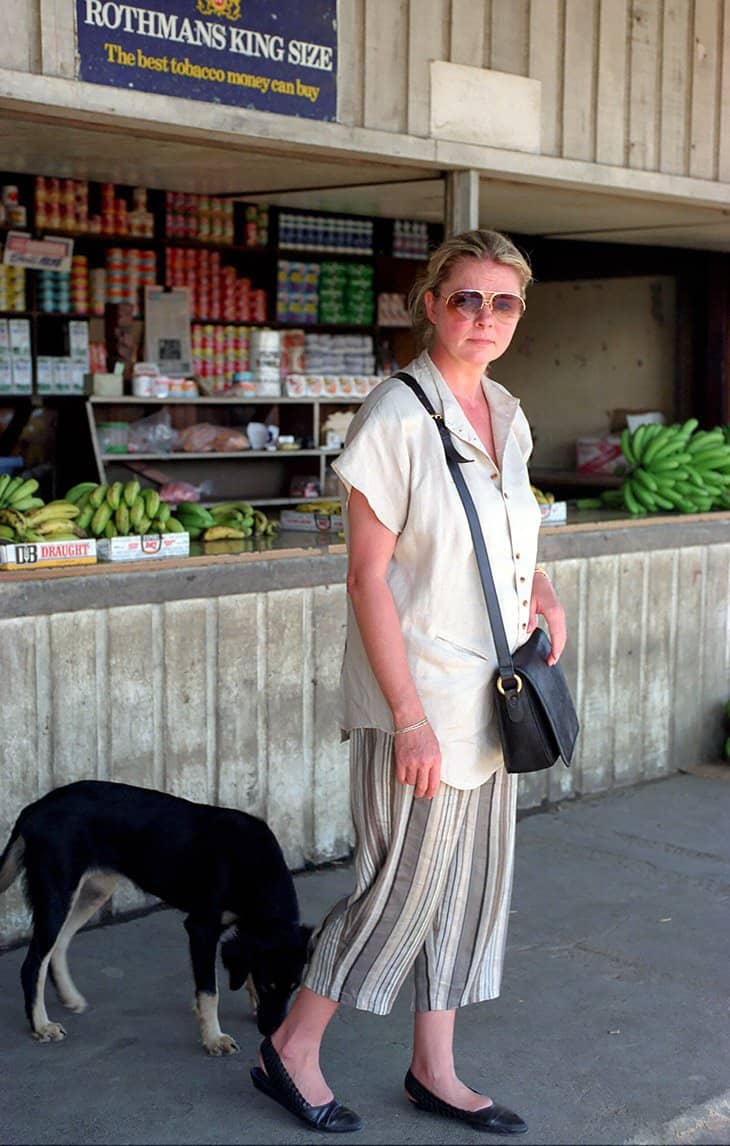
The relaxed atmosphere and the satisfaction of the local cultures never ceases to impress European visitors. The population was made up of 83% Polynesian, 11% European, 4% Asian, and 3% mixed-race people. The painter Paul Gauguin (1848 to 1903) lived and worked in Tahiti. Of course, the picture does not show Brigitte with Gauguin, but with one of his descendants.

Pictures South Seas – Tahiti – People

South Sea - Tahiti - People

Questions about the destination South Seas

In the Südsee-Forum you will get the answers!

26. August 2017 0 comments
0 FacebookTwitterPinterestEmail
South Sea - Cook Islands
South Seas

South Seas – Cook Islands – People

by Joe OnTour 26. August 2017
written by Joe OnTour

South Seas – Cook Islands – People

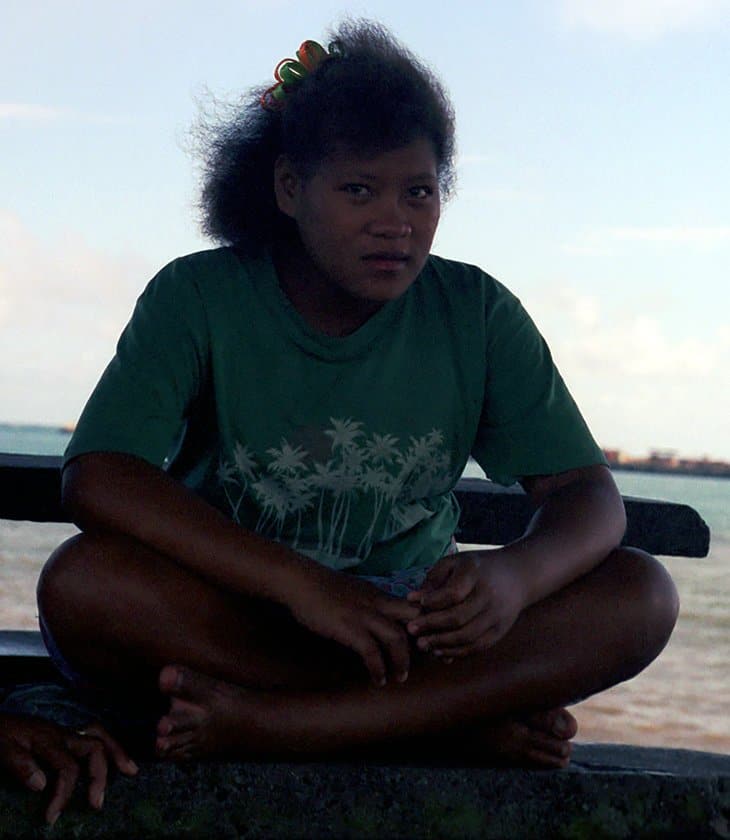
We watched the islanders on the Cook Islands a little with our camera.
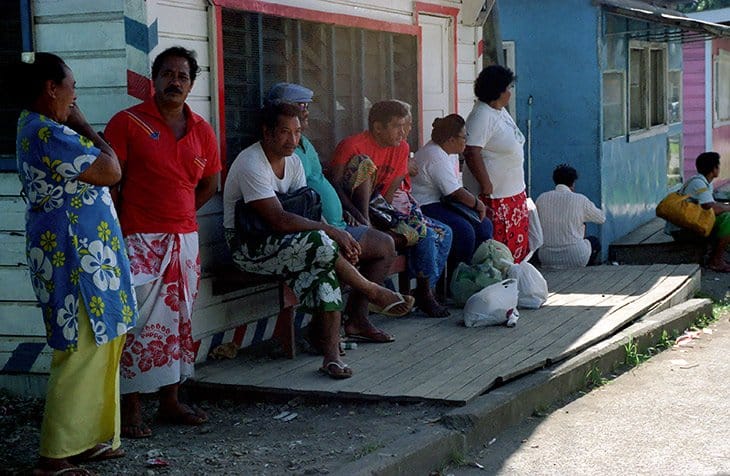
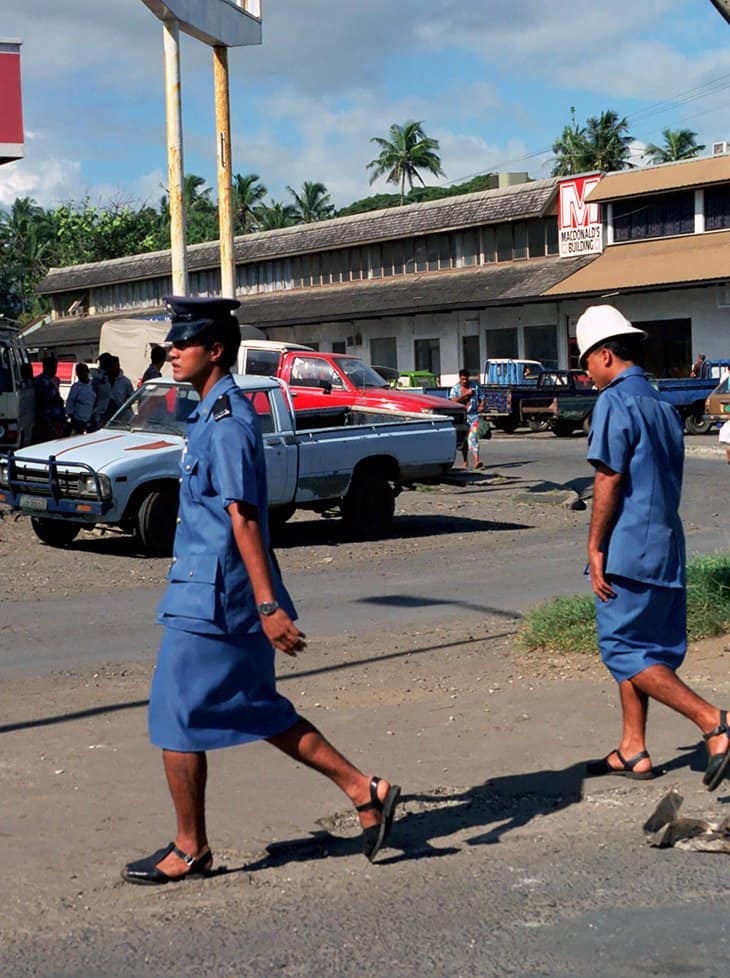
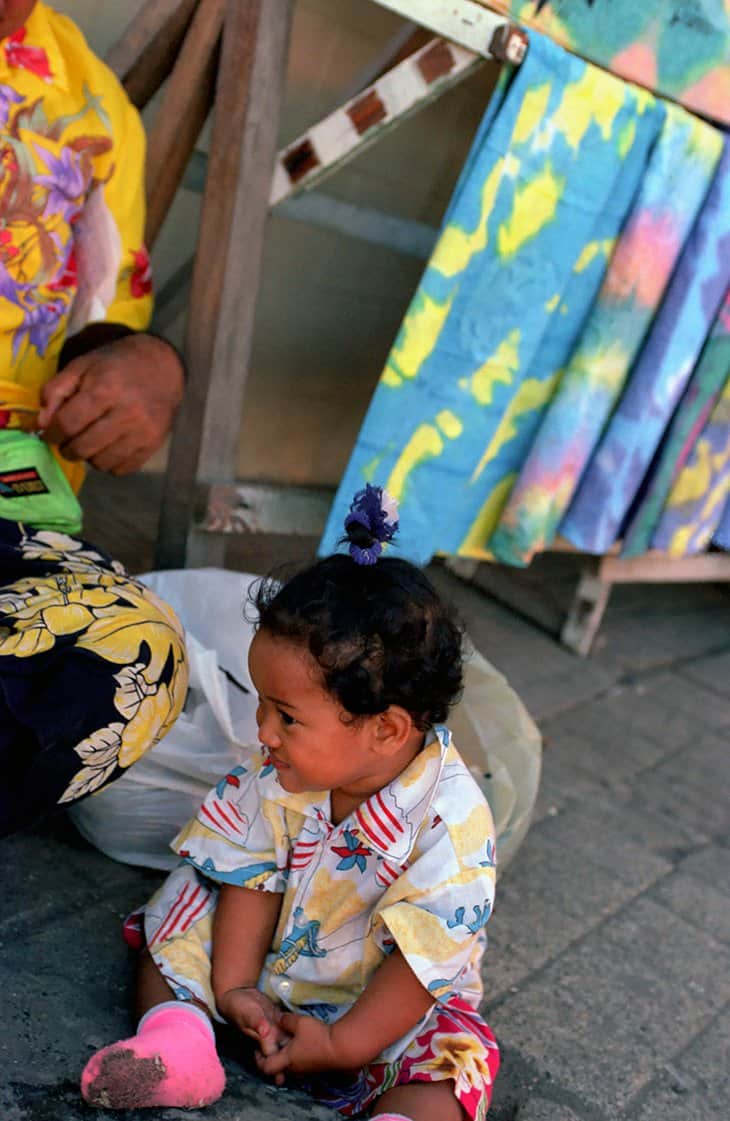
An interesting street scene at the bus stop. Men and women wear the colorful pareos that are so typical of the South Seas. The fine cotton wraps are usually provided with colourful print patterns. The pareos are worn both as a dress and as a skirt.

You can tell from the policemen in their blue skirts that today the temperatures are beyond 40 degrees. In this heat, we finally take a well-deserved rest after our exhausting island tour.

Pictures South Seas – Cook Islands

South Sea - Cook Islands

Questions about the destination South Seas

In the Südsee-Forum you will get the answers!

26. August 2017 0 comments
0 FacebookTwitterPinterestEmail
Galapagos
GalapagosGeneral country information

Galapagos – General info

by Joe OnTour 26. August 2017
written by Joe OnTour

Galapagos General Information

From Guayaquil, after an hour and a quarter of flight, they emerge unexpectedly from the deep blue ocean:

The enchanted islands, the enchanted islands, the enchanting islands. Tropical Dream World, Paradise on Earth, Noah’s Ark in the Pacific, God’s Workshop, Model Example of Evolution or Fantastic Laboratory of Nature, are the many other intoxicating epithets for the exotic Galápagos archipelago, which has become the magical formula of constantly increasing visitor numbers for the entire Ecuadorian tourism industry worldwide.

Location and size
Almost 1,000 kilometers west of the Ecuadorian mainland, or 1,200 km southwest of Panamá and Costa Rica, lie the 70 islands, islands, and volcanic rocks of the Galápagos archipelago that rise out of the water. Isabela, by far the largest island among them with 4,588 square kilometers, takes up more than half of the total area.

It is followed by Santa Cruz (986 sq km), Fernandina (642 sq km), Santiago (585 sq km), San Cristóbal (558 sq km), Floreana (173 sq km) and Marchena (115 sq km). The total surface of the archipelago is just over 8,000 sq km. Among the smallest islands with an area of 1 to 5 square kilometers are Rábida, Seymour, Wolf, Bartolomé, Tortuga and Darwin.

Drawn on an axis from west to east, the island kingdom stretches over 320 km. The equatorial line runs exactly through the volcanic crater Wolf in the northern part of Isabela Island. With a height of 1,707m, this is also the highest elevation on Galápagos.

The history of the archipelago
Like many other volcanic island chains in the Pacific region, the Galápagos Islands are of oceanic descent. Oceanic in this case means the opposite of continental, i.e. the islands have had no connection to the mainland in the course of their formation history or have emerged from it by drifting. They were lifted up from the depths of the sea to the surface of the water quite independently of the geological events on the South American continent, or were created by a hot magma ejection from the earth’s interior. Similar to the Hawaiian Islands, the Galápagos Islands are still very young, and still “growing”!
The geological structure of the earth can be compared to a peach. The hard inner core of the earth is surrounded by a soft flesh (magma). This viscous mantle is held together by a thin outer shell, the Earth’s crust. This outer crust of the Earth is divided into twelve large plates that constantly rub against each other like a movable spherical mosaic, collide with each other, fold each other open and submerge each other as they float around on the viscous mantle.

The continuous movements of these colliding plates eventually lead to earthquakes and volcanic eruptions. The cause of these tectonic plate movements are certain currents and countercurrents within the Earth’s mantle, which grind the Earth’s crust in one place and reshape it in another place to compensate.

The Galápagos Islands are located on the northern edge of the so-called Nazca Plate. This plate is slowly moving eastwards towards the South American plate – at an annual rhythm of about nine centimetres. The South American plate, on which the continent of the same name is located, on the other hand, is moving westwards, at a speed of about five centimeters per year. These two plates collide west of the South American Pacific coast in a kind of slow-motion collision. Along this zone, where the lighter Nazca Plate dives under the heavier South American Plate, not only has a deep sea trench formed, but also the mighty Andean chain has been folded out by the continuous pushing up of the continental plate.

A little further north of Galápagos is also the Cocos Plate, which finally dives under the Caribbean Plate. The islands are therefore located exactly in the border area of these three plates. The gradual drifting away of the Nazca Plate – and thus also of the Galápagos archipelago – explains the folds of the sea and land floor, but not yet the volcanic activity of the islands.

Beneath the Galápagos Islands is a point that geologists call a hot spot. A hot spot is a zone of hot rising magma in the lower part of the Earth’s mantle, which eventually pierces through the Earth’s hard crust like a fire-breathing fountain. This hot spot has formed an underwater platform at this point like a heat bubble from which the isolated Galápagos volcanoes rise. They are nothing more than the valves of this underground hot spot. Where one of these volcanic cones protrudes from the ocean, a new island is formed. In the case of Isabela Island, these were once five separate volcanoes that have merged into one large landmass due to persistent eruptions and lava outflows.

However, since this hot spot always remains in the same place, while the Nazca Plate drifts towards the continent at the same time, the Galápagos Islands are to be divided from east to west in terms of age. The oldest islands are the easternmost Española and San Cristóbal (over 3 million years old), while the youngest are also the most volcanically active: Fernandina and Isabela (about 700,000 years old).

The current archipelago therefore rises from the water in two different forms. The round volcanic cones are the result of this fixed hot spot, while the flattened block mounds are the result of the Nazca plate movement, which partially folded the seabed above the water surface. Some of the islands have been formed in this context by a combination of these two primordial forces.

Recent geological findings have provided evidence that there must have been a kind of “Proto-Galápagos” further east of the islands (over nine million years ago). These forerunners of today’s islands have long since been eroded and disappeared into the sea. They were much closer to the continent than today’s islands and can therefore also provide completely new information about the theory of evolution.

In the end, the animal world did not have to travel such a long way to get to the archipelago. At least not as initially suspected. This proto-archipelago was located just 300 – 400 kilometers west of the continent. This also explains why there are animals and plants on Galápagos which, due to their endemic stage of development, must have passed through an age that far exceeds the age of today’s islands.

Galapagos – Climate

Due to the meeting of various Pacific ocean currents in interaction with the winds, the Galápagos Islands do not have a typical equatorial climate, but rather have a unique microclimate. The ocean currents are the key to this phenomenon, which basically causes two seasons – one cool and one warm.

From January to May / June, tropical summer air temperatures prevail due to mild northeast trade winds. The North Equatorial Panamá Current, which is also known as El Niño due to its unusual strength, supplies warm, plankton-poor seawater (24-27 degrees). In the process, the moist air above the ocean is warmed up and condensed. During these months, heavy rain showers can also occur in the coastal area of the islands, while many marine animals and seabirds have to fear for their food due to the absence of the cold, nutrient-rich Humboldt Current from the south.

Nevertheless, the archipelago has the most sunny days during this humid season. The otherwise dry vegetation thrives magnificently and takes on colour. Even the dusty, desert-like island of Baltra is covered by a green carpet. In addition, many animals begin to reproduce during this season, which is more attractive to tourists.

From June to December / January, in the so-called garúa months, cool air and water temperatures prevail. With the Humboldt Current from Antarctic climes, subtropical weather fronts will reach Galápagos from the south. A sea of dense clouds envelops the higher altitudes of the islands, which is caused by the interaction of cold water (17-20 degrees) and warm air. Strong trade winds from the southeast drive this effect even further.

There is fog and continuous drizzle (garúa). In addition, the cold equatorial Cromwell Current, which hits the Galápagos Plateau from the west at a depth of several hundred meters (Fernandina, Isabela, Floreana), plays another decisive role in the nutrient supply of the dolphins, whales and penguins living mainly in this zone.

The plankton-rich sea is very rough, especially in the months from August to October, and the marine fauna multiplies more during this season. The coastal vegetation, on the other hand, is visibly drying up, even the Palo Santo forests are losing their leaves completely. Dust and stones are often the first impression of visitors to the island. For divers, this is one of the most exciting seasons. However, land-goers are advised to pack a warming jacket or a light sweater.

Galapagos – Fauna

There is hardly a place on earth where animals are easier to observe in the wild than on the Galápagos Islands.

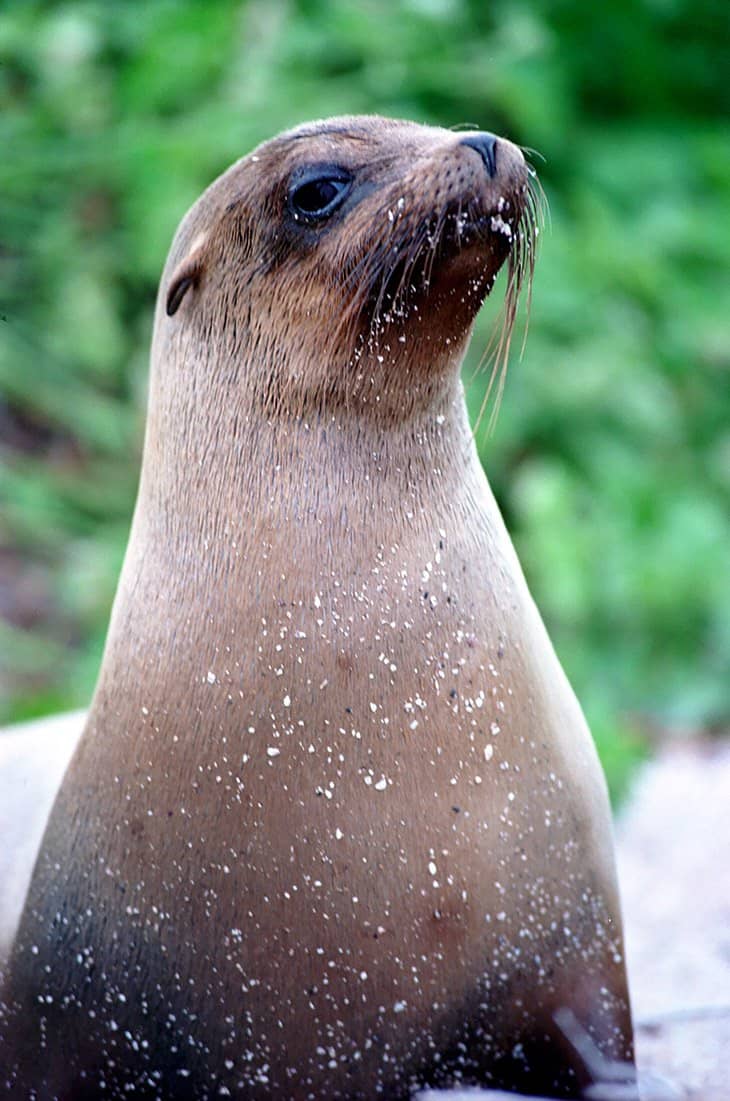
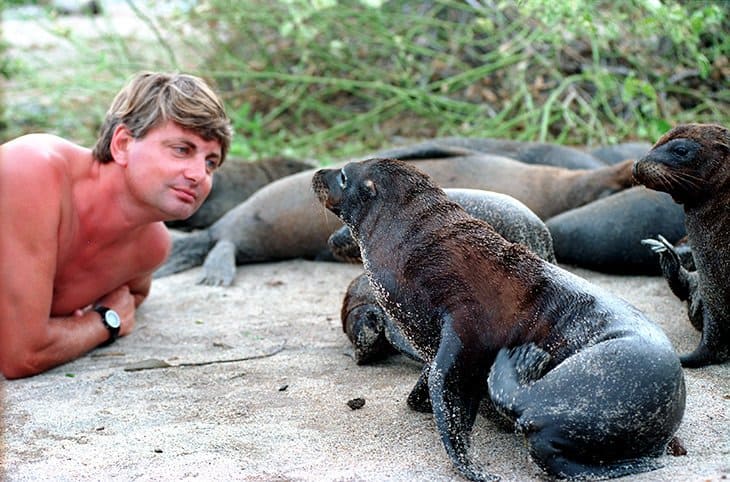
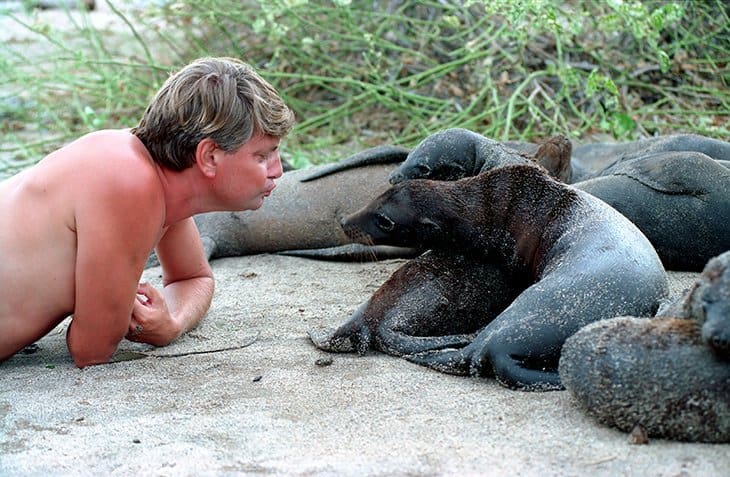
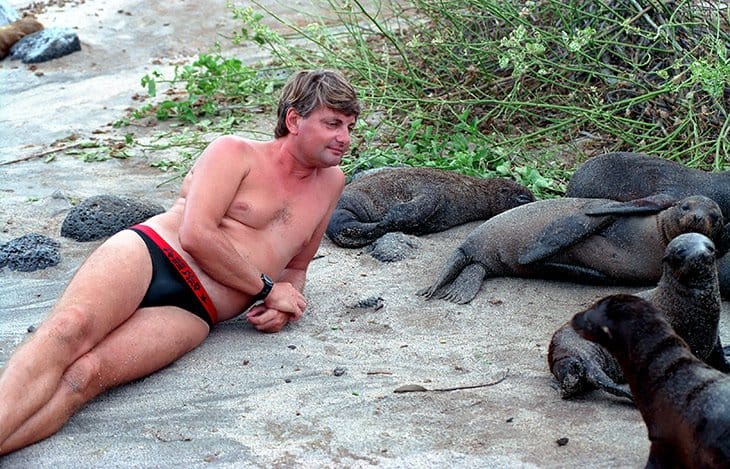
Despite the slaughter caused by pirates, buccaneers, whalers, fur seal hunters, settlers and the US Navy for centuries, the animals show no fear of the constantly landing hordes of tourists. At some visitor locations, the camera-armed groups even march through their territories by the dozens every day, stumbling past their living niches and breeding grounds, and unsettling their newborns. The adult animals remain undaunted and can be photographed steadfastly at very close range. Humans are simply accepted as an insignificant part of their natural environment. Some animals, especially sea lion cubs and Darwin’s finches, even show undisguised curiosity. Others, on the other hand, such as the gannets, snap with their beaks when they come too close.

This unanimous approval of humans on the part of the animals is primarily due to the professional nature guides who have been working according to the strict guidelines of the National Park Administration for decades. One of the most urgent tasks of the Guids is that the tourists only walk along the prescribed paths, so as not to step on the animals or their nesting sites off the paths. Visitors who cannot resist the temptation to leave the marked path are immediately reprimanded. Apart from that, sooner or later the coveted motif will sit directly on the side of the path in front of the lens anyway. In order to get a better shot, care should also be taken to ensure that many birds and iguanas breed in the middle of the tourist paths. In order not to destroy these breeding sites, careful evasion is the top priority. Never step directly over a nest!

There are also selfish sea lion bulls who stubbornly occupy the jetty, or want to claim the beautiful beach all to themselves and their numerous playmates. Here, too, any kind of confrontation should be avoided. The National Park regulations do not apply to animals, even if they are ultimately intended only for them.

The best time to observe the wild animals is in the early morning and late afternoon. Around noon, the marine iguanas often dive the ocean floor for food, as do the sea lions and sea turtles. The many seabirds also often have better things to do in the midday heat than pose for the cameras of the ecstatic tourists.

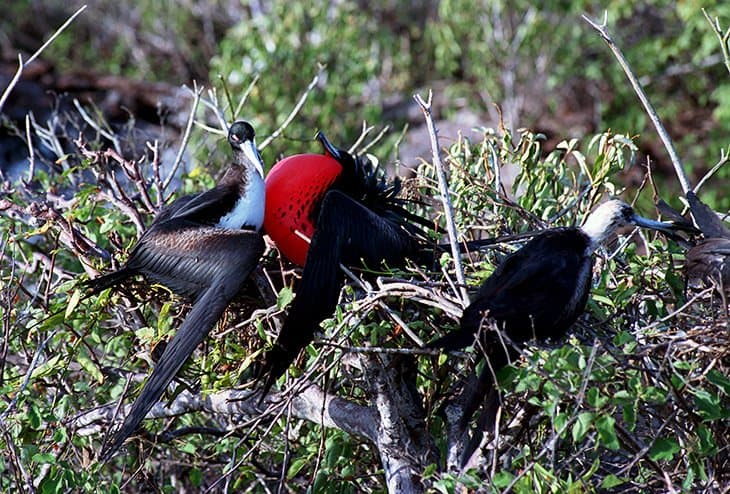
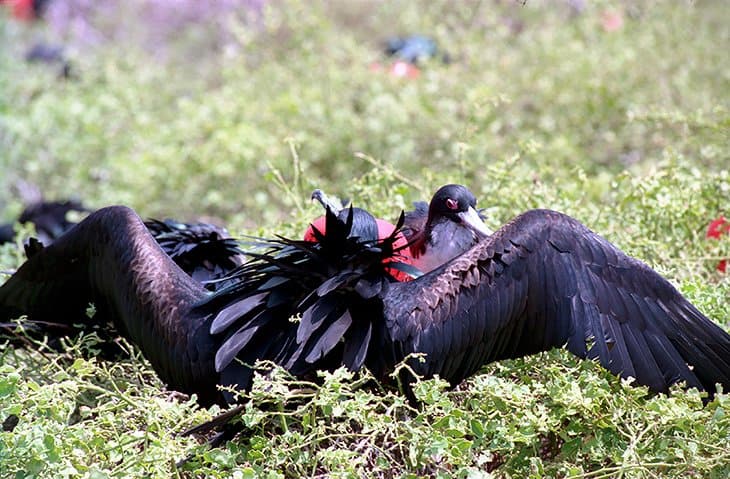
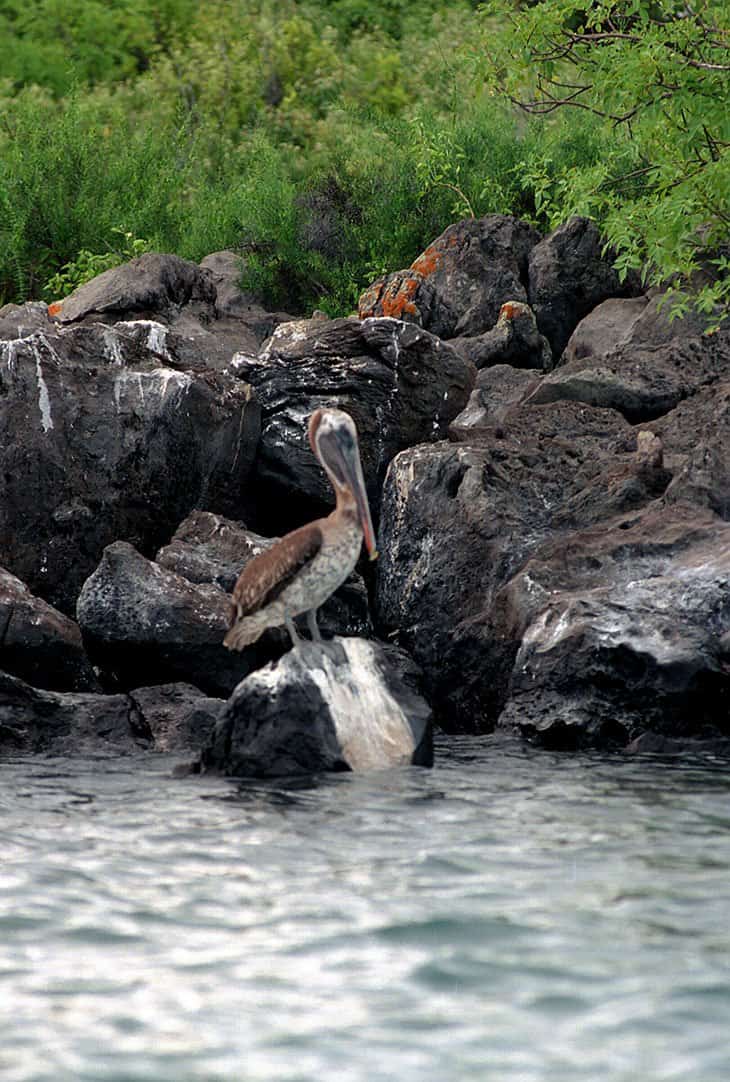
On practically every Galápagos island, visitors get to see sea lions, marine iguanas, cliff crabs, lava lizards and Darwin’s finches. On most islands, however, you can encounter blue-footed boobies, tropic birds, pelicans, fork-tailed gulls, mockingbirds and Galápagos buzzards. On many islands, on the other hand, there are masked boobies, banded and magnificent frigate birds, noddy terns and lava gulls. On a few islands you can find giant tortoises, fur seals, land iguanas, flightless cormorants, flamingos, penguins and red-footed boobies. And only on Española can the sluggish albatross be observed breeding at very close range.

There are very few different mammal species on Galápagos. To be more precise, only four! The Galápagos rice rat, which can be found in two subspecies on Santa Fé and Fernandina, and the Galápagos bat, which sometimes flutters around the street lamps on the Malecón in the harbour towns, play a completely insignificant role for visitors.

This glaring shortage of mammals is simply due to the fact that there had never been a land bridge between the islands and the mainland. Otherwise the animal world would have to be composed quite differently today. At least some of the large land mammals of the Ecuadorian mainland would be expected with a prehistoric connection to the continent.

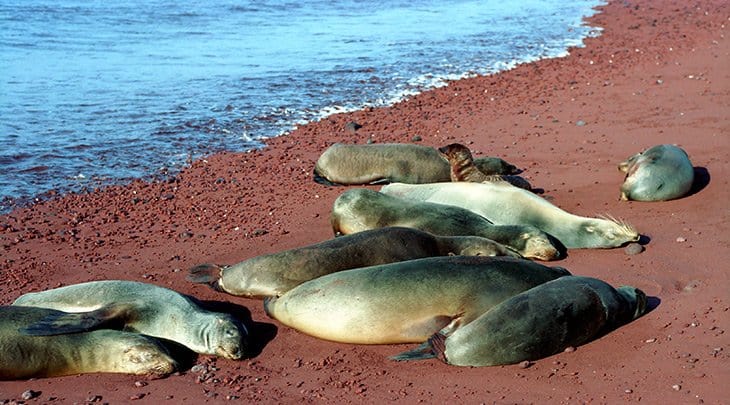
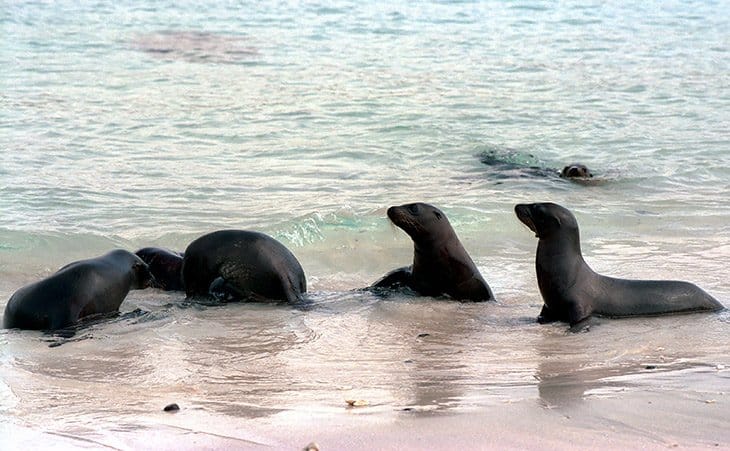
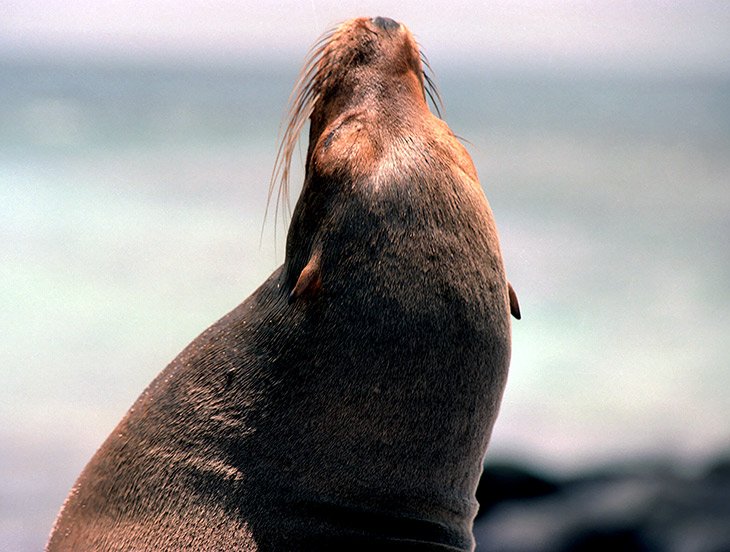
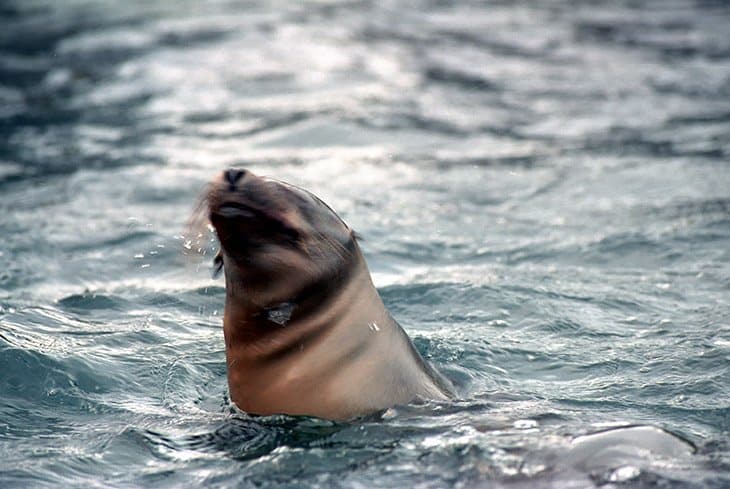
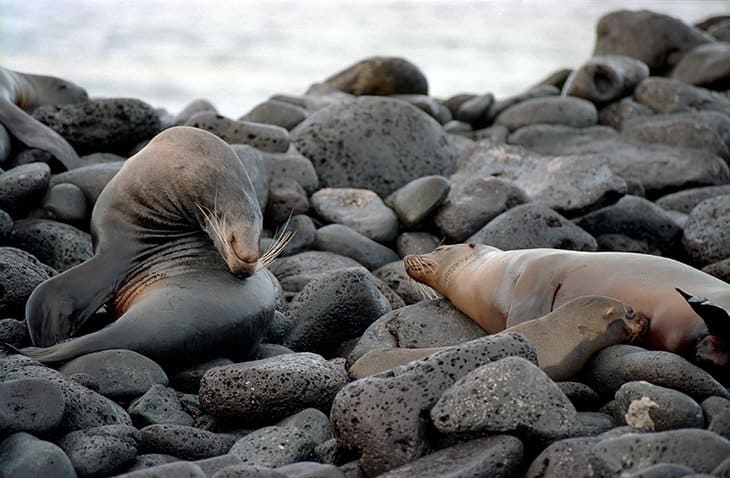
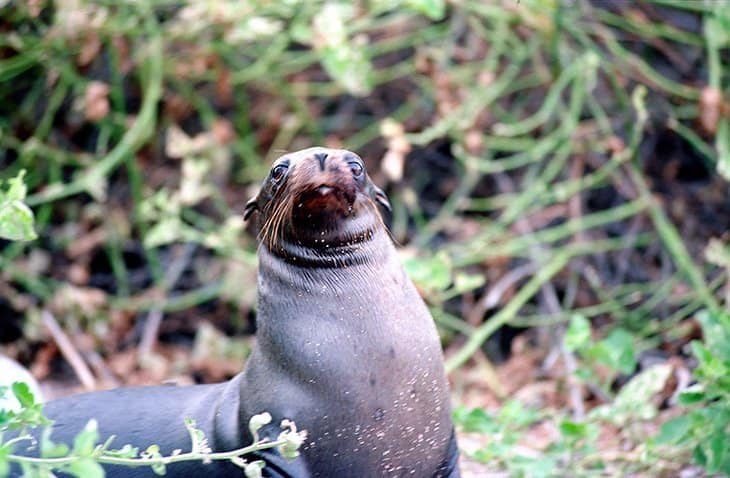
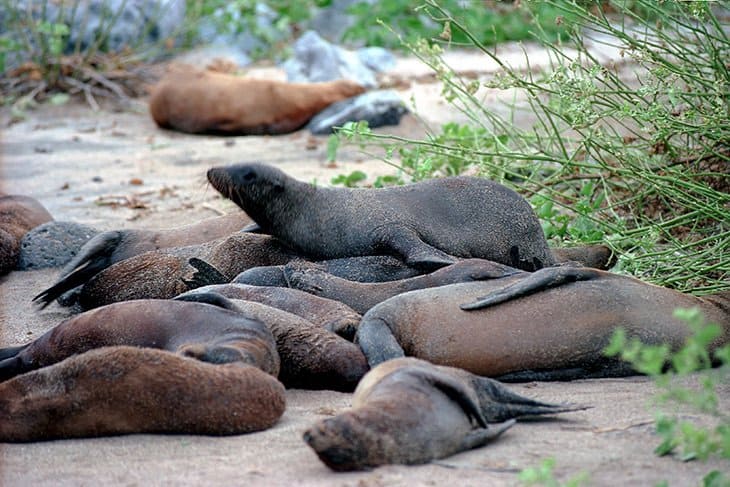
The most common mammals on practically all coasts of the Galápagos Islands are the sea lions. Newcomers will be able to confirm this at first glance – even with their eyes closed! The guttural WCC sounds of the omnipresent swimming stars sometimes even haunt island visitors and boat trippers until they sleep. The dinghies and jetties in the harbour basins of Puerto Baquerizo Moreno (San Cristóbal) and Puerto Ayora (Santa Cruz) are often used by the sea lions as a bedding. Fishermen don’t like this at all, as the playful and curious animals shamelessly leave their stinking droppings behind in the boats. If you walk to the quay in the harbour town of Puerto Villamil in the evening, you should keep in mind that the electricity is turned off around 10 p.m., and thus the light is switched off. If you then accidentally stumble over a bull resting there in the dark, you may not only be deeply shocked by its loud curses. The sharp bite of an angry bull sea lion can cause nasty flesh wounds!
On Plaza Island, the Galápagos sea lions – incidentally very close relatives of the Californian sea lions – have now polished the stones on the shores and cliffs smooth due to their numerous colonies. Sea lions are polygamous. A single bull can have a harem of up to 25 people under its wing. After a gestation period of nine months, each of its females usually gives birth to a young weighing about 5 kilos towards the end of the year. And there is another point in which the sea lion does not differ too much from the average Latin American: During the rutting season, bloody territorial fights among jealous bulls are by no means unusual!

In Plaza and Rábida there are also small colonies of exclusively old people and bachelors. These bulls came away empty-handed in the annual female distribution and have developed into real loners. You shouldn’t get too close to them. They are considered extremely aggressive and do not understand intrusive photo fun at all.

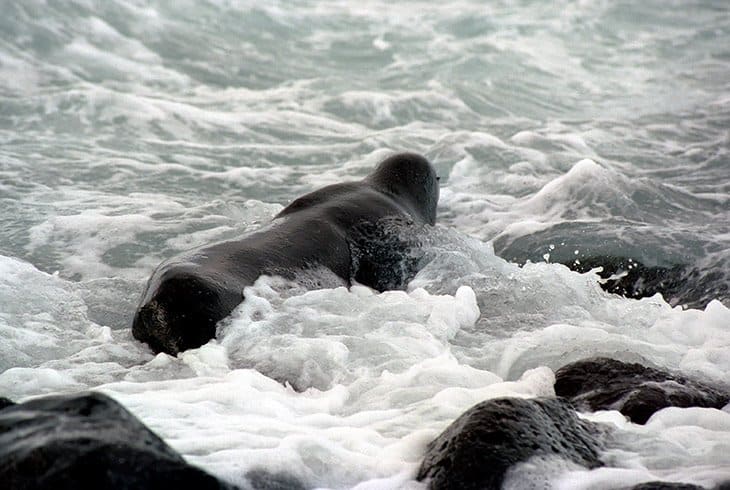
Sea lions are excellent swimmers and even more elegant divers. You can swim for miles out to sea and reach diving depths of 250 meters. The most imposing of the bulls are simply terrifying when they stand up on their front flippers and dash towards you, scolding loudly. At the latest then it’s time to throw away the camera and make a bow tie.

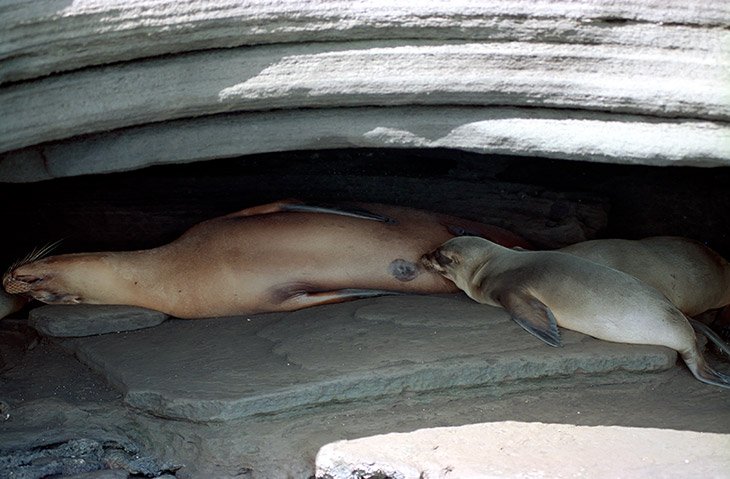
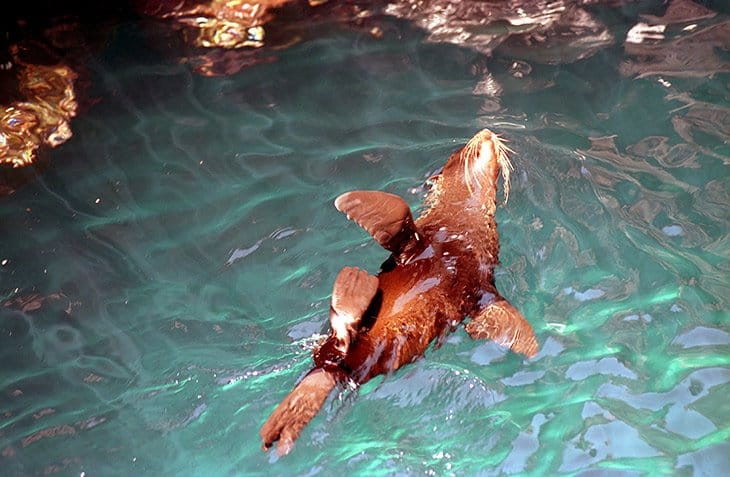
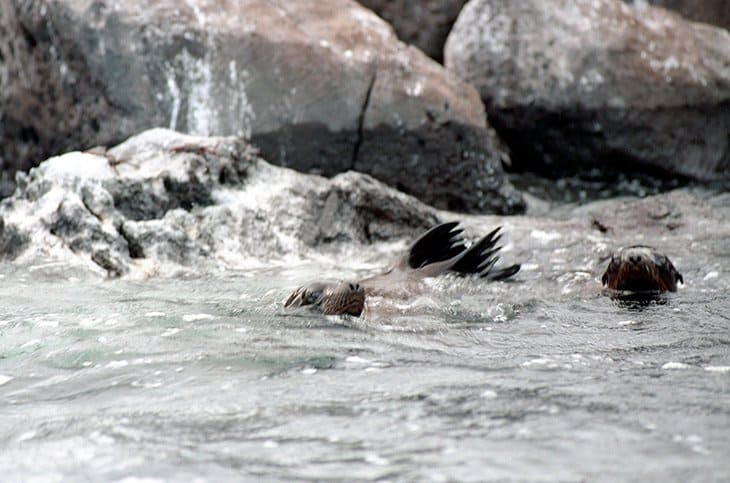
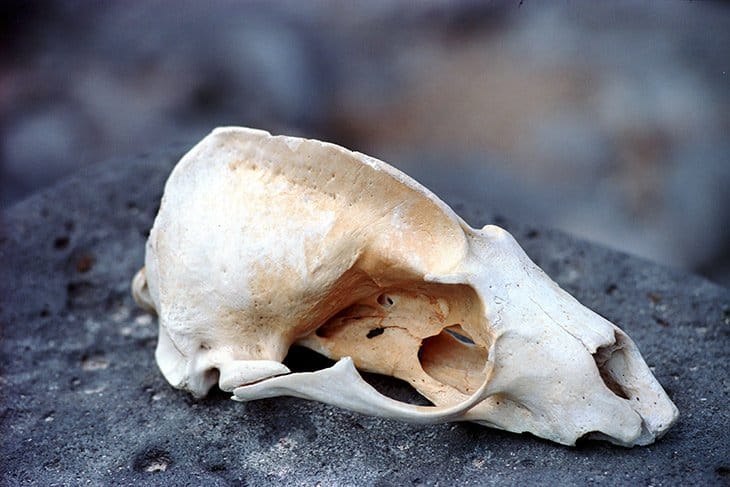
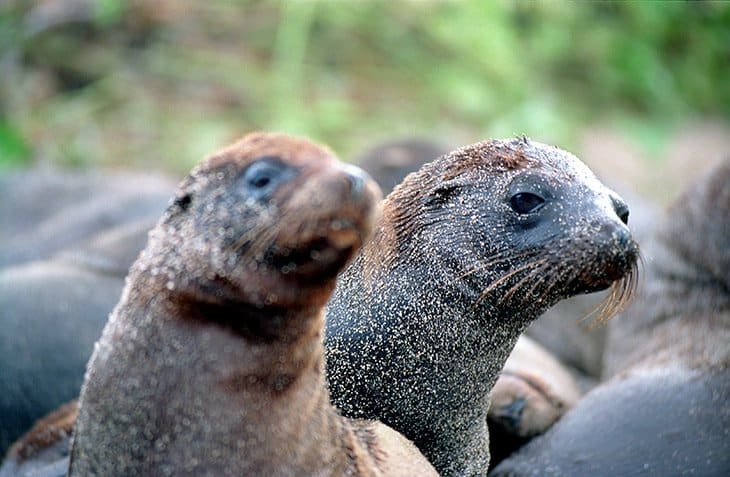
The Galápagos fur seal differs from the sea lion by its denser fur, the smaller rather rounded head, the flattened nose, the larger auricles, and the lost melancholic look. On land, the fur seals, which are otherwise native to Antarctic climes, can only be found in shady rock niches and small grottos, where they can protect themselves from the equatorial sun. The Galápagos Islands owe their presence to the cold Humboldt Current.

Unlike sea lions, fur seals never seek out the sandy beaches. Their exact population size on Galápagos is not exactly recorded, but it is estimated at several thousand. At least they are much less common than the ubiquitous sea lions.

A total of six reptile species can be found on Galápagos. These include elephant-like giant tortoises, monstrous land iguanas, algae-eating marine iguanas, lava lizards, geckos and a few completely harmless snakes.

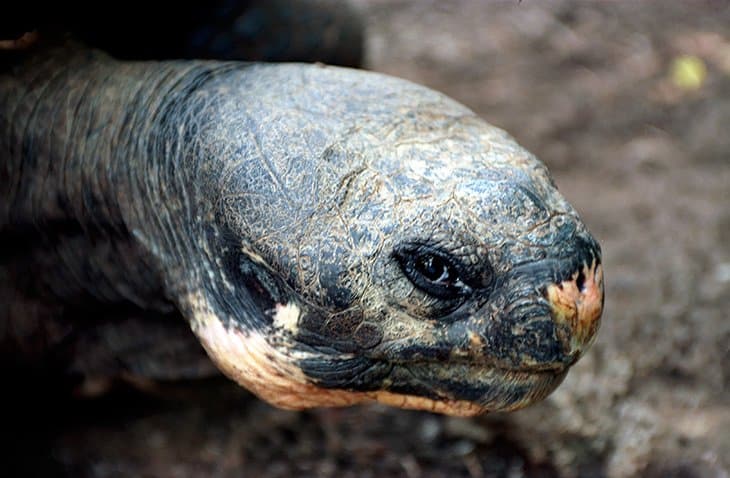
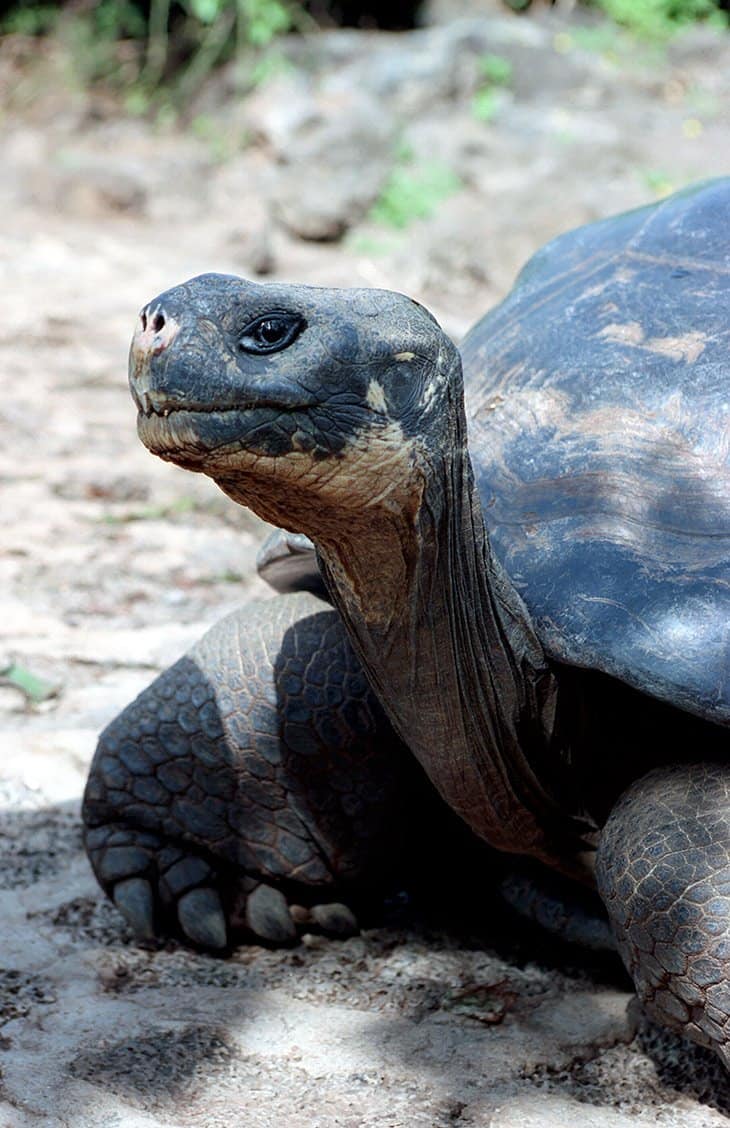
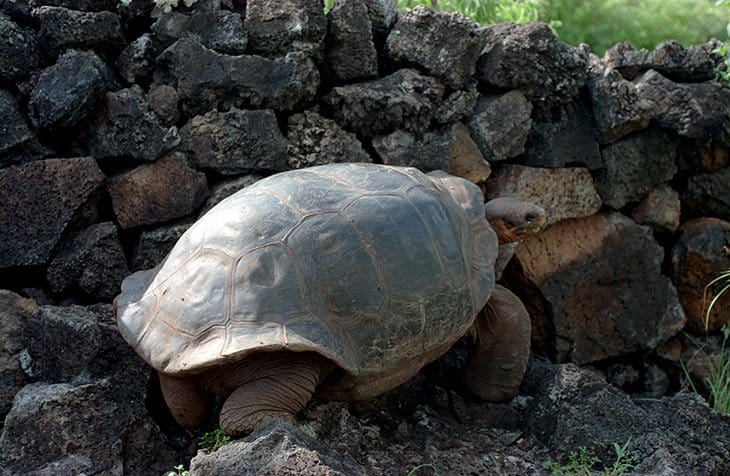
The giant tortoises, which weigh up to 300 kilos, can only be found on the Aldabra Atoll in the Indian Ocean, except on the enchanted islands. In the Galápagos archipelago, 11 of the original 14 subspecies remain.

The tragicomic lonely George, once resettled from his home island of Pinta to the Charles Darwin Station on Santa Cruz, is the last representative of a race doomed to extinction. Three other subspecies have already become extinct, others are now bred at the famous “turtle station”.

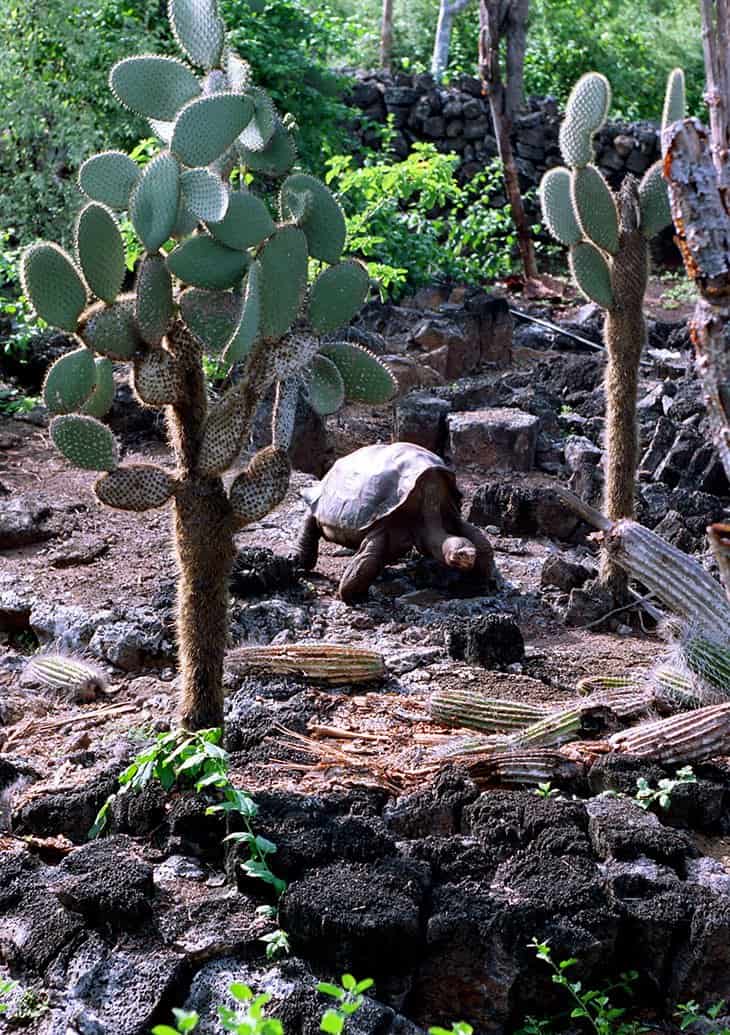
The giant tortoises differ from island to island in their size and the shape of the shell. The somewhat smaller saddleback turtles with their longer necks and legs have adapted to the shallow dry regions in the course of evolution. Even if this turtle type prefers to eat fallen cactus cushions, it can also reach the leaves of widely branched bushes. The larger turtle type with the high dome shell, on the other hand, prefers the highland regions of the islands, where grasses and fallen fruits are the main food.

Five different breeds alone can be found in the massive volcanic cones of Isabela Island. Their respective radius of action is limited to the crater and its rims. This may even indicate that the five Isabela volcanoes were once isolated islands. The evolution of turtles has taken place in accordance with the different biotopes of the crater cones, which are separated from each other by lava and cinder deserts.

A special case is a subspecies on Española. In the 60s, there were only two males and twelve females of this turtle type alive on the island. Natural reproduction hardly took place anymore. Understandably, the animals have hardly ever met! Through incubation and careful long-term rearing, the “Charles Darwin Station” succeeded in releasing almost 700 giant tortoises of this subspecies back to Española in 1995.

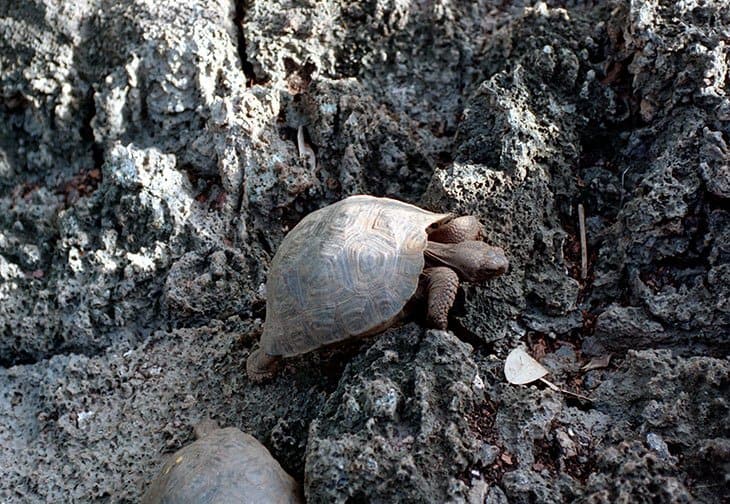
Giant tortoises reach sexual maturity after about 25 years. They reproduce between January and June during the rainy season. In the second half of the year, the females then go to the dry zones to hatch their eggs. It usually takes many hours until they have dug a sufficiently deep hole with their hind legs.

During this heavy work, they urinate constantly to give the earth more suppleness. Between 2 and 20 eggs, the size of a tennis ball, are laid in the hatching pit. After the hole has been filled in again, the female retreats to the mountains. After another 4 – 8 months, the young break out of their eggshell. The temperature of the underground breeding site ultimately determines the sex of the newly hatched birds, whereby cooler temperatures usually produce males. Their only natural enemy is the Galápagos buzzard. Once they survive the first difficult years, they can reach a proud age of almost 200 years.

Land iguanas live in the arid zones of the islands of Plaza Sur, Santa Cruz, Isabela and Fernandina. A second endemic species can only be found on Santa Fé. You can see the iguanas dozing in the sun in the morning, while they seek shady places under stones or tree cacti in the midday heat. In order to be able to store their body heat at night, they sleep in self-dug caves. Their diet consists of shrubs, fruits and fallen cactus cushions, the spines of which they usually scrape out with their claws. On the other hand, very daring specimens can also be observed biting into the middle of the spines!

Unlike their distant green relatives on the Ecuadorian mainland, Galápagos land iguanas are stubbornly mindful of their territory. The yellow-colored males can react extremely aggressively to same-sex intruders. Such turf wars are threatened by vigorous nodding of the head, and sometimes end with terrifying tail and bite fights.

The grey-brown females, similar to turtles, lay 2 to 25 eggs in specially dug holes. 3 – 4 months later, the young, which are only centimetres in size, hatch from the egg. If they survive the first few years – buzzards and owls are their only mortal enemies – they can live to be over 60 years old.

When Charles Darwin landed on Santiago in 1835, he could hardly find a place where we could pitch our tent because of all the land iguanas! Today, land iguanas are completely extinct on Santiago. Rats and pigs, as well as feral dogs and cats, ate their eggs and bit the young. Goats destroyed their plant food sources.

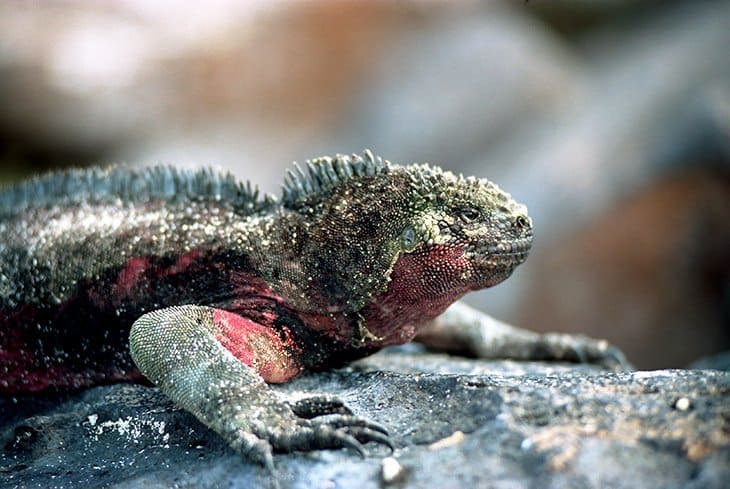
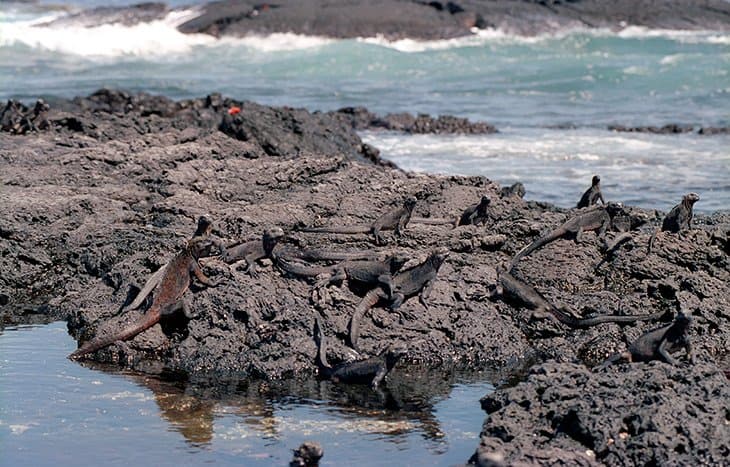
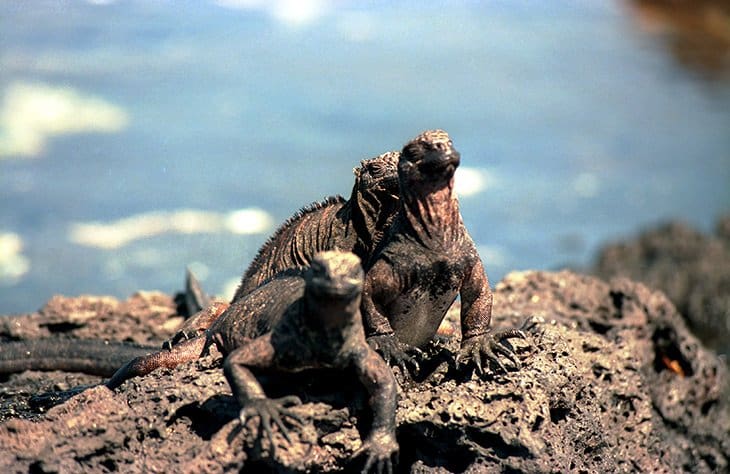
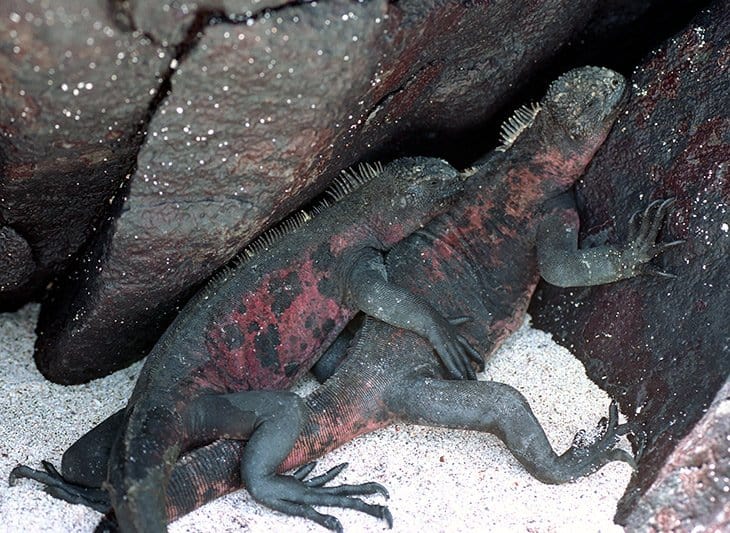
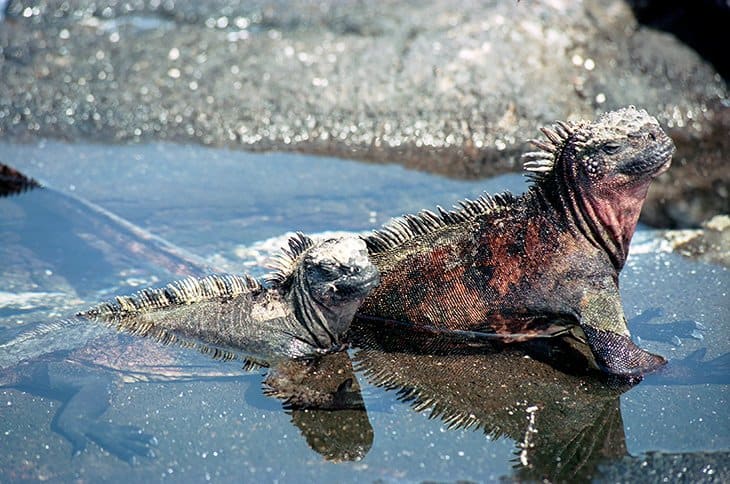
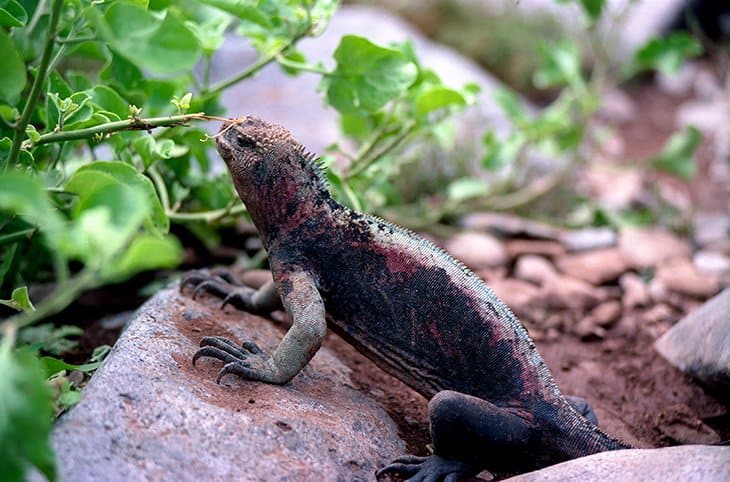
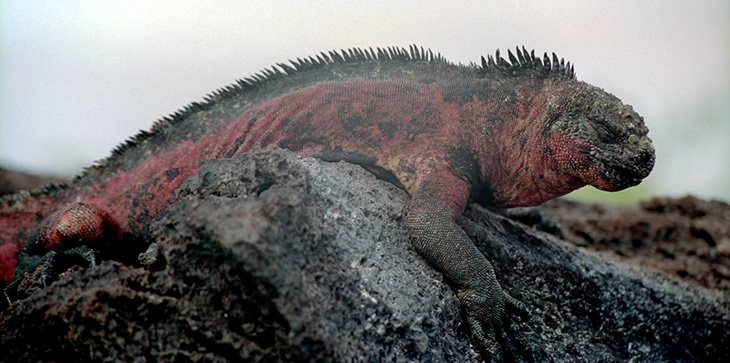
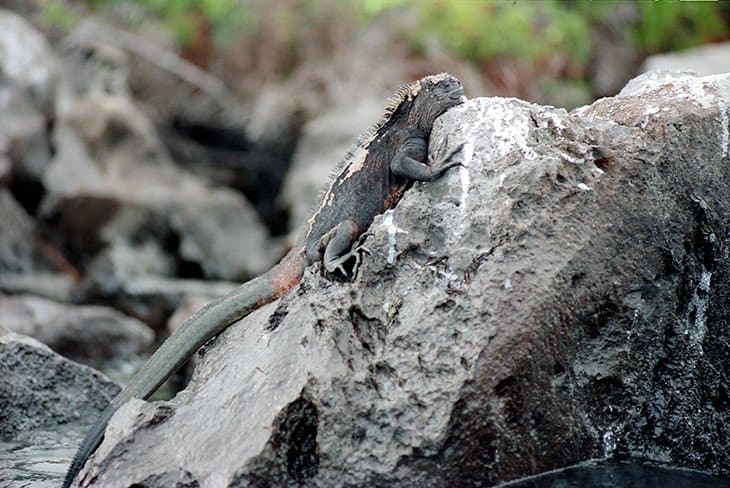
The algae-eating marine iguanas populate almost all coasts of the Galápagos archipelago. They are considered the only reptiles in the world that have successfully adapted to life in the sea. With the soft snaking movements of their muscular tail, they can swim out for miles and take deep dives. A heartbeat four times slower in the water allows them to spend over an hour below the surface of the sea. Although tiny webbed feet have developed between the strong toes in the course of evolution, the feet are not used in diving, but only placed against the body. With the small teeth of the blunt snout, they graze on the short algae growth on the underwater rocks.

As actual land animals, marine iguanas also have no difficulties with the salinity of seawater. A gland helps them to excrete the excess salt. The secretion is expelled through the nostrils like a fine drizzle. In older animals, this has already caused veritable salt crusts to form on the antediluvian skull. In order to counteract the heat loss that occurs after an extensive dive, the cold-blooded animals like to lie lazily on the warm lava rocks in the afternoon, stretching their heads towards the equatorial sun in their hundreds.

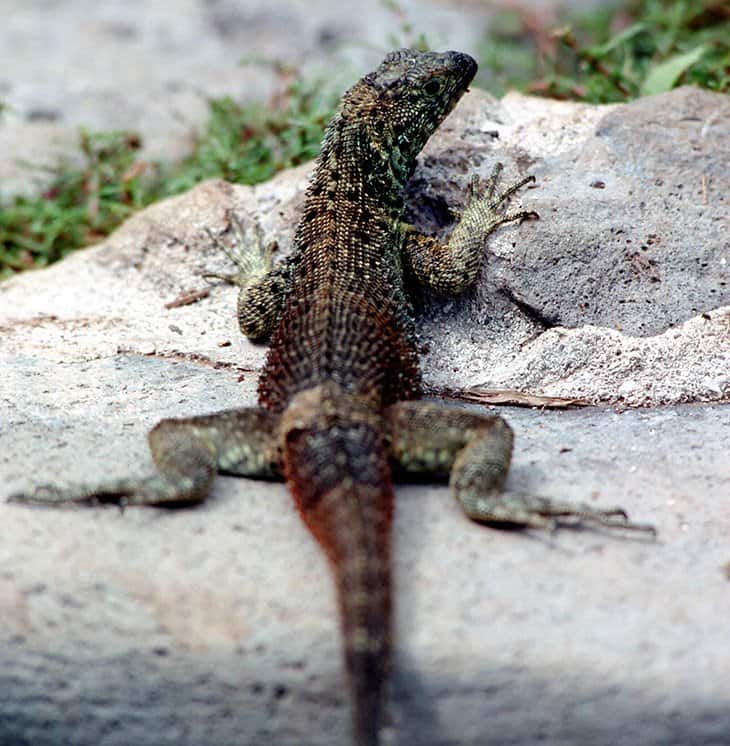
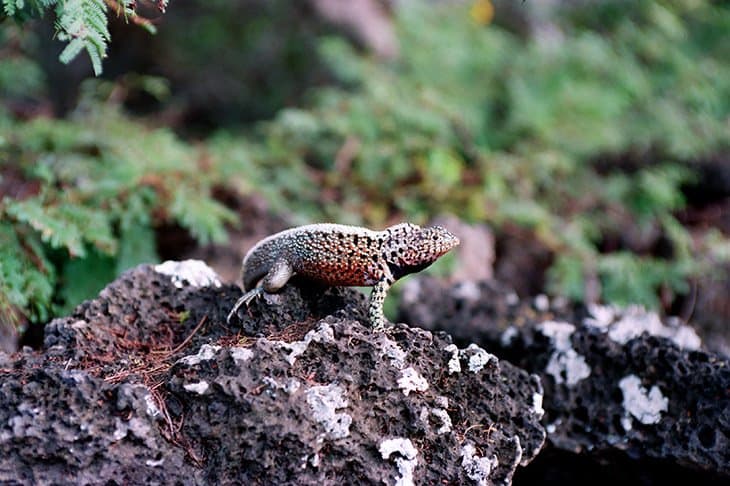
Lava lizards populate the arid zones of almost all Galápagos Islands. Visitors encounter them everywhere at every turn. Only one species is distributed on several islands, while six other endemic species only flit around on specific islands. Lava lizards with a bright red belly pattern, by the way, are females.

There are also five endemic gecko species on Galápagos with their typical suckers on their tiny claws, as well as three species and several subspecies of Dromicus snakes, which are more afraid of humans than elephants are of mice. They are all slender and gray-brown, can grow to over a meter long, and feed primarily on lava lizards and large grasshoppers. Unfortunately, you rarely get to see the pretty little animals.

The Galápagos Islands are a paradise for birds. The seabirds occupy a very special position. They are undoubtedly the main attraction among the feathered inhabitants. Their total population is estimated at over one million. There are a total of 19 different species of seabirds, five of which are endemic. The archipelago is also populated by over 40 species of land and waders, of which 23 are endemic.

The absolute star among the seabirds is the albatross. With a wingspan of up to 2.40m, it is not only the largest bird in the Galápagos, but also the largest in the tropical waters of the eastern Pacific. The only place in the world where it can be observed breeding is the island of Española, in the far southeast of the archipelago. Over 12,000 pairs can be found here at Punta Suárez and Punta Cevallos, as well as on the south side of the flat island hill chain between April and June. Each pair of albatross produces a large egg, which is usually inexplicably rolled back and forth like a billiard ball by the parents after laying.

Albatroses are like huge transport planes. They need a long runway and have to do several laps before touching down. The flat Española Island comes in handy for their cumbersome landing maneuvers. They also have their special difficulties when it comes to being exposed. For the start, they usually have to waddle on foot to the edge of the cliffs and from there plunge headlong into the carrying updrafts.

If you want to observe the unique flightless cormorant endemic to the Galápagos at close range, you have to head to the rough secluded lava coasts of the western islands of Isabela or Fernandina. There, the down-to-earth diving birds with the powerful flippers usually live in very small colonies. After all, there are supposed to be a few hundred.

Violent volcanic eruptions, protein-rich food in abundance, and the absence of any natural enemies, have taken away this large bird’s desire to fly in the course of evolution. Its clipped wings have completely lost their function. They look like retracted paddles.

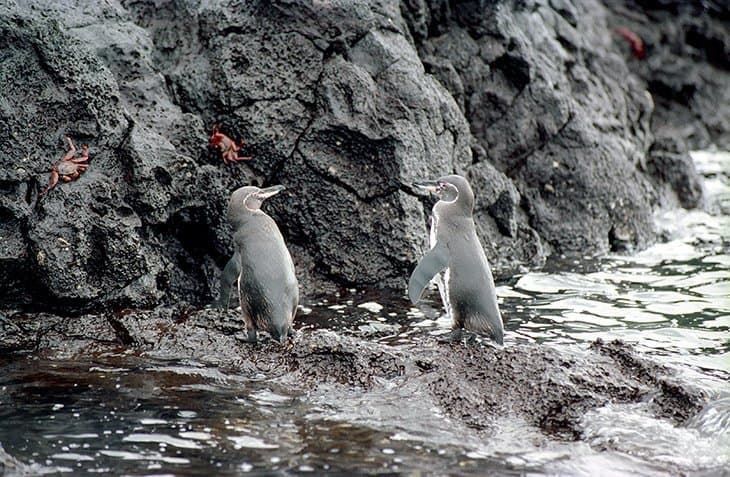
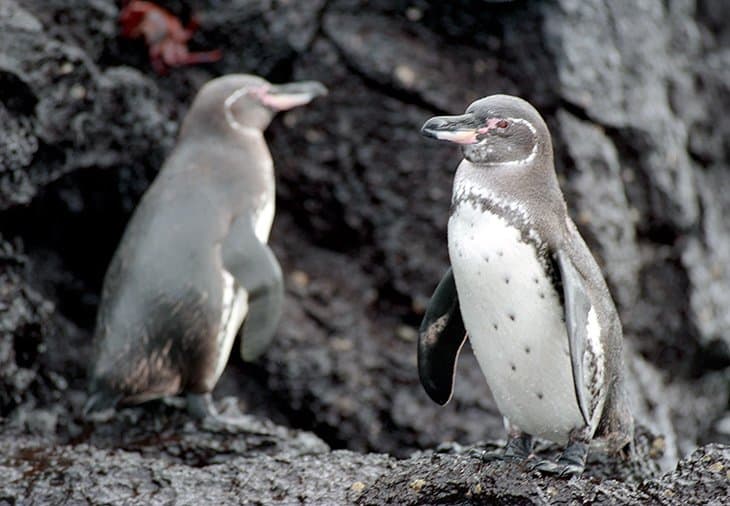
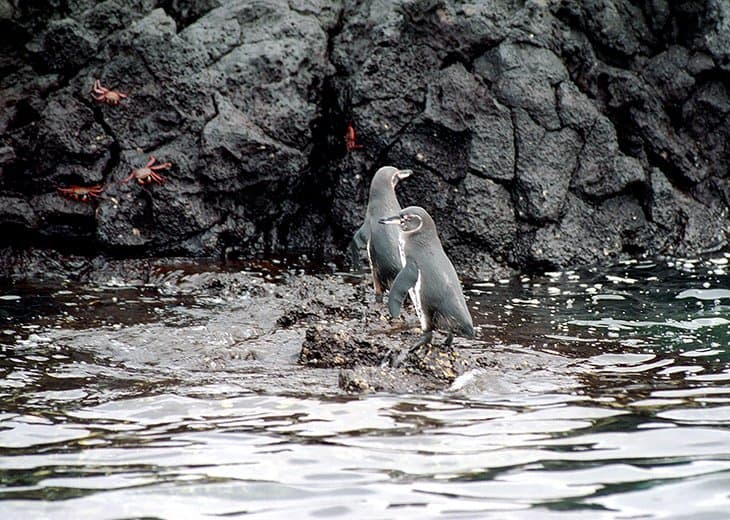
The endemic Galápagos penguin is considered the second smallest of its species in the southern hemisphere. Some of the colonies living on Isabela and Fernandina are even still located in the northern hemisphere.

Scattered groups of the frocked waterfowl can also be observed in Sullivan Bay near Bartolomé. The Humboldt Current from Antarctic climes allows this tropical penguin type to lead an undisturbed existence far away from its ancestral cold-water zone. He is the only Nordic penguin. Its closest relative is the Humboldt penguin, which lives on the coasts of Perú and Chile.

The clumsy land-walkers can reach speeds of up to 50 kilometers per hour under water. When raising their young together, however, they tend to give the impression of missing their floating ice floe on the rocky shores.

The beautiful red-billed tropic bird is relatively easy to spot during flight by its long, fine feather tail. It hunts far out in the open sea, diving from a great height like an arrow deep below the surface of the water. Loose breeding colonies of these birds can be found all year round on most islands. Only on Plaza Sur does the breeding season only last from August to February.

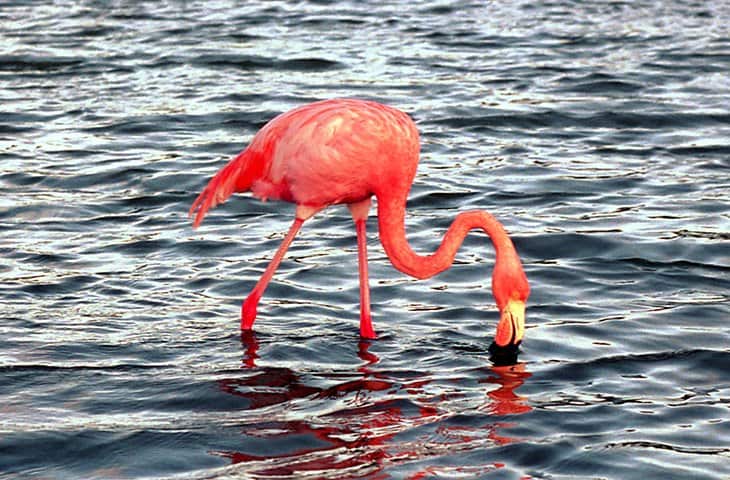
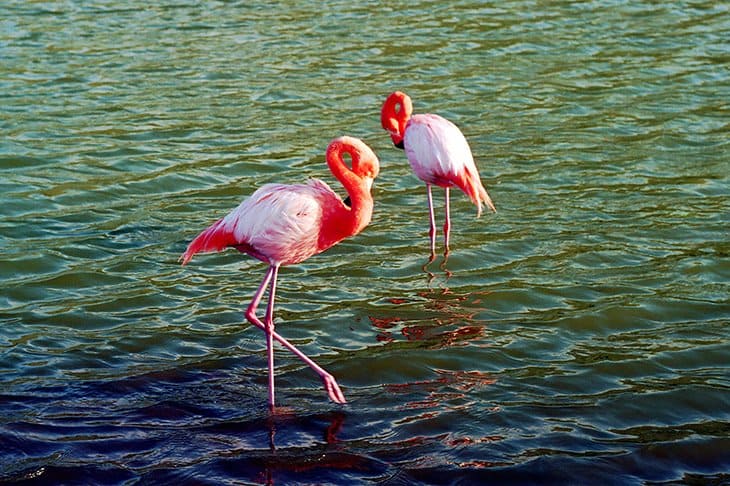
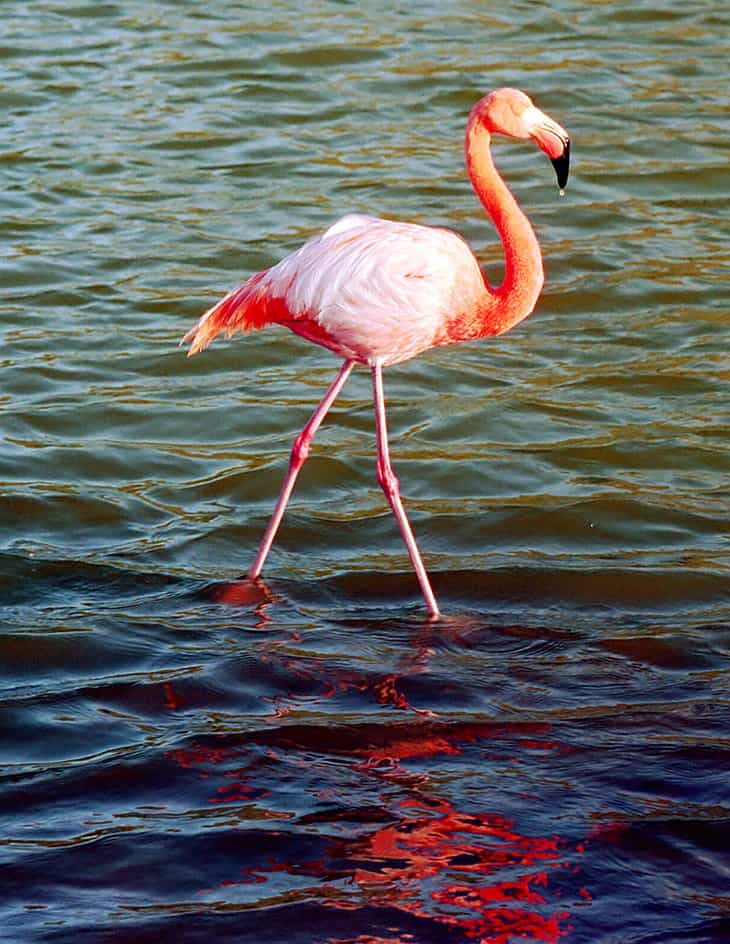
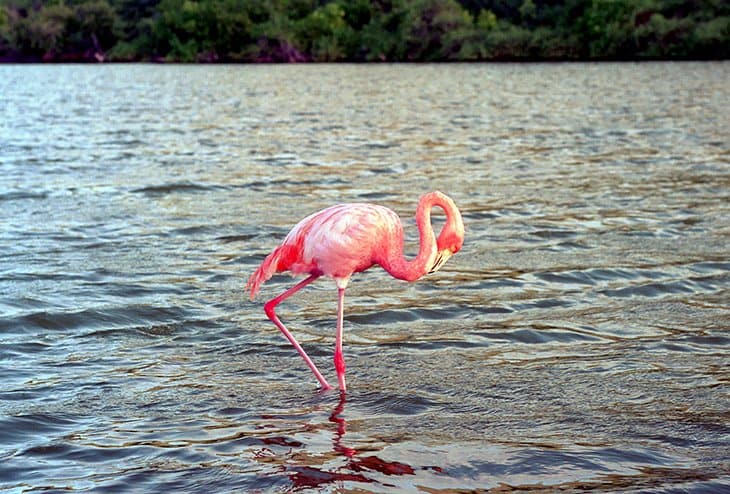
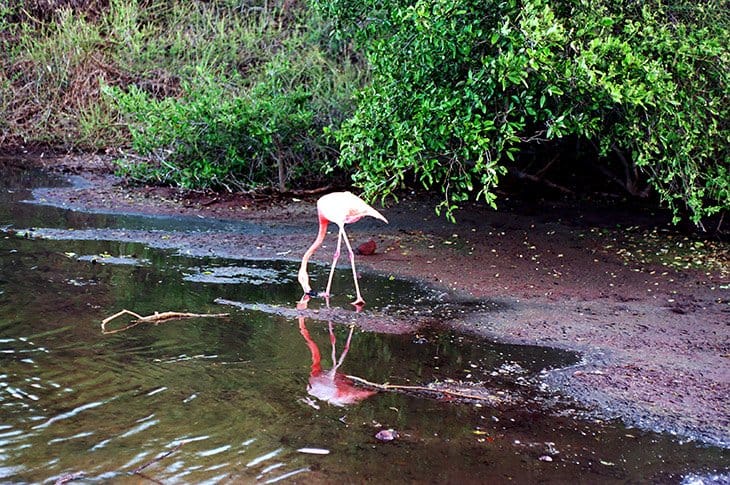
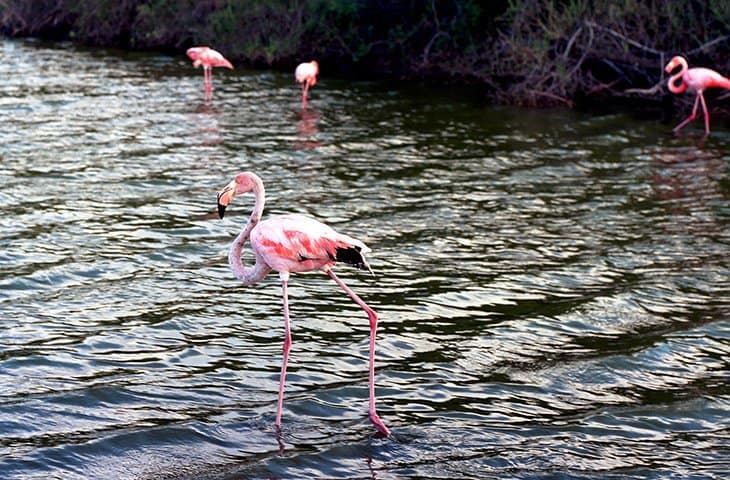
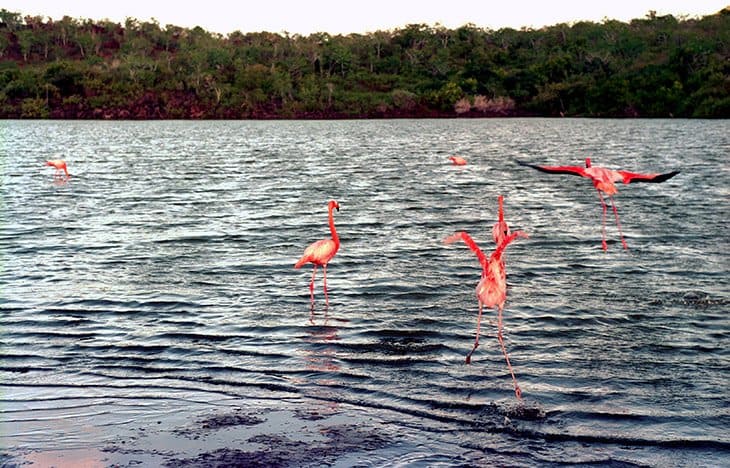
The “star” among the Galápagos waders is the pastel pink flamingo. It is by far the most shy bird in the archipelago and lives in seclusion in the saltwater lagoons of Isabela, Floreana, Santiago, Santa Cruz and other islands. Since it often flies from lagoon to lagoon in search of protein-rich shrimp, it is not always found at all flamingo lakes. The more than a thousand Galápagos flamingos, spread over small colonies, originally come from the West Indies.

No other animal species on the Galápagos Islands has contributed as much to the understanding of the theory of evolution as Darwin’s finches. The 13 endemic finch species – with another species on Cocos Island, 425 nautical miles northeast of Galapagos, there are even 14 – all look quite similar in color and physically. However, they differ quite clearly in their beak shape. This in turn is optimally adapted to the respective food sources. The beak serves as a practical tool for the small birds. For example, the small and large ground finches harvest medium-soft to hard seeds with their crushing nut knacher beaks. The Greater Tree Finch or Parrot-billed Darwin’s Finch, on the other hand, has a strong, sharp beak, which it uses like a metal cutting device. It can even prey on large insects under tree bark. Instead, the Warbler finch pecks the insects from the leaves as if with tweezers, while the cactus finch uses its long, powerful beak like a pair of wire pliers.

Darwin’s finches are all descended from an original species that once came to the archipelago from the mainland. This Galápagos primeval finch inhabited an unrivalled free habitat. This initially allowed it to spread unhindered to all islands. With the constantly growing finch population, the competition for daily bread began. In order to eliminate the pressure of the like-minded competition, the finches gradually began to specialize in food procurement.

Marine animals are sometimes the most spectacular thing to admire during a visit to the Galápagos. Due to the interaction of different ocean currents, the archipelago has an incredible variety of submarine life, which sometimes knows how to combine both distinctly tropical and typical Antarctic species in a single territory. Of the more than 300 species of fish, 50 alone are endemic!

Every snorkeler and diver’s neck hair stands on end when he encounters a group of whitetip sharks for the first time in his life at the Devil’s Crown, at Bartolomé, in the bay of Santa Fé, or even very close to Puerto Ayora. The cinematic, but completely harmless bites belong to the nurse shark family with their barbels. Hammerhead sharks are just as common, of which sometimes 20 or 30 can appear unexpectedly. In the northern waters of the archipelago (Isla Wolf), even schools of up to 500 specimens are not a rare sight.

All these sharks are harmless to humans. Since they find enough food in the archipelago, they are not interested in divers or dinghies. So you can dare to get quite close to them. The notorious tiger sharks, which can spread fear and terror on other tropical coasts of the world’s oceans, are almost never seen in Galápagos waters. They prefer to frolic far out in the open sea.

The majestically gliding, futuristic-looking rays are the crowning glory of every dive for many underwater sports enthusiasts. There are manta rays, eagle rays, cownose rays and stingrays. The former can reach a wingspan of up to five meters. The latter like to frolic in shallow beach waters and have already caused many a nasty injury among barefoot visitors by careless stepping.

Sea turtles can be found in many places and in many bays. The Caleta Tortuga Negra is considered ideal for observing the animals from the dinghy during the day. During the mating season between December and April, they come to the sandy beaches after dark to lay their eggs in a self-dug hollow in the shallow dunes. This strenuous process often takes half the night. Afterwards, the animals immediately seek out the vastness of the sea again and forget their offspring forever and ever. The grinding marks of the armored animals, which weigh up to 300 pounds, can usually be seen in the sand for weeks after they lay their eggs. But since the beaches are closed to visitors after 6 p.m., everyone is at least deprived of this spectacle.

After the young turtles have broken out of the half-buried eggshell, they try to reach the cooling water as quickly as possible. Only a very small percentage of the clumsy people chased into the surf have a chance of surviving only the first few minutes of existence in this gauntlet. In the air, the greedy seabirds are already lurking over the defenseless prey, and in the water, the voracious sharks are looking forward to a varied snack.

Visitors will not notice anything about the merciless survival lottery. During this time, the members of the Charles Darwin Station try their best to keep the sea turtle beaches free of tourists and to collect the fleeing young. In the breeding station they have the very best chances of survival. When they have grown up, they are left to the elements again.

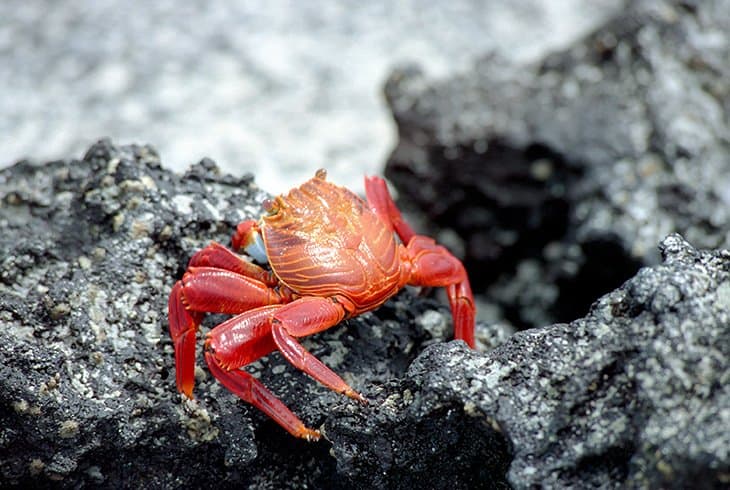
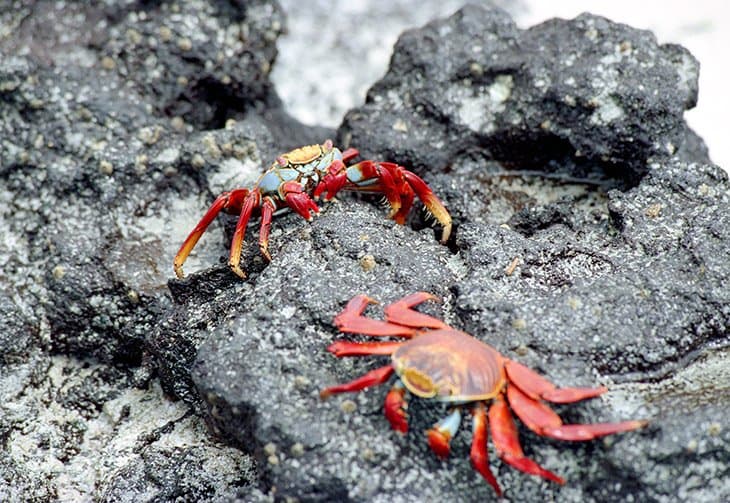
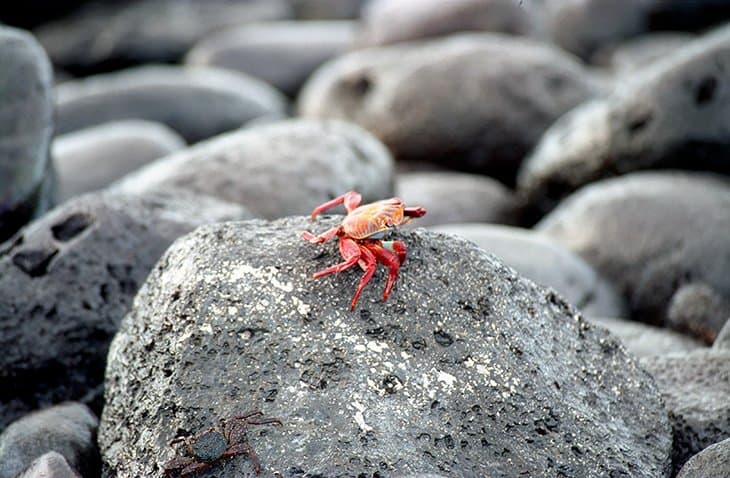
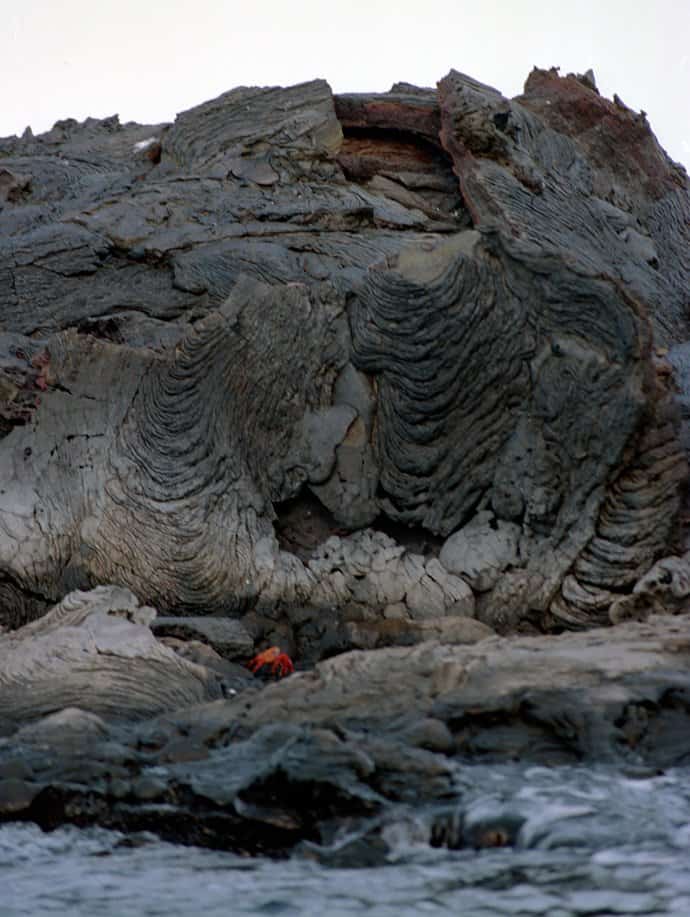
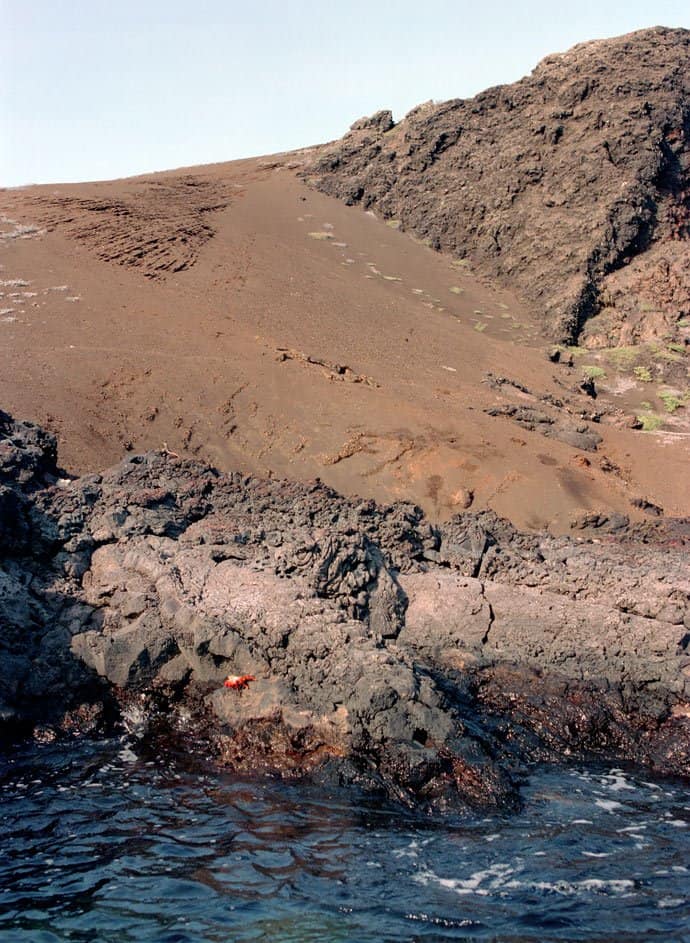
The red cliff crabs immediately catch the eye when docking on the black basalt lava coasts. They usually live in large, loose groups in the intertidal zones of almost all islands. In order not to fall victim to the herons in their earliest youth, they are initially still monotonously black in color.

Immigrant and introduced animals
The endemic animals living in the Galápagos have reached the coasts of the archipelago on their own during the last three million years. They came flying and swimming from the mainland, or were carried over by winds and water currents. For example, the iguanas, which presumably clung to fallen drifted coconut palms and other driftwood during the involuntary crossing, after being surprised by a storm surge or torrential rain in search of fruit. In the same way, smaller birds probably crossed over to the islands, while the sea lions may have been forced to break all long-distance records during a persistent chase of a school of fish. A particularly strong Humboldt current could have played a decisive role in this. But the enormous distance had to mean certain death for most of the transoceanic conspecifics. The few stranded on the energy-sapping odyssey also had little chance of survival due to the prevailing environmental conditions on the fire-breathing volcanic islands.

However, the settlement of the archipelago took its God-given course. Gradually, a natural equilibrium developed among the exiles, which eventually led to the formation of harmonious communities of destiny. This is because these emigrated animals knew almost no enemies or competitive behaviour.

With the landing of the first seafarers about 400 years ago, this newly created “Noah’s Ark” balance slowly began to falter. Mice and rats were the first to leave the musty cargo holds of the anchored sailing ships. They were followed by imported domestic animals such as cows, horses, donkeys, goats, pigs, dogs and cats, which were left behind after many failed settlement attempts or fled to the hinterland. Due to the relatively rapid spread of the aliens, the native animals and plants had no time to create an effective defense system against the unexpected enemies and competitors.

The newly created foreign communities with a large population have now invaded large parts of the island kingdom. There are more than enough examples of their devastating effects on the delicate fabric of nature:

On Santiago, feral pigs dig up the freshly laid eggs of sea turtles.

On Isabela, marauding hordes of goats eat the entire vegetation bare and thus also the food plants that are vital for tortoises. This has now also led to the extinction of endemic flora and rapidly advancing soil erosion. The devastating number of wild Isabela goats is estimated at over 100,000 today!

In addition, the ancestral waterholes of the primeval giant tortoises are sometimes occupied by scattered groups of donkeys.

On all inhabited islands, cows and horses trample the rare ferns and bushes, drive away the local wildlife, and leave behind a destroyed pampa soil, as in the highlands of Santa Cruz.

Also on Santa Cruz, the only existing land iguana colony was attacked by a pack of vagabond dogs at the end of the 70s. In the massacre, about 500 tattered iguanas fell by the wayside.

Cats not only eat the small bird and reptile eggs in the dry zones, but also keep the introduced rats under control – their direct competitors in egg theft! As the youngest unwanted visitor, the particularly aggressive, “cat-devouring” Norwegian rat has now spread on two of the islands!

Accidentally and intentionally introduced animals are probably the biggest environmental problem for the islands today. Only two of the fourteen main islands are still free of foreigners. It seems that Galápagos will have to live with the many aliens in the future. Nobody has quick, practical solutions ready. Organized drive hunting safaris to exterminate the Isabela goats were always the first to come to mind. However, these hunting squads, made up of frustrated big game hunters and trigger-happy tourists, would make little sense. The climbing-happy goats gave the hunters hardly a chance in the tough, prickly thicket above the jagged lava floor. Traps set up and poisoned waterholes would only harm the endemic wildlife. The laying of kilometer-long fences would also be too unaesthetic, too expensive, and also completely ineffective against the small aliens.

Nevertheless, the Charles Darwin Station considers the eradication of the Isabela goats possible. Their track record of recent years actually speaks for this. On six smaller islands, the eradication of vegetation destroyers has been successful.

Even the difficult rat plague has now been mastered on some islands. An annual cat and rat extermination campaign carried out on Floreana in the area of the waverunner breeding grounds shows the first pleasing results today. However, at least five million US dollars are needed for the Isabela problem alone. No small amount if you are dependent on donations! The previous allocations are no longer sufficient. The national park administration, and the tireless scientists at Charles Darwin Station, face very different challenges today than they did just a few years ago.

Galapagos – Flora

In contrast to the Ecuadorian mainland, the Galápagos flora proves to be stepmotherly and brittle. Some of the otherwise enchanting islands are reminiscent of a Moroccan thornbush desert during the cool dry season from June to December. Tropical paradise, far from it.

There are therefore not too many plants that could immediately catch the eye of the visitor on an island cruise. Almost half of them are endemic, i.e. they indicate an isolated and completely independent development. In total, there are over 700 native plant species and subspecies. Compared to the approximately 20,000 mainland species of Ecuador, however, this is extremely sparse.

With increasing settlement, many non-native plants also came from the mainland to the Noah’s Ark Islands: crops, fruit perennials, ornamental and medicinal plants, as well as trees for rapid timber production. Unintentionally, other plants were often introduced as well. Seeds and germs, mostly accidentally hidden in luggage, have contributed to the current occurrence of over 500 different foreign plants. Today, this circumstance has a very lasting effect on the ancestral endemic flora and fauna, and even poses a serious threat to the specific ecological balance on some of the islands. The native plants are no match for the mostly aggressive “aliens”. In the daily battle for sunlight, water and nutrients, they often lose out.

Cinchona trees, which were introduced decades ago on Santa Cruz and San Cristóbal, are now displacing the endemic unique miconia vegetation at altitudes above 500m. Guava trees are spreading faster and faster to entire forests on four of the uninhabited islands. The monogamous, endangered birds use the same nesting box for their entire lives. If this is buried for some reason, they dig a new room in the same place. If they can no longer locate their ancestral breeding site, they become homeless and die. Once on Floreana, the lantana seeds were in turn spread on the island by Darwin’s finches and introduced rats.
The flora of Galápagos is divided into five to seven different vegetation zones, which are primarily dependent on the altitudes: the saltwater-resistant plants in the direct coastal area (up to 20 meters in altitude), the bush landscape of the dry zone (up to over 100m), the partly foggy-humid transition zone (150-300m), the year-round green and rainy Scalesia jungle zone (250-600m), the Miconia scrub zone on Santa Cruz and San Cristóbal (up to over 100m). 700m), as well as the windy pampas grass zone in the highest island locations. However, most Galápagos visitors have very little opportunity to explore the mountainous regions in the interior of the islands. In the case of organized boat tours, the piers are mainly limited to visitor locations in the coastal vegetation zones.

One of the most striking exponents of the flora widespread on Galápagos for visitors is often the green mangrove forests in flat coastal areas. All of the four species of these dense respiratory and stilt root networks found in Ecuador line Santa Cruz, Isabela, Fernadina, San Cristóbal and many other islands of the archipelago, mostly tidal beach shore zones. These include the black mangrove with its yellow-brown asymmetrical fruits, the reddish branches and fleshy leaves of the red mangrove, the white mangrove dotted on the underside of the leaves and the small-leaved button mangrove.

Other typical plants of the nearby coastal region are the salt bush with its long drooping leaves and yellow-green flowers, the dense low mats of the solstice, the slender thorny branches of the Lesser Fenughorn with its club-shaped leaves, as well as the equally shallow-growing beach winds and beach grass.

Particularly impressive are the wonderful red coral bush networks on the stony Plaza Island. This plant forms almost Nordic-looking carpet mats, which can have very different magnificent shades depending on the season.

In the water- and humus-poor coastal areas of the islands, there is a whole range of plants that have been able to successfully resist the annual dry periods in the course of evolution.

Thanks to widely branched surface roots, these plants can absorb a lot of water during the rainy season and store it in the trunk and branches for the dry months from June to the end of December. During this brittle period, the shallow root system loses its importance.

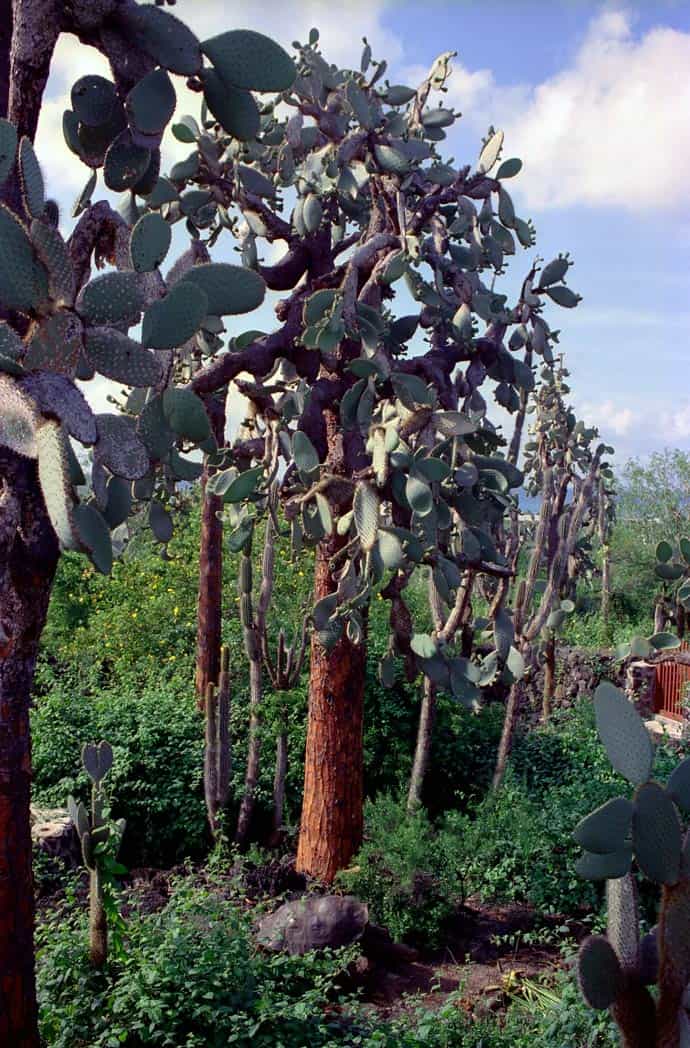
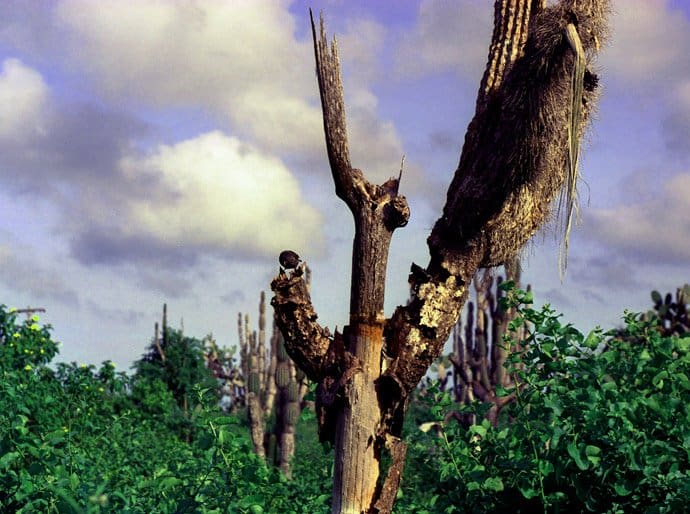
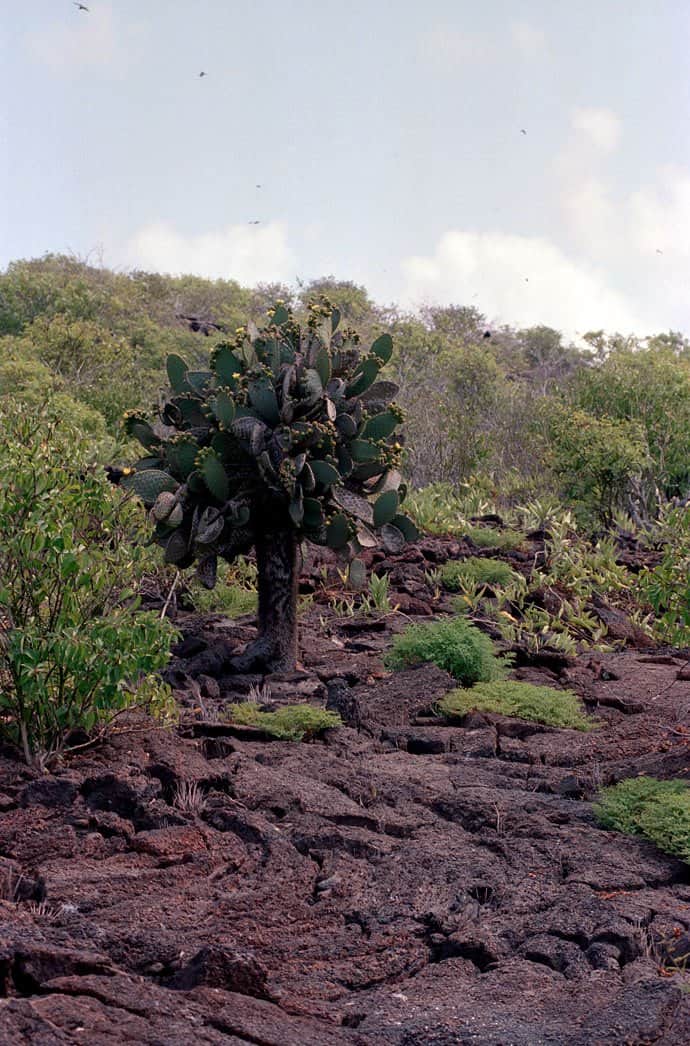
The mighty Opuntia tree cacti have grown into a kind of landmark of Galápagos. They have adapted to the given environmental conditions in a unique way. There are six endemic species of these fig or opuntie cacti, which can grow up to 9m high. The cactus cushions are turned towards the sun’s rays like twisted parabolic antennas. Their pointed, shadowless spines protect the meat from voracious egg-laying predators. The brown tree bark, covered with smooth wax, not only repels the climbing iguanas, but also reduces unnecessarily evaporating body water due to winds and strong equatorial UV radiation to a minimum. A vital component for cacti for photosynthesis!

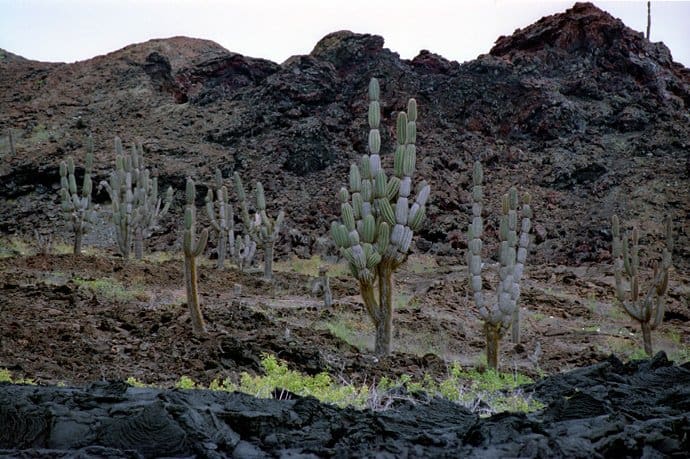
The rarer columnar or candelabra cacti, up to 6m high, on the other hand, consist of only one endemic species, which has since been split up by evolution. They are particularly easy to discover during a walk in the lagoon area around Puerto Villamil on Isabela.

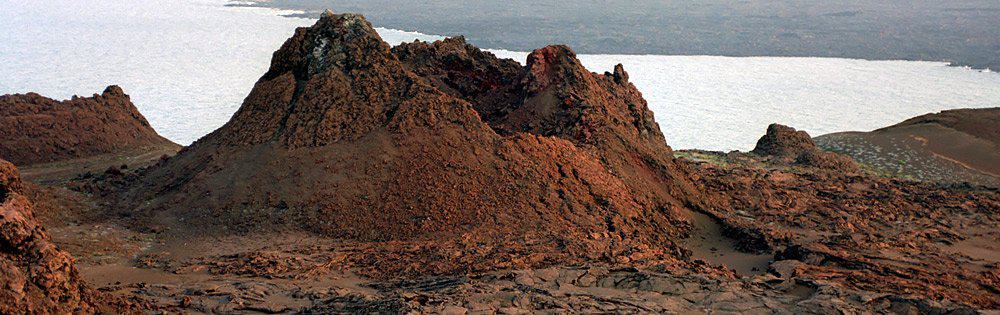
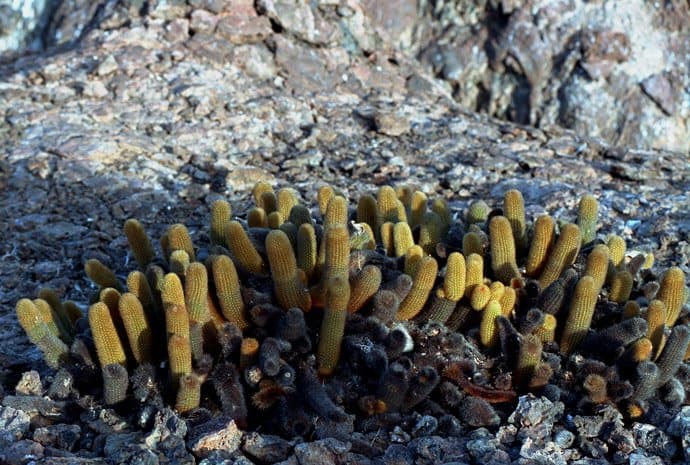
The lava cactus, which thrives on naked lava rock, can only be understood as an erotic whim of nature. It usually occurs in erectile groups, and can be admired, for example, in the moon-like volcanic landscape of Bartolomé.

The most common representative of the dry zone, however, is the Palo Santo tree, which often forms entire forests in the nearby coastal areas, and whose aromatic resin smells very strongly of frankincense. With its smooth, shiny bark, the palo santo belongs to the white gum or balsam trees. While it does not bear a single leaf in the driest months, it wraps itself in a light green robe during the rainy season.

Other typical, partly endemic plant species in the nearby coastal area are the small Muyuyo tree with its yellow flowers, the poisonous Manzanillo tree, the spot-causing Chalá bush, the parasitic Galápagos silk, the unruly Tribulus, the nodular dry Tree of Destiny, the white-headed parrot leaf, the pedunculate-flowered lantana, the pointed-leaved Parkinsonia on Baltra Island, the prickly Algarrobo acacia at Tagus Cove on Isabela, Peruvian Orchid the Suárez headland on Española, grey-bearded coldenias and bonsai tree sunflowers on Bartolomé, as well as an almost leafless impenetrable thorny scrub called Scutia Pauciflora Rhamnaceae.

The seductively spreading Galápagos passion flower, an originally introduced, highly hairy climbing plant with edible fruits, is considered a pest in contrast to the endemic Galápagos tomato, as it blocks sunlight from native wild plants.

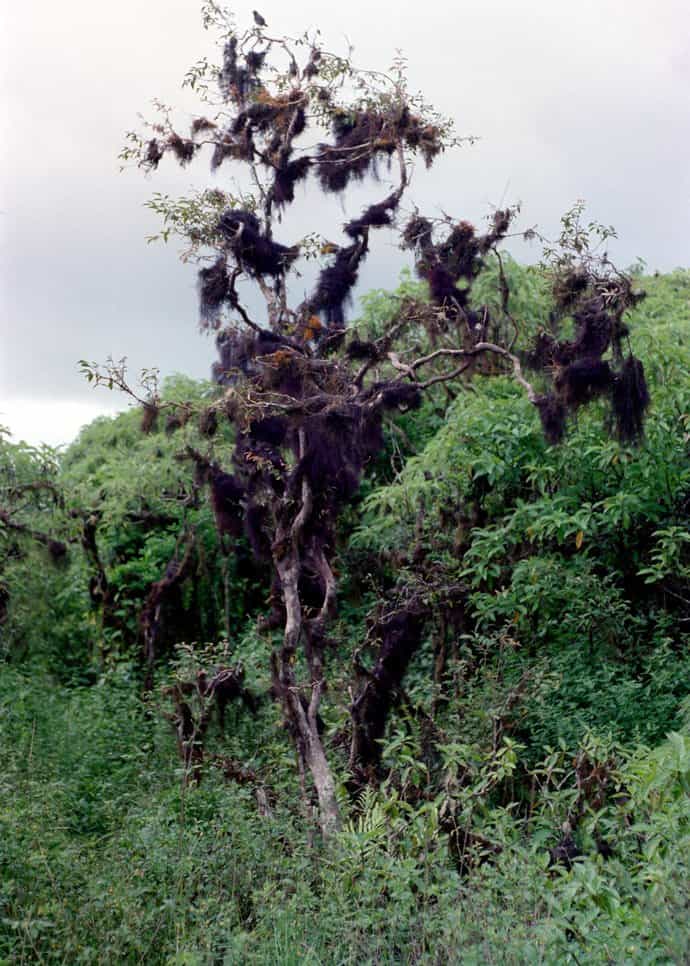
At wetter altitudes of 150 to 300 m, in addition to coral trees, bearded braids and liverworts, parasitic epiphytes catch the eye, especially on trees. In this transition zone, the frequency of precipitation increases in contrast to the dry coastal area. Of course, this also changes the plant world noticeably. However, this so-called transition zone is hardly distinguishable from the higher-lying “Scalesia zone” for the layman.

In hilly and rainy locations of over 200 to 600 metres above sea level, foggy Scalesia forests surrounded by bromeliads and ferns predominate. There are a total of 15 endemic tree and bush species of these composite plants on Galápagos. Some of them – albeit very small – can also be found in the coastal region.

Since the high-altitude Scalesia zone has the most fertile soils in the archipelago, it has unfortunately also been used intensively for agriculture. This is particularly evident in San Cristóbal and Santa Cruz, where large parts of this forest area have already disappeared, never to be seen again. This is also increasingly affecting other residents of the national park. During the dry season, the foraging giant tortoises migrate to the evergreen jungle area, which is unmistakable by the constant chirping of birds.

Only in these higher altitudes of Galápagos has a tropical flora similar to the mainland developed. For example, the small red flycatcher living there, also known by the magical name Ruby Tyrant, hardly differs from its fluttering mainland relatives.

On the southern slopes of the islands, both the transition zones and the scalesia zones are much lower than on the rainy shadow sides of the northern slopes due to the prevailing winds and stronger cloud formation. The drive from the airport over the undulating ridges to Puerto Ayora, across the island of Santa Cruz, gives the visitor a glimpse of these little-visited vegetation zones of the archipelago.

Above the forest region, at altitudes of over 500 meters, the pampa-like mountain region begins. Meter-high miconia bushes, isolated tree ferns, as well as extensive swamp and elephant grasses, characterize this rainy green zone, especially on San Cristóbal and Santa Cruz. On Isabela, the tough thicket even reaches the crater edges of the volcanic giants, which are up to 1,700m high.

Curiously, the tropical-subtropical highlands have more endemic plant and animal species than the coastal dry and splash water zone combined. For example, the habitat of two very rare bird species, the Galápagos dwarf rail and the bright-beaked snarl, is limited to this pampa zone.

Galapagos History

The first visitors to the Galápagos Islands were probably the seaworthy cultures of the Manteños or Huancavilcas, who came over from the Ecuadorian mainland on large balsa rafts. Ceramic splinters found on the island of Santiago, the Bahía Ballena on Santa Cruz, and on the black beach of Floreana can testify to this. However, it remains doubtful whether the former coastal inhabitants found their way back from the oceanic islands. With the prevailing current conditions, this undertaking was almost impossible.

Around 1485, the Inca Tupac Yupangui is said to have already headed for two of the islands, Nina Chumbi and Hahua Chumbi. According to the Norwegian explorer Thor Heyerdahl, the horse skin brought back, which was still in Cuzco 100 years later, was actually a sea lion skin.

The tenth Inca emperor is also said to have come across a bronze crescent-shaped Manteño pedestal there. But both the mysterious fur and the chieftain’s chair could just as well have come from a stretch of coast on the continent.

A lull in the wind drove the first European, Fray Tomás de Berlanga, to the coasts of the archipelago in 1535 with the strong Humboldt counter-current. The then Archbishop of Panamá, who (like most animals and plants before him) involuntarily stranded on the islands, declared the stony islands “full of sea lions and turtles” to be “completely uninhabitable”. After giving up the desperate search for drinking water, he just reached the Peruvian coast again. Through the discovery of the bishop in 1574, the archipelago could be marked on a world map for the first time – under the name “Islands of the Turtles” or Archipelago de los Galopegoes.

The Spaniard Diego de Rivadeneira gave them the enchanting name Islas Encantadas in 1546. The deserter from Pizarro’s army fled north from Perú with twelve men and a stolen ship, and was drifted to the islands, as was Berlanga. Due to the high error rate of the navigation instruments used at that time, the remote, often cloud-shrouded “phantom islands” had the reputation of bewitching themselves from the surface from time to time, or making themselves invisible. Rivadeneira not only found fresh water on one of the islands, but also mentioned the “Galápagos falcon” for the first time in his report.

Since the end of the 16th century, English, French and Dutch pirates and buccaneers, among them the legendary Francis Drake, Captain Morgan and William Dampier, used the islands as a treasure cache and base for raids on Spanish sailors who transported the last Inca gold of the colonies to Europe. The islands also had to serve as a starting point for many a bloodthirsty attack on the port city of Guayaquil. The volcanic caves on Santiago and Floreana served as an ideal hiding place for the pirates. In 1684, the buccaneer William Ambrose Cowley named the islands after British kings, counts and admirals, and made the first detailed map of the archipelago. The English sailor Alexander Selkirk, who was picked up by the pirate Woods Rodgers far off the Chilean coast in 1709, later provided the writer Daniel Defoe with the basis for his famous Robinson Crusoe novel. Three months after his miraculous rescue, Selkirk himself commanded his own corsair ship, with which he attacked Guayaquil and then divided up the rich booty on one of the Galápagos Islands.

In 1793, the British captain James Colnett erected a curious wooden barrel on Floreana, which is still used as a mail delivery for sailors and tourists to this day. With Colnett, the first whalers and sealers arrived on the islands at the end of the 18th and beginning of the 19th century. The number of fishing vessels massacring in the Galápagos region rose to over 2,000 in the middle of the last century. The fur seal colonies have practically not yet been able to recover from the slaughter. It is also estimated that over 200,000 giant tortoises fell victim to the hunters, 15,000 on Floreana alone. The unfortunate armored animals, which were simply stacked on top of each other below deck and turned on their backs, were able to survive for months without water and food despite this practice, and thus constantly supplied the crew with fresh meat. Three of the unique turtle species are now extinct as a result, while others have been decimated extremely badly.

The first inhabitant of Galápagos was the Irishman Patrick Watkins, who was abandoned on Floreana in 1807. He was mainly engaged in the cultivation of vegetables, which he exchanged for whisky from the passing whaling ships.

Almost two years after Ecuador’s declaration of independence, the islands were incorporated into Ecuadorian territory on February 12, 1832 by Coronel Ignacio Hernandez. The first governor of Galápagos, General José Villamil, had the utopian intention of founding a new ideal society on Floreana. He officially gave the islands Spanish names in addition to their already existing English names. However, his dream of a distant paradise turned into an anarchist convict colony after a short time.

The cruel Manuel Julio Cobos, after a first colonization attempt in 1869, moved the prison camp to El Progreso on San Cristóbal in 1888. A lucrative sugarcane industry was established under lashes. Work-shy he had the rats eat alive in an iron kettle heated by the sun. After continuing to rape the wives of the prisoners, he was hacked to pieces by a machete-wielding Colombian in 1904.

In the autumn of 1835, the most famous visitor to the Enchanted Islands, the “HMS Beagle”, which was subordinate to Captain Fitzroy – an English student named Charles Darwin – was staying on the Enchanted Islands. The budding naturalist and ornithologist, who had been classified as unimaginative by his teachers, traveled despite his father’s strict prohibition – and only because two other passengers had cancelled at short notice. On Galápagos, Darwin spent five weeks studying plants and animals, which he described as cyclopean beasts, among other things. The term evolution was never used by the deeply religious Victorian in this regard. At first, he simply denied a progressive development of species based on a variety of momentums.

Between 1875-78, the German geologist and naturalist Theodor Wolf visited Galápagos twice. He found out that the islands must be of volcanic-oceanic origin, and therefore have no connection to the South American continent. The highest Galápagos elevation, a 1,707m high volcano on Isabela, as well as a small rocky island in the far northwest of the island kingdom, bear his name today.

On the occasion of Columbus’ 400th anniversary of his discovery of America in 1892, the archipelago was given the name “Archipiélago de Colón”. A year later, the honorable Guayaquileño Don Antonio Gil initiated the first reasonably successful settlement attempt on Isabela. The colony survived thanks to the sale of beef and the sulfur mines at the Sierra Negra volcano. A Norwegian group of settlers, who built a fish can factory on Floreana in 1926, gave up this project a little later. Only a rusty cauldron remained as a silent witness. A salt mine in the former Puerto Egas in James Bay on Santiago also only existed for a short time (1924-30).

Among the other adventure travelers who helped the islands gain their magical attraction was the American explorer William Beebe. His visit to the Galápagos in 1923 inspired him to write the world bestseller “Galápagos – World’s End”. An enthusiastic reader of the book was the German dropout dentist and “eco-pioneer” Friedrich Ritter, who settled on Floreana in 1929 with his practice assistant Dore Strauch. In 1932, they were followed by the Wittmer family from Cologne, who still live on the island today. The first luxury yachts of eccentric American multimillionaires appeared on the black beach of Floreana. Wagner de Bosquet’s young German baroness also reached the exotic island on one of these first tourist ships – accompanied by her two lovers Lorenz and Philipson. Her initial plans for an extraordinary luxury hotel failed. After all that remained of it was a hut made of crooked boards and rusted iron, the blue-blooded diva declared herself Empress of Floreana.

During World War II, Baltra Island was used by the American Air Force as a base to monitor the Panama Canal. During this period, the gringos not only ensured the complete extinction of the land iguanas on Baltra, but also bombed parts of other islands such as the rock needle on Bartolomé for training purposes. An encrusted, not exploded explosive device has since adorned the top of the brittle natural monument.

On July 4, 1959, 95% of the archipelago was declared a national park. In the same year, the penal camp opened in 1944 on Isabela Island was blown up. The remaining “Wall of Tears”, built by 200 prisoners from basalt chunks, can still be visited. The only survivor of the former exile colony is now said to be enjoying his retirement somewhere in Puerto Ayora (Santa Cruz).

In 1964 the Charles Darwin Station was founded, and in 1969 the ekuad. Tourism company Metropolitain Touring organized boat trips to Galápagos with the “Lina-A” yacht. Twenty years earlier, however, the German immigrant Fritz Angermeyer had already undertaken the first sailing trips for rich tourists on the “Nixi” yacht.

UNESCO declared the islands a “World Heritage of Humanity” in 1978. Today, almost 60,000 visitors from all over the world come to the archipelago every year. More than 20,000 inhabitants now live in the towns of Puerto Ayora (Santa Cruz) and the provincial capital Puerto Baquerizo Moreno (San Cristóbal).

Overpopulation and human intervention are putting the ecological balance to a new test. The government is to put thick barriers on migration from the mainland to the islands in the future.

With the freighters Piqueros and San Cristóbal, about 15 new cars arrive in Puerto Ayora and Puerto Baquerizo Moreno every month. The local fishing boat fleet alone has increased tenfold in the last five years.

The illegal fishing of the “potency-enhancing” sea cucumbers (pepinos del mar), whose meat is sold as a delicacy to Singapore, Hong Kong and Taiwan, could have the most serious impact on the unique underwater world in the future. The “garbage” devouring sea cucumbers eat algae and dead microorganisms. Other organisms live on their larvae, on which all animal species on Galápagos ultimately feed – and Galápagos ultimately stands or falls with the entire Ecuadorian tourism volume. It is to be hoped that this destructive activity will be stopped in the future.

GalapagosGeneral country information

Galapagos – General info

by Joe OnTour 26. August 2017
Galapagos

Galapagos – Arrival

by Joe OnTour 26. August 2017
Galapagos

Galapagos – Isabela Island

by Joe OnTour 26. August 2017
Galapagos

Galapagos – Birds of Prey

by Joe OnTour 26. August 2017
Galapagos

Galapagos – Birds – Red-footed Boobies

by Joe OnTour 26. August 2017
Galapagos

Galapagos – Frigate Birds II

by Joe OnTour 26. August 2017
Galapagos

Galapagos – Frigate Birds I

by Joe OnTour 26. August 2017
Galapagos

Galapagos – Rails, Herons, Pelicans

by Joe OnTour 26. August 2017
Galapagos

Galapagos – Gannets

by Joe OnTour 26. August 2017
Galapagos

Galapagos – Blue-footed boobies

by Joe OnTour 26. August 2017
Galapagos

Galapagos – Penguins

by Joe OnTour 26. August 2017
Galapagos

Galapagos – Flamingos

by Joe OnTour 26. August 2017
Galapagos

Galapagos – Turtles

by Joe OnTour 26. August 2017
Galapagos

Galapagos – Crayfish

by Joe OnTour 26. August 2017
Galapagos

Galapagos – Seals and Sea Lions

by Joe OnTour 26. August 2017
Galapagos

Galapagos – Seals and Sea Lions

by Joe OnTour 26. August 2017
Currently PopularGalapagos

Galapagos – Iguanas & Lizards

by Joe OnTour 26. August 2017
Galapagos

Galapagos – Coasts & Beaches II

by Joe OnTour 26. August 2017
Galapagos

Galapagos – Coasts & Beaches

by Joe OnTour 26. August 2017
Galapagos

Galapagos – Evolution III

by Joe OnTour 26. August 2017
Galapagos

Galapagos – Evolution II

by Joe OnTour 26. August 2017
Galapagos

Galapagos – Evolution I

by Joe OnTour 25. August 2017
Galapagos

Galapagos – Volcanic Lake

by Joe OnTour 25. August 2017
Galapagos

Galapagos – Flora

by Joe OnTour 25. August 2017
Galapagos

Galapagos – Volcanic Islands

by Joe OnTour 25. August 2017
Galapagos

Galapagos – Kicker Rock

by Joe OnTour 25. August 2017
Galapagos

Galapagos – Puerto Ayora – Harry’s Bar

by Joe OnTour 25. August 2017
Galapagos

Galapagos – Puerto Ayora II

by Joe OnTour 25. August 2017
Galapagos

Galapagos – Puerto Ayora I

by Joe OnTour 25. August 2017
Galapagos

Galapagos – Bartolome Island II

by Joe OnTour 25. August 2017
Galapagos

Galapagos – Bartolome Island I

by Joe OnTour 25. August 2017

Questions about the destination Galapagos

In the South America forum you will get the answers!

26. August 2017 0 comments
0 FacebookTwitterPinterestEmail
Galapagos - seals and sea lions
Galapagos

Galapagos – Arrival

by Joe OnTour 26. August 2017
written by Joe OnTour

Galapagos – Arrival

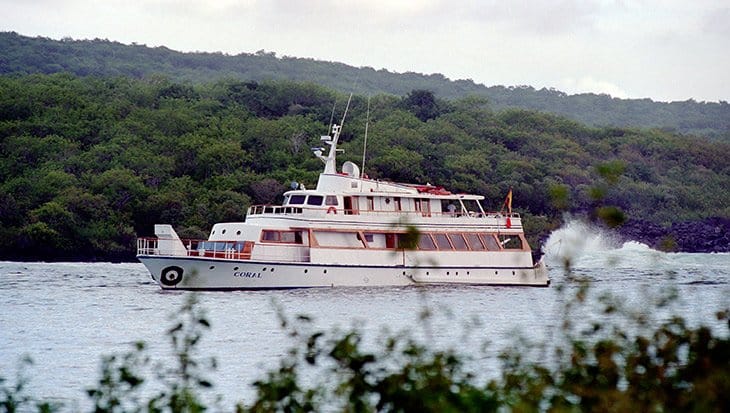
After our flight from Quito to the Galapagos Islands, the owner of the “small motor yacht” is already waiting for us, which we have pre-booked together with friends. We check in there after a lengthy entry procedure completely exhausted.

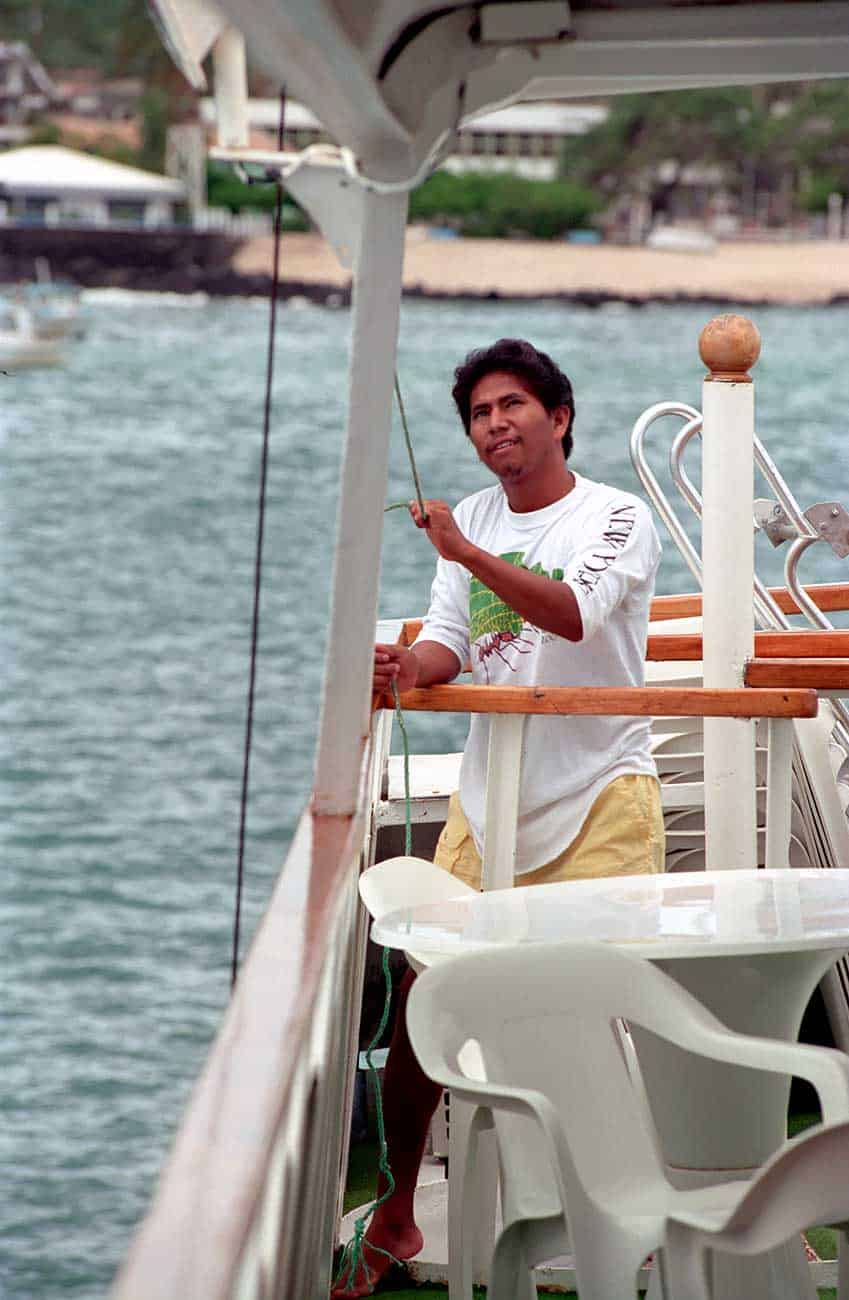
But we also find some peace and quiet on board the motor ship. The first day we want to stay in the harbor and regenerate first. The staff consists of the captain, a helmsman, two assistants and two cooks. In this way, we are self-sufficient and can also call at more distant islands without the difficult search for accommodation on the other islands.

Many islands can only be reached in a day’s journey. The archipelago can only be explored in trips of several days by ship. Only a few islands have sufficient accommodation. That’s why a boat trip is the ideal starting point. Two other larger ships have gathered in the harbor, which are also stockpiling provisions, fuel and food for several days in order to be prepared for the upcoming ship expedition. We take the opportunity for one last shore leave to make our small private purchases. It won’t be much, because we have already brought the basic equipment with us.

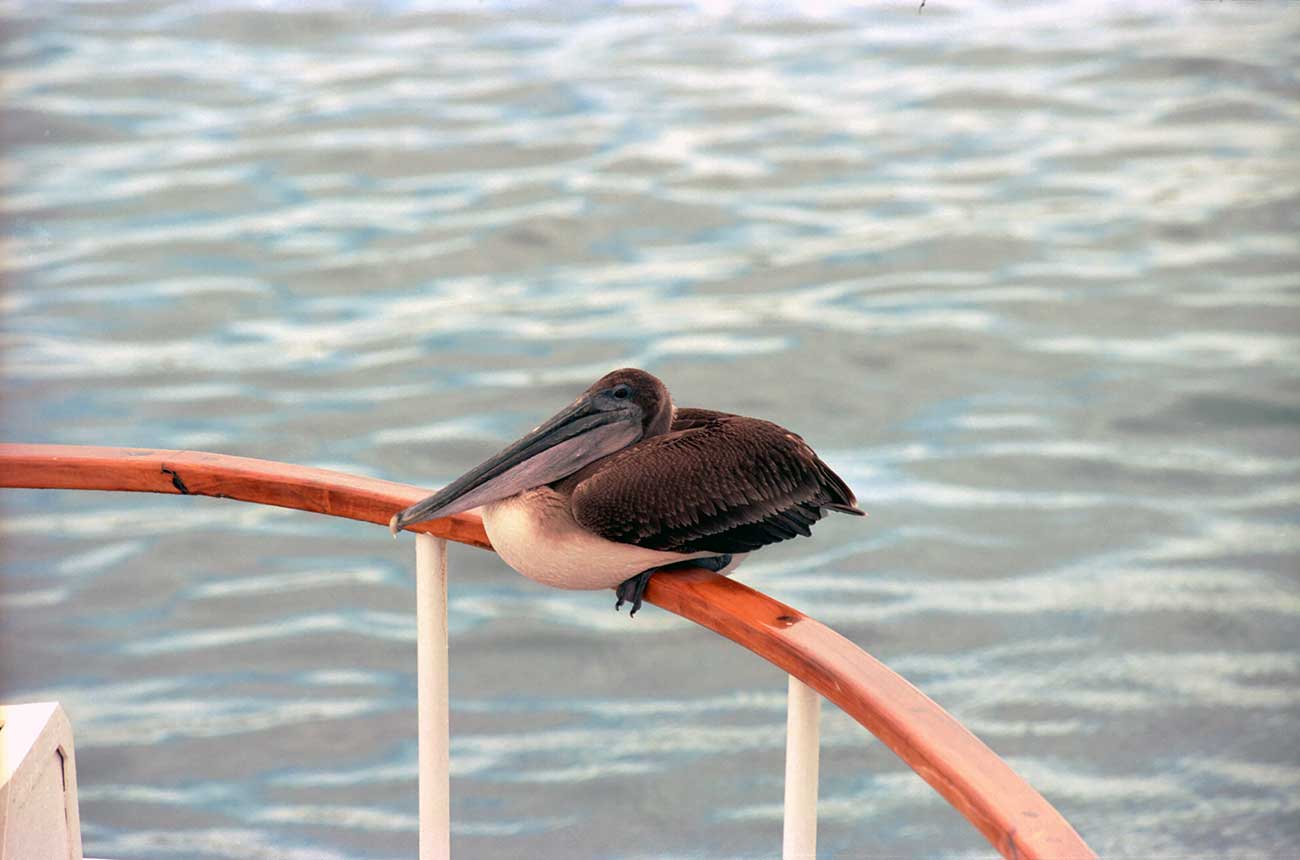
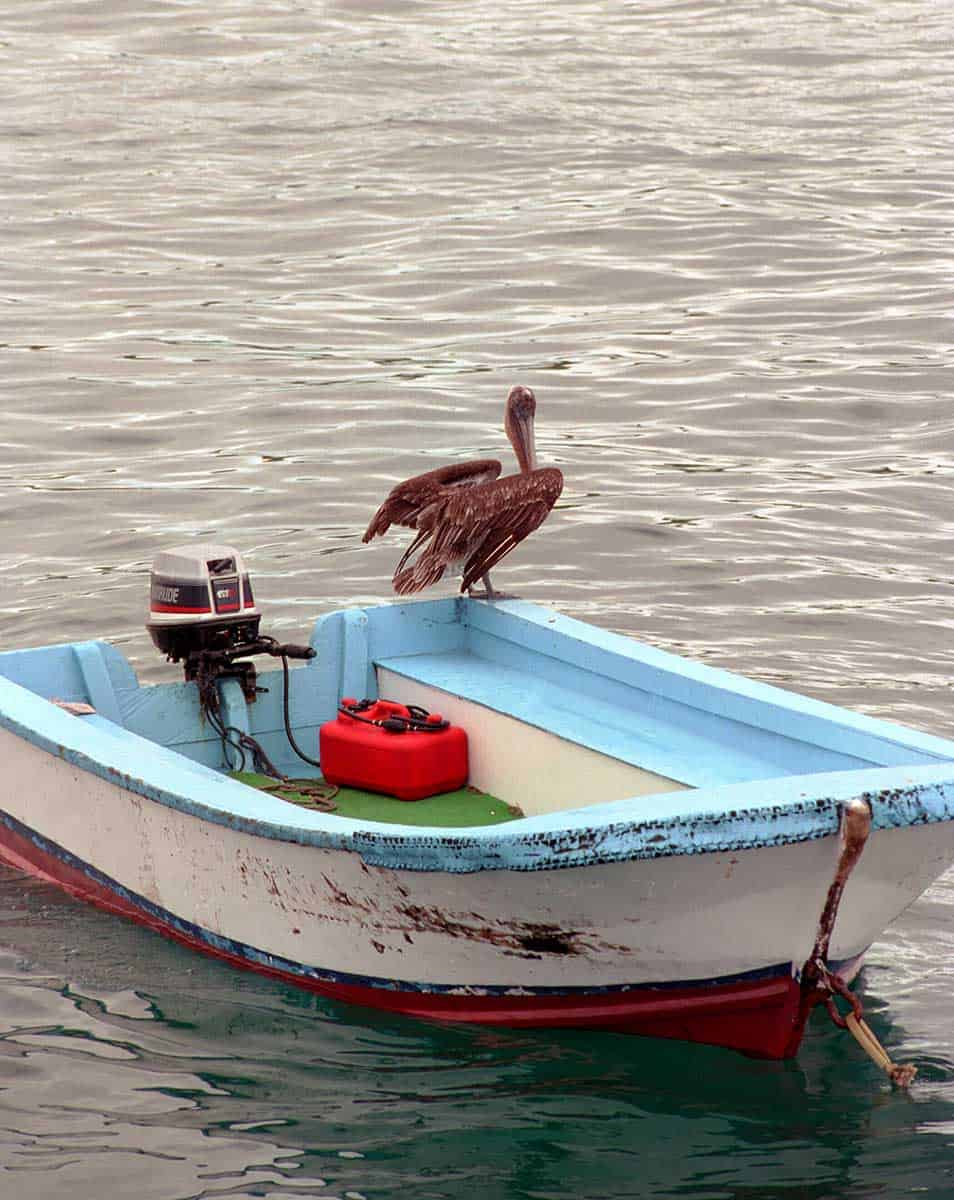
The next morning we can expect beautiful weather with optimal conditions for the upcoming trip. So then it starts. The captain gives the signal to moor the dinghy, which we absolutely need for our planned shore leaves. There is only one small problem left. The pelican does not want to leave its nightly sleeping place….. But our assistant helmsman copes with the problem in his own way…… we don’t think it’s the first time he’s experienced this. Shortly before driven away by our dinghy, the pelican looks for the railing of our motor yacht to end its nap. Well, that can still be funny.

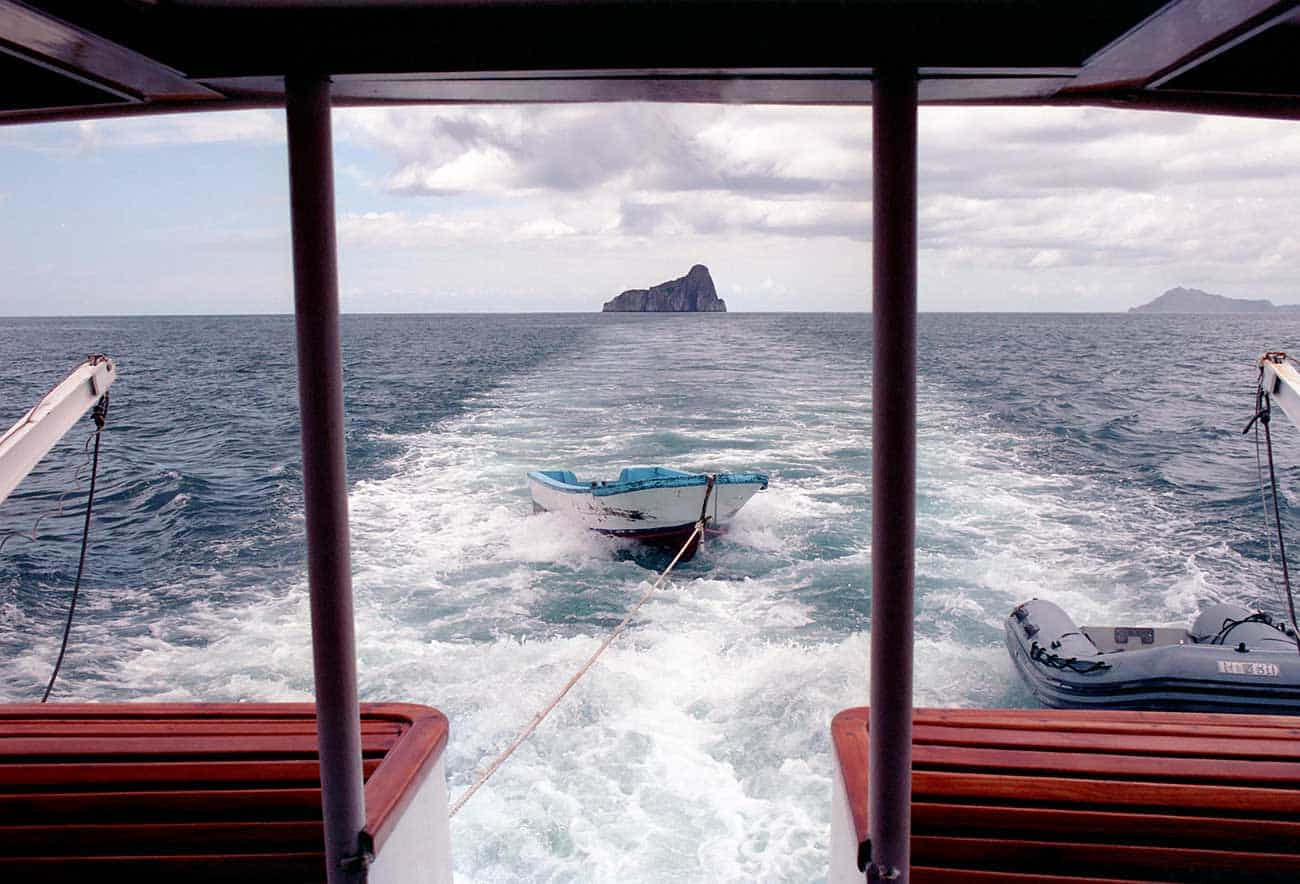
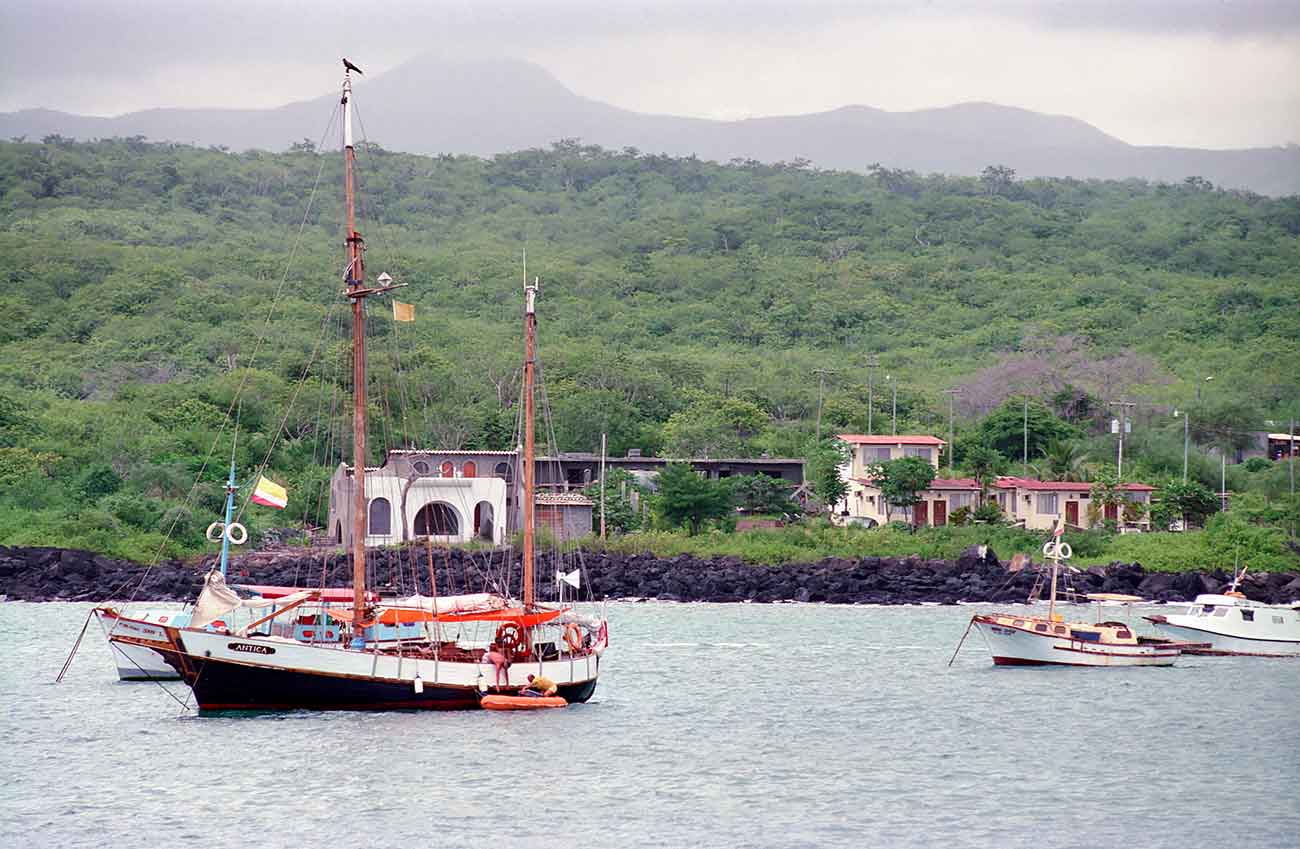
We greet the sailor who has been lying next to us for the night and then we start. Our ship makes a good trip and we get the first impressions of the other islands. The islands quickly disappear on the horizon. Our dinghy dances in the stern wave. In the late afternoon we reach our first destination. We go ashore with the dinghy.

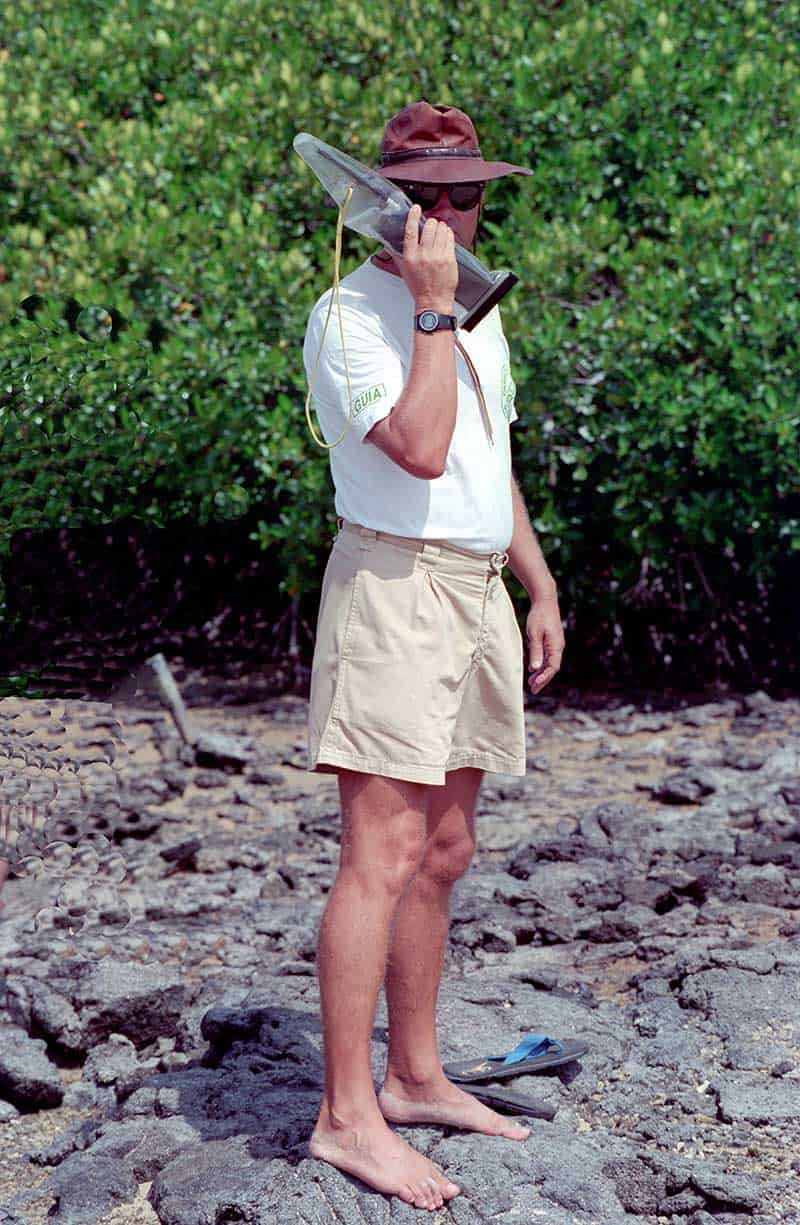
Our guide radios his OK to the captain. Then we go on foot on our first journey of discovery.

Photos Galapagos

galapagos ankunft 610
Galapagos - Arrival
Galapagos - Arrival
Galapagos - Arrival
Galapagos - Arrival
galapagos ankunft 604
Galapagos - Arrival
Galapagos - Arrival

Questions about the destination Galapagos

In the South America forum you will get the answers!

26. August 2017 0 comments
0 FacebookTwitterPinterestEmail
Galapagos - Isabela Island
Galapagos

Galapagos – Isabela Island

by Joe OnTour 26. August 2017
written by Joe OnTour

Galapagos – Isabela Island

The name Galapagos comes from the Spanish name of the island Insulae de los Galopegos, the island of turtles. Of the five main islands, Isabela is the largest and is 120 kilometers long. The Wolf volcano is the highest mountain on the islands at 1707 meters. About a thousand people live in the south of the island. The north is characterized by barren lava landscapes. It is home to an extensive colony of sea guans. The island of Santa Cruz has about 9000 inhabitants – in Puerto Ayora, the tourist center of the archipelago, and in the Charles Darwin Research Station. Santa Cruz is already home to a large part of the animals typical of Galapagos. Many tourists stay on this island because of this and because there are also some good hotels here. With about 5000 inhabitants, San Cristobal is one of the more densely populated islands. The people on this island live from cattle breeding, banana and orange cultivation. This is also the capital of the province of Galapagos: Puerto Baquerizo Moreno. The island also has an airport.

With 4588 km², Isabela is the largest island in the archipelago. It is composed of five shield volcanoes, which probably initially formed separately from each other and only grew together to form an island due to the lava flowing out. The island is home to a diverse flora, such as Tournefortia, Psychotria ruficeps, Galápagos guavas, Galápagos tree ferns, various epiphytic ferns, various mosses, grasses, balsam trees, mangroves, Waltherias, Croton scouleri shrubs, yellow cordias, various acacia species, Darwiniothamnus, lava cacti, orchids, etc. Our guide will lead us through the partly dense jungle of the island.

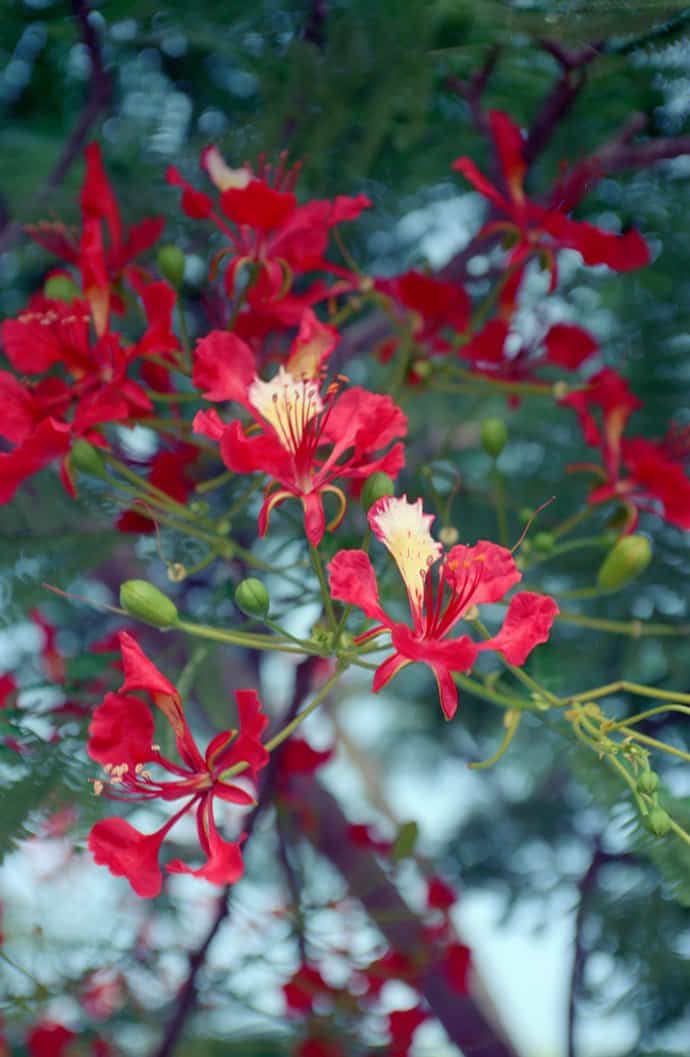
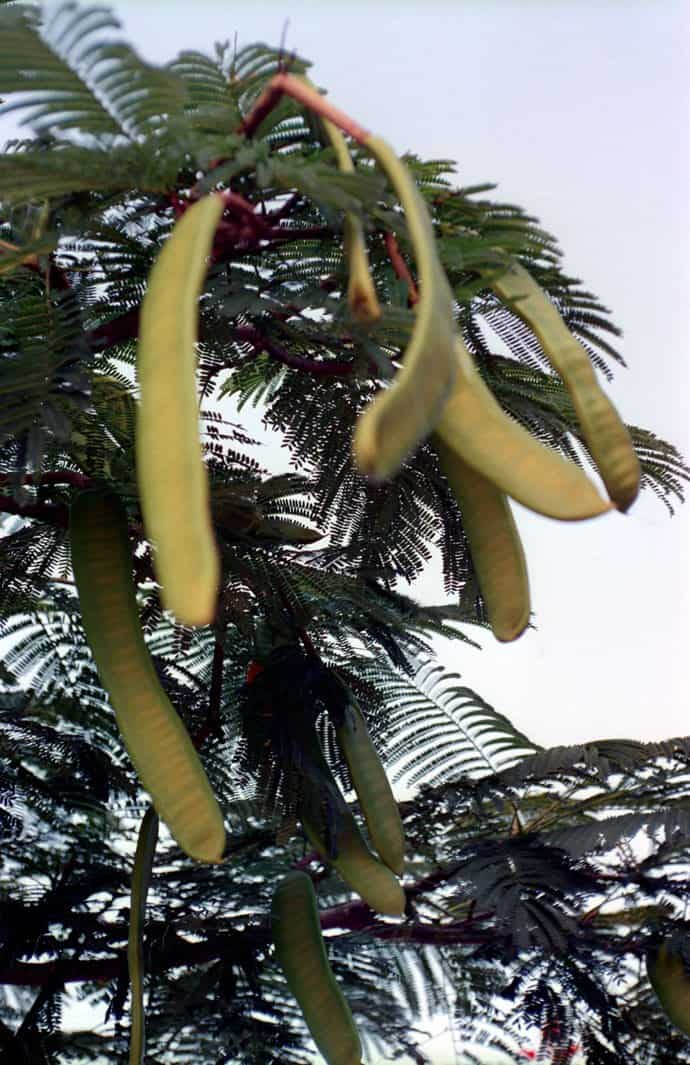
The bushes are densely overgrown. On the trees we find nests of breeding birds. To the north are the volcanoes Wolf (the highest at 1677m), Darwin and Alcedo, to the south the volcanoes Sierra Negra and Cerro Azul. Half of the Ecuador volcano in the northwest has already been swallowed up by the sea. The volcanoes Wolf, Cerro Azul and Sierra Negra are still active. The blaze of colour can be admired in many places on the island. A pod tree in its full glory.

From time to time we see the sea on our hike through the dense jungle. Huge cactus trees grow in the undergrowth and block our way. The islands are not only of different structure among themselves, but we find on this island alone the most glaring landscape contrasts on our journey from the south to the north of the island.

The mighty Opuntia tree cacti have grown into a kind of landmark of Galápagos. They have adapted to the given environmental conditions in a unique way. There are six endemic species of these fig or opuntie cacti, which can grow up to 9m high. The cactus cushions are turned towards the sun’s rays like twisted parabolic antennas. Their pointed, shadowless spines protect the meat from voracious egg-laying predators. The brown tree bark, covered with smooth wax, not only repels the climbing iguanas, but also reduces unnecessarily evaporating body water due to winds and strong equatorial UV radiation to a minimum. A component essential for the survival of cacti for photosynthesis. During these excursions and hikes, you should not forget to protect yourself from insects and always have enough drinking water with you. Finally we have found a suitable resting place for an extensive break.

Pictures Galapagos – Isabela Island

Galapagos - Isabela Island
galapagos 2
Galapagos - Isabela Island

Questions about the destination Galapagos

In the South America forum you will get the answers!

26. August 2017 0 comments
0 FacebookTwitterPinterestEmail
Galapagos - Birds
Galapagos

Galapagos – Birds of Prey

by Joe OnTour 26. August 2017
written by Joe OnTour

Galapagos – Birds of Prey

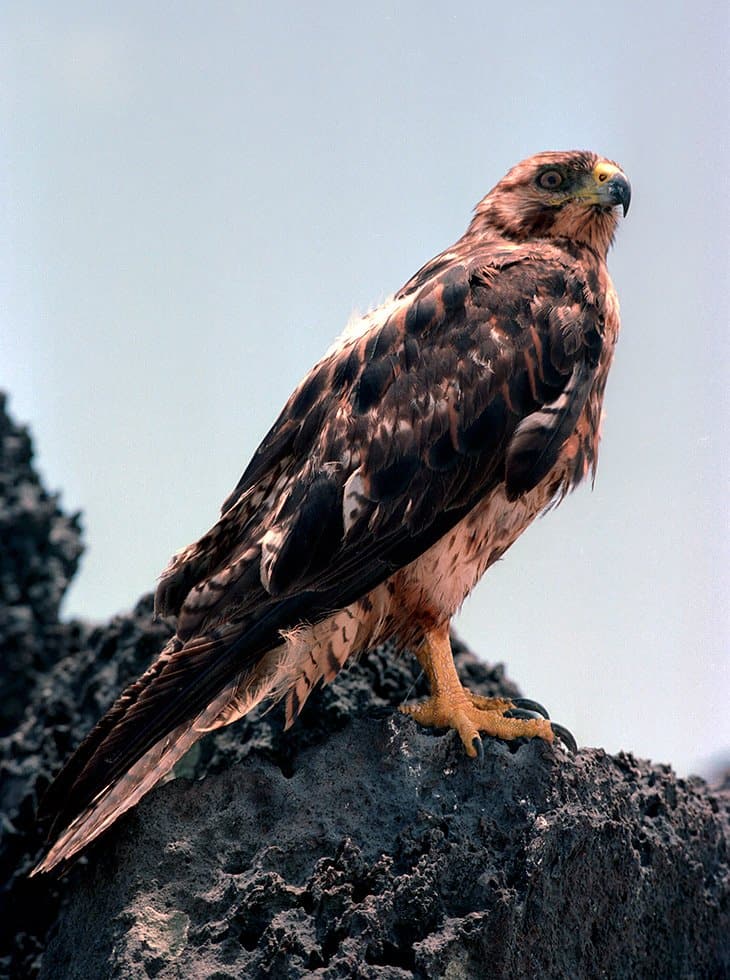
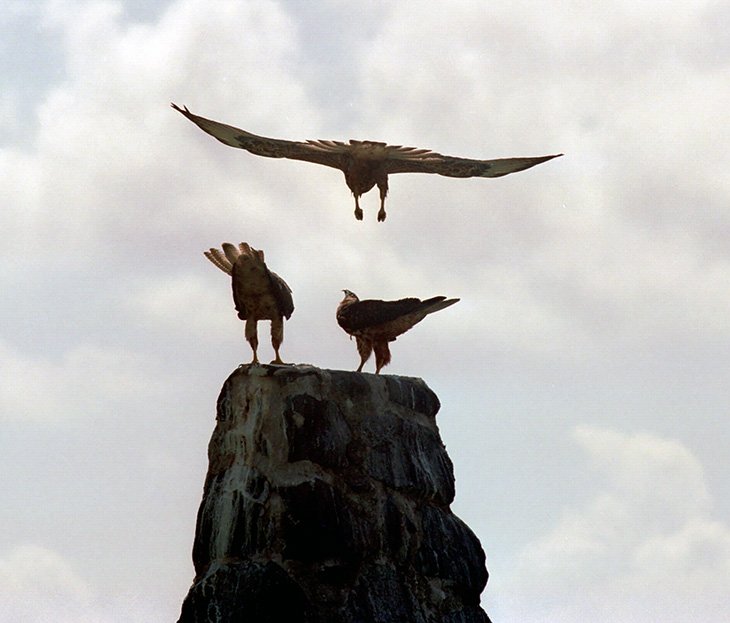
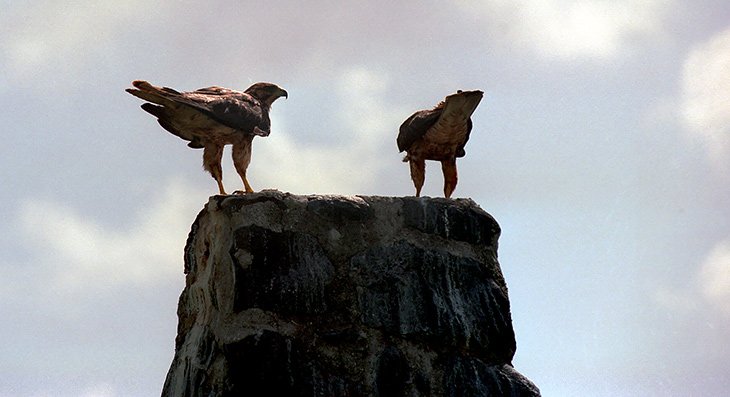
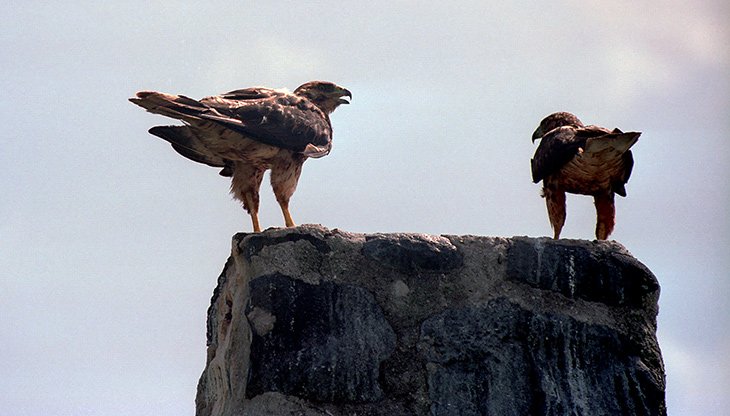
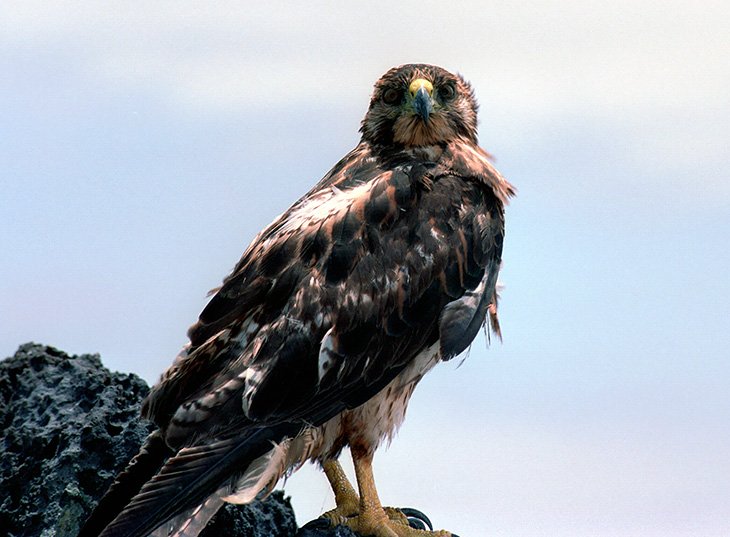
Among the most striking land birds is the Galápagos buzzard, the only bird of prey in the archipelago. It lives in practically all vegetation zones and is somewhat similar to the buzzard. Its prey are pigeons, finches, rats, lizards, snakes, as well as small iguanas. The population of the Galápagos buzzard is estimated at 130 pairs. It feeds on insects, small birds, lizards and carrion.

Flight image of the Galapagos buzzard. The female mates with several males, who participate together in the rearing of the young. The female buzzard usually hatches 2 – 3 eggs in tree nests.

Even though breeding pairs can be observed all year round, the real peak of the reproductive period is reached between May and July. Since the buzzard shows no fear of humans at all, it can often be found right next to the tourist paths – most often on Santa Fé, Santiago, Española, Isabela and Fernandina.

However, it was almost completely eradicated on the inhabited islands, most commonly on Santa Fé, Santiago, Española, Isabela and Fernandina. Even though the buzzards could easily reach all islands due to their high flight ability, the slightly more than 200 breeding pairs are strangely only found on ten islands.

Pictures Galapagos - Birds of Prey

Galapagos - Birds
Galapagos - Birds
Galapagos - Birds
Galapagos - Birds
Galapagos - Birds
Galapagos - Birds
Galapagos - Birds

Questions about the destination Galapagos

In the South America forum you will get the answers!

26. August 2017 0 comments
0 FacebookTwitterPinterestEmail
Galapagos - Birds - Red-footed Boobies
Galapagos

Galapagos – Birds – Red-footed Boobies

by Joe OnTour 26. August 2017
written by Joe OnTour

Galapagos – Birds – Red-footed Boobies

The third and smallest in the gannet group is the red-footed booby, which is rarely observed by visitors. He lives only on San Cristóbal, Genovesa, Wolf, Darwin, and a few tiny satellite islands off the Floreana coast.

His unmistakable trademark is the bright red waddling feet. It is the only booby to build its nest above the ground in bushes and trees.

By far the largest breeding colony of these acrobatic deep-sea fishermen is located on Genovesa. There are now over 150,000 couples living there!

Pictures Galapagos – Birds – Red-footed Boobies

Galapagos - Birds - Red-footed Boobies

Questions about the destination Galapagos

In the South America forum you will get the answers!

26. August 2017 0 comments
0 FacebookTwitterPinterestEmail
Galapagos - Frigatebirds
Galapagos

Galapagos – Frigate Birds II

by Joe OnTour 26. August 2017
written by Joe OnTour

Galapagos – Birds – Frigate Birds – Travelogue 2

Frigate birds do not have water-repellent plumage, so they do not fish themselves, but have specialized in snatching their prey from the other birds. In addition, the frigate birds like to rob the nests of other birds. Whole flocks of frigate birds are in the air.

During courtship, the male inflates his red throat sac to attract the attention of a passing female. Here you can see one of the rare short courtship pauses.

The frigate birds vibrate with their wings and fire machine-gun-like gurgling sounds in the direction of the female. The female then chooses the most beautiful man. The breeding business is a man’s job for the frigate birds. The only egg is incubated for 40 to 50 days. It takes four to 5 months, months until the young is fledged.

Pictures Galapagos – Frigate Birds

Galapagos - Frigatebirds

Questions about the destination Galapagos

In the South America forum you will get the answers!

26. August 2017 0 comments
0 FacebookTwitterPinterestEmail
Galapagos - Frigatebirds
Galapagos

Galapagos – Frigate Birds I

by Joe OnTour 26. August 2017
written by Joe OnTour

Galapagos – Birds – Frigate Birds – Travelogue 1

The air pirates par excellence are the banded and magnificent frigate birds native to San Cristóbal, Seymour, Isabela, Genovesa and other islands. Their specialty is to snatch prey from other seabirds during flight. The body weight of the frigate birds is not even three pounds. One would think that they would spend a lot of time on the surface of the water.

However, as a precaution, they almost never land on the water, as their plumage, unlike all other seabirds, is not water-repellent and becomes clumsy when wet. The status symbols of each frigate bird male include a grappling hook-like beak and a magnificent scarlet throat sac. Full of pride, they inflate it to the size of a balloon during courtship in order to deeply impress some female. The breeding sites are spread over wide areas.

On the left a frigate bird in full “regalia” and on the right in “normal condition”. Even during their notorious raids, the throat sac can often be seen circling over the ocean like a kind of war paint, slightly inflated.

The impressive wingspan of the frigate birds is over two meters.

Pictures Galapagos – Birds – Frigate Birds

Galapagos - Frigatebirds

Questions about the destination Galapagos

In the South America forum you will get the answers!

26. August 2017 0 comments
0 FacebookTwitterPinterestEmail
Galapagos - Birds - Rails Herons Pelikans
Galapagos

Galapagos – Rails, Herons, Pelicans

by Joe OnTour 26. August 2017
written by Joe OnTour

Galapagos – Birds – Rails, Herons, Pelicans

Also among the waders of the archipelago are the American oystercatcher, the Bahama duck, the crooked-billed whimbrel and five species of heron: the well-camouflaged lava heron, the widespread American grey heron, the great egret, the nocturnal crab heron, which is relatively rare in Galápagos, and the cattle egret, which is native to the Santa Cruz mountains. The herons feel at home on the Galapagos Islands due to the extremely rich food supply.

Despite its smooth, grey-tinted plumage, the common fork-tailed gull is one of the most attractive seabirds in the archipelago. The white chest, the three-coloured beak, as well as the red feet and red circles under the eyes on the black coat, give this nocturnal fish hunter an elegant appearance. The seagulls’ diet also includes delicious octopus, which they grab just below the surface of the water after dark. In order to avoid the pursuit of the frigate birds, they also feed their young at an even later hour. Numerous specimens of the year-round breeding birds can be found at many visitor sites on the islands.

The rail species find a rich offer on the beaches and the various cliff and reef zones. In addition to the ubiquitous seabirds, the islands are also home to a variety of waders. This feathered extended family gets its food from mangrove forests, coastal saltwater lagoons, and washed beach shores.

Although the brown pelican is the smallest compared to its seven other conspecifics, it is still one of the largest seabirds in Galápagos. It usually breeds on mangroves and other bushes in the immediate vicinity of the shore. Even if the enduring shock diver is not endemic to the archipelago, i.e. is therefore actually nothing special, its absence at jetties, on dinghies and reelings, would cause the deepest consternation. Pelicans belong to Galápagos like penguins to Antarctica. You can approach the animals up to short distances, as humans are not recognized as enemies or hunters.

Pictures Galapagos – Rails, Herons, Pelicans

Galapagos - Birds - Rails Herons Pelikans

Questions about the destination Galapagos

In the South America forum you will get the answers!

26. August 2017 0 comments
0 FacebookTwitterPinterestEmail
Galapagos - Birds - Gannetsl
Galapagos

Galapagos – Gannets

by Joe OnTour 26. August 2017
written by Joe OnTour

Galapagos – Birds – Boobies

The masked booby, which is also widespread, is somewhat larger than its blue-footed relative and can be easily recognized by its black “mask” and dark wing coverts. The ponderous masked boobies breed only on the edges of the rocky cliffs, where they can take off with the updraft. In contrast to the blue-footed boobies, they fish much further out at sea.

Their courtship phase is subject to uniform intervals, which can vary from one island to another.

There is advertising and hooking up for all it’s worth. During courtship, the boobies have practically no flight distance. You can approach them up to the shortest distance. The nest sites are carefully selected and prepared.

The masked boobies have a considerable body size. It is particularly impressive to watch the animals in flight.

Of the two hatched young, only the firstborn survives, which receives all the care and care of its parents. The other is simply rejected and left to its sad fate. The little ones are always cute to look at and they are not shy at all.

Pictures Galapagos – Birds – Boobies

Galapagos - Birds - Gannetsl
Galapagos - Blue-footed booby
Galapagos - Isabela Island

Questions about the destination Galapagos

In the South America forum you will get the answers!

26. August 2017 0 comments
0 FacebookTwitterPinterestEmail
Galapagos - Blue-footed booby
Galapagos

Galapagos – Blue-footed boobies

by Joe OnTour 26. August 2017
written by Joe OnTour

Galapagos – Birds – Blue-footed Boobies

The cutest seabird is certainly the blue-footed booby. The upright piercing gaze, the challenged beak and the sky-blue waddling feet that stand out from each other inevitably give him the aspect of a “cartoon sailor”. It is the most common representative of the gannet family, which is widespread almost everywhere in Galápagos. These live in large colonies, where they can be observed courting and breeding practically all year round.

Blue-footed boobies are good fliers. They prefer to fish near the coast in small groups. As soon as they have discovered something worthwhile, they plunge vertically down into the water at great speed. Only when they surface do they grab the fish. The male begins the courtship dance with polite bows and alternately lifts one sky-blue foot after the other, with the undersides of the feet pointing towards the female. If the female agrees, she gradually falls into the same rhythm.

Particularly striking is the so-called pointing towards the sky, in which the male stretches neck and beak straight into the air and twists the half-spread wings forward. Such a dance can drag on for hours. Once mated, boobies remain loyal to each other for life. The females lay 2 to 3 eggs, but depending on the food situation, only one young may grow up. While the blue-footed boobies are still quite clumsy on land, they swing up to become true show acrobats in the air. You can often admire their elaborate dive maneuvers. Fishing is preferably done in small “fighter squadrons” near the shore. The pointed beak always aims at the water surface during the reconnaissance flight. Once the floating “target” has been captured and precisely targeted, they rush towards it like missiles out of the blue. During the pleasurable courtship, the male performs the so-called “skypointing” to his beloved and the camera-armed audience.

The beak, rump and wingtips are stretched into the sky like receiving antennas. Elegant waltz turns, tactful foot lifting and seductive whistles are then supposed to finally soften the female. If he is completely enraptured by the temptations of the male, he begins to snort hoarsely and joins in the sensational love dance. During the graceful dance steps, the bride and groom stare at each other’s irresistible blue feet. Affectionate attentions such as gifted twigs are also not uncommon among them. Females and males are relatively easy to distinguish from each other during the extraordinary lovemaking. The female has “soft large” pupils, the male “prickly small”!

Pictures Galapagos – Birds – Blue-footed Boobies

Galapagos - Blue-footed booby

Questions about the destination Galapagos

In the South America forum you will get the answers!

26. August 2017 0 comments
0 FacebookTwitterPinterestEmail
Galapagos - penguins
Galapagos

Galapagos – Penguins

by Joe OnTour 26. August 2017
written by Joe OnTour

Galapagos – Birds – Penguins

The penguins are one of the funniest fellows in the Galapagos Islands. They are always cheerful, in a good mood and constantly on the move with their short, staggering steps. Penguins at the equator? This is also available in Galápagos. With a body size of 33 cm, they are the smallest and northernmost of all penguin species, and only breed when the water is cold enough. Most of the time, they stand under shady lava ledges to protect themselves from the sun.

Penguins are agile swimmers and divers and feed on small fish and crabs. During the breeding season, the females lay one or two eggs in small rock caves. One parent constantly watches over the clutch while the partner is looking for food.

Pictures Galapagos – Birds – Penguins

Galapagos - penguins

Questions about the destination Galapagos

In the South America forum you will get the answers!

26. August 2017 0 comments
0 FacebookTwitterPinterestEmail
Galapagos - Flamingos
Galapagos

Galapagos – Flamingos

by Joe OnTour 26. August 2017
written by Joe OnTour

Galapagos – Animal Expedition – Flamingos

The flamingo family includes 5 species. It is very different from its presumably closest relatives, the waders and the ducks. The flamingos are connected to the waders by their entire external appearance with the long neck (19 cervical vertebrae!) and the extra-long legs. In all flamingos, the 3 front toes are connected with webbed feet, the short 4th toe points backwards. Other anatomical features are reminiscent of storks.

The flamingos live on small crabs, snails, worms and insect larvae. By trampling their feet, flamingos sometimes stir up the nutrient-rich soil mud, which can contain up to 91% organic matter. Flamingos react extremely sensitively to disturbances at the nesting site, and fluctuations in salinity also affect the breeding process, so that in some years certain colonies do not lay eggs at all.

The way they feed is unique: flamingos are completely adapted to foraging in lagoons and highly saline lakes (including mountain lakes in the Andes up to 4000 m altitude). Flamingos stand in shallow water and sift out small creatures with their crooked beak, which is provided with lamellae on the sides and works like a sieve.

For reproduction, the flamingos build a nest consisting of a 30-40 cm high mud mound in the shallow shore water, which has an upper diameter of 25-40 cm (50-60 cm at the base) and carries a shallow hollow at the top, in which the only white egg is placed without further padding. Only rarely do you find two eggs in one nest. Shortly before the eggs are laid, the construction activity increases sharply, before that only little of the nest can be seen. Even after laying eggs, both adults increase the burrow for a while. When drying out, the birds compact the material by stepping on it. The female takes over the main part of the entire construction activity.

Both parents breed for 28-32 days, and the flamingo sitting on the nest with its heel joints protruding far back is a peculiar sight. The young birds have a short, dense dune plumage (slightly grey on the upper side, lighter white below), which is replaced by a dark grey juvenile plumage after 4 weeks. Initially, the legs and beak are still red, after a few days they become blue-gray to black. Also, the beak is straight at first, only after about 2 weeks does it begin to curve.

Pictures Galapagos – Animal Expedition – Flamingos

Galapagos - Flamingos
galapagos flamingos 301
Galapagos - Flamingos

Questions about the destination Galapagos

In the South America forum you will get the answers!

26. August 2017 0 comments
0 FacebookTwitterPinterestEmail
Galapagos - turtles
Galapagos

Galapagos – Turtles

by Joe OnTour 26. August 2017
written by Joe OnTour

Galapagos – Giant Tortoises

On our boat trip through the Galapagos archipelago, we come across a volcanic lake shortly before sunset. An ideal anchorage for the night, as our captain says….

To the south of Genovesa we find Darwin Bay, a volcanic crater collapsed by surf erosion, surrounded by high cliffs. The nightly trip through the very narrow entrance to the wind-protected anchorage is a special experience.

Inside the volcanic lake, the water is pea soup green due to the millions of microscopic marine organisms. At the other end of the food chain, this abundance of food is reflected in the many seabirds that breed in droves in the salt bushes and on the cliffs everywhere.

The volcanic lake has an enormous fish stock. We only need to cast the fishing line and have already prepared for our dinner. But our ship’s cook does not miss the opportunity to dive for a specialty. After several free dives, he caught a number of lobsters. The next morning we hoist the anchor and sail towards our next destination.

Pictures Galapagos – Giant Turtles

Galapagos - turtles
Galapagos - turtles
Galapagos - turtles
Galapagos - turtles
Galapagos - turtles
Galapagos - turtles

Questions about the destination Galapagos

In the South America forum you will get the answers!

26. August 2017 0 comments
0 FacebookTwitterPinterestEmail
Galapagos - crabs
Galapagos

Galapagos – Crayfish

by Joe OnTour 26. August 2017
written by Joe OnTour

Galapagos – Crayfish

Cliff crabs can also be found on the coasts of South America, but their shell is black-green there and only during the mating season do the claws turn red. There they have many enemies, so a flashy color would be deadly. In Galápagos they have fewer enemies, but there are more conspecifics than competitors, so it is important to outdo the rival.

Cliff crabs are actually aquatic animals that breathe through gills, but the fact that they can still live on land is made possible by a unique respiratory organ, the gill chamber. It must be constantly supplied with oxygen-rich water, which ensures a circulation pump. The water exits at the mouth opening, runs along the side of the abdomen, enriches itself with oxygen from the air and re-enters the gill chamber at the base of the legs.

From time to time, fresh water is refilled. Whole armies of cliff crabs hop over the rocks. With their tweezer-like scissors, they pluck and poke around between the algae and bring the smallest food particles to their mouths. At high tide, they hurry back to the higher shore, because they can’t swim. It has been found that each crab has its own stone, which is its home, so to speak. For this purpose, some crabs were marked and released about 500 m from the fishing site. After 9 days, the last one sat on her stone again. It is believed that they orient themselves according to the sun.

Pictures Galapagos – Crayfish

Galapagos - crabs
Galapagos - crabs
Galapagos - crabs

Questions about the destination Galapagos

In the South America forum you will get the answers!

26. August 2017 0 comments
0 FacebookTwitterPinterestEmail
Galapagos - seals and sea lions
Galapagos

Galapagos – Seals and Sea Lions

by Joe OnTour 26. August 2017
written by Joe OnTour

Galapagos – Seals – Sea Lions – Travelogue 2

The curious Galápagos sea lions can be found on all beaches. The ancestors of sea lions came from California’s south coast and have developed into their own subspecies on Galápagos. Sea lions are pronounced herd animals. They are diurnal and go fishing in the morning and evening.

During the breeding season, a male jealously guards a harem. It swims attentively back and forth on the shore and defends its territory against intruders of all kinds with a loud roar.

The young animals play on the beach. The females give birth to one young each year. At the age of about 14 days, the little ones go swimming in shallow water for the first time, after a year they are independent.

After fishing, the females and the young spend the rest of the day in groups like holidaymakers lazily lying on the beach.

Pictures Galapagos – Seals – Sea Lions

Galapagos - seals and sea lions

Questions about the destination Galapagos

In the South America forum you will get the answers!

26. August 2017 0 comments
0 FacebookTwitterPinterestEmail
Galapagos - seals and sea lions
Galapagos

Galapagos – Seals and Sea Lions

by Joe OnTour 26. August 2017
written by Joe OnTour

Galapagos – Seals – Sea Lions – Travelogue 1

With our motor boat we reach a place where our guide suspects larger colonies of seals and sea lions. We can only get to the landing sites and the beach with our small dinghy.

The sea lions can hardly be distinguished from the dark lava stones in the surf. Fur seals are smaller than sea lions and come from Antarctic coastal areas. For centuries they were hunted for their valuable, dense fur, which is why they are found far less frequently than the sea lions. Not so long ago, the animals were literally slaughtered. Today, the population has recovered. About 40,000 animals now live on Galápagos.

In the midday sun, the seals treat themselves to a nap, but not without having oiled themselves well beforehand… of course with a thick layer of sand. Our guide tries to make contact with the seals. The animals are curious and playful.

For the larger sea lions, however, a greater distance is required. You never know how they are in a good mood. To avoid the danger of overheating, the animals usually stay on rocky coasts, where they find enough shady places to lie between the lava blocks. There are often quarrels between the females about the safest and most shady places for themselves and their young. The cub is sucked by its mother for up to two years. Nevertheless, the female can give birth to a young again after just one year. However, it usually has to starve, because only the strongest females are able to feed two young. The second cub represents a biological reserve, and is only raised when the firstborn dies.

The contact seems to succeed, at least our guide is accepted and not attacked. But we don’t dare to imitate him and stay at a short distance from him. However, we should get even closer contact with the seals during the subsequent snorkeling and free day. They cut a much better figure in the water than on land. They swim around us from all directions, from the side, from above and below….nudging us and inviting us to play. That was an experience of a special kind.

The pack leader always has a watchful eye ready. The interplay of life and death is always within reach. Never before have we felt this more strongly than in these places, where man has not yet intervened with his organizations. In the short, quiet moments of reflection, one becomes aware of the finiteness of one’s own being.

Pictures Galapagos – Seals – Sea Lions

Galapagos - seals and sea lions

Questions about the destination Galapagos

In the South America forum you will get the answers!

26. August 2017 0 comments
0 FacebookTwitterPinterestEmail
Galapagos - iguanas & lizards
Currently PopularGalapagos

Galapagos – Iguanas & Lizards

by Joe OnTour 26. August 2017
written by Joe OnTour

Galapagos – Animal Expedition – Iguanas and Lizards

When Charles Darwin visited the Galápagos Islands, some areas were teeming with iguanas that he had difficulty setting up his tent. Today they are only numerous on Fernandina. On Santiago, for example, they were completely exterminated by introduced rats and feral pigs. During the mating season, the males engage in fierce fights, which usually end bloodlessly. If the opponent takes a position of humility, the winner lets him pull off generously.

There are 14 subspecies of the lava lizard, with the Espanola species being endemic. They grow up to 30 cm long here. The female lava lizard is smaller and has a bright red spot on her throat. Males and females have their own territories that must be defended, with only same-sex invaders being fought.

Land iguanas live singly, in pairs or in small groups. They can grow up to 1.20 m long. They look like they are from another time.

Prickly cactus leaves suit them just as well as tender green plant leaves. They take the vital moisture from the thick cactus leaves, because fresh water is lacking on many islands. The fruits are a treat. Since they are quite prickly, the iguanas roll them over the stones until the last sting has broken off.

A male that distinguishes itself from others by its striking colors has a greater chance of choosing a partner and thus more offspring. During mating season, the males fight for the best and largest territories, because the females only like strong supermales. This ensures that only the strongest can reproduce. However, the fights are more ceremonial in nature, the animals do not hurt each other. The fight is initiated by a vigorous nod of the head, the rivals stand erect opposite each other. They collide with their foreheads and try to push each other off the pitch. The weaker one gives in and goes his way. The situation is different with the females: they have to dig deep holes in the earth to lay their eggs there.

Loose soils are therefore very popular and where these places are rare, they often fight each other to the death. Only the strongest of them can reproduce.

Marine iguanas are cold-blooded animals, their body temperature rises and falls with the ambient temperature. When the tide comes and they have recharged enough energy on land, they go in search of food on the seabed, where they graze on algae carpets. No other lizard in the world feeds on the sea, and they are one of the few animals that can drink seawater. They have glands in the nasal region with which they excrete the excess salt.

Pictures Galapagos – Animal Expedition – Iguanas and Lizards

Galapagos - seals and sea lions
Galapagos - iguanas & lizards
Galapagos - Isabela Island
galapagos 2

Questions about the destination Galapagos

In the South America forum you will get the answers!

26. August 2017 0 comments
0 FacebookTwitterPinterestEmail
Galapagos - Coastline & Beaches
Galapagos

Galapagos – Coasts & Beaches II

by Joe OnTour 26. August 2017
written by Joe OnTour

Galapagos – Coasts and Beaches – Travelogue 2

The coasts and beaches in the Galapagos archipelago are a very special nature experience. In this unadulterated landscape, almost untouched by human hands, we feel how gigantic the powers of nature are and how small and small one’s own human abilities are.

On our shore leave we climb the piled up huge rock formations, which are whitewashed by the droppings of the birds. On the cliffs, we are surrounded by the bursting force of the sea, which is constantly reshaping and reshaping the coasts.

We are presented with a unique scenario like the history of the formation of the earth. Everything seems to be in a process of continuous destruction and constant renewal.

And yet there is a peculiar calm and regularity to be felt here, which cannot be reconciled with the hectic pace of our normal (European) everyday life. We feel closer to the origin of life here in a strange way than in any other place on earth.

The variety of coasts and beaches is simply incredible. Pitoresquely staged lava formations alternate with beach bays that actually only appear in a dream. We see bridge constructions that in their beauty and simplicity can only be created by nature. We store the images of the Galapagos Islands in our interior, which we should not forget in a hurry.

Pictures Galapagos – Coasts and Beaches

Galapagos - Coastline & Beaches
Galapagos - Coasts & Beaches

Questions about the destination Galapagos

In the South America forum you will get the answers!

26. August 2017 0 comments
0 FacebookTwitterPinterestEmail
Galapagos - Coasts & Beaches
Galapagos

Galapagos – Coasts & Beaches

by Joe OnTour 26. August 2017
written by Joe OnTour

Galapagos – Coasts and Beaches – Travelogue 1

The coasts and beaches on the Galapagos Islands are not a classic place to stay for tourists. The opposite is the case. The coasts and beaches belong to the wildlife that lives here. Here is one of the few places in the world where the sell-out of nature has not yet been completed.

Bizarre rock formations line the coasts of the volcanic islands. On our trip, we see smaller uninhabited islands emerging from the sea again and again, as if out of nowhere. The shapes of the coasts are of a very different nature.

The rocky islands usually have high and steep cliffs, while the volcanic islands are often flatter and partly equipped with white untouched sandy beaches. We pass islands where you can see their volcanic origin right away. Here the crater of this small island seems to have exploded.

At the bottom left is the image of a typical granite island and in contrast to it to the right the appearance of an island of volcanic origin.

On this day, a strong surf whips onto the coast, sparking a natural spectacle of a unique kind. From the underground crevices and passages, the seawater shoots to the surface in huge fountains.

The structure of the lava islands often looks very similar in its basic structure. The lava cools as it flows into the sea, leaving behind different shapes that look like works of art of nature. At the bottom left, a structure that you could think is alive?

Pictures Galapagos – Coasts and Beaches

Galapagos - Coastline & Beaches
Galapagos - Coasts & Beaches
Galapagos - volcano lake
Galapagos - Evolution
Galapagos - Isabela Island
Galapagos - Bartolome Island

Questions about the destination Galapagos

In the South America forum you will get the answers!

26. August 2017 0 comments
0 FacebookTwitterPinterestEmail
Galapagos - Evolution
Galapagos

Galapagos – Evolution III

by Joe OnTour 26. August 2017
written by Joe OnTour

Galapagos – Evolution – Travelogue 3

The black Pahoehoelava (Pahoehoe = Polinese: rope), also called knitted lava, forms the most curious forms when it cools. In the upper area, you can see that the roof of this structure has already collapsed. On the right, another formation. Here, various layers of lava have poured over each other. In another place, you can clearly see the dark and porous lava flows between lighter rock layers. Here again such a structure. In the shore area, this cross-section of the earth has been exposed by the surf and erosion. The lava has completely enclosed the rock here.

An even younger, already cooled lava flow has trapped cacti and shrubs, but they have reclaimed their habitat. The lava breaks up over time and gives way to more life. Brigitte takes a short break. Walking on the lava surface is exhausting. You have to be constantly careful not to step on layers that are too porous, as there is a risk of collapsing there. The hot gases have formed cavities during the cooling of the lava, which collapse over time.

We admire the washed out lava layers on the beach. Such natural works of art can be found in an incredible variety on the Galapagos Islands.

Images Galapagos – Evolution

Galapagos - Evolution

Questions about the destination Galapagos

In the South America forum you will get the answers!

26. August 2017 0 comments
0 FacebookTwitterPinterestEmail
Galapagos - Evolution
Galapagos

Galapagos – Evolution II

by Joe OnTour 26. August 2017
written by Joe OnTour

Galapagos – Evolution – Travelogue 2

The strong surf forms strange and wondrous formations from the lava…..which are always impressive in their diversity.

On our boat trip through the Galapagos archipelago, we pass a completely flat lava island, in the middle of which stands a huge debris cone of extinct lava. A strangely strange sight. We drive up to the island with our small dinghy. In the immediate vicinity, the structures of the extinct lava can be seen as clearly as if it had just cooled down. The sea is smooth and calm. No sound of an animal or bird can be heard. A strange, almost unsettling silence surrounds us in this wasteland. We are kind of relieved when we are back on board our ship and leave this place. Elsewhere, huge rock needles emerge from the turquoise blue water as if they wanted to give a signal.

This coastal formation must have originated from a huge volcanic eruption. The lava structure has huge dimensions. The lava masses are continuously processed by the force of the ocean surf and finally ground into sand.

Huge lava flows have poured over already existing land masses, so that new layers are piling up again and again. Only sporadically does plant growth form in sparse form. We are presented with an impressive landscape with a variety of forms that can only be found here on the Galapagos Islands.

Images Galapagos – Evolution

Galapagos - Coastline & Beaches
Galapagos - Coasts & Beaches
Galapagos - Evolution
Galapagos - volcanic islands

Questions about the destination Galapagos

In the South America forum you will get the answers!

26. August 2017 0 comments
0 FacebookTwitterPinterestEmail
Galapagos - Evolution
Galapagos

Galapagos – Evolution I

by Joe OnTour 25. August 2017
written by Joe OnTour

Galapagos – Evolution – Travelogue 1

The active volcanoes of the Galápagos Islands are oceanic shield volcanoes that are initially built up undersea by basalt magma. Due to constant lava flows, a rather flat cone is formed layer by layer, which rises steeply only at its highest point and culminates in a so-called caldera (Spanish: cauldron), a circular crater-like depression that is created by the sudden collapse of the crater floor into an emptied magma chamber. The largest caldera can be found on Isabela, it has a diameter of 10×8 km.

Typical lava structures on Galápagos are the black Pahoehoelava (Pahoehoe = Polinese: rope), also called knitted lava, and the gray or red Aalava (A’a = Polinese: pain), also called block lava. Pahoehoelava is formed from very low-viscosity basalt lava, which cools down on the surface due to the air and causes only a very thin film to solidify. The liquid lava underneath continues to move, folding and twisting the surface skin more and more until its structure resembles vast numbers of adjacent and interwoven ropes.

Over a period of about 1 million years, small ash cones consisting of thicker lava form on the surface and in the caldera. After that, gradual erosion begins, in the course of which individual eruptions can still occur on the flanks of the shield volcanoes. The Aalava is formed by slow-flowing lava, in which a thicker layer cools down quickly, which then breaks up into sharp-edged floes. They are transported by the lava flowing below and piled up at the end of the lava flow.

The low-viscosity and slowly cooling lava often forms so-called lava tunnels, which are formed by the fact that the inner liquid lava continues to flow under the solidified surface skin, gradually dries up and leaves elongated, often kilometer-long cavities. Such a large and accessible lava tunnel can be seen on Santa Cruz. In volcanically active areas, earthquakes and tectonic movements occur again and again, caused by magma movements in the depths. They sometimes cause uplifts that raise submarine-formed lava blankets with fossil-bearing layers above sea level. This phenomenon is found on Isabela (Urbina Bay) and San Cristóbal and is responsible for the formation of some islands, such as Baltra and Española , which were not formed by volcanoes, but by submarine lavas raised by tectonic movements.

Galapagos – extinguished lava from an explosion crater
Over a period of up to 10 million years, the surface weathers more and more and gradually submerges in the water due to drifting on the Nazca Plate, which slopes more and more towards the mainland.

Images Galapagos – Evolution

Galapagos - Evolution
Galapagos - Flora
Galapagos - Flora
Galapagos - Flora

Questions about the destination Galapagos

In the South America forum you will get the answers!

25. August 2017 0 comments
0 FacebookTwitterPinterestEmail
Galapagos - volcano lake
Galapagos

Galapagos – Volcanic Lake

by Joe OnTour 25. August 2017
written by Joe OnTour

Galapagos – Volcanic Lake

On our boat trip through the Galapagos archipelago, we come across a volcanic lake shortly before sunset. An ideal anchorage for the night, as our captain says….

To the south of Genovesa we find Darwin Bay, a volcanic crater collapsed by surf erosion, surrounded by high cliffs. The nightly trip through the very narrow entrance to the wind-protected anchorage is a special experience.

Inside the volcanic lake, the water is pea soup green due to the millions of microscopic marine organisms. At the other end of the food chain, this abundance of food is reflected in the many seabirds that breed in droves in the salt bushes and on the cliffs everywhere.

The volcanic lake has an enormous fish stock. We only need to cast the fishing line and have already prepared for our dinner. But our ship’s cook does not miss the opportunity to dive for a specialty. After several free dives, he caught a number of lobsters. The next morning we hoist the anchor and sail towards our next destination.

Pictures Galapagos – Volcanic Lake

Galapagos - volcano lake

Questions about the destination Galapagos

In the South America forum you will get the answers!

25. August 2017 0 comments
0 FacebookTwitterPinterestEmail
Galapagos - Flora
Galapagos

Galapagos – Flora

by Joe OnTour 25. August 2017
written by Joe OnTour

Galapagos – Vegetation – Flora

Typical plants of the nearby coastal region are the salt bush with its long drooping leaves and yellow-green flowers, the dense low mats of the solstice, the slender thorny branches of the Lesser Fenughorn with its club-shaped leaves, as well as the equally shallow-growing beach winds and beach grass.

In the water- and humus-poor coastal areas of the islands, there is a whole range of plants that have been able to successfully resist the annual dry periods in the course of evolution. One of the most striking exponents of the flora widespread on Galápagos for visitors is often the green mangrove forests in flat coastal areas. These include the black mangrove with its yellow-brown asymmetrical fruits, the reddish branches and fleshy leaves of the red mangrove, the white mangrove dotted on the underside of the leaves and the small-leaved button mangrove.

The landmark of Galápagos are the mighty Opuntia tree cacti. They have adapted to the given environmental conditions in a unique way. There are six endemic species of these fig or opuntie cacti, which can grow up to 9m high. Their pointed, shadowless spines protect the meat from voracious egg-laying predators. The rarer columnar or candelabra cacti, up to 6m high, consist of only one endemic species, which has since been evolutionarily split.

The lava cactus that thrives on bare lava rock can only be seen as an erotic whim of nature. It usually occurs in erectile groups, and can be admired in the moon-like volcanic landscape of Bartolomé.

Pictures Galapagos – Vegetation – Flora

Galapagos - Evolution
Galapagos - Flora
Galapagos - Flora
Galapagos - Flora
Galapagos - Flora
Galapagos - Flora
Galapagos - Flora
Galapagos - Flora
Galapagos - Isabela Island

Questions about the destination Galapagos

In the South America forum you will get the answers!

25. August 2017 0 comments
0 FacebookTwitterPinterestEmail
Galapagos - volcanic islands
Galapagos

Galapagos – Volcanic Islands

by Joe OnTour 25. August 2017
written by Joe OnTour

Galapagos – Volcanic Islands

About 5 million years ago, 1000 km off the South American Pacific coast, the sea began to boil. Volcanoes grew up from the sea. Lava, rock and ash were released in huge eruptions. At the beginning, the volcanic islands were desolate and devoid of any life. But as soon as the lava had cooled down, the first colonists settled in the new habitat.

Many plant seeds were carried out to the archipelago by the wind from the far away mainland. The spores of mosses, ferns and seeds of more highly developed plants were among the first newcomers. Other colonists arrived on the volcanic islands by water. Sea lions and turtles conquered the remote island world on their forays through the Pacific.

Many animal species such as marine iguanas will have found their way via carriers such as floating tree trunks. Most plant species reached the archipelago as stowaways in the plumage of seabirds. The settlement lasted thousands of years. About every 10,000 years, a new species managed to establish itself permanently on the islands. Geographically isolated, subspecies developed over time from the colonists that had adapted to the special living conditions on the archipelago.

This explains why many endemic animal and plant species have been discovered in Galápagos. About 50% of all plants found there can only be found on these Pacific islands. With the arrival of humans, settlement was greatly accelerated. Sailors and settlers brought domestic animals to the islands. Pigs, goats, dogs and donkeys became feral and became part of the insular fauna. Other newcomers such as the house rat came to the remote region more by chance.

What they all have in common, however, is that they have a lasting influence on the original flora and fauna. While the domestic rat has specialized in the search for turtle eggs, goats and pigs cause great damage to the field and reduce the food supply for the native species. These are not up to the sudden evolutionary pressure.

Photos Galapagos – Volcanic Islands

Galapagos - Coastline & Beaches
Galapagos - Coasts & Beaches
Galapagos - Evolution
Galapagos - volcanic islands
Galapagos - Bartolome Island
Galapagos - Isabela Island

Questions about the destination Galapagos

In the South America forum you will get the answers!

25. August 2017 0 comments
0 FacebookTwitterPinterestEmail
Galapagos - Kicker Rock
Galapagos

Galapagos – Kicker Rock

by Joe OnTour 25. August 2017
written by Joe OnTour

Galapagos – Kicker Rock

On our voyage through the Galapagos archipelago, we will find the strangest rock formations that rise directly from the sea.

On our cruise through the Galapagos archipelago we find the strangest island shapes. Without having any major land masses in sight, the two small rock formations suddenly emerge from the sea. It’s the Kicker Rock. These two rocky islands consist of a slightly larger main island, which rises steeply from the water about 100 meters and is green on top of the head. Bizarre rock formations on the Galapagos Islands, a few hundred meters off the coast and a slightly smaller rock needle right next to it, which seems to lean against the main island. On closer inspection, you might think that the needle would tip over to the main island at any moment. To get a closer impression of the uniqueness of these formations, we want to drive directly through the narrow gap between the two islands. In calm weather, an experienced captain can dare to maneuver through the decidedly narrow passage.

We are a bit queasy at the thought of crashing here. Help in this wasteland is very difficult to expect. Brigitte is also quite strained, as you can see. But everything goes well and we have a magnificent impression of the rock masses immediately in front of and above us. Only up close can you see the deep cuts in the rock massif, jagged by the forces of nature.

We circle the Kicker Rock with the ship. At the bottom of the rocks, the traces of the constant surf are clearly visible.

Pictures Galapagos – Kicker Rock

Galapagos - Kicker Rock

Questions about the destination Galapagos

In the South America forum you will get the answers!

25. August 2017 0 comments
0 FacebookTwitterPinterestEmail
Newer Posts
Older Posts
  • Blog OntourWorld Travel Blog
  • GTC
  • Imprint
  • OnTourWorld
  • Privacy Policy
  • Useful links

@1993 - 2026 OnTour World | All Rights Reserved | Powered by OnTour World

Travel blog OnTourWorld
  • HOME
  • TRAVEL REPORTS
    • Europe
      • Spain
      • Portugal
      • France
      • Ireland
      • Italy
      • Croatia
      • Netherlands
      • Austria
    • Africa
      • South Africa
      • Mauritius
      • Seychelles
      • Egypt
    • America
      • Hawaii
      • New England
      • New York
      • Arizona
      • Ecuador
      • Galapagos
      • Canada
      • California
      • Mexico
      • Dominican Republic
      • Puerto Rico
      • Bermudas
      • Bahamas
    • Asia
      • Bali
      • Hong Kong
      • Java
      • Maldives
      • Philippines
      • Singapore
      • Sri Lanka
      • Thailand
      • Turkey
    • Oceania
      • Australia
      • New Zealand
      • South Sea
  • CITY TOURS
  • Forum
  • SERVICE
    • Videos
    • Imprint
    • Data protection
  • German
  • English