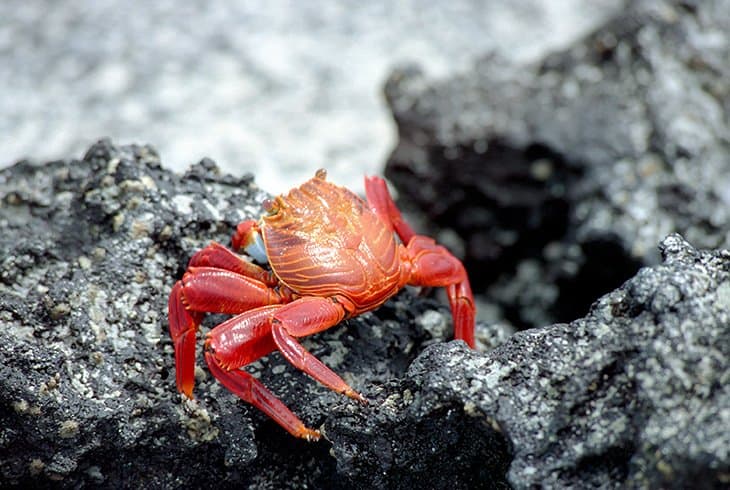
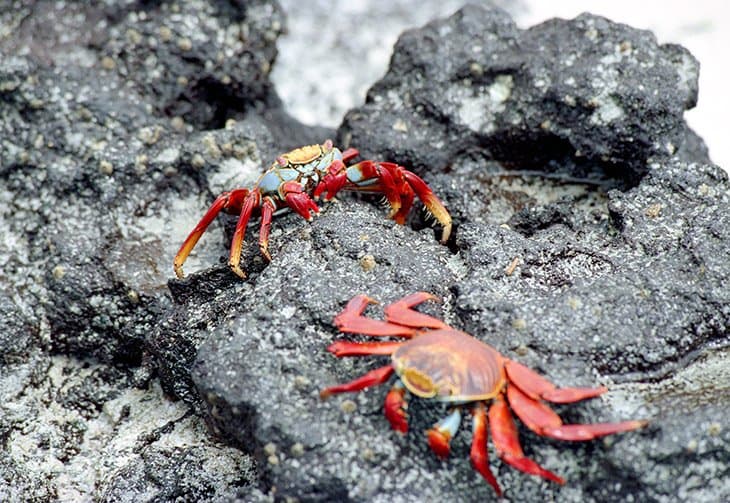
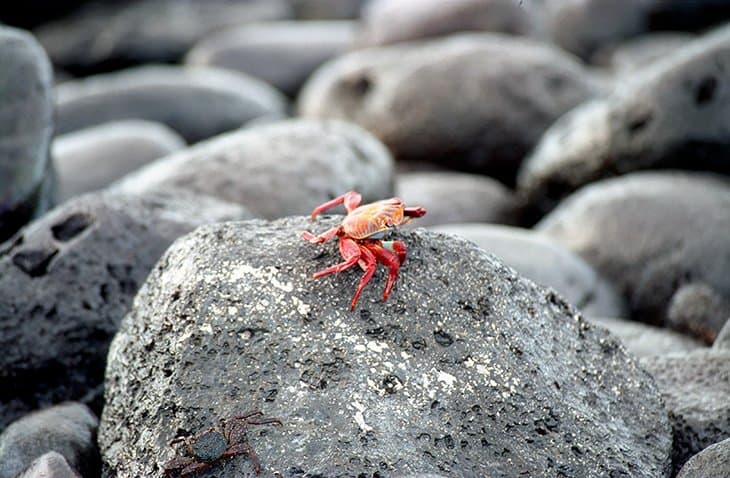
Cliff crabs can also be found on the coasts of South America, but their shell is black-green there and only during the mating season do the claws turn red. There they have many enemies, so a flashy color would be deadly. In Galápagos they have fewer enemies, but there are more conspecifics than competitors, so it is important to outdo the rival.
Cliff crabs are actually aquatic animals that breathe through gills, but the fact that they can still live on land is made possible by a unique respiratory organ, the gill chamber. It must be constantly supplied with oxygen-rich water, which ensures a circulation pump. The water exits at the mouth opening, runs along the side of the abdomen, enriches itself with oxygen from the air and re-enters the gill chamber at the base of the legs.
From time to time, fresh water is refilled. Whole armies of cliff crabs hop over the rocks. With their tweezer-like scissors, they pluck and poke around between the algae and bring the smallest food particles to their mouths. At high tide, they hurry back to the higher shore, because they can’t swim. It has been found that each crab has its own stone, which is its home, so to speak. For this purpose, some crabs were marked and released about 500 m from the fishing site. After 9 days, the last one sat on her stone again. It is believed that they orient themselves according to the sun.