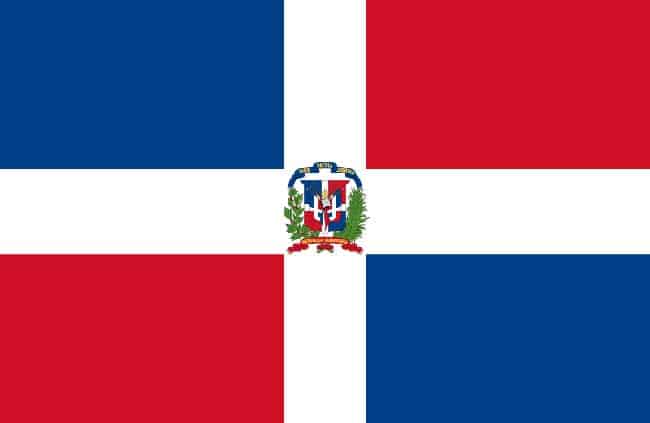
Dominican Republic – General Information
The Dominican Republic (Spanish: República Dominicana) is an island nation located on the island of Hispaniola east of Haiti, between the Atlantic Ocean and the Caribbean.
Official language: Spanish
Capital: Santo Domingo
Form of government: Presidential republic
Area: 48,320–48,730 km² (figures vary slightly depending on the source)
Population: around 11.4 to 11.6 million (as of 2026) – significantly more than the previously mentioned 9 million.
Population density: around 238–240 inhabitants per km².
Currency: Dominican Peso (DOP).
Time zone: UTC−4 (all year round, without daylight saving time change).
Telephone code: The Dominican Republic now uses three area codes in parallel in the North American numbering plan: +1-809 (original, still valid area code), +1-829 and +1-849 (both introduced later, as the available numbers under +1-809 became scarce) – the earlier only mention of +1-809 is thus incomplete.
The largest cities continue to be the capital Santo Domingo (today around 1 million inhabitants in the core city area, around 3–4 million in the metropolitan area) in the south and Santiago de los Caballeros in the interior (today around 700,000–800,000 inhabitants in the metropolitan area). Other cities with more than 100,000 inhabitants are La Romana and San Pedro de Macorís in the south, La Vega in the interior and Puerto Plata in the north.
Language: The national language is Spanish. The Dominican Republic is also home to a significant ethnic group of Haitian descent who speak Haitian Creole – their exact number is politically and statistically disputed and, according to various estimates, is significantly higher than the previously mentioned 159,000. In the northeast of the country, a small English-speaking minority continues to live in the city of Samaná, descendants of former American slaves who settled there in 1824.
Religion: Christians, predominantly Catholics (today still around 55–60%, with a noticeably growing proportion of Evangelical and Pentecostal free churches as well as an increasing proportion of non-denominationals – the previously mentioned Catholic proportion of 80% is therefore no longer relevant).
Politics: Presidential Republic. Constitution of 1966 with numerous later amendments (including 2010, 2015). Compulsory voting from the age of 18. Bicameral parliament (“Congreso Nacional”): Chamber of Deputies (“Cámara de Diputados”, today 190 members) and Senate (“Senado”, 32 members). Elections every four years, direct election of the head of state also every four years.
Current president: Luis Abinader (Partido Revolucionario Moderno, PRM), in office since August 2020, re-elected in May 2024 with a clear majority for a second and, according to the current constitution, last term until 2028.
The political landscape has shifted significantly since the founding of this article: The formerly dominant Partido de la Liberación Dominicana (PLD) has lost much of its importance after a party split in 2019/2020, while the PRM (which emerged from the PRD), which is now in power, as well as the traditional Partido Revolucionario Dominicano (PRD) and the conservative Partido Reformista Social Cristiano (PRSC), continue to shape the party system.
Dominican Republic – Entry and current situation
German, Austrian and Swiss nationals can enter the country without a visa for tourist stays of up to 30 days; the tourist card, which used to have to be paid separately, is now included in the price of the flight ticket or is processed via the mandatory electronic entry declaration (e-ticket, to be filled out online before departure). A passport valid for at least 6 months at the time of entry is required.
Important current note on the border region with Haiti: This information was completely missing from the original article, but is relevant for the overall classification of the country: The neighboring Republic of Haiti on the same island has been experiencing a severe political and security crisis for years with extensive state failure and strong gang crime in large parts of the country. The Dominican Republic has therefore temporarily closed its land border with Haiti completely or heavily regulated it in recent years and secured the border area more militarily. The touristically relevant regions of the Dominican Republic (including Punta Cana, Puerto Plata, Samaná, Santo Domingo) are generally not directly affected by this border problem and are still considered to be safe to visit; however, travel to the immediate vicinity of the border with Haiti should only be undertaken after prior examination of the current situation. Before any trip, it is advisable to take a look at the current travel and security advice of the Federal Foreign Office.
Dominican Republic – Climate
The climate on the coast of the Dominican Republic is tropical with high humidity.
Even in winter, temperatures below about 15 degrees Celsius are rarely measured. The average temperature is around 27 °C.
The Dominican Republic is in the area of effect of tropical cyclones (hurricanes); the hurricane season traditionally extends from June to November, with a statistical focus between August and October – travelers should take this into account when planning, especially for this period, and keep an eye on current weather warnings.
It is noticeably cooler in the mountains. In the Cordillera Central, for example in the town of Constanza, which is located at an altitude of around 1,400 m, temperatures below freezing are also possible in winter.
Note: All information on population figures, political offices, the border situation with Haiti and entry requirements is subject to change and has been researched to the best of our knowledge as of August 2026. For up-to-date, binding information, it is advisable to take a look at the travel and security advice of the Federal Foreign Office before travelling.
Questions about the destination Dominican Republic?
In the America Forum you will get the answers!

Author: Joe OnTour
Autor + Reise-Blogger