Travel blog OnTourWorld
  • HOME
  • TRAVEL REPORTS
    • Europe
      • Spain
      • Portugal
      • France
      • Ireland
      • Italy
      • Croatia
      • Netherlands
      • Austria
    • Africa
      • South Africa
      • Mauritius
      • Seychelles
      • Egypt
    • America
      • Hawaii
      • New England
      • New York
      • Arizona
      • Ecuador
      • Galapagos
      • Canada
      • California
      • Mexico
      • Dominican Republic
      • Puerto Rico
      • Bermudas
      • Bahamas
    • Asia
      • Bali
      • Hong Kong
      • Java
      • Maldives
      • Philippines
      • Singapore
      • Sri Lanka
      • Thailand
      • Turkey
    • Oceania
      • Australia
      • New Zealand
      • South Sea
  • CITY TOURS
  • Country information
  • Forum
  • SERVICE
    • Videos
    • Imprint
    • Data protection
  • German
  • English
Seychellen Bird Island
Seychelles

Seychelles Bird Island Beach

by Joe OnTour 12. July 2017
written by Joe OnTour

Seychelles – Bird Island – Beach

If the ‘blue lagoon’ is in reality even more beautiful than in any imagination, the white sandy beaches are even gentler and the azure blue with the turquoise green advertise the most beautiful watercolours, if buried treasures and pirate hideouts, the largest turtles in the world and the exotic-erotic Coco de Mer have led the visitor to an island world near Africa and Madagascar and perhaps seduced him a little, then you are in the Seychelles.

The beaches of the Seychelles are among the most beautiful in the world, so that even most die-hard globetrotters go into raptures. We include ourselves in this. Despite this, or perhaps because we have already seen most of the beaches in the world, we feel the uniqueness of this remote island in the Indian Ocean here on Bird Island. When we set foot on this island immediately after landing with the small Islandhopper, all the hustle and bustle and travel stress of the last few days falls away from us. The strange silence, broken only by the call of birds and the sound of the surf, has a strange effect on our psyche.

The fine-grained white sandy beach, which runs completely around the island of Bird Island, sometimes widening and narrowing, is just as unique in its kind as the island itself.

On the first night in our small palm roof bungalow (shown in the picture below) we wake up frequently. We actually miss the otherwise omnipresent soundscape of street noise and passing cars. Here we hear only the quiet murmur of the Indian Ocean, which is only a few meters away. There is neither television nor radio and so we are glad that we have our little world radio receiver with us (as always on our travels) to be able to establish contact with the outside world at least occasionally. The next morning we are greeted by a glowing red rising sun on the horizon. The few clouds plunge into a sea of colour. It’s like being woken up with fireworks. The sun quickly rises higher and bathes the island of Bid Island in a glaring light. The temperatures on the beach quickly rise to over 30 degrees.

The entrance sign to the Bird Island Lodge, as the few bungalows are called, lies abandoned and unnoticed on the beach. No wonder, because the facility does not need to advertise. You don’t have to hope for passing ships. The island is far away from the usual shipping routes. Insiders and lovers of the Seychelles know how to find this place as well. Bird Island is completely flat and protrudes only slightly from the turquoise blue sea.

Due to the small number of bungalows, there is never any cramped or crowded on the beach. You can choose “your place” on the island in peace and quiet and otherwise you won’t be disturbed all day.

Every morning we set off on a circumnavigation of the island. In jogging style, you can complete the circuit in half an hour. But there are always new and interesting things to see on the beach, so we take our time. So it can take a few hours until we return. In the water near the beach we see a wide variety of fish species. We even meet small baby sharks. Brigitte collects different types of shells. When it gets too hot for us, we take a cooling bath in the light surf of the Indian Ocean. We forget the time very quickly and lie dozing in the white sand. There are only a few palm trees that offer a little shelter from the scorching sun. On the other side of the island are extensive mangrove plantations that have grown into the sea. At this point, when the tide is high, we have to tie our seven things together on our heads and swim around the obstacles.

The bungalows are located just a few steps from the beach. The front bungalow (picture left) was our temporary home. The exact location of the bungalows can be seen on the map of the island on our page “Bird Island”. Life on this desert island requires us to completely change our rhythm of life. After a short time, the restlessness and busyness typical of us Europeans falls away from us. A special kind of serenity and inner peace spreads. Slowly we understand the mentality of the local population. It is not only the seclusion that imposes its own rhythm on us. The mercilessly shining sun with the tropical temperatures also helps to reduce all activities to a minimum.

The upcoming evening hours with the approaching sunset are particularly spectacular.

Every evening there is a new fireworks display of nature, which is presented impressively and even completely free of charge. At first, the sky turns in wonderfully shallow pastel tones. The falling twilight underlines the approaching finale of the setting sun. We sit on the beach like in an open-air theater and wait for things to come.

In these minutes we let our thoughts wander. Couldn’t the days be endless, accompanied by a perpetual sunset? Couldn’t we live on this island forever?

We reject these thoughts. We are still too firmly rooted in our well-trodden paths and structures.

The fireworks of the final sunset wipe our thoughts aside and take up all the space in us. The rainbow colors are reflected in the almost smooth water of the Indian Ocean like in a mirror.

One thing is certain, we will come back……..

Photos Seychelles – Bird Island – Beach

Seychellen – Insel Bird Island
Seychellen Bird Island

Questions about the destination Seychelles?

You can get the answers in the Africa forum!

12. July 2017 0 comments
0 FacebookTwitterPinterestEmail
Seychellen – Insel Bird Island
Seychelles

Seychelles – Bird Island

by Joe OnTour 12. July 2017
written by Joe OnTour

Seychelles – Bird Island

Bird Island is very difficult and cumbersome to reach from the main island of Mahe. An irregular Air Seychelles flight service carries a small number of visitors to the island once a week. Accommodation consists of a few small local-style bungalows and a beachfront restaurant.

After a short flight, we land with a twin-engine aircraft of the Air Sechelles on the well-swept grass landing site of the island of Bird Island. The pilots receive extra training for landing on Bird Island, as the runway is extremely short. The touchdown point begins a few meters behind the white, fine sandy beach, which is close enough to touch during the landing approach. Immediately after touchdown, the engines are switched to “braking effect” with deafening noise. It is advisable to be well fastened with your seatbelt. The suitcases have to be taken out of the hold of the plane themselves. The terminal (on the right picture behind the plane) consists of a small palm hut with a diameter of 2 meters.

On the hand-painted site plans, which are hung on the outside of the restaurant wall, you can see the dimensions of Bird Island very nicely. You can clearly see that the runway takes up the entire length of the island.

On the left side of the map you can see the few bungalows, north of them is the small restaurant. The island can be easily circumnavigated on foot in an hour if the water level is right. This was part of our daily fitness program. However, it is advisable to take sufficient sun protection and clothing with you, as the radiation exposure here is extremely high due to reflection of the water and the white fine-grained sandy beach. The small, flat coral island is only 1.5 km long and 0.65 km wide. The highest elevation is only a few meters above sea level. In the north, the seabed drops steeply to a depth of 3000 meters.

In the northern and eastern parts of the island there is extensive and dense mangrove vegetation, which reaches into the water on the beach. When circumnavigating the island, you have to wade into the water up to your belly or even swim at high tide. The bungalows are simple and built in typical local style. Insects and geckos are our roommates at night. Apart from the fantastic animal observations and extensive swimming and snorkeling, the island offers no tourist variety. You should bring enough reading material with you. To explore nature and the birds that occur here, a few days are actually enough. If it weren’t for this addictive factor that makes some people think about staying here forever.

The information board shows the daily high and low water levels (tide). You can also rent a glass-bottom boat to study the underwater world extensively (for those who find snorkeling too strenuous).

For deep-sea anglers, pre-booked trips to the Blue Marlin can be organized. But then you should plan a few more days for your stay.

Hunting for the Blue Marlin is a tradition here. There are the largest specimens of the Indian Ocean in the waters around the Seychelles with record-breaking weight classes.

There is even a hand-made device with which the catches caught from deep-sea fishing can be weighed and found to be good. On the small terrace of the restaurant, which is located directly on the beach, you can let your thoughts run free and really relax.

We enjoyed the few days on the island very much and can recommend everyone to visit the island of Bird Island during a stay in Seychelles. The island is also a real experience for your soul.

Photos Seychelles – Bird Island

Seychellen – Insel Bird Island
Seychellen Bird Island

Questions about the destination Seychelles?

You can get the answers in the Africa forum!

12. July 2017 0 comments
0 FacebookTwitterPinterestEmail
Seychellen – Insel La Digue
Currently PopularSeychelles

Seychelles La Digue Beaches

by Joe OnTour 11. July 2017
written by Joe OnTour

Seychelles – La Digue Island – Beaches

Pure bathing pleasure and an almost unreal exotic landscape await the traveller on La Digue, which is characterised by dreamlike white sandy beaches. The underwater world around the island offers over 800 colorful fish species an Eldorado for divers and snorkelers. The hospitality and joie de vivre of the inhabitants of this gem enchant the visitor.

A travel magazine has already declared Grande Anse on La Digue the most beautiful beach in the world. Since the Seychelles are hardly hit by such devastating storms as other tropical islands, they can also shine with immaculately grown palm trees. In the Seychelles you will find fantastically beautiful beaches with fine white sand and huge palm trees, which are hardly visited by tourists. At any time of the day, the rocks impress with a different play of light.

Particularly fantastic are the moments before the sunsets, which are almost always spectacular in this region. The setting sun colours the rocks in a reddish warm tone. In the morning at sunrise, the rocks in the same place have a completely different coloration and they convey a completely different mood. Staying on the island of La Digue seems like paradise to us. No trace of mass tourism. Large hotel complexes are completely missing. Empty beaches wherever you look.

In the interior of the island, you can admire the tropical vegetation. La Digue is truly worth a visit, even if the prices are far above normal levels. It is not for nothing that the Seychelles are considered an exclusive destination for individual travellers. In addition to the expensive four- and five-star hotels, there are also some smaller accommodations for the smaller purse, which do not necessarily have to be worse, especially since you spend time in the great outdoors until late in the evening during the day anyway.

Pictures Seychelles – Island of La Digue – Beaches

Seychellen – Insel La Digue

Questions about the destination Seychelles?

You can get the answers in the Africa forum!

11. July 2017 0 comments
0 FacebookTwitterPinterestEmail
Seychellen – Insel La Digue
Seychelles

Seychelles – La Digue Island

by Joe OnTour 11. July 2017
written by Joe OnTour

Seychelles – La Digue Island

Arriving on the island of La Digue is just as spectacularly easy as the impressions we get during the next few days of our stay on the island.

We arrive by ship on the island of La Digue and are picked up by our host with an ox cart. Our luggage and we are unceremoniously transported onto the cart and off we go at a leisurely pace along the “main road” of the village to our new temporary home.

Cars are largely unknown on the island. During the crossing, we have the impression that we have sat in a time machine that has transported us back in time by exactly 300 years. Time seems to have stood still here. Not only are the means of transport a few centuries old, but also the whole of life seems to follow a different rhythm here. In our eyes, it takes an eternity to complete the formalities and the welcome ceremony. Is this the little paradise we were hoping for?

The following day we try to organize an island exploration. Since there are no cars on the island, you should at least be able to find a mountain bike………… After long negotiations, our host gets us a mountain bike in the original version. The bike has only one gear. Nevertheless, Jürgen embarks on a lonely tour to explore the island. We arrange that he will get back to you within 8 hours. Otherwise, we want to activate an emergency plan. With this equipment, it is already a small adventure to explore the island. But the condition is good and Jürgen has trained enough at home…….so he should have his adventure. ….And Brigitte was right, it was an adventure.

Despite the small differences in altitude on the island, the tour was very strenuous but on the other hand also a real experience. The path leads through wildly overgrown primeval landscapes with dense forests, which no one seems to have penetrated before. Everything is completely untouched and the loneliness is a little oppressive. Only a few birds screech their horror at the intruder into the silence. A narrow path finally leads to an enchanted beach that seems to be from another world. The scene seems like something out of a dream. The granite rocks with the huge palm trees form an unreal backdrop. Not a soul is to be seen far and wide. The shadows are already getting a little longer. The transition to darkness takes place extremely quickly in the tropics. It’s time to make your way back. The trip has already lasted 7 hours and I could go on for at least as long. I can’t get enough of this landscape, which seems to be addictive. I could stay here forever. The pain in the legs from the unaccustomed movement in the translation of the “entrance bicycle” is slowly becoming noticeable. However, the road back is still long. The same way back inland would take several hours.

The alternative is the direct path along the beach, but I don’t know it. I dare this alternative. The path proves to be much more difficult, as it is practically impossible to drive directly in the deep sand. Often this means…….”pushing until the arms glow” …….the compensation for these exertions is the fantastic evening natural scenery with an incomparable sunset. So I just make it back to our accommodation at nightfall. Completely exhausted but happy about this incredible experience, I even forget dinner and sink into a dreamless sleep.

Note: Most of the remote beaches are hardly visited by visitors, as they are too difficult to reach. This also applies to the domestic market. For all visitors to the island who are in good shape, we can recommend a day trip by bike across the island of La Digue.

Photos Seychelles – La Digue Island

Seychellen – Insel La Digue

Questions about the destination Seychelles?

You can get the answers in the Africa forum!

11. July 2017 0 comments
0 FacebookTwitterPinterestEmail
Seychellen – Insel Praslin
Seychelles

Seychelles – Praslin Island

by Joe OnTour 11. July 2017
written by Joe OnTour

Seychelles – Praslin Island

Praslin is the second largest island in the Seychelles and a granite island with dreamlike, snow-white sandy beaches. It is still 13 kilometers long and 5 kilometers wide. 8,000 inhabitants live here.

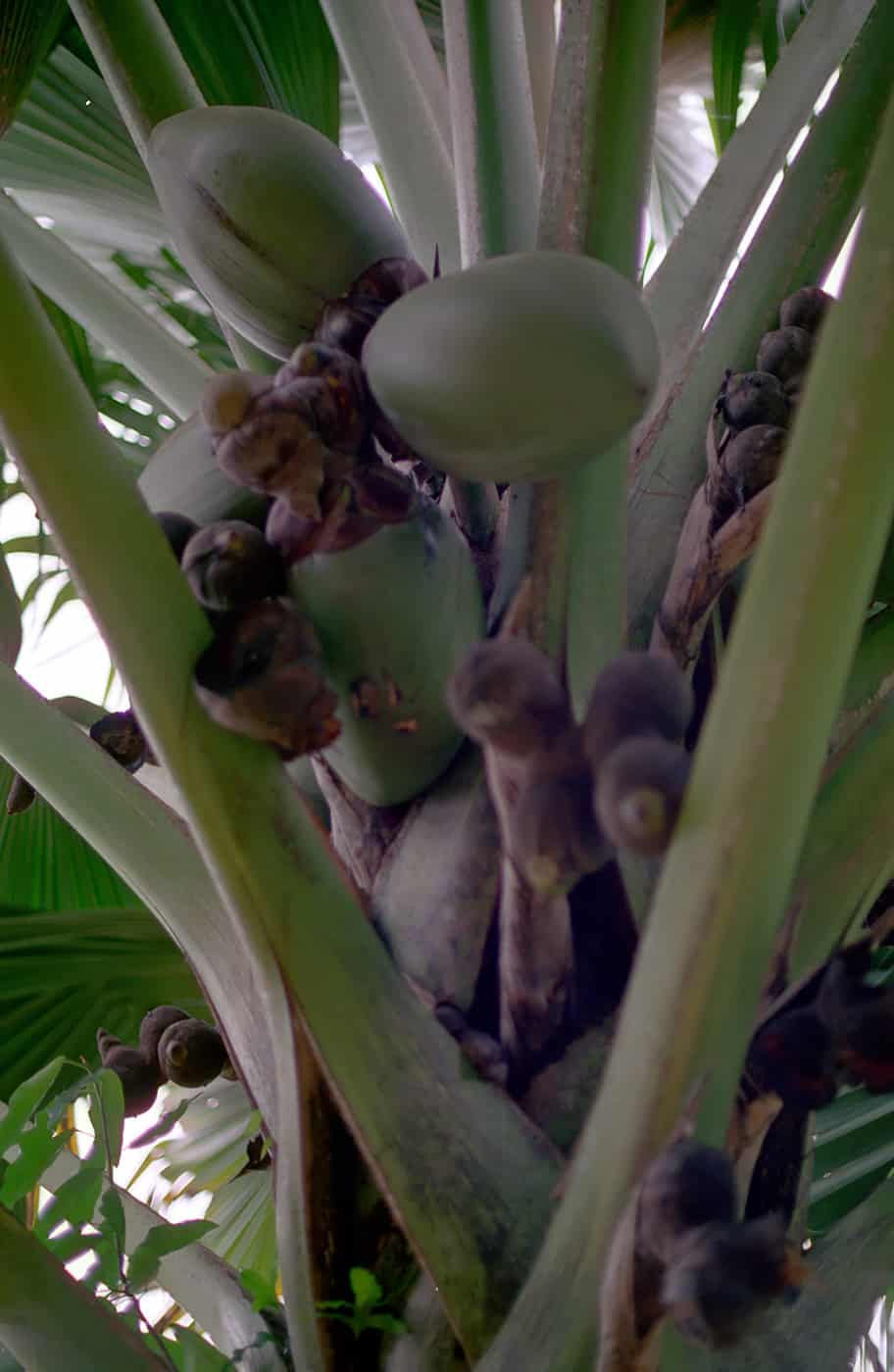
The pace of life here is a little slower than on the main island of Mahe. Pralin can be reached by ferry in about two hours from Mahe. Praslin became famous because of a special plant, the Coco de Mer palm. You can find this palm tree in the “Vallée de Mai”. The size of the coconut nuts and the leaves are impressive. The fruit of the palm weighs up to 25 kg. The special thing about the coconut nuts is the erotic shape.

In the north of the island of Praslin you will find the long “Côte d’Or” with a golden sandy beach.

The “Anse Lazio” in the north of the island is probably the most beautiful beach in the world? A sheltered bay, mirror-smooth, light green-turquoise blue sea, white sand and of course the decorative palm trees.
In the east, on the other hand, there are small romantic bays. In the south, the long beach of “Grand Anse” is impressive, which is described by visitors as the dream beach par excellence. Another worthwhile destination is the “Anse Lazio” in the west of the island. Praslin is particularly suitable for all beach tourists, especially those who consider themselves individualists. Even those who are not only looking for peace and seclusion but also local music and some entertainment and want to take an insight into the life of the locals are in good hands here.

Of course, Praslin is a must for all nutur lovers. We drive here with a rented small off-road vehicle to the north of the island to visit Anse Lazio. A visit to the “Vallée de Mai” is particularly recommended. It is open every day from 7.30 am to 5.30 pm. You should plan about 4 hours for the big tour. It is convenient to leave in the early morning hours, as it is still quiet then. The Valle de Mai was declared a World Heritage Site by Unesco in 1983.

In this way, the aim is to ensure that the animals and plants protected there are preserved for posterity. On the way we find a small open chapel framed by granite rocks. This narrow dirt road leads through a fantastically beautiful landscape to the north of the island to Anse Lazio.

In the high granite mountains in the background, you can observe birds of prey that have built their nests here in the steep rock faces. After the strenuous day tour, we end the day with dinner with local fish dishes.

Photos Seychelles – Praslin Island

Seychellen – Insel Praslin
1989 11 088

Questions about the destination Seychelles?

You can get the answers in the Africa forum!

11. July 2017 0 comments
0 FacebookTwitterPinterestEmail
Seychellen – Insel Mahe - Markt
Seychelles

Seychelles Mahe Market

by Joe OnTour 11. July 2017
written by Joe OnTour

Seychelles – Mahe Island – Market

The Seychelles are a destination for nature lovers who are willing to spend more money than anywhere else for the luxury of this unique and unspoiled nature. There is hardly any nightlife worth mentioning in the Seychelles. Shopping is limited to the market in Victoria and to small shops and individual supermarkets. Even Victoria is not a shopper’s paradise. Nevertheless, it is worth visiting the market to study the mentality of the islanders.

Most of the goods are available in a small selection and at high prices (at least 50% higher than in Europe). The tropical fruits of various kinds are available, but (except for mangoes, papayas and bananas) difficult to find and expensive because they usually have to be imported.

In addition, tourists are often charged “special prices”, which are significantly higher. Better prices are mainly achieved in remote and small shops that are rarely visited by tourists. This is different at the fish market in Viktoria. The markets are usually bustling with activity. Often, the entire family, including the children, is involved in the sales activities. Regional products are offered fresh and uncomplicated on self-made sales counters (simple wooden frames) or on the floor with a blanket as a base.

The usual equipment of a well-stocked market assortment naturally also includes the various droplets, tinctures, ointments and spices. Even the “Coco de Mer” is offered here in the smaller versions. The supply of meat is rare and expensive. It is sold in its own butcher shops, which must be licensed….. Or should be? There is a hustle and bustle, as is usually the case at the markets in tropical countries.

What is striking about the market in Viktoria, however, is that the people are always cheerful and in a good mood. The clothing of the women in the Seychelles usually consists of colorful dresses and straw hats against the strong sun. The men usually wear shorts, sandals and colorful shirts. You can often see the women carrying their burdens on their heads. It takes constant practice from a young age to keep your balance. This tradition has probably been adopted from the African continent. When shopping, this technique naturally has the advantage that you have your hands free to bargain and haggle. Speaking of bargaining and haggling…. this is simply part of shopping and is an absolute “must”.

In this way, you also get into a “conversation” and learn a lot about the country and its people and the everyday life of the inhabitants of the Seychelles. Brigitte is trying to apply this right now. Even with the smallest things like this straw broom, you have to talk shop about the quality beforehand……

…..then you put the thing aside for the time being and take an interest in another object to distract your attention from the object of desire ………….. after all, after a long negotiation, you buy something else at a low price and buy the straw broom as an encore (at half price……………….isn’t that a perfect negotiation strategy? Nevertheless, both sides are highly satisfied with the result!

Pictures Seychelles – Mahe Island – Market

Seychellen – Insel Mahe - Markt
Seychellen – Insel Mahe
Seychellen – Insel Mahe - Markt

Questions about the destination Seychelles?

You can get the answers in the Africa forum!

11. July 2017 0 comments
0 FacebookTwitterPinterestEmail
Seychellen – Insel Mahe - Markt
Seychelles

Seychelles Mahe Fish Market

by Joe OnTour 5. July 2017
written by Joe OnTour

Seychelles – Mahe Island – Fish Market

A must-see destination is the fish market on the island. The Mahe fish market is bustling with activity, a constant coming and going. Here you can study not only the goods but also the people.

This is one of the most interesting fish markets we have visited in our travels around the world. You should come to the market quite early, as the largest and best offer is still available in the early morning hours and most buyers can be observed. The selection of fresh-caught fish from local waters is extremely rich here.

On long counters, the fish are presented pure and without much fuss. The only thing that counts here is the quality of the goods. The fish are gutted on the fish banks, scaled and cut to the right size in portions according to requirements. Then they are cleaned and handed to the man. / the woman brought. However, it must be admitted that the proportion of shoppers is clearly dominated by women. The merchant in the upper right picture still has a huge supply of fish under his counter.

From a purely strategic point of view, the supply is kept limited, because if all the goods were presented at once, this could depress the price. We have rarely encountered a selection of such large fish at fish markets. We find huge red snappers, tuna, sharks, swordfish, perch and many more species. The market, as everywhere in tropical countries, is also a communication center. There is gossip and information about all the news.

Of course, the negotiation about the price, which follows immediately after the small talk, is important. This can be longer and more extensive than the introductory conversation about “this and that”. You can feel that all this is part of the islanders’ joie de vivre. Behind the stalls and sales counters, the hustle and bustle is far from over.

The leftovers and waste are picked up there by the herons and seagulls. So nothing remains of the natural product fish.

This islander is obviously satisfied with the purchase. He bought the pike in one piece…….

…………… and a piece of vegetables. This is sure to make for a delicious meal.

There are always great photo motifs to be found at the fish market. It’s just fun to study people in their everyday activities.

Pictures Seychelles – Mahe Island – Fish Market

Seychellen – Insel Mahe - Markt

Questions about the destination Seychelles?

You can get the answers in the Africa forum!

5. July 2017 0 comments
0 FacebookTwitterPinterestEmail
Seychellen – Insel Mahe
Seychelles

Seychelles – Mahe Island

by Joe OnTour 5. July 2017
written by Joe OnTour

Seychelles – Mahe Island

Mahé is the largest island in the Seychelles. The mountain range “Morne Seychellois”, the highest point of the island state, is ideal for shorter hikes. The capital of the Seychelles, Victoria, invites you to linger with its harbour and picturesque market.

The famous clock tower on Mahe Island in Victoria is a faithful replica of Big Ben in London. Victoria – When you think of eco-holidays, you think of modest holiday accommodations and little comfort. Not so in the Seychelles. The clientele also does not correspond at all to the cliché image of the eco-tourist.

This is due to the fact that the Seychelles are one of the most expensive countries in the world for holidaymakers: Almost everything has to be imported for a lot of money and is also subject to a hefty import tax. The typical Seychelles tourist is therefore not so much someone who actually spends a holiday on a farm, but a wealthy globetrotter for whom money plays only a minor role and who is not bothered by the fact that he and the 130,000 other holidaymakers who enter each year contribute 70 percent of the foreign exchange earnings. The approximately 80,000 Seychellois do not live badly from it. Your country has the highest per capita income and the highest life expectancy in Africa.

They have free health insurance and do not know mass tourism. There are neither ballermänner nor hotel concrete blocks, not even in the capital Victoria. On the other hand, an imported beer in a restaurant costs ten euros, a cheap bottle of wine five times as much. A night in a luxury hotel is available for 300 euros.

Above is the trophy of a Blue Marlin. The Blue Marlin reaches record-breaking proportions in the waters around Mauritius. This specimen weighed 217 kilograms.

Photos Seychelles – Mahe Island

Seychellen – Insel Mahe
Seychellen – Insel Bird Island
Seychellen – Insel Mahe

Questions about the destination Seychelles?

You can get the answers in the Africa forum!

5. July 2017 0 comments
0 FacebookTwitterPinterestEmail
Mauritius - General information
General country informationMauritius

Mauritius – General info

by Joe OnTour 3. July 2017
written by Joe OnTour

Mauritius – General Information

Mauritius is located in the southwestern Indian Ocean about 800 km east of Madagascar and belongs to the Mascarene Islands archipelago with Réunion and Rodrigues.

Mauritius has an area of 1,865 km² and is densely populated with around 1.24 to 1.26 million inhabitants (as of 2025/26) – a slight increase compared to the previously mentioned 1.074 million.

Capital: Port Louis.

Phone: Area code of Germany: 00230/phone number Area code to Germany: 0049/local network without 0/phone number

Language: The national languages are officially English (the sole official language) and French as a widely used lingua franca; in everyday life, Mauritius Creole (Morisyen) is also predominantly spoken, which is now also increasingly being taken into account in the education system.

Currency: 1 Mauritian rupee (MUR) = 100 cents. Important exchange rate update: 100 MUR is now only equivalent to around 1.85 euros (2026 rate: 1 EUR ≈ 54–55 MUR) – the exchange rate of “100 MUR ≈ 4 euros” mentioned in the original is thus long outdated and would significantly mislead travellers when planning their budgets.

Traffic: Left-hand traffic. The German driver’s license is usually accepted in practice for short rental car stays, but an international driver’s license is still recommended and is required by some rental companies.

Tourist Information: The contact details of official tourist offices and embassies change occasionally; for current addresses, it is advisable to check the official websites of the Mauritius Tourism Promotion Authority and the Federal Foreign Office before travelling.

Mauritius still does not have its own embassy in Germany; the embassy of the Republic of Mauritius in Brussels is responsible. Germany also does not have its own embassy in Mauritius; the embassy in Antananarivo (Madagascar) with an honorary consul on site in Port Louis is responsible.

The island is of volcanic origin and almost entirely surrounded by a coral reef. The territory of Mauritius also includes the islands of Rodrigues, St. Brandon (Cargados Carajos), the Agalega Islands and the Chagos archipelago, whose sovereignty was long disputed between Mauritius and Great Britain – in 2024, both countries agreed in a historic agreement that sovereignty over the Chagos Islands would be transferred to Mauritius, while Great Britain and the USA would be allowed to continue to use the Diego Garcia military base in the long term. This agreement marks the end of a decades-long dispute under international law and, of course, was not yet mentioned in the original article.

Mauritius has been an independent state since 1968 and a republic since 12 March 1992.

Politics: Mauritius is a parliamentary republic with a largely representative president as head of state and a prime minister as head of government. The current prime minister is Navin Ramgoolam (Labour Party), who took office for the third time in November 2024 after his alliance won the parliamentary elections by a clear margin; he replaced Pravind Jugnauth. The head of state is President Dharam Gokhool.

Economy: The sugar industry has historically been the country’s largest economic force and continues to dominate large swathes of land with its monocultures as it travels across the island, but has now lost much of its relative economic importance. Today, Mauritius’ economy is mainly based on tourism, financial services (Mauritius has become a major international offshore financial centre), the textile industry and a growing technology sector; the former textile industry dominance has shifted in favour of this more diversified economy.

Mauritius – Climate

The climate in Mauritius is pleasant all year round, with the months of April to July and September to October being particularly beautiful. During this time, the least rain falls and the temperatures are not too high. If you don’t want to miss out on the blooms of the flamboyant trees and fresh exotic fruits such as lychees, you should prefer the Mauritian summer; there is also a particularly pleasant water temperature in the lagoons at this time of year.

From November to March is summer in Mauritius, with average temperatures of 23–25 °C in the morning, which rise to 30–32 °C during the day. In winter (April to October), temperatures are around 7 °C lower, and water temperatures are around 25 °C. Due to the proximity to the equator, the seasons do not differ significantly from each other; even during the rainy season between November and April, precipitation rarely lasts long. Between January and March, cyclones, tropical cyclones that form on the open sea, occasionally occur.

Mauritius is suitable as a travel destination all year round, with consistently mild temperatures. In the Mauritian winter (April–October), stronger winds blow on the east coast, where it can also seem a little cooler.

Note on the time zone: Mauritius has not participated in a summer/winter time change since March 2009; the time difference to Central Europe is therefore 3 hours in the Central European winter and 2 hours in the Central European summer.

Mauritius – Fauna

The fauna and flora of the island of Mauritius as well as the habitat of many species have suffered greatly from human settlement. Due to the deforestation of the once lush forests, the habitat of the original fauna was largely destroyed; many species became extinct, and the native bird life was particularly affected. Many birds ended up in cooking pots or fell victim to introduced rats and monkeys. With the exception of a few species of bats and birds, the original fauna of Mauritius is now completely extinct.

The Dronte (Dodo): The most famous animal and landmark of Mauritius is the dronte, popularly known as the dodo, which has been extinct for centuries. In the Natural History Museum of Port Louis there is one of the rare, completely preserved skeletons as well as a reconstruction of the flightless bird. Striking features were short stubby legs, a crooked beak and feathers that only began behind the eyes. When fully grown, the animal weighed 20–25 kg. Since the dodos had no natural enemies on the island, they had lost their ability to fly in the course of evolution; however, with the arrival of humans in the 16th century, predators such as rats, pigs, goats and monkeys came to the country, which also fed on eggs and young birds – in addition to human hunting of the tasty meat, this led to the extinction of the species within a few decades.

Birdlife: When there were still rainforests in Mauritius, a large number of colourful birds lived on the island; many species fell victim to the change in their habitat. In the last remnants of the original forest ecosystems in the southwest of Mauritius, endemic species such as the Mauritius kestrel, the pink dove, the Mauritian parakeet and the Mauritian caterpillar catcher have found a last refuge. The Mauritius kestrel (Kestrel) is the only bird of prey on the island and was long considered the rarest falcon on earth: around 1970, only four animals of this species still existed. Thanks to an intensive, internationally respected conservation programme, the population has since grown to several hundred animals; the species is now considered one of the best-known examples of conservation success worldwide, even though it remains classified as endangered.

Reptiles and lizards: Only smaller reptiles occur in Mauritius. The extensive sugar cane plantations are mainly home to chameleons and lizards; there are no poisonous snakes on the island. Small geckos, which play a useful role as insect killers on the walls and ceilings of many houses, are often found.

As on the Galápagos Islands, there is also a population of giant tortoises in the Indian Ocean. The original Mauritian giant tortoise was helplessly at the mercy of humans, as the animals could survive for months without food and were therefore highly valued as a meat reserve on ships – it is now extinct. The giant tortoises that can be seen on the island today (including on the Île aux Aigrettes) belong to a species that was originally native to the Aldabra Atoll, about 400 km north of Madagascar, and was introduced to Mauritius for reintroduction and ecological replacement purposes.

Mammals: Before human settlement, mammals were only represented by a few species in Mauritius, including two endemic bat species. As early as the 16th century, rats came to the island with the first ships, decimating many other species. To combat the rodents, Indian mongooses were later settled, which are now common in many regions and can often be seen on the roadsides around the sugar cane fields.

Red deer were once imported from Java by the Dutch; the population in the grazing areas is estimated at several tens of thousands of animals. Around 400 years ago, the Portuguese also brought small macaques from Asia to the island. The monkeys come from the forests to cultivated land and rummage through plantations and settlements for food; they also plunder bird nests, which has contributed to the extinction of several bird species. Nevertheless, they are widespread among the population and are sometimes used as food or bred for biomedical research – an economic sector that has been increasingly critically discussed internationally in recent years.

Underwater world (corrected section – in the original there was an inadvertent text about Canada’s climate): The waters around Mauritius are among the most biodiverse in the Indian Ocean. The coral reef that surrounds the island almost continuously provides habitat for a variety of colorful fish species, including parrotfish, butterflyfish, lionfish and numerous reef sharks, which are generally harmless to divers. Dolphins can be seen regularly in the deeper waters beyond the reef, especially off the west coast at Tamarin and Rivière Noire, where bottlenose dolphins and spinner dolphins can be found all year round. Between July and September, humpback whales also migrate along the coast, which are increasingly the target of responsible whale-watching activities. The reefs themselves, as elsewhere in the Indian Ocean, are under pressure from coral bleaching due to rising sea temperatures and coastal development; several marine protected areas around the island (including Blue Bay in the southeast) are to preserve the remaining intact reef sections in the long term.

Mauritius – Flora

The sea is a huge barrier that plants and animals can overcome in various ways: under their own power or through passive transport such as ocean currents, winds, as well as in the plumage, body or feet of birds.

The successful settlement of plants depends on three factors: reaching the island, finding a suitable habitat and ensuring reproduction. The settlement of Mauritius and Réunion followed a typical sequence: first sea plants and larvae of sedentary marine fauna, then lichens on bare rock, and finally – with the onset of soil formation – plants brought in by wind, sea and birds.

Frequent rainfall and a warm climate quickly led to dense vegetation. Both Mauritius and Réunion have two island-specific characteristics: a comparatively low number of species as a result of random settlement, and a high rate of endemism due to particularly rapid evolutionary processes in small, isolated populations. New species have established themselves here that do not occur anywhere else on earth – around 500 flowering plant species alone are endemic to the Mascarene Islands. However, this limited habitat also makes the biological balance of the islands particularly susceptible to disturbances.

Endemic plants include various species of ebony, Bois d’Olive, Bois de Natte, Bois de Fer, Bois Puant, Bois d’Éponge, Bois de Rat, Bois Colophane, macaque, tambalacoque, bottle palm, hurricane palm and the national flower Trochetia boutoniana (Boucle d’Oreille, “earring tree”). The national flower is a widely branched bush or low tree with oval, leathery leaves densely hairy on the underside; its bell-shaped red flowers are 5–6 cm long.

Agricultural crops include sugar cane, potatoes, corn, peanuts, fruit (pineapples, bananas, papayas, mangoes, lychees, citrus fruits, coconuts), vegetables (beans, tomatoes, avocados), the perfume ylang-ylang and cut flowers.

Mauritius – History

The history of Mauritius is relatively recent; the island was first recorded on Arabic maps around 1500.

In 1598, the Dutch took possession of the island and gave it the name Mauritius, in honor of the governor Maurice of Orange. In 1638, the first settlers landed, who initially only stayed for two decades; several further settlement attempts failed, so that the Dutch finally gave up the island in 1710.

In 1715, the French took possession of the island to secure their shipping routes to India; settlement began in 1721. The actual development of the country began in 1735 with the arrival of the governor Mahé de Labourdonnais, whose work is still visible today: the construction of Port Louis as a military port and shipbuilding center, the Château de Mon Plaisir in Pamplemousses, the Line Barracks in Port Louis and parts of today’s Government House. Until 1767, the French East India Company administered the island.

During the Napoleonic Wars, Mauritius served as a base for buccaneers. In 1810, the great naval battle between England and France took place at Grand Port; in August 1810, the English landed in the north (Cap Malheureux) and finally ousted the French.

In the following period, there were major social and economic upheavals, the climax of which was the abolition of slavery in 1835. As a result, numerous Indian contract workers (Hindus and Muslims) immigrated, who now took over the work in the sugar cane fields and had a lasting influence on the culture of the island through their large numbers; Chinese traders also settled here.

Due to the well-developed sugar industry, Mauritius has achieved economic prosperity. Mauritius has been an independent state since 1968 and a republic since 12 March 1992.

The various waves of immigration have turned Mauritius into a multi-ethnic society. People of African, Indian, European and Chinese origin with different cultures, customs and languages live together peacefully in a small area – a circumstance that Mauritius is often cited internationally as an example of successful multi-ethnic coexistence, even if, as in any society, selective social tensions cannot be ruled out.

An important current chapter in recent history, which was naturally missing from the original article: In 2024, after decades of international litigation, Mauritius and Great Britain agreed that sovereignty over the Chagos archipelago – including the Diego Garcia military base – would be transferred to Mauritius, while military use by Great Britain and the USA would remain contractually secured in the long term. This is considered a significant foreign policy success for Mauritius and ends one of the last major decolonization disputes worldwide.

Mauritius – Food & Drink

Several local cuisines can be distinguished:

  • Creole (spicy)
  • Chinese
  • Indian (strongly seasoned)
  • European
  • Fish dishes – everything the local sea has to offer

The national dish curry, which is prepared with chicken, beef or fish and usually served with a generous portion of rice, is highly recommended.

Drinks

The soft drinks Coca-Cola and Pepsi are bottled in Mauritius and are available everywhere. The Mauritians prefer still water, but there is also sparkling water.

Beer is also brewed in Mauritius, including the local brands Phoenix and the slightly stronger Blue Marlin; in the meantime, the German brand Warsteiner is also brewed locally under license.

Wine is comparatively expensive in Mauritius because it is not grown in the country and has to be imported; lighter wines from South Africa and France are common.

The main drink of the inhabitants remains the rum produced in Mauritius – from simple goodwill to the nobler Green Island. Rum is drunk neat, with cola (popular with locals) or in various cocktail variations. Alcoholic beverages imported from other countries continue to be extremely expensive due to high import duties.


Note: All information on population figures, exchange rates, political offices and current developments is subject to change and has been researched to the best of our knowledge as of August 2026. For up-to-date, binding information, it is advisable to take a look at the travel and security advice of the Federal Foreign Office before travelling.

Questions about the destination Mauritius?

You can get the answers in the Africa forum!

3. July 2017 0 comments
0 FacebookTwitterPinterestEmail
Mauritius - Boats
Mauritius

Mauritius – Boats

by Joe OnTour 3. July 2017
written by Joe OnTour

Mauritius – Boats

In Mauritius you can always find a variety of motifs where it is worth unpacking the camera. We have compiled some motifs below and explained them with short texts.

In front of the hotel complex Le Touessrok is a small island called “Ile Aux Cerfs”. This island can only be reached by boat from the Touessrok hotel complex. A natural sea channel runs past this offshore island, which serves as access to the open sea. This channel is also used by the small sailboats of the local fishermen to reach the outer reefs, where the best fishing grounds are located. The left image shows the access via the sea channel from the island to the open sea.

Fishing takes place off the coast along the coral reefs. The yield is still abundant in these waters, but the decreasing fish population worldwide is already making itself felt here as well. The group of local fishermen seen in the picture on the right has just returned from fishing. The boat is ancient and without an outboard engine. It is powered only by the shred of sails.

The beach is fine-grained and white and invites you to sunbathe or go hiking. The water here in the sea channel is turquoise and crystal clear. Due to the constant current from the tides, fresh seawater always flows into the lagoon here. The search for small muzzles and other animals is extremely productive and brings some variety to the otherwise sluggish beach life on a small island.

Local musicians play to the delight of the guests, but also mainly for their own entertainment. The inhabitants of Mauritius are extremely enthusiastic about music and it is a special experience to see how the islanders reveal their temperament to the rhythmic sounds of the music. The biggest attraction of Mauritius is the inhabitants of this island anyway. This mixture of peoples has lived peacefully together for generations. Hospitality is part of the way of life, so to speak. We are not only amazed by the beauty of the island, but above all by the people.

Tom is again on his daily walk along the small beach today. Every day he carries around his small shop as a beach vendor, which consists of three baskets of fruit. They are then unobtrusively sent to the man/… the woman. The coconuts are even ready-made. Service is a top priority…..and doesn’t even cost more.

In the evening hours, when the shadows have been a little longer and the sun is no longer burning down so hot, you can watch the anglers at work or try it out for yourself. The table is still richly set here. No one goes home without the fresh fish.

With the small trapeze boats that are rented on the beach, you can sail wonderfully in the lagoon. If you are not yet familiar with sailing, you can learn it from instructors here.

From here, the experienced sailors dare to go to the outer reef and the open sea.

Pictures Mauritius – Boats

Mauritius – Touessrok
Mauritius – Boote
Mauritius – Boote
Mauritius – Boote
Mauritius – Boote
Mauritius – Boote
Mauritius – Boote
Mauritius – Boote
Mauritius – Boote
Mauritius - Boote
Mauritius - Touessrok - Ile Aux Cerfs

Questions about the destination Mauritius?

You can get the answers in the Africa forum!

3. July 2017 0 comments
0 FacebookTwitterPinterestEmail
Mauritius - Heli sightseeing flight
Mauritius

Mauritius – Heli Sightseeing Flight

by Joe OnTour 3. July 2017
written by Joe OnTour

Mauritius – Helicopter – Sightseeing Flight

To get to know the island of Mauritius from a bird’s eye view, we decided to charter a helicopter. This starts at the airport and picks us up directly at the hotel for a sightseeing flight over the island. The flight had to be organized by “Air Mauritius”, as there is still no company here that offers helicopter sightseeing flights as a package. The organization was correspondingly complex…. and the price.

The helicopter lands next to the hotel on an open meadow…..completely unspectacular and without obtaining a permit…… (probably completely unthinkable in Old Germany). Here on the island of Mauritius, this is handled in a completely less complicated way.

The aircraft, we were promised, is newer and the pilots are to be trained by Air Mauritius. So we don’t have any big concerns and are already looking forward to the probably magnificent view of the island from lofty heights.

We start across the lagoon. On the right you can see the small offshore island “Ile Aux Cerfs”, which belongs to the hotel and maintains its own small beach business here. In the background, the open sea and the border to the outer reef can be seen, where the water quickly reaches a depth of several hundred meters. The outer reef can be recognized by the small white stripe in the photo below the horizon.

We also fly over the interior and are amazed by the varied landscape. To the right is a waterfall that flows into a small lake. The island has a large population of game. From the helicopter we see numerous large herds of native deer species, which find enough food in the wide grassy and shrub landscapes.

Up to 25,000 animals are said to live on the island. Around 3,000 animals are released for hunting every year. These measures are necessary to reduce the game population to a level necessary for the ecological balance. Otherwise, the animals would deprive themselves of their food source, as there are no more natural enemies on the island.

The flight takes about two hours. We got to know much of the northern island and the interior from the air. From the helicopter we were able to get a first impression of the diversity of the island. We will take advantage of this and carry out our further explorations selectively by car.

After our pilot has dropped us off directly at the hotel, he says goodbye to us again with a short lap of honor. We enjoyed this exciting and informative short trip and now we have to process the new impressions. For the next few days we have planned to explore the island with a rental car. We want to take our time and also spend the night in various places on the island, as day trips on the local roads are simply too stressful.

We are already excited to see what new impressions we will gain on our next stages.

Pictures Mauritius – Helicopter Sightseeing Flight

Mauritius – Heli Rundflug
mauritius 0153
Mauritius – Heli Rundflug
mauritius 0130
mauritius 0062
mauritius 0061
Mauritius – Strände
Mauritius – Touessrok
mauritius 0058
mauritius 0040
Mauritius – Heli Rundflug
mauritius 0038
mauritius 0037
mauritius 0036
Mauritius – Heli Rundflug

Questions about the destination Mauritius?

You can get the answers in the Africa forum!

3. July 2017 0 comments
0 FacebookTwitterPinterestEmail
Mauritius - Heli sightseeing flight
Mauritius

Mauritius – Coasts

by Joe OnTour 3. July 2017
written by Joe OnTour

Mauritius – Coasts

Mauritius is almost completely surrounded by an offshore coral reef. This can be seen particularly well from the helicopter.

The reef protects the beaches from the high surf of the ocean and offers protection to many fish species in the area of the inner reef from larger predatory fish, which mainly stay on the outer reefs.

On the other hand, this brings with it some problems for boat traffic. These are then dependent on the small gaps in the reef or on high water levels.

The beaches are often miles long and almost always white and fine sand. The coastline is repeatedly interrupted by large and smaller bays. The water of the Indian Ocean is clear and clean and is mostly turquoise on the beaches, as can be seen in the pictures above and opposite. In the north of the island you will find wide flat stretches of land. The island of Mauritius is located in the Indian Ocean about 2000 km off the coast of Africa. The island of Madagascar is just under 800 km away.

The island of Mauritius has an area of about 1900 square kilometers with a length of 64 km and a width of 47 km. One can imagine the multitude of beautiful beaches that await the visitor here. We rented a rental car and drove most of the coasts. Many coastal areas are still deserted and sparsely built-up. For individualists who are looking for solitude and silence, there is still plenty of space here. You just have to submit to the little effort and move out of the hotel complexes.

The beauty and unspoilt nature of the island of Mauritius compensates the brave with its special charm. Some coastal areas are of course built up with larger hotel and bungalow complexes. However, the balance between civilization and untouched nature is still balanced. Slowly, the building permits for new plants are also being granted more hesitantly by the government. In the meantime, it has also been established that nature must not be sold out, as this would undermine one’s own potential.

Photos Mauritius – Coasts

Mauritius – Heli Rundflug
mauritius 0038
mauritius 0037

Questions about the destination Mauritius?

You can get the answers in the Africa forum!

3. July 2017 0 comments
0 FacebookTwitterPinterestEmail
Mauritius Ile Aux Cerfs
Currently PopularMauritius

Mauritius Ile Aux Cerfs

by Joe OnTour 3. July 2017
written by Joe OnTour

Mauritius – Touessrok – Ile Aux Cerfs

The Hotel Touessrok has several sandy beaches. We show a small excerpt of it below.

One of these beaches is located on the island “Ile Aux Cerfs” in front of the hotel. The island “Ile Aux Cerfs” can only be reached via the hotel’s own boat service.

Fantastic beaches surround the small hotel and resort complexes (also on the picture below you can see a complex in the north of the island of Mauritius).

The hotel complex has its own private sheltered marina. Motor yachts for deep-sea fishing can also be chartered from here. An ideal starting point for deep-sea anglers who want to go on the Blue Marlin. Many records have been set in deep sea fishing in Mauritius. The location in the middle of the Indian Ocean, a good 2000 km off the coast of Africa, ensures a real abundance of fish. The island of Madagascar is just under 800 km away. Guests wait here for the half-hour departure. With the speedboat, the crossing takes only a few minutes.

The island “Ile Aux Cerfs” is located on a natural water channel that supplies the lagoon with constantly fresh water from the Indian Ocean. The current is not entirely harmless. For good swimmers, however, it offers additional bathing fun. The adjacent image shows the view over the water channel towards the open sea. On the island “Ile Aux Cerfs” there is a small restaurant that also offers drinks, snacks and fruit etc. We have especially often eaten the fresh pineapples, which taste very good already peeled and are also excellent at quenching thirst.

In the high season, the beach of the island “Ile Aux Cerfs” is very popular and therefore very frequented. However, there are plenty of other beaches in the vicinity for those seeking peace and quiet. By car, you can reach miles of fine-grained sandy beaches in a short time. With the high temperatures, you can spend a little longer dozing on the beach. However, we don’t take advantage of this offer too often, as there are far too many interesting things to discover on the island of Mauritius. We report on this on our other pages. View from the island “Ile Aux Cerfs” over the natural water channel to the open sea.

Photos Mauritius – Touessrok – Ile Aux Cerfs

mauritius 0010
Mauritius – Touessrok
mauritius 0039 1
Mauritius – Strände
Mauritius – Strände
Mauritius – Strände
Mauritius – Strände
Mauritius – Strände
Mauritius – Touessrok – Ile Aux Cerfs
mauritius 0072
Mauritius – Touessrok – Ile Aux Cerfs
mauritius 0068
mauritius 0067
mauritius 0034
mauritius 0033
Mauritius – Touessrok – Ile Aux Cerfs
Mauritius – Heli Rundflug
mauritius 0061
Mauritius – Boote
Mauritius – Boote
Mauritius – Boote
Mauritius – Boote
Mauritius – Boote
Mauritius – Boote
Mauritius - Boote
Mauritius - Boote
1 of 52

Questions about the destination Mauritius?

You can get the answers in the Africa forum!

3. July 2017 0 comments
0 FacebookTwitterPinterestEmail
Mauritius – Strände
Mauritius

Mauritius – Beaches

by Joe OnTour 3. July 2017
written by Joe OnTour

Mauritius – Beaches

During a helicopter tour we photographed the different coastal regions and beaches of the island of Mauritius. From a bird’s eye view, all the beauty of the beaches in Mauritius can be seen.

From the helicopter perspective we have a beautiful view of the coastal landscapes of the island of Mauritius. From up here you can clearly see the different colors of the sea. In the area near the beach, the water has a turquoise tone. Behind it, the colour of the water changes to a deep blue colour. The sandy beaches in the north of the island of Mauritius are bright white and fine-grained.

Fantastic beaches surround the small hotel and resort complexes (also on the picture below you can see a complex in the north of the island of Mauritius).

The hotel complex has its own private sheltered marina. Motor yachts for deep-sea fishing can also be chartered from here. An ideal starting point for deep-sea anglers who want to go on the Blue Marlin. Many records have been set in deep sea fishing in Mauritius. The location in the middle of the Indian Ocean, a good 2000 km off the coast of Africa, ensures a real abundance of fish. The island of Madagascar is just under 800 km away.

The island has an area of about 1900 square kilometers and a length of 64 km and a width of 47 km. The dimensions are therefore very manageable and you can easily circumnavigate the island by car in one day. There is also enough time to look around the beautiful beaches or sunbathe. However, it is recommended to plan enough time to explore the island. We took a rental car and made stopovers on several days at different points on the island.

In this way, you get to know the island in all its beauty and also have the chance to get in touch with the inhabitants, which is a real experience. The friendly, cheerful people transfer their positive attitude to life to the traveler in no time.

Pictures Mauritius – Beaches

mauritius 0039 1
Mauritius – Strände
Mauritius – Strände
Mauritius – Touessrok – Ile Aux Cerfs
mauritius 0068
mauritius 0067
Mauritius – Touessrok – Ile Aux Cerfs
Mauritius – Heli Rundflug
Mauritius – Boote
mauritius 0038

Questions about the destination Mauritius?

You can get the answers in the Africa forum!

3. July 2017 0 comments
0 FacebookTwitterPinterestEmail
Mauritius – Touessrok
Mauritius

Mauritius – Touessrok

by Joe OnTour 3. July 2017
written by Joe OnTour

Mauritius – Touessrok

The Touessrok hotel complex is one of the best hotels on the island of Mauritius. It is a popular holiday home because of its unique location with the offshore bathing island “Ile Aux Cerfs” belonging to the hotel. Many weddings of foreign guests also take place here, as the management recognized this gap in the market early on.

On the left photo we photographed the Touessrok hotel complex from the helicopter. The main building of the Touessrok hotel complex is located to the left of the bridge. The reception, the restaurant and the lounges are also located here. The bridge leads to a small island in front of it with various rooms and suites.

On this island there is also a small sandy beach, which has been beautifully planted with palm trees. The accommodations are modern in design and of a high standard. It is particularly quiet and has a great view of the Indian Ocean from the rooms. You can walk over the small hotel bridge to the main building of the hotel in a few minutes.

The boat pier, where you can take the hotel’s own transfer boat to the bathing island “Ile Aux Cerfs”, looks like a small fortress from the Middle Ages.

The restaurant and the lounges are partly open, which is extremely pleasant on warm nights. When the weather is nice, which is actually the rule here almost all year round, you can enjoy the local cuisine with a view of the starry sky.

Almost everything the chef prepares here is extremely good. Of course, the fish dishes prepared in the local way are particularly recommended. The management is well trained and attaches great importance to good care of the guests. We have always felt very comfortable in this hotel. In addition, the hotel has an excellent location directly on the Indian Ocean.

The entire complex is located a few kilometres from the main thoroughfare. However, the somewhat isolated location is very convenient for guests seeking peace and quiet. However, many events such as weddings are also celebrated in the hotel complex. Then it gets a little louder. We have therefore moved into accommodation on the island in front of the hotel.

Photos Mauritius – Helikpot Sightseeing Flight

Mauritius – Heli Rundflug
mauritius 0153
Mauritius – Heli Rundflug
mauritius 0130
mauritius 0062
mauritius 0061
Mauritius – Strände
Mauritius – Touessrok
mauritius 0058
mauritius 0040
Mauritius – Heli Rundflug
mauritius 0038
mauritius 0037
mauritius 0036
Mauritius – Heli Rundflug

Questions about the destination Mauritius?

You can get the answers in the Africa forum!

3. July 2017 0 comments
0 FacebookTwitterPinterestEmail
Mauritius – The Island
Mauritius

Mauritius – The Island

by Joe OnTour 3. July 2017
written by Joe OnTour

Mauritius – The Island

We have visited Mauritius in different years and explored the island both from the air by helicopter and on the ground by car.

After we have already got to know the island from the air by helicopter, we now want to take a tour of the island by car. On the way we have a wonderful view of various offshore islands. The beaches are deserted. Nevertheless, we do not feel lonely. The incredible diversity of nature is impressive and calming at the same time.

We set off to start our exploration tour by rental car. On a lonely beach we stop again to discuss. The tasks are clearly divided.

Brigitte is the navigator, I am the driver. Brigitte checks again the exact route we want to take. The huge mangrove tree, which stands directly on the nearby beach, offers us some protection from the scorching sun. This beach is also not busy with tourists, but only by a few inhabitants of the nearby village.

We have chosen our route well and decide to follow the little-used coastal road, which is more like a dirt road. In this way, we get a direct impression of the island by visiting smaller villages where strangers rarely come.

On the way we pass the construction site of one of the few rich inhabitants of the country. The palatial building is built in the Moorish style with its turrets and minarets. It stands directly on the beach and forms a strong contrast to the barren dwellings of the poor people a few steps away.We drive past one of the many small restaurants that are on our way. A large blackboard is set up as a menu directly on the street. Of course, all dishes are written down by hand and on a daily basis.

By the way, the dishes are all extremely tasty and freshly prepared. The best way to eat the regionally caught fresh “catch of the day” (fish or catch of the day), which is prepared in a variety of ways. On the further journey we see the origins of the formation of the island, which was formed as a volcanic island from lava.

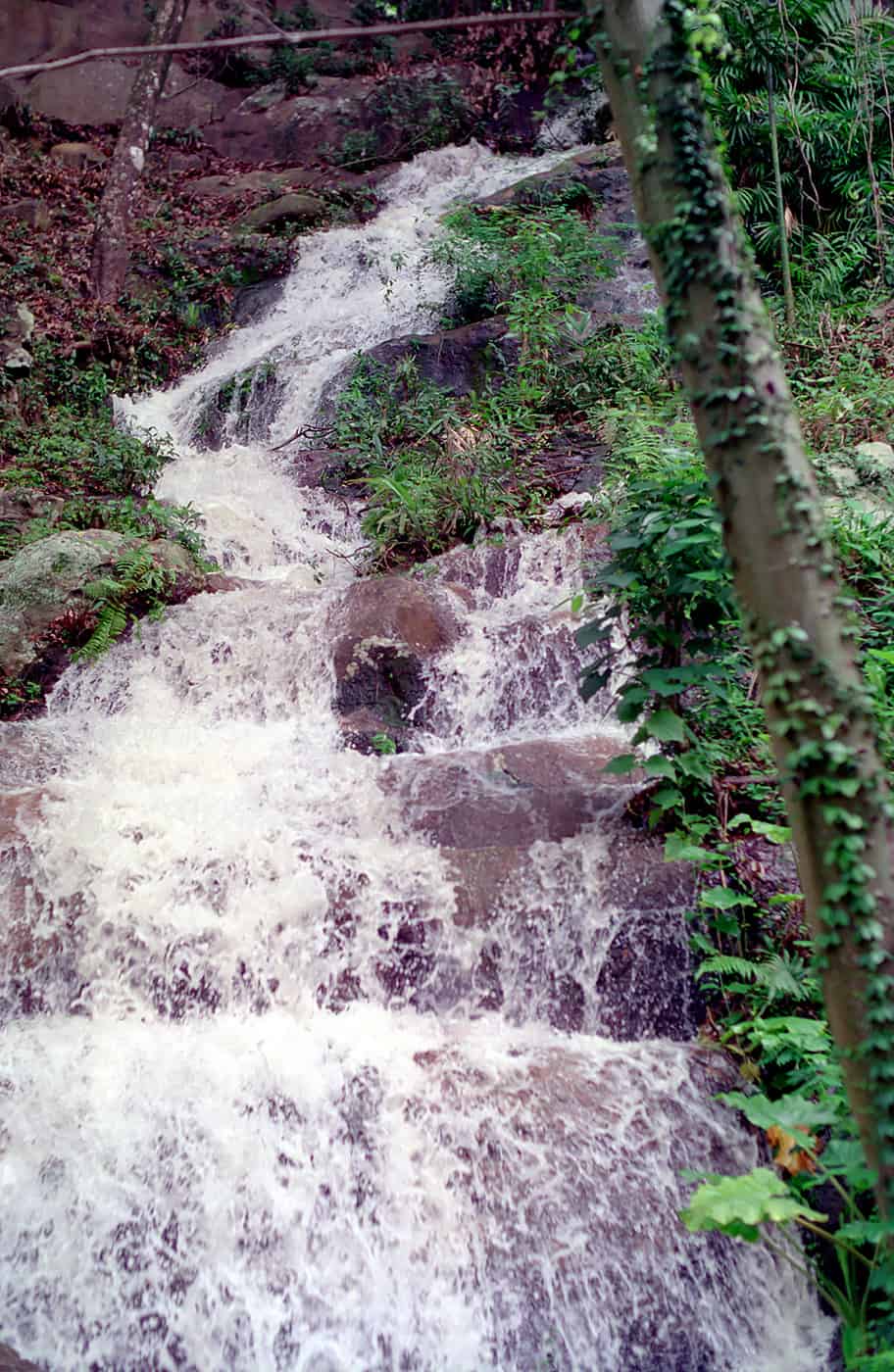
Inland, we are presented with the picture of a magnificent landscape and with high water fauml; in which the water flows in several cascades into a lake below; llt. Everything is framed in evergreen tropical vegetation.

The inhabitants of the island of Mauritius are above all open-minded and cheerful. Again and again there is someone who picks up the guitar and makes a little music for general entertainment…….

People still find the time and leisure to communicate with each other here. A little chat is always worth more than retreating into your shell and sitting in front of the TV, as is unfortunately becoming more and more common in many European countries. On the island of Mauritius, the daily exchange of information takes place on the street, in the shop, at the market or on the beach. Everyone approaches their neighbours freely and openly. This solves many social problems in the do-it-yourself process. We find this form of interpersonal interaction very sympathetic.

Mauritius – The Island

Mauritius – Die Insel

Questions about the destination Mauritius?

You can get the answers in the Africa forum!

3. July 2017 0 comments
0 FacebookTwitterPinterestEmail
South Africa General information
General country informationSouth Africa

South Africa – General info

by Joe OnTour 3. July 2017
written by Joe OnTour

South Africa – General information

The Republic of South Africa is located at the southern tip of the African continent. The country is bordered to the east by the Indian Ocean, to the west by the Atlantic Ocean and to the north by Namibia, Botswana, Zimbabwe, Mozambique and Eswatini (formerly Swaziland, officially renamed since 2018). Lesotho is completely enclosed by South Africa.

Three geographical regions dominate South Africa’s landscape: the inland highlands, the mountains and the coastal region. The inland highlands are characterised by a largely constant altitude and are separated from the other landscapes by mountain breaks (the Great Escarpment) that rise above the plains (veld) of the high plateau.

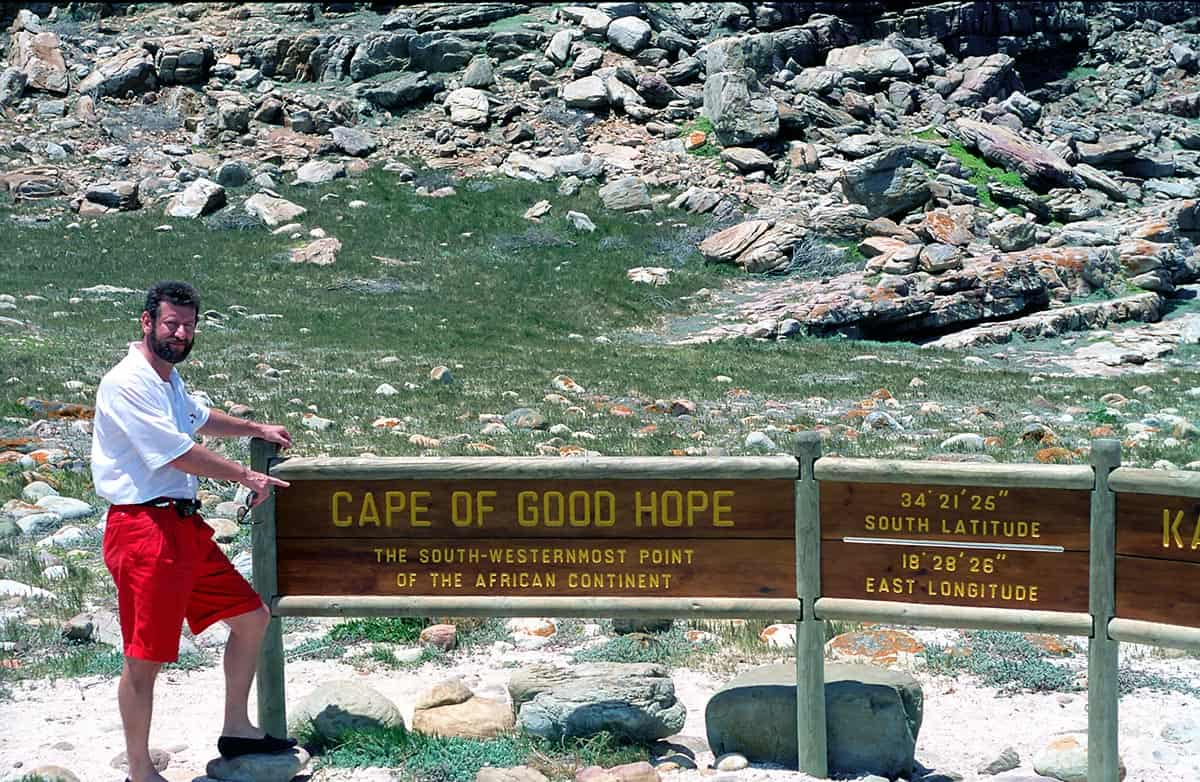
Although there are two major river systems, the Limpopo and the Orange River, the surface of the plateau is arid. On the coast there are both sandy beaches and rocky bays, the hinterland is overgrown with shrubs. The mountainous region, which stretches from the Cape of Good Hope along the coast to the Limpopo Valley in the northeast, consists of the Drakensberg, Nuweveld and Stromberg mountain ranges.

Provinces (corrected): Since the first democratic elections in 1994, South Africa has been divided into nine provinces: Western Cape (provincial capital Cape Town), Eastern Cape, Northern Cape, KwaZulu-Natal, Free State (Bloemfontein), North West (Mahikeng), Limpopo (Polokwane – the province originally called “Northern Province” was renamed in 2003), Mpumalanga and Gauteng (Johannesburg/Pretoria) – the ninth province incorrectly referred to as “Johannesburg” in the original. Gauteng is the smallest province in the country in terms of area, but by far the most populous.

Capital: Pretoria (seat of government, today around 2.5–3 million inhabitants in the metropolitan area). Cape Town (seat of parliament, today around 4.8 million inhabitants in the metropolitan area). Bloemfontein also remains the seat of the highest court of appeal – South Africa thus has three unique capitals, each with different government functions.

Area: 1,219,090 km² (or about 1,213,090 km² pure land area).

Population: around 63 to 65 million (as of 2025/26) – significantly more than the previously mentioned 42.1 million (as of 1999). The largest metropolitan region today is Johannesburg with around 4.8 million inhabitants, closely followed by Cape Town with around 4.77 million.

Economy: South Africa continues to have the most developed industrial economy in the southern part of Africa, although Nigeria and Egypt now have higher overall GDP values in some cases. Livestock farming is widespread, sugar and grain are produced in large quantities. Mining remains an important pillar of the economy: coal is mined in large quantities, as well as chromium, manganese, vanadium and platinum. The country’s most valuable raw materials continue to be gold and diamonds, although South Africa’s share of world gold production has declined significantly compared to previous decades.

Mining and agriculture continue to be among the major employers and export pillars, but the largest economic sector today is clearly the service sector. The tourism sector is now one of the country’s most important sources of foreign exchange income; visitor numbers have more than doubled since the previously mentioned 6 million (1999), with sometimes significant fluctuations due to the COVID-19 pandemic 2020-2022 and a recovery since then.

The South African economy has been struggling with structural challenges for years: high structural unemployment (the rate was most recently around 30–33%, in some cases even higher than the 36% from 2000 mentioned in the original), recurring power outages caused by the ailing state-owned energy supplier Eskom and economic growth that is only moderate by international standards. China, the USA, Germany and other EU countries are now among the most important trading partners.

Politics/form of government: Parliamentary republic (in the Commonwealth) since 1961, current constitution since 1997. Bicameral parliament: National Assembly (400 members) and National Council of Provinces (90 members).

Current head of state and government: Cyril Ramaphosa (ANC), in office since February 2018 (as successor to the resigned Jacob Zuma), confirmed in office in 2019 and 2024.

Important current political development that is missing in the original: In the parliamentary elections in May 2024, the ANC lost its absolute majority for the first time since the end of apartheid in 1994 and only achieved around 40% of the vote. Since no party achieved its own majority, Ramaphosa formed a “Government of National Unity” (GNU) – a broad alliance of the ANC, the largest opposition party Democratic Alliance (DA), the IFP and several smaller parties. This marks a historic turning point in South Africa’s post-war politics and is seen by many observers as an opportunity for more pragmatic reforms, even if the coalition is repeatedly struggling internally to find a course and fill the post.

Currency: 1 Rand (ZAR) = 100 Cents.

South Africa – population, safety and driving

South Africa’s large cities continue to be characterized by sometimes sharp social contrasts: While better residential areas are often generously laid out and maintained, the “townships”, in which a significant part of the population still lives, consist mainly of simple houses, barracks or informal settlements. In particular, the townships, but also parts of the inner cities of large cities such as Johannesburg, Pretoria, Cape Town and Durban, continue to suffer from high crime; South Africa is one of the countries with a particularly high rate of violent crime internationally. Tourists can become the target of robberies, in which perpetrators sometimes do not shy away from violence. In the event of a robbery, it is still generally advised to refrain from resisting and to hand over valuables without resistance.

For up-to-date, regionally differentiated security assessments (e.g. on certain districts or regions), it is advisable to take a look at the travel and security advice of the Federal Foreign Office before travelling, as the situation can vary regionally and temporarily.

Driving a car: There is left-hand traffic; outside the large conurbations, traffic is usually manageable. Some practice is required to merge into roundabouts and the 4-way stop signs common in South Africa at many intersections: whoever arrives at the intersection first drives first, then the next one in the order of arrival.

Ideally, a rental car should be booked from home; current prices vary significantly depending on the season, vehicle class and provider and should be compared before travelling.

When overtaken, the prudent driver keeps far to the left or swerves into the hard shoulder to let the overtaking driver pass; as a thank you, the hazard lights are often briefly activated, and the overtaken driver retaliates with a short flashing light – a traffic gesture common among locals and often new to tourists.

South Africa – Climate

South Africa stretches between 22 and 34 degrees south latitude and thus falls into the subtropics. Compared to areas of similar latitude, however, temperatures are lower in many regions. On the west coast, the cold Benguela sea current ensures moderate temperatures; in the central highlands, it is the altitude (Johannesburg is at an altitude of around 1,753 m) that rarely causes the thermometer to climb above 30 degrees, even in midsummer.

In winter, temperatures drop to freezing point – also due to altitude – and sometimes even below; only on the coasts is it warmer. Precipitation falls mainly in the summer months, with the exception of the western cape, which is considered a winter rain area.

The seasons are exactly the opposite of those in Europe: when there is winter in Germany, it is summer in South Africa – and vice versa. The South African winter (June to August) is usually dry and pleasantly warm, except in the region around Cape Town, where it can rain extensively at this time of year and become sensitively cool at night. Snow is then possible in the Drakensberg. In midsummer (October to February), temperatures rise to around 30 degrees, and in Durban and the neighboring provinces, humidity is high.

In the transitional months, climatic conditions prevail throughout South Africa that can be compared to the southern European spring and autumn.

South Africa – Fauna

South Africa is rightly proud of its rich natural heritage, which is carefully protected in numerous nature reserves and national parks. The country is home to more than 300 species of mammals, over 500 species of birds, more than 100 species of reptiles, as well as countless species of insects.

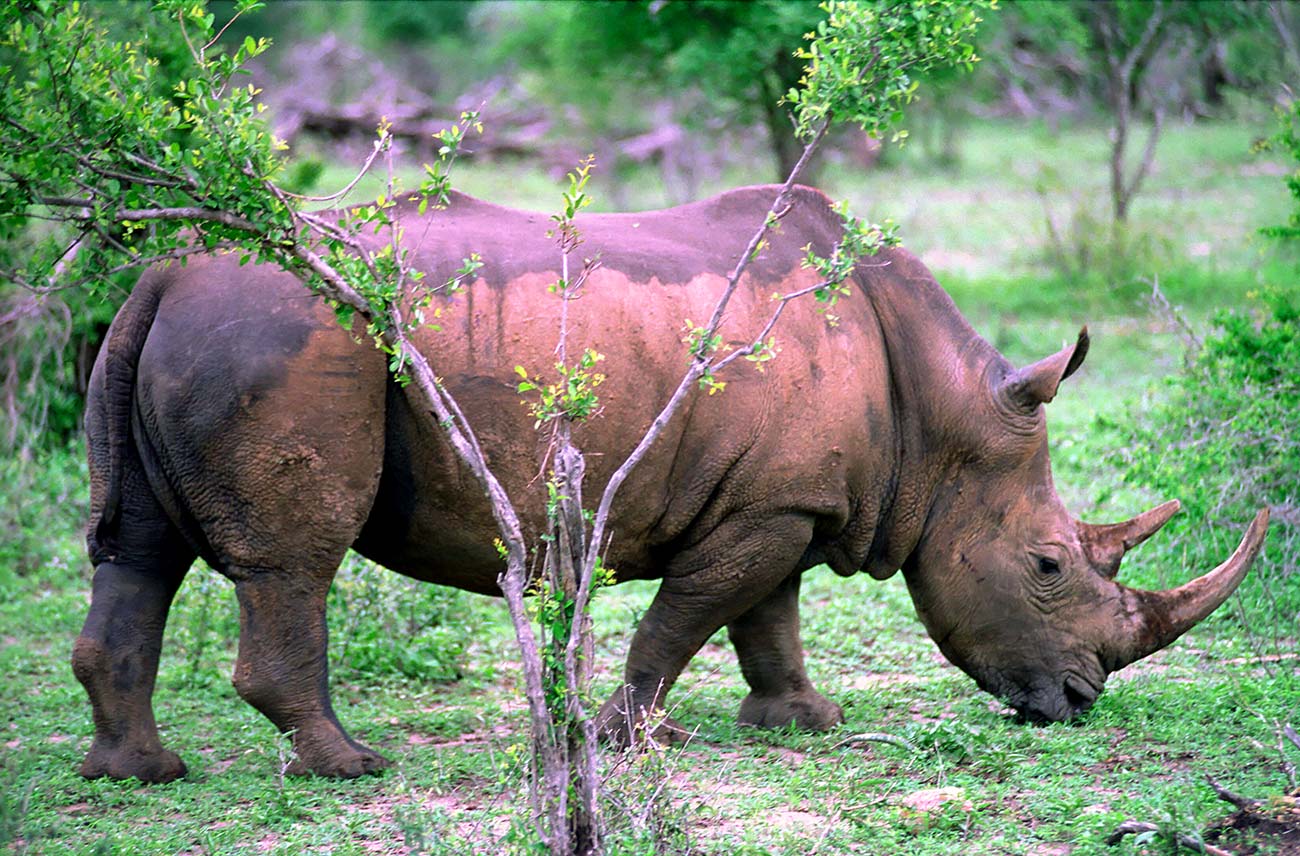
South Africa is not only home to the three largest land mammals in the world – the African elephant, white rhinoceros and hippopotamus – but is also home to the tallest (giraffe), the fastest (cheetah) and one of the smallest mammals (the pygmy shrew).

The biodiversity remains impressive, even if some species have become extinct since the arrival of Europeans. Most of the big game lives in the national parks, where there is the greatest chance of spotting buffalo, lions, leopards, elephants, and white and black rhinos. All of South Africa’s major game reserves are located in the savannah or semi-savannah.

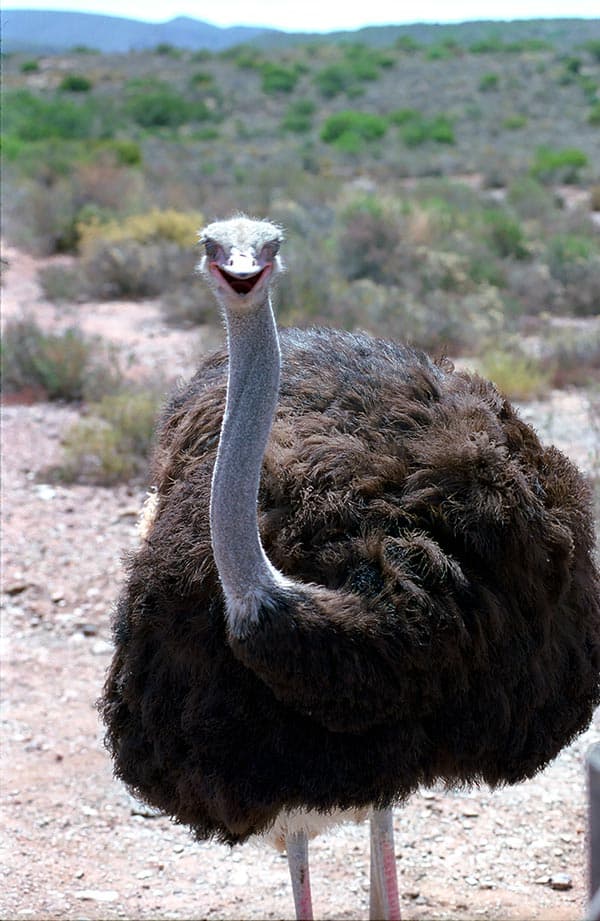
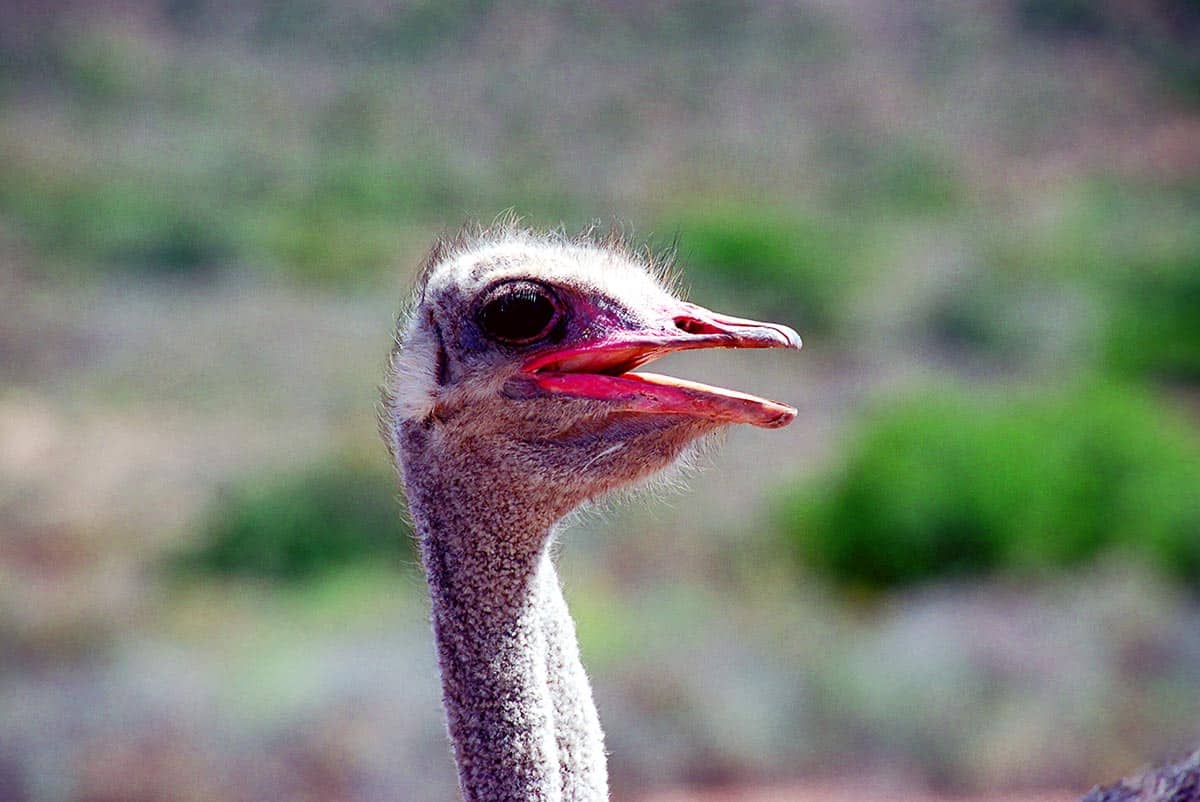
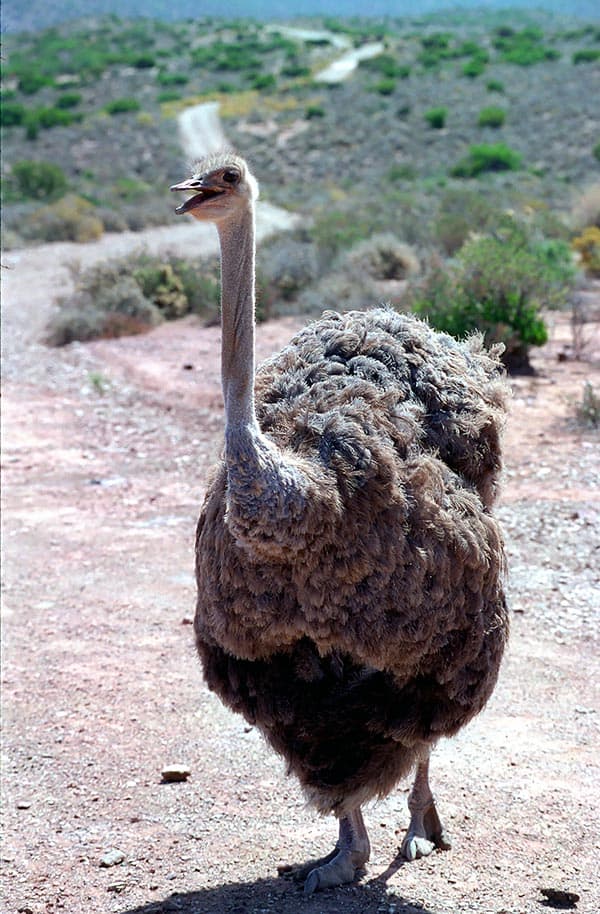
There are numerous antelope species such as impala, kudu or springbok, as well as ostriches, flamingos and zebras. Despite intensive conservation measures, rhino poaching remains a serious problem, especially in the Kruger National Park, although international cooperation and increased ranger operations have contributed to a certain decline in poaching numbers in recent years. The overwhelming diversity of South Africa’s wildlife should be experienced with your own eyes.

South Africa – Flora

With over 20,000 plant species – around 10% of all plant species worldwide – South Africa has an exceptionally species-rich flora.

Around 8,000 species are concentrated in the small western Cape region. Of the six flora kingdoms on earth, this “fynbos” vegetation zone at the Cape is one – it is mainly evergreen hardleaf plants with mostly fine, needle-like leaves.

The fynbos is particularly rich in magnificent flowering plants, especially the proteas, of which there are over 130 different species.

If this is contrasted with the abundance of flowering plants, the situation is quite different for the forest stands: only about 1% of South Africa’s area is forested. These forests are located almost exclusively in the rainy coastal strip of the Indian Ocean and in the adjacent middle altitudes of the marginal threshold mountains. These are mainly plantations with imported tree species, mostly eucalyptus, pines or spruces.

The original forest largely fell victim to overexploitation, as it was long considered economically unprofitable and was therefore ruthlessly cleared in South Africa’s earlier history. Only small patches of the original “Indigenous Forest” are still preserved today; the coveted hardwoods Yellowwood, Stinkwood and Ironwood are now under strict nature conservation.

By far the largest part of South Africa is grassland. Especially in the Highveld, a vegetation of various grasses, low bushes and isolated acacias, mostly camel thorn or hawthorn, dominates. In the northwest, vegetation becomes sparser due to lower rainfall; especially in the dry, hot Namaqualand, there are numerous water-storing succulent species as well as aloes and euphorbias.

In the northeast, the grass and thorn savannah increasingly turns into a more densely overgrown bush savannah. Particularly striking here are the baobabs, which can be observed well in the northern part of the Kruger National Park.

South Africa – History and Culture

The settlement of South Africa by Europeans began in Cape Town. After the English had initially decided against the establishment of a colony at the Cape of Good Hope, the Dutch were the first to recognize the strategic and economic importance of the Cape. On behalf of the Dutch East India Trading Company, the merchant Jan van Riebeeck landed in the bay at the foot of Table Mountain on April 6, 1652.

Since the beginning of the 18th century, the settlers at the Cape have expanded further and further north and east – carried by the so-called Trekburs, white farmers in search of pastureland. Since the end of the century, the Xhosa peoples settling in the east have opposed them.

In the urban communities, the danger of confrontation between citizens striving for political self-determination and a weak, corrupt colonial administration grew. In Swellendam and Graaff-Reinet, the first, short-lived republics were proclaimed. The power struggle ended in 1795 with the landing of British ships at the Cape and the takeover of the colony by the English kingdom.

The 19th century was marked by the “Groot Trek”: from 1835 onwards, more than 10,000 Boers, the “Voortrekkers”, left the Cape Colony with their families and moved north and northeast. At the same time, larger ethnic communities were formed in southern Africa from loose tribal associations – a process that was by no means peaceful. The development of the Zulu Kingdom also took place during this time; through a high degree of violence, the Zulu warrior Shaka gained supremacy over various Zulu clans and systematically expanded his sphere of influence.

After futile negotiations and several catastrophic raids, the decisive battle took place in 1838: on 16 December, 464 Boers under Andries Pretorius defeated about 10,000 Zulu warriors.

The Portuguese navigator Vasco da Gama had already reached the bay of today’s Durban at Christmas 1497 and named it “Rio de Natal”; however, a first permanent settlement, “Port Natal”, was not established until 1823, and in 1835 the place was named Durban after the governor of the Cape Colony at the time. In 1844, Natal became a British crown colony; the Anglo-Zulu War ended in 1879 with the victory of the British after numerous battles with heavy losses.

After the Voortrekkers were defeated by the British in Natal in 1842, the Groot Trek moved further northeast to the areas south and north of the Vaal River. In the north, the independent Transvaal was first created, later transformed into the South African Republic. Meanwhile, the Cape Colony continued to expand; in 1848, the entire country between Vaal and Orange became British territory. On February 23, 1854, the Treaty of Bloemfontein led to the founding of the Orange Free State.

After the founding of the Union of South Africa in 1910, the policy of consistent racial segregation was initiated by a series of laws that increasingly curtailed the rights of the black majority of the population – such as the “Mines and Works Act” (1911) and the “Native Land Act” (1913), which declared 7.3% of the country’s land area to be “reservations” for blacks and prohibited them from purchasing land outside these areas.

Since there were hardly any opportunities for political protest due to the lack of voting rights and a general ban on strikes for non-whites, the “African National Congress” (ANC) was founded in 1912 as well as other resistance movements, which initially acted with little effectiveness. After the Second World War, the conflicts intensified; the insecure white electorate helped the right-wing conservative National Party under D. F. Malan, who had promised drastic measures against the supposed “black danger”, to an election victory in 1948. Malan coined the term “apartheid” and initiated its systematic implementation.

In February 1990, a few months after taking office, Frederik Willem de Klerk heralded the end of apartheid with a historic parliamentary speech; the ANC ban was lifted, and a few days later Nelson Mandela was released after 27 years in prison. In secret negotiations, the ANC and the government had previously agreed on a non-violent, peaceful transition and a new constitution.

In April 1994, South Africa’s first free elections were held, in which, as expected, the ANC won an overwhelming victory. On 10 May 1994, Nelson Mandela became the first black president of the new South Africa, succeeding de Klerk, who became second vice-president of the interim government. The first vice-president was Thabo Mbeki, who succeeded Mandela as president in 1999 and remained in office until 2008.

Continuation of the story to the present – missing in the original: After Mbeki’s forced resignation in 2008 (in the course of internal party power struggles), Kgalema Motlanthe followed as interim president, then from 2009 Jacob Zuma, whose almost nine-year presidency was increasingly overshadowed by corruption allegations and the so-called “state capture” affair. After internal party pressure, Zuma resigned in 2018; his successor was the former vice president and current incumbent Cyril Ramaphosa.

Ramaphosa won the 2019 presidential election, but lost an absolute majority with the ANC in the 2024 elections for the first time since 1994 and has since governed at the head of the “Government of National Unity” described above. Central political issues in recent years include the ongoing energy crisis with recurring nationwide power shutdowns (“load shedding”), high youth unemployment, dealing with corruption and debates about possible land reform.

South Africa – Food & Drink

Local specialties include sosaties (a kind of shashlik), bobotie (minced meat with curry seasoning), bredies (stew with meat, tomatoes and other vegetables), crayfish (crayfish) and biltong (air-dried dried meat) – the latter is still considered a popular South African snack par excellence today.

Drinks: South Africa produces excellent local wines – the South African wine industry, especially around Stellenbosch, Franschhoek and Paarl, has gained significant international prestige in recent decades. Sherry is also pressed in the country. Liquor stores selling spirits are usually open Monday to Friday from 9 a.m. to 6 p.m. and Saturdays from 9 a.m. to 1 p.m., although exact opening hours may vary depending on the province and local regulations; alcohol is now also available in many supermarkets.

To greet each other, people shake hands. For private visits, usual forms of politeness are expected; casual clothing is appropriate in everyday life, elegant clothing on special occasions. Smoking is prohibited in cinemas and theaters.

Tipping: Around 10% is customary if the tip is not already included in the price. Porters, waiters, room service staff, porters and taxi drivers expect a tip; hotel bills usually do not include service charges.


Note: All information on population figures, political offices, the security situation and economic key figures is subject to change and has been researched to the best of our knowledge as of August 2026. For up-to-date, binding information, it is advisable to take a look at the travel and security advice of the Federal Foreign Office before travelling.

Questions about South Africa as a travel destination?

You can get the answers in the Africa forum!

3. July 2017 0 comments
0 FacebookTwitterPinterestEmail
South Africa - People
South Africa

South Africa – People

by Joe OnTour 3. July 2017
written by Joe OnTour

South Africa – People

Below we have captured some scenes of “South African everyday life” with the camera.

Pictures South Africa – People

OnTourWorld Südafrika Kapstadt
OnTourWorld Südafrika Pretoria Blue Train
OnTourWorld Südafrika Krüger Nationalpark Mala Mala Lodge
OnTourWorld Südafrika Sun City
OnTourWorld Südafrika People

Questions about South Africa as a travel destination?

You can get the answers in the Africa forum!

3. July 2017 0 comments
0 FacebookTwitterPinterestEmail
OnTourWorld Südafrika Impressionen
South Africa

South Africa – Impressions

by Joe OnTour 3. July 2017
written by Joe OnTour

South Africa – Impressions

Our journey to the Ngala Lodge led us directly and many kilometers through the impassable bush.

Some deep potholes and sand holes almost knocked our axle away. Actually, this was an ideal route for a Land Rover………

………..Unfortunately, the Landy we booked was no longer available and the landlord thought he was doing us a favor with a Daimler. We have expressly pointed out our route into the bush and the difficult terrain that comes with it.

He gave us carte blanche. Thank God, because on the way back the terrain became almost impassable due to a storm with meter-deep water fords and mud holes.

The only chance to get out of the area was to keep the accelerator pedal all the way down……………..such a difficult off-road tour was too much even for a Daimler.

Again and again we encounter slums and slums on our journey, which are part of the reality of the country. The slums in the suburbs of Johannesburg were particularly drastic. It is advisable not to stop at the roads, not even if supposedly broken down vehicles with locals (which happened to us several times) ask for help. Street robbery is a big problem in the slums.

Some signs are unmistakable……………..and often end in a field or in the middle of an impassable bush. Good advice is expensive, it’s best to drive back to the starting point if you can still find it….Finding the right way in the bush without a navigation system is not that easy.

Roads are sometimes simply rerouted or they lead to a dead end………..and if you are hopelessly lost, the mobile phone is of no use anyway, because there are no transmitting stations in the bush……

…………………………………..At best…………….drumming helps!!!!

Pictures South Africa – Impressions

OnTourWorld Südafrika Kapstadt
OnTourWorld Südafrika Gardenroute
Suedafrika Cape of Good Hope 017
OnTourWorld Südafrika Gardenroute
OnTourWorld Südafrika Ngala Lodge Giraffen
OnTourWorld Südafrika Ngala Lodg
OnTourWorld Südafrika Impressionen

Questions about South Africa as a travel destination?

You can get the answers in the Africa forum!

3. July 2017 0 comments
0 FacebookTwitterPinterestEmail
South Africa - Accommodations
South Africa

South Africa – Accommodation

by Joe OnTour 3. July 2017
written by Joe OnTour

South Africa – Accommodation

In South Africa, the traveller will find all common forms of accommodation. From luxury hotels to standard hotels, guesthouses, guesthouses, camps in the wildlife parks, backpacker hostels, bed and breakfast options and campsites, everything is available here. The hotels in the middle price range are usually surprisingly well equipped and relatively cheap for Europeans due to the exchange rate. Guesthouses are available in all quality levels from simple to 5* luxury. Prices are seasonal almost everywhere. Farm stays are available for as little as 130 Rand p.p. incl. breakfast. The prices in the luxury game lodges range from 400 to 500 US $ per person. Game lodges are located in private, huge game reserves. As a rule, you even get to see the Big Five here.

There are often discounts if you stay longer than two nights. You should also always inquire whether the price is per person or per room and whether breakfast is included. In any case, you should book your accommodation in advance during the high season (October to February and over Easter). If you don’t want to commit, you should call and order one or two days in advance to avoid unpleasant surprises.

Reliable hotel chains include Sun International, Southern Sun, Protea Hotels, Holiday Inn and City Lodge. The camps in the state-owned game parks are comfortable and inexpensive. The hotels tend to be expensive and often more impersonal than guest farms, retreats, and bed and breakfasts as accommodations. Here you live more individually and you come into contact with the locals and often get many tips that you won’t find in any travel guide. Often you also get into conversation with other guests, exchange experiences and possibly go to dinner together. The standard is relatively high, especially in the upper price category. These accommodations can be booked from R300 per person per night. Often these accommodations can be found in historic buildings or in private villas and especially in very good locations. However, even the simpler accommodations offer their own charm. It doesn’t always have to be the upper price segment.

In principle, reservations are not absolutely necessary with the large number of accommodation options. However, if the route is already fixed beforehand, they are very practical, as there is no need to search on site. So you have the certainty that you really get the accommodation you want. In areas with a lot of tourist traffic and for the national parks, you should definitely make reservations in advance, even outside the high season.

Pictures South Africa – Accommodation

OnTourWorld Südafrika Gardenroute
OnTourWorld Südafrika Pretoria Blue Train
Suedafrika Mala Mala Lodge 021
OnTourWorld Südafrika Krüger Nationalpark Mala Mala Lodge
OnTourWorld Südafrika Sun City
OnTourWorld Südafrika Lost City
Südafrika - Unterkünfte
Südafrika - Sun City
Südafrika - George

Questions about South Africa as a travel destination?

You can get the answers in the Africa forum!

3. July 2017 0 comments
0 FacebookTwitterPinterestEmail
South Africa Sun City Casino
South Africa

South Africa Sun City Casino

by Joe OnTour 3. July 2017
written by Joe OnTour

South Africa – Sun City – Casino

Sun City is the second most important source of income in the Northwest Province, because it is an almost perfect mix of nature, sports experience and casino world and attracts tens of thousands of tourists and especially gamblers every year.

Due to the gambling ban in South Africa and the proximity to the densely populated Gauteng, the rush of visitors is very large. People come here from all parts of the country to get rid of their money. The gambling industry is enriched with various revues, in which of course scantily clad ladies also appear.

In addition, there are cinemas to have some variety between games. Until the founding of Sun City, none of this existed anywhere else in the rest of South Africa!

Photos South Africa – Sun City – Casino

Südafrika - Sun City - Casino

Questions about South Africa as a travel destination?

You can get the answers in the Africa forum!

3. July 2017 0 comments
0 FacebookTwitterPinterestEmail
OnTourWorld Südafrika Lost City
South Africa

South Africa Sun City – Lost City

by Joe OnTour 3. July 2017
written by Joe OnTour

South Africa Sun City – The Palace of Lost City

The Palace Hotel is the heart of Lost City, which is intended to be a “sunken city” reminiscent of past African cultures. It was built by multimillionaire Sol Kerzner.

Around 700 employees of the Palace Hotel read (almost) every wish from the guest’s eyes. Everywhere the Palace Hotel is surrounded by water basins and cascades.

The interior of the hotel is decorated with many (real?) antiques. The ceiling heights are reminiscent of those of a cathedral. Even the reception could be a side aisle of Cologne Cathedral.

Huge windows provide the right view. You also need it in order not to lose track. You can literally get lost here. As a precaution, you will also receive a comprehensive route map when you check in.

Mr. Kerzner did not mess around in the construction of the complex, but there is talk of 400,000,000 dollars, which were built for the hotel alone.

All money from investors hoping for a return….. The rooms are truly royally furnished. The smallest double room has a size of 60 sqm. We are only here for a few days. Brigitte checks the account balance again as a precaution……

Pictures South Africa – Sun City – Lost City

suedafrika suncity lostcity 012
OnTourWorld Südafrika Sun City
suedafrika suncity 001 1
OnTourWorld Südafrika Lost City
suedafrika lostcity001

Questions about South Africa as a travel destination?

You can get the answers in the Africa forum!

3. July 2017 0 comments
0 FacebookTwitterPinterestEmail
OnTourWorld Südafrika Sun City
City tripsSouth Africa

South Africa – Lost City

by Joe OnTour 3. July 2017
written by Joe OnTour

South Africa – Sun City – Lost City

Sun City, the flagship of the renowned Sun International tourism group, is the largest entertainment center in the southern hemisphere and the South African answer to Las Vegas. The city of plastic, glass and marble is located 200 km northwest of Johannesburg in a valley on the southern edge of the Pilanesberg Game Reserve.

It was built during the apartheid era in what was then the homeland of Bophutatswana by Sol Kerzner, a millionaire hotel magnate from Johannesburg. At that time, gambling and nude revues were forbidden in Calvinist South Africa, so this “alternative” offered itself. Since that time, Sun City has also been popularly called “Sin City” (= Sin City).

Today, Sun City is the second most important source of income in the Northwest Province, because it is a mixture of nature, sports experience and casino world and attracts tens of thousands of tourists and gamblers every year. Golfers can choose between two of South Africa’s best golf courses, the Gary Player Country Club and the Lost City Golf Course. The former hosts the famous Million Dollar tournament every year. Sun City has four hotels, the relatively inexpensive Cabanas, as well as the 5-star Main Hotel, The Cascades and The Palace of Lost City. A suite in the Palace costs about 3000 DM per night.

But you also get an exciting mix of pure luxury and African fantasy with battlements, towers, a 65m long pool, a 25m high entrance hall and mosaic floors. 700 employees read every wish from the guest’s eyes. The Palace Hotel is the heart of Lost City, which is intended to be a “sunken city” reminiscent of sunken African cultures. Of course, there are also several elegant restaurants of the highest quality on the premises, e.g. the Peninsula in the Cascades Hotel or the Villa de Palazzo in the Palace Hotel. <

Due to the gambling ban in South Africa and the proximity to the densely populated Gauteng, the rush of visitors was very large from the beginning and so two more luxury hotels were built at the beginning of the 80’s. In the beginning, of course, the games of chance, the revues with scantily clad ladies and the cinemas with their soft were particularly popular.

All this had never been seen anywhere in the rest of South Africa until then! The huge wave pool with a sandy beach, Valley of Waves, can create artificial waves big enough for surfing competitions. There are also riding stables, bowling alleys, tennis and squash courts, circular rivers, artificial rainforest with rope bridges, ponds and weirs. Theatres and concert halls, bars and shops complete the impressive picture of Sun City. Huge cascades can be found everywhere.

Pictures South Africa – Sun City – Lost City

Südafrika - Sun City - Lost City
Südafrika - Sun City

Questions about South Africa as a travel destination?

You can get the answers in the Africa forum!

3. July 2017 0 comments
0 FacebookTwitterPinterestEmail
OnTourWorld Südafrika Sun City
South Africa

South Africa – Sun City

by Joe OnTour 3. July 2017
written by Joe OnTour

South Africa – Sun City

Sun City is probably the most famous place in this province – a gambling mecca and venue for golf tournaments and concerts with star casts. Not far away is the Pilansberg Game Reserve, the oldest protected area in this province. A little further south are Rustenberg and the Rustenberg Nature Reserve on the Magaliesberg, which is a habitat for antelopes and other wildlife as well as rare birds of prey (black eagle). Other places worth seeing are Klerksdorp and the old university town of Potchefstroom.

If the cities of South Africa are too hectic for you and the nature reserves too quiet, an experience of a completely different kind awaits you in Sun City. Here, in the middle of an extensive savannah landscape, lies the Las Vegas of southern Africa. The sprawling entertainment complex was once part of the now-defunct homeland of Bophuthatswana.

The independence of the homeland made it possible to offer an extensive range of games of chance and nude shows in close proximity to the conurbations of Johannesburg and Pretoria, all activities that were forbidden in Calvinist South Africa at the time. But Sun City has long since lost the smell of the forbidden. Today, the name stands for luxurious hotel complexes, beautifully landscaped water gardens, excellent golf courses, imaginative gambling halls, exclusive casinos and first-class entertainment shows. The latest jewel in the series of various casino complexes is Lost City.

The complex in the style of a sunken, legendary African city is fantastically located and extremely imaginatively designed. So it’s no wonder that Sun City attracts more than 25,000 visitors every day. When the multimillionaire Sol Kerzner began the construction of the Sun City complex, all gambling was still prohibited in South Africa. In the semi-autonomous homeland of Bophuthatswana, however, the lucrative source of income was recognized and construction was permitted. Just 180 kilometers north of Johannesburg, a sprawling amusement park with an artificial oasis was built in several stages, in a desolate landscape south of Pilanesberg.

It all started with a luxury hotel with a casino, an artificial lake in the desert and an excellent golf course designed by Gary Player. The best thing to do after checking in is to sit comfortably on the balcony of your hotel room, take something cool to drink (Sun City lives up to its name, it is warm to hot and always sunny) and study the map that is available in the rooms, and which you urgently need to settle in mentally. Well rested and with the map as a companion, you should simply wander through the complex, take a walk and take a look at the range of leisure activities. Inside is what is probably the most luxurious hotel in Africa, which is only accessible to people on a tight budget.

In the King Tower, the highest tower, is the Kings Suite, for which you have to shell out about 3,200 euros/night. The suite is paneled with maple, offers a bar, library, dining room, several bedrooms and a wonderful panoramic view and everything you need. A really stark contrast to the poverty raging outside. From Johannesburg it is about 1700 kilometers to Sun City. There are daily planes from Johannesburg Airport and several buses from downtown Johannesburg to the entertainment paradise every day. On weekends, there are also some buses between Pretoria and Sun City.

Pictures South Africa – Sun City

suedafrika suncity lostcity 012
OnTourWorld Südafrika Sun City
suedafrika suncity 001 1
OnTourWorld Südafrika Lost City
suedafrika lostcity001

Questions about South Africa as a travel destination?

You can get the answers in the Africa forum!

3. July 2017 0 comments
0 FacebookTwitterPinterestEmail
South Africa - Rhinos
South Africa

South Africa – Rhinos

by Joe OnTour 3. July 2017
written by Joe OnTour

South Africa – Rhinos

There are two species of rhinos, the white rhino, also known as the “White Rhino”, and the black rhino, also known as the “Black Rhino”. Bulging lips and an elongated head characterize the White Rhino. The Black Rhino has a shorter head that ends in a pointed gripping lip. On their huge mouths above the nostrils, these colossi carry two rhinoceroses. One is a little longer. The second has a short stump.

Rhinos are hairless except for a few fringes on the ears and on the tip of the tail. After elephants, the white rhinoceros is the second largest land mammal. It reaches a shoulder height of 180 cm. The bulls weigh up to 2300 kg. The cows weigh a little less and reach a weight of up to 1600 kg.

Less massive and with longer legs is the black rhinoceros. The bulls weigh about 1200 kg. The shoulder height is approx. 160 cm. The front horn is about 130 cm long. The life expectancy of rhinos is about 45 years. White rhinos live in open tree savannahs and feed exclusively on short grass. They drive their huge mouths over the ground like a lawnmower. Black rhinos inhabit more bushland and densely forested areas. They mainly eat leaves. The most active times for rhinos are early morning, late afternoon, and night. At noon they rest. The rhinos are half-blind, but have a keen sense of smell and a keen sense of hearing. Black rhinos are the wild and daredevil ones. If a rhinoceros senses danger, it races straight ahead at a speed of up to 50 km/h in the direction of the supposed danger. The only salvation is then the nearest tree. White rhinos, on the other hand, are more gentle and shy. They are extremely sensitive to noise and immediately flee in the event of a disturbance.

On our safaris through the bush of South Africa, we encountered rhinos on one of our tours. With the Land Rover we were able to get within a few meters of the colossus. The population of rhinos in the area of the Kruger National Park is extremely low. Rhinos are still threatened with extinction throughout Africa. Even in the national parks, it is not easy to protect the animals. Poachers (in the Kruger Park, poachers usually cross the border with Mozambique, which is more than 300 kilometers long and therefore almost impossible to control) continue to succeed in killing rhinos. The motif is the horns. These are sold at high prices on the black market. The powdered horn is particularly popular with Japanese men as a sexual enhancer.

The rhinos have populated the savannahs of Africa for millions of years. It took only a few decades to almost eradicate them. Even after months of stay in East and South Africa, you only come across a few of the massive, primeval colossi. This is the result of ruthless poaching for dagger hilts in Yemen and traditional medicine in East Asia. The powdered horn of these animals is not only supposed to cure serious diseases, but also to strengthen virility – this superstition of the East Asians probably arose from the endless mating games of the rhinoceroses. The horn is weighed at three times the weight of gold and no international protection law can help against such a prospect of profit, especially in the poor countries of Africa.

In the meantime, there are protective measures by some African countries that are trying to save the endangered animals from final extinction. Young, two- to three-year-old males leave their mother and soon join forces with a fellow male to explore the savannahs. She then has a friendship with this friend that has lasted for years. The rhinos are extremely impressive when viewed up close.

It is a stroke of luck that we unexpectedly had two of these specimens standing directly in front of our Land Rover. We crossed a small clearing and suddenly they stood there…….. We can observe the two rhinos for a while, then they move into the dense bush and disappear from our sight.

After this experience, we deserve a short rest. Our auxiliary guide takes care of the fire. Brigitte does not dare to leave the Land Rover for the time being. It could be that the rhinos will suddenly come back…..

An eventful day in the bush of South Africa is behind us and we travel back to our lodge satisfied and happy.

Pictures South Africa – Rhinos

suedafrika nashoerner 010
Südafrika - Nashörner
suedafrika nashoerner 009
suedafrika nashoerner 008
Südafrika - Nashörner
suedafrika nashoerner 006
Südafrika - Nashörner

Questions about South Africa as a travel destination?

You can get the answers in the Africa forum!

3. July 2017 0 comments
0 FacebookTwitterPinterestEmail
OnTourWorld Südafrika Ngala Lodge Giraffen
South Africa

South Africa Ngala Lodge Giraffes

by Joe OnTour 3. July 2017
written by Joe OnTour

South Africa – Ngala Lodge – Giraffes

On the western edge of the Kruger National Park lies the Ngala Lodge. Here we go on game drives in an open Land Rover. It is an incomparable experience to track giraffes, antelopes and plains zebras in the wild.

We have seen tracks of giraffes that we follow. After a short time we see them appear above dense bushes like skyscrapers in the wilderness. Giraffes can be found in most of South Africa’s national parks. It is always nice to see when the huge animals wander through the bush in their swaying and slow-motion walk. Giraffes are the largest land animals on earth.

Bulls reach a height of almost 6 meters when fully grown with a shoulder height of over 3 meters. The animals are strikingly patterned. They are construction workers. They are busy looking for food all day long. On their migration from tree to tree, they tear off small twigs and leaves. They like the foliage of the thorny acacia trees best. To drink, the giraffes spread their front legs very far apart. Only in this position do they often become prey to lions. Otherwise, they defend themselves very well against these attackers by powerful blows with their long legs.

On the way we see numerous antelopes. They belong to the huge group of horned bearers (Bovidae). They wear their horns for life and never throw them off. In most species, only the males wear the foreheads. In a few species, however, both sexes have horns. Antelopes are extremely numerous in all game reserves. There are about 120,000 impalas alone, the most common antelope species. This protects them relatively well from persecution by predators.

During the further stalking through dense undergrowth, a smaller elephant suddenly and unexpectedly crosses our path. We stop and let him go his way. Slowly we retreat with all caution. Somewhere in the dense undergrowth is certainly not far away his family, with whom we don’t want to have a fight. The rather striking striped pattern of the plains zebra is drawn differently for each animal.

In this way, the members of a clan can recognize each other by their stripes. Viewed from a short distance, the patterns are very striking. At greater distances, however, the stripes become ideal camouflage protection. In this way, the zebras are protected from predators. Zebras are a favorite delicacy, especially for lions.

Pictures South Africa – Ngala Lodge – Giraffes

OnTourWorld Südafrika Ngala Lodge Giraffen

Questions about South Africa as a travel destination?

You can get the answers in the Africa forum!

3. July 2017 0 comments
0 FacebookTwitterPinterestEmail
OnTourWorld Südafrika Ngala Lodg
South Africa

South Africa – Ngala Lodge

by Joe OnTour 3. July 2017
written by Joe OnTour

South Africa – Ngala Lodge

In the Mpumalanga province, on the western edge of the Kruger National Park, lies the Ngala Lodge. You usually need an all-terrain car to get to the lodge. The area around Ngala Lodge is pure wilderness. Two safaris a day are carried out by the experienced and well-trained rangers, early in the morning before sunrise and late in the afternoon until nightfall. In this way, we were also able to observe nocturnal animals. The game drives are conducted in open Land Rovers. The park is characterized by a great variety of plants and animals. The natural beauties of this region have captivated us again and again and captivated us.

This luxurious dream of Africa borders the Kruger National Park to the north and is located about 515 kilometers from Johannesburg. The journey takes us through the magnificent Drakensberg Mountains, past the famous Blyde River Canyon, the Grand Canyon of South Africa and through the Strydom Tunnel. Ngala Game Lodge is located in the South African Lowveld on the banks of the Mopane River in the north of the wildlife sanctuary, while Ngala Tented Safari Camp, the luxury tented camp, is located on the banks of the Timbavati River, which only carries seasonal water. The landscape is generally flat and slightly undulating. The main form is bush savannah with forest strips along the Timbavati River, which flows through the area from west to east.

Our ranger is an experienced and trained gamekeeper and at the same time a tracker. Game drives take us in an open off-road vehicle (Landy) through the approximately 15,000 ha area rich in game, which is known above all for its many lions. Ngala also means lion on Shangaan.

The lodge was the first private safari reserve in the world-famous Kruger National Park. Ngala has exclusive rights of use over 15000 of the two million hectares of the Kruger National Park, which is one of the most biodiverse and important big game parks on the continent. On our first safari we want to see one of the “Big Five”. In the open Land Rover Defender we stalk through the bush savannah. Our ranger sits at the wheel and his helper positions himself at the front on a small seat above the left fender, so that a report can be made immediately if game is sighted.

It doesn’t take long and we first meet a small herd of elephants. We approach the huge animals carefully to within a few meters. The bull wags his ears vigorously and trumpets frantically, which immediately causes our ranger to increase the escape distance by engaging reverse gear. We do not want to get involved in a direct confrontation. African elephants are the largest land mammals on earth. Bulls reach a height of over 3 m, and weigh up to 6 tons. The tusks weigh around 60 kg. Elephant cows grow to about 2.50 m tall and weigh 3000 – 3500 kg. The elephants’ ears reach a height of 2 m and a width of 1.5 m. The skin of the huge animals has a thickness of 3 cm. It requires sufficient care, which is carried out in mud baths.

Elephants hear and smell excellently, but eyesight is quite weak. Their diet consists of herbs and bushes, leaves and twigs, roots and tree bark. Fruits are a delicacy for elephants. The elephants have a food requirement of about 300 kg per day, which is why they spend about two thirds of their lives eating. The great need for food means that the habitat for other animal species is becoming smaller and smaller. In addition, the elephants, which cover long distances on their migration, cannot be stopped by fences and barriers. They simply tear them down.

As a result, other animal species also leave the park, which are resettled in elaborate actions. The elephants have only 4 to 5 hours to sleep. The main feeding times are morning, afternoon and night. The family forms an association of elephant cows with all children. One group is led by the largest, usually oldest elephant cow. It determines where and at what pace it goes. Young male offspring leave the family at the age of 12 to 13.

The bulls join together in small herds of about 10 animals or they live as solitary animals. When bulls become capable of reproduction, they start looking for a suitable female. After a gestation period of 22 months, the female elephant gives birth to a calf. The elephants communicate via infrasound. Very low sounds that are not audible to the human ear are emitted. The elephants have a life expectancy of about 60 years. Their death is determined by the condition of the dentition. Elephant teeth grow back throughout their lives. They have 6 teeth per half of the jaw. As soon as these are used up, the life of an elephant also ends.

On our further game drive we meet a group of zebras who are resting under a shady group of trees. This gives us enough time to observe the animals in peace. The group behaviour of the zebras is extremely remarkable. The animals live in smaller groups of up to 20 animals, which are led by a lead stallion. Families usually stay together for many years. If one of the animals is lost, the group often searches for it. After the game drive of several hours, we also need a little break now. The many impressions have to be processed first. Brigitte refreshes herself with the drinks she has brought with her from the cooler.

Pictures South Africa – Ngala Lodge

Suedafrika Ngala Lodge 018
OnTourWorld Südafrika Ngala Lodg

Questions about South Africa as a travel destination?

You can get the answers in the Africa forum!

3. July 2017 0 comments
0 FacebookTwitterPinterestEmail
OnTourWorld Südafrika Krüger Nationalpark Mala Mala Lodge
South Africa

South Africa – Mala Mala Lodge

by Joe OnTour 3. July 2017
written by Joe OnTour

South Africa – Kruger National Park – Mala Mala Lodge

The world-famous Kruger National Park, which is roughly the size of Belgium, is home to elephants, lions, leopards, hippos, buffaloes, zebras, giraffes, wildebeest and many other animal species. With a little luck, you can see the Big Five here.

The Kruger National Park was founded in 1898 to protect wildlife in the South African Lowveld. Today, the national park with almost 2 million hectares is unique in the world in its diversity of life forms. South Africa’s largest national park is home to an impressive variety of species: 336 trees, 49 fish species, 34 amphibians, 114 reptiles, 507 birds and 147 mammals can be found here.

The ideal time to visit the Kruger Park is from April to August, as the climate is temperate and dry, and the bush is thinned and the grass is still low.

In the rainy season from November to February, it gets hot and humid, and there is an increased risk of malaria because of the mosquitoes.

The Kruger National Park is often referred to as the pearl of South Africa. Adventure to the horizon: Here, where giraffes, elephants and lions are at home, people are only allowed to stay in a safe environment. We have chosen the Mala Mala Lodge as the location for our animal observations.

Mala Mala is one of the oldest and most famous lodges in the Sabi Sands area. The thatched rondavels are equipped with 2 bathrooms, air conditioning, telephone and terrace. The excellent cuisine and service are world-famous. There are also two pools and a bar. The best months for a stay are from June to September. That’s when the animal observations are at their best. The African “winter” is very dry, and so you meet many animals at the few waterholes. In addition, the grass of the savannahs is lower.

At this time of year, you can see further and better and observe the wild animals particularly well. With an area of almost 20,000 square kilometers, the park is about the size of Hesse. Almost 2,000 kilometres of road are available to guests for game drives. But if you want to discover the rhinoceros in the bush or the cheetah on the hunt, you should discover slowness.

In the evening, after the hunting stress of the day, we relax a little at the famous bar in the Mala Mala Lodge. Ernest Hemingway has already been here and of course many other famous “personalities”. Wherever the eye wanders, it always catches the countless trophies on the walls. The bar is an ideal meeting place for the evening Smaltalk, where you can chat about the experiences of the past safari.

The rooms consist of round bungalows, which are comfortable and generously equipped for the local conditions. However, this does not protect against the dangers of the wilderness. Despite “Autan and Co.”, Jürgen is bitten by a scorpion in the evening. The consequences: circulatory collapse, first aid, cancellation of dinner and nausea, dizziness until the next morning. But then everything is over. Jürgen has caught the “beast” under the blanket and killed it so that it can be identified. Thank God it was one of the non-lethal poisonous specimens.

South Africa – Kruger National Park – Mala Mala Lodge

Suedafrika Mala Mala Lodge 021
OnTourWorld Südafrika Krüger Nationalpark Mala Mala Lodge

Questions about South Africa as a travel destination?

You can get the answers in the Africa forum!

3. July 2017 0 comments
0 FacebookTwitterPinterestEmail
OnTourWorld Südafrika Pretoria Blue Train
South Africa

South Africa Pretoria Blue Train

by Joe OnTour 3. July 2017
written by Joe OnTour

South Africa – Pretoria and Blue Train

From Pretoria to Cape Town, this is our route. Of course, the ride on the Blue Train is not a cheap trip, but it is a “special experience”. One of the most luxurious nostalgic trains, the “Blue Train”, takes us on a tour through southern Africa, which was named the most beautiful train journey in the world by the World Travel Award in 1998. In a 25-hour drive we drive from the capital Pretoria across South Africa to Cape Town. In an exclusive ambience reminiscent of the Orient Express, you can leisurely let the impressive landscape pass you by in the “Blue Train”.

We arrive in Pretoria from the Kruger National Park with our car. The day after next we want to travel back from Pretoria to Cape Town with the “Blue Train”. After our experiences on various safaris in the lodges Mala_Mala and Ngala, we treat ourselves to two days of relaxation in Pretoria. The hotel is already getting you in the mood for the journey with the Blue Train. It is decorated in typical South African colonial style.

The lounge on the ground floor of the hotel is full of nostalgic memories of the Blue Train and the Rovos Rail. There are plenty of books in which you can read the stories of these famous trains.

The walls are decorated with oversized motifs of the trains. Old photos document the first trips of the Blue Train. Underneath, their founders can be seen in various poses. In the hotel’s nostalgic bar, you can sit down in deep club chairs and read or relax or be served.

After the exhausting last days on our safaris, this is also necessary. We use the stay in Pretoria to get to know the city and visit the National Museum, which is well worth seeing.

The day after next, our suitcases are picked up by the train staff early in the morning, so that we only have to carry out the check-in procedure provided with our hand luggage. On a red carpet we are led by our stewart into our train compartment, not without the usual champagne greeting. Each compartment in the Blue Train has its own bathroom with shower or full bath, telephone, television and individually controlled air conditioning. On a video channel, you can watch short documentaries about the region through which the train is passing, while a large screen in the club car provides a view of the railway line thanks to a camera mounted on the front of the locomotive. The professionally trained and friendly staff is available to us around the clock. The 380m long train has 18 wagons, offers space for 84 passengers and 27 employees and travels towards our destination with a top speed of 110 km/h.

Pictures South Africa – Pretoria and Blue Train

OnTourWorld Südafrika Pretoria Blue Train

Questions about South Africa as a travel destination?

You can get the answers in the Africa forum!

3. July 2017 0 comments
0 FacebookTwitterPinterestEmail
OnTourWorld Südafrika Drakensberge
South Africa

South Africa – Drakensberg Mountains

by Joe OnTour 2. July 2017
written by Joe OnTour

South Africa – Drakensberg Mountains

The Drakensberg (“Dragon Mountains”) are the highest mountain range in South Africa. They stretch for about 1000 km in a north-south direction from northeastern Mpumalanga to the Eastern Cape province, i.e. from the Kruger National Park in the north to the Garden Route in the south. The real home of the eponymous dragons, however, is the area between Sentinel and Rhino Peak, where the mountains have an average height of 3050 meters over a hundred kilometers and rise loftily from the Midlands, the region between the coastal city of Durban and the mountains themselves with their gentle green peaks. The rugged mountain peaks actually resemble the jagged back of a dragon in the overall view. These massive mountain ranges with their three-thousand-metre peaks, covered with snow in winter, offer deep gorges, pinnacles, ridges, caves, overhangs and are not called “Quathlamba” in the Zulu language for nothing: “barrier of upright spears”. The 3000m high, alpine-looking escarpment forms the natural border to Lesotho, whereby the Sani Pass, which leads into the Kingdom of Lesotho, is the highest pass road in South Africa with an altitude of 2874m.

Lesotho border is open daily from 8:00 am to 4:00 pm. The starting point for exploration tours is Piertermaritzburg. The North Drakensberg Mountains at Mount-aux-Sources and the Central Drakensberg at Cathedral Peak and Giant’s Castle are particularly recommended. The tourist routes in this area are marked with a brown sign showing a lamb vulture. Mountain hiking and climbing are particularly good on the 3194m high Cathkin Peak, which offers a magnificent panoramic view. The Royal Natal National Park, one of the most beautiful in South Africa, has over 20 different hiking trails. The view of the mountain formation of the “Amphihteater” is unforgettable. Almost the entire mountain range is a national park area, especially protected because of its numerous rare animal and plant species.

They have settled and survived in this unique combination of raging mountain rivers that have eaten deep gorges into the earth, waterfalls that plunge into narrow canyons, and mushroom-like mountain cones that grow out of the valleys. The Drakensberg is considered one of the very few places on earth where vultures can still be observed in the wild. They spend around 90 percent of daylight time flying, covering up to 700 kilometres in a single day – our hiking stage balance looks much more modest.

In order to really experience the clear mountain air, the fairytale atmosphere, the waterfalls, wildflowers and the birdlife, it is advisable to plan at least one night in one of the numerous family hotels in the foothills.

If you are planning longer tours, you should urgently deregister with the Natal Park Authority in your own interest (Tel.: 0331/845 1000). If something happens on the bad, unpaved roads, search parties would otherwise be completely overwhelmed in the huge area. But the most spectacular part of the Drakensberg is this: over the 500-metre-high, steeply sloping rock face between Sentinel and Eastern Buttress, the Tugela River plunges 850 metres down into the valley in five stages. The abundance of water in the landscape is symbolised by the name of the highest peak of the plateau, the 3282-metre-metre Mont-aux-Sources “Mountain of Springs”, which was named after the no less than eight rivers that rise here. The whole area of the Drakensberg is very worth seeing and you should plan enough time for all the sights.

Photos South Africa – Drakensberg Mountains

OnTourWorld Südafrika Drakensberge
Suedafrika Drakensberge 015
OnTourWorld Südafrika Ngala Lodg
OnTourWorld Südafrika Drakensberge
Suedafrika Drakensberge 002
Suedafrika Drakensberge 001
OnTourWorld Südafrika Drakensberge

Questions about South Africa as a travel destination?

You can get the answers in the Africa forum!

2. July 2017 0 comments
0 FacebookTwitterPinterestEmail
South Africa - George
City tripsSouth Africa

South Africa – George

by Joe OnTour 2. July 2017
written by Joe OnTour

South Africa – George

George is the largest town on the Garden Route and is located about 20 km inland at the foot of the Outeniqua Mountains. Scenic beauty and exceptional sports facilities are the main features of the city.

The *Monday* and *Outeniqua* golf courses on Fancourt are among the top 10 golf courses in South Africa. Together with 3 other excellent golf courses, they make George a mecca for golfers. George is also the start and end point of the famous Outeniqua Choo-Tjoe railway. This is a steam-powered narrow-gauge railway that runs in a beautiful landscape between George and Knysna. During a city trip, we notice that there are small parks surrounded by flowering trees all over George. The town is pretty and tranquil and worth a detour on the Garden Route. We stay for three days over New Year’s Eve and New Year’s Eve in the Fancour Hotel, which has been integrated directly into the golf course.

This is an ideal location for golfers, especially since the 18-hole golf course is a real challenge. It may only be done with local caddies, who have the necessary tips for a perfect game ready for every shot. This is also a particularly sympathetic way of creating a job. The caddies have been waiting for hours early in the morning to be selected by the golf pro for the day’s work. A strange sight are the divers fishing for devious balls in the ponds on the Fancourt golf course.

Pictures South Africa – George

Südafrika - George
Südafrika - George
Südafrika - George
Südafrika - George

Questions about South Africa as a travel destination?

You can get the answers in the Africa forum!

2. July 2017 0 comments
0 FacebookTwitterPinterestEmail
OnTourWorld Südafrika Plettenberg Bay
South Africa

South Africa – Plettenberg Bay

by Joe OnTour 2. July 2017
written by Joe OnTour

South Africa – Plettenberg Bay

Plettenberg Bay was named after Governor Joachim von Plettenberg, who placed the bay under the jurisdiction of the Dutch East India Company in 1778. The company used the place mainly as a port for timber shipments. Later, a whaling station was built here, which ceased its activities in 1920.

On the site of the former whaling station, there is now an exclusive hotel complex. Beacon Island is one of the most famous hotels on the Garden Route and has played a decisive role in the development of Plettenberg Bay into an exclusive seaside resort.

Today, of course, there is an abundance of other first-class hotels and lodges, as well as numerous B&Bs, guesthouses, apartments and campsites. *Plett* – as the sophisticated seaside resort is simply called by South Africans – has the most beautiful beaches on the Garden Route. They stretch for many kilometers all the way around the bay.

Water sports are varied, and whales and dolphins can often be spotted in the bay. Various other sports, including parachuting, can also be practiced here

From Plettenberg we drive into the Tsitsikamma Forest Nature Reserve with its well-known yellowwood trees, a long suspension bridge in the forest and over a deep gorge and its unforgettable meter-high sea waves that burst with a loud roar on the cliffs. From a vantage point at the upper end of the bay you have a fantastic panoramic view.

The extensive white sandy beaches invite you to linger and swim. Unfortunately, we have only planned a two-day stay in Plettenberg, so we prefer to explore the surrounding area.

Photos South Africa – Plettenberg Bay

OnTourWorld Südafrika Cape of Good Hope
Suedafrika Plettenberg Bay 009
OnTourWorld Südafrika Plettenberg Bay

Questions about South Africa as a travel destination?

You can get the answers in the Africa forum!

2. July 2017 0 comments
0 FacebookTwitterPinterestEmail
Newer Posts
Older Posts

Stay up to date – subscribe to our newsletter.

OnTourWorld Reisemagazin

OnTour World

OnTour World is an exclusive travel blog & travel forum with lots of tips, information and interesting facts for planning your trip around the world or long-term trip.

Visit our travel forum

Contact Now

  • Phone: +1 (307) 481-7707
  • E-mail: contact@ontourworld.com
  • Address: OnTourWorld | Office Lisbon, Rua Correia Teles, 28 A 1350-100 – Lisbon

Services

  • Imprint
  • GTC
  • Privacy Policy
  • Registration
  • Registration
  • Profile
  • My Subscriptions
  • Payment page
  • Imprint
  • GTC
  • Privacy Policy
  • Registration
  • Registration
  • Profile
  • My Subscriptions
  • Payment page

Inspiring destinations

Russia – General information

Russia – St. Petersburg

South Africa - Leopards

South Africa – Leopards

Neuseeland – Nationalmuseum

New Zealand – National Museum

Neuseeland – Abel Tasman Nationalpark

New Zealand – Abel Tasman National Park

@2003 – 2026 All Right Reserved. Designed and Developed by OnTourWorld

Travel blog OnTourWorld
  • HOME
  • TRAVEL REPORTS
    • Europe
      • Spain
      • Portugal
      • France
      • Ireland
      • Italy
      • Croatia
      • Netherlands
      • Austria
    • Africa
      • South Africa
      • Mauritius
      • Seychelles
      • Egypt
    • America
      • Hawaii
      • New England
      • New York
      • Arizona
      • Ecuador
      • Galapagos
      • Canada
      • California
      • Mexico
      • Dominican Republic
      • Puerto Rico
      • Bermudas
      • Bahamas
    • Asia
      • Bali
      • Hong Kong
      • Java
      • Maldives
      • Philippines
      • Singapore
      • Sri Lanka
      • Thailand
      • Turkey
    • Oceania
      • Australia
      • New Zealand
      • South Sea
  • CITY TOURS
  • Country information
  • Forum
  • SERVICE
    • Videos
    • Imprint
    • Data protection
  • German
  • English