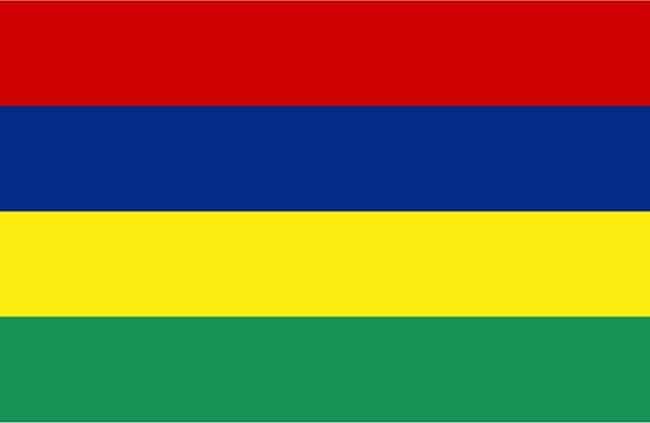
Mauritius – General Information
Mauritius is located in the southwestern Indian Ocean about 800 km east of Madagascar and belongs to the Mascarene Islands archipelago with Réunion and Rodrigues.
Mauritius has an area of 1,865 km² and is densely populated with around 1.24 to 1.26 million inhabitants (as of 2025/26) – a slight increase compared to the previously mentioned 1.074 million.
Capital: Port Louis.
Phone: Area code of Germany: 00230/phone number Area code to Germany: 0049/local network without 0/phone number
Language: The national languages are officially English (the sole official language) and French as a widely used lingua franca; in everyday life, Mauritius Creole (Morisyen) is also predominantly spoken, which is now also increasingly being taken into account in the education system.
Currency: 1 Mauritian rupee (MUR) = 100 cents. Important exchange rate update: 100 MUR is now only equivalent to around 1.85 euros (2026 rate: 1 EUR ≈ 54–55 MUR) – the exchange rate of “100 MUR ≈ 4 euros” mentioned in the original is thus long outdated and would significantly mislead travellers when planning their budgets.
Traffic: Left-hand traffic. The German driver’s license is usually accepted in practice for short rental car stays, but an international driver’s license is still recommended and is required by some rental companies.
Tourist Information: The contact details of official tourist offices and embassies change occasionally; for current addresses, it is advisable to check the official websites of the Mauritius Tourism Promotion Authority and the Federal Foreign Office before travelling.
Mauritius still does not have its own embassy in Germany; the embassy of the Republic of Mauritius in Brussels is responsible. Germany also does not have its own embassy in Mauritius; the embassy in Antananarivo (Madagascar) with an honorary consul on site in Port Louis is responsible.
The island is of volcanic origin and almost entirely surrounded by a coral reef. The territory of Mauritius also includes the islands of Rodrigues, St. Brandon (Cargados Carajos), the Agalega Islands and the Chagos archipelago, whose sovereignty was long disputed between Mauritius and Great Britain – in 2024, both countries agreed in a historic agreement that sovereignty over the Chagos Islands would be transferred to Mauritius, while Great Britain and the USA would be allowed to continue to use the Diego Garcia military base in the long term. This agreement marks the end of a decades-long dispute under international law and, of course, was not yet mentioned in the original article.
Mauritius has been an independent state since 1968 and a republic since 12 March 1992.
Politics: Mauritius is a parliamentary republic with a largely representative president as head of state and a prime minister as head of government. The current prime minister is Navin Ramgoolam (Labour Party), who took office for the third time in November 2024 after his alliance won the parliamentary elections by a clear margin; he replaced Pravind Jugnauth. The head of state is President Dharam Gokhool.
Economy: The sugar industry has historically been the country’s largest economic force and continues to dominate large swathes of land with its monocultures as it travels across the island, but has now lost much of its relative economic importance. Today, Mauritius’ economy is mainly based on tourism, financial services (Mauritius has become a major international offshore financial centre), the textile industry and a growing technology sector; the former textile industry dominance has shifted in favour of this more diversified economy.
Mauritius – Climate
The climate in Mauritius is pleasant all year round, with the months of April to July and September to October being particularly beautiful. During this time, the least rain falls and the temperatures are not too high. If you don’t want to miss out on the blooms of the flamboyant trees and fresh exotic fruits such as lychees, you should prefer the Mauritian summer; there is also a particularly pleasant water temperature in the lagoons at this time of year.
From November to March is summer in Mauritius, with average temperatures of 23–25 °C in the morning, which rise to 30–32 °C during the day. In winter (April to October), temperatures are around 7 °C lower, and water temperatures are around 25 °C. Due to the proximity to the equator, the seasons do not differ significantly from each other; even during the rainy season between November and April, precipitation rarely lasts long. Between January and March, cyclones, tropical cyclones that form on the open sea, occasionally occur.
Mauritius is suitable as a travel destination all year round, with consistently mild temperatures. In the Mauritian winter (April–October), stronger winds blow on the east coast, where it can also seem a little cooler.
Note on the time zone: Mauritius has not participated in a summer/winter time change since March 2009; the time difference to Central Europe is therefore 3 hours in the Central European winter and 2 hours in the Central European summer.
Mauritius – Fauna
The fauna and flora of the island of Mauritius as well as the habitat of many species have suffered greatly from human settlement. Due to the deforestation of the once lush forests, the habitat of the original fauna was largely destroyed; many species became extinct, and the native bird life was particularly affected. Many birds ended up in cooking pots or fell victim to introduced rats and monkeys. With the exception of a few species of bats and birds, the original fauna of Mauritius is now completely extinct.
The Dronte (Dodo): The most famous animal and landmark of Mauritius is the dronte, popularly known as the dodo, which has been extinct for centuries. In the Natural History Museum of Port Louis there is one of the rare, completely preserved skeletons as well as a reconstruction of the flightless bird. Striking features were short stubby legs, a crooked beak and feathers that only began behind the eyes. When fully grown, the animal weighed 20–25 kg. Since the dodos had no natural enemies on the island, they had lost their ability to fly in the course of evolution; however, with the arrival of humans in the 16th century, predators such as rats, pigs, goats and monkeys came to the country, which also fed on eggs and young birds – in addition to human hunting of the tasty meat, this led to the extinction of the species within a few decades.
Birdlife: When there were still rainforests in Mauritius, a large number of colourful birds lived on the island; many species fell victim to the change in their habitat. In the last remnants of the original forest ecosystems in the southwest of Mauritius, endemic species such as the Mauritius kestrel, the pink dove, the Mauritian parakeet and the Mauritian caterpillar catcher have found a last refuge. The Mauritius kestrel (Kestrel) is the only bird of prey on the island and was long considered the rarest falcon on earth: around 1970, only four animals of this species still existed. Thanks to an intensive, internationally respected conservation programme, the population has since grown to several hundred animals; the species is now considered one of the best-known examples of conservation success worldwide, even though it remains classified as endangered.
Reptiles and lizards: Only smaller reptiles occur in Mauritius. The extensive sugar cane plantations are mainly home to chameleons and lizards; there are no poisonous snakes on the island. Small geckos, which play a useful role as insect killers on the walls and ceilings of many houses, are often found.
As on the Galápagos Islands, there is also a population of giant tortoises in the Indian Ocean. The original Mauritian giant tortoise was helplessly at the mercy of humans, as the animals could survive for months without food and were therefore highly valued as a meat reserve on ships – it is now extinct. The giant tortoises that can be seen on the island today (including on the Île aux Aigrettes) belong to a species that was originally native to the Aldabra Atoll, about 400 km north of Madagascar, and was introduced to Mauritius for reintroduction and ecological replacement purposes.
Mammals: Before human settlement, mammals were only represented by a few species in Mauritius, including two endemic bat species. As early as the 16th century, rats came to the island with the first ships, decimating many other species. To combat the rodents, Indian mongooses were later settled, which are now common in many regions and can often be seen on the roadsides around the sugar cane fields.
Red deer were once imported from Java by the Dutch; the population in the grazing areas is estimated at several tens of thousands of animals. Around 400 years ago, the Portuguese also brought small macaques from Asia to the island. The monkeys come from the forests to cultivated land and rummage through plantations and settlements for food; they also plunder bird nests, which has contributed to the extinction of several bird species. Nevertheless, they are widespread among the population and are sometimes used as food or bred for biomedical research – an economic sector that has been increasingly critically discussed internationally in recent years.
Underwater world (corrected section – in the original there was an inadvertent text about Canada’s climate): The waters around Mauritius are among the most biodiverse in the Indian Ocean. The coral reef that surrounds the island almost continuously provides habitat for a variety of colorful fish species, including parrotfish, butterflyfish, lionfish and numerous reef sharks, which are generally harmless to divers. Dolphins can be seen regularly in the deeper waters beyond the reef, especially off the west coast at Tamarin and Rivière Noire, where bottlenose dolphins and spinner dolphins can be found all year round. Between July and September, humpback whales also migrate along the coast, which are increasingly the target of responsible whale-watching activities. The reefs themselves, as elsewhere in the Indian Ocean, are under pressure from coral bleaching due to rising sea temperatures and coastal development; several marine protected areas around the island (including Blue Bay in the southeast) are to preserve the remaining intact reef sections in the long term.
Mauritius – Flora
The sea is a huge barrier that plants and animals can overcome in various ways: under their own power or through passive transport such as ocean currents, winds, as well as in the plumage, body or feet of birds.
The successful settlement of plants depends on three factors: reaching the island, finding a suitable habitat and ensuring reproduction. The settlement of Mauritius and Réunion followed a typical sequence: first sea plants and larvae of sedentary marine fauna, then lichens on bare rock, and finally – with the onset of soil formation – plants brought in by wind, sea and birds.
Frequent rainfall and a warm climate quickly led to dense vegetation. Both Mauritius and Réunion have two island-specific characteristics: a comparatively low number of species as a result of random settlement, and a high rate of endemism due to particularly rapid evolutionary processes in small, isolated populations. New species have established themselves here that do not occur anywhere else on earth – around 500 flowering plant species alone are endemic to the Mascarene Islands. However, this limited habitat also makes the biological balance of the islands particularly susceptible to disturbances.
Endemic plants include various species of ebony, Bois d’Olive, Bois de Natte, Bois de Fer, Bois Puant, Bois d’Éponge, Bois de Rat, Bois Colophane, macaque, tambalacoque, bottle palm, hurricane palm and the national flower Trochetia boutoniana (Boucle d’Oreille, “earring tree”). The national flower is a widely branched bush or low tree with oval, leathery leaves densely hairy on the underside; its bell-shaped red flowers are 5–6 cm long.
Agricultural crops include sugar cane, potatoes, corn, peanuts, fruit (pineapples, bananas, papayas, mangoes, lychees, citrus fruits, coconuts), vegetables (beans, tomatoes, avocados), the perfume ylang-ylang and cut flowers.
Mauritius – History
The history of Mauritius is relatively recent; the island was first recorded on Arabic maps around 1500.
In 1598, the Dutch took possession of the island and gave it the name Mauritius, in honor of the governor Maurice of Orange. In 1638, the first settlers landed, who initially only stayed for two decades; several further settlement attempts failed, so that the Dutch finally gave up the island in 1710.
In 1715, the French took possession of the island to secure their shipping routes to India; settlement began in 1721. The actual development of the country began in 1735 with the arrival of the governor Mahé de Labourdonnais, whose work is still visible today: the construction of Port Louis as a military port and shipbuilding center, the Château de Mon Plaisir in Pamplemousses, the Line Barracks in Port Louis and parts of today’s Government House. Until 1767, the French East India Company administered the island.
During the Napoleonic Wars, Mauritius served as a base for buccaneers. In 1810, the great naval battle between England and France took place at Grand Port; in August 1810, the English landed in the north (Cap Malheureux) and finally ousted the French.
In the following period, there were major social and economic upheavals, the climax of which was the abolition of slavery in 1835. As a result, numerous Indian contract workers (Hindus and Muslims) immigrated, who now took over the work in the sugar cane fields and had a lasting influence on the culture of the island through their large numbers; Chinese traders also settled here.
Due to the well-developed sugar industry, Mauritius has achieved economic prosperity. Mauritius has been an independent state since 1968 and a republic since 12 March 1992.
The various waves of immigration have turned Mauritius into a multi-ethnic society. People of African, Indian, European and Chinese origin with different cultures, customs and languages live together peacefully in a small area – a circumstance that Mauritius is often cited internationally as an example of successful multi-ethnic coexistence, even if, as in any society, selective social tensions cannot be ruled out.
An important current chapter in recent history, which was naturally missing from the original article: In 2024, after decades of international litigation, Mauritius and Great Britain agreed that sovereignty over the Chagos archipelago – including the Diego Garcia military base – would be transferred to Mauritius, while military use by Great Britain and the USA would remain contractually secured in the long term. This is considered a significant foreign policy success for Mauritius and ends one of the last major decolonization disputes worldwide.
Mauritius – Food & Drink
Several local cuisines can be distinguished:
- Creole (spicy)
- Chinese
- Indian (strongly seasoned)
- European
- Fish dishes – everything the local sea has to offer
The national dish curry, which is prepared with chicken, beef or fish and usually served with a generous portion of rice, is highly recommended.
Drinks
The soft drinks Coca-Cola and Pepsi are bottled in Mauritius and are available everywhere. The Mauritians prefer still water, but there is also sparkling water.
Beer is also brewed in Mauritius, including the local brands Phoenix and the slightly stronger Blue Marlin; in the meantime, the German brand Warsteiner is also brewed locally under license.
Wine is comparatively expensive in Mauritius because it is not grown in the country and has to be imported; lighter wines from South Africa and France are common.
The main drink of the inhabitants remains the rum produced in Mauritius – from simple goodwill to the nobler Green Island. Rum is drunk neat, with cola (popular with locals) or in various cocktail variations. Alcoholic beverages imported from other countries continue to be extremely expensive due to high import duties.
Note: All information on population figures, exchange rates, political offices and current developments is subject to change and has been researched to the best of our knowledge as of August 2026. For up-to-date, binding information, it is advisable to take a look at the travel and security advice of the Federal Foreign Office before travelling.
Questions about the destination Mauritius?
You can get the answers in the Africa forum!

Author: Joe OnTour
Autor + Reise-Blogger