Destination South Africa – Garden Route
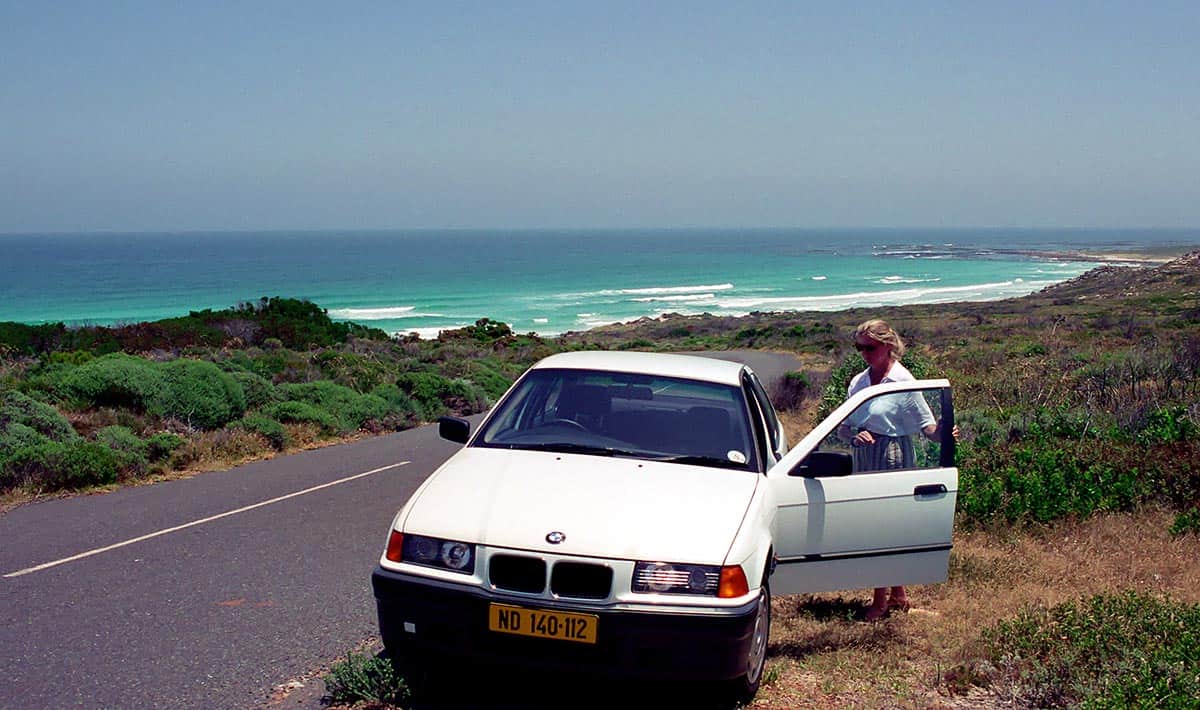
Our path leads us along the Garden Route. The Outeniqua Mountains, together with the Tsitsikamma Mountains, form the northern edge of the Garden Route. These mountain ranges are the main cause of the relatively humid climate (and higher rainfall) in the southern coastal region, which has led to the flourishing of native forests and partly lush vegetation. The biodiversity of the plant world is high, but not as high as in the western Cape region. The Garden Route therefore bears its name solely because of the higher rainfall and the forests, not because of the biodiversity of the plants. Continue through the Tsitsikamma Coastal Park and the Swart Mountains with the underground Cango Caves. The extraordinary variety of plants has given this route its name. The Jeffrey’s Bay region is particularly popular with surfers. At St. Francis Bay you will find wide beaches for swimming and shelling. The lagoon at Paradise Beach is a bird sanctuary with flamingos and swans. Between Knysna and George lies an impressive lake district. George owes its nickname Garden City to the huge tree population. Near Oudtshoorn we visited several ostrich farms.
The Garden Route is a must-see for anyone holidaying in South Africa. Knysna, Mossel Bay, George, Plettenberg Bay and Oudtshoorn in the Little Karoo and the numerous nature parks along the Garden Route offer everything that belongs to a stay in South Africa.
The Garden Route is one of the most beautiful and popular destinations in South Africa. It starts at Gouritsmond (southwest of Mossel Bay) to the eastern end of Tsitsikamma National Park. However, the most interesting and impressive section of the route is between Mossel Bay and the Storms River estuary in Tsitsikamma National Park.
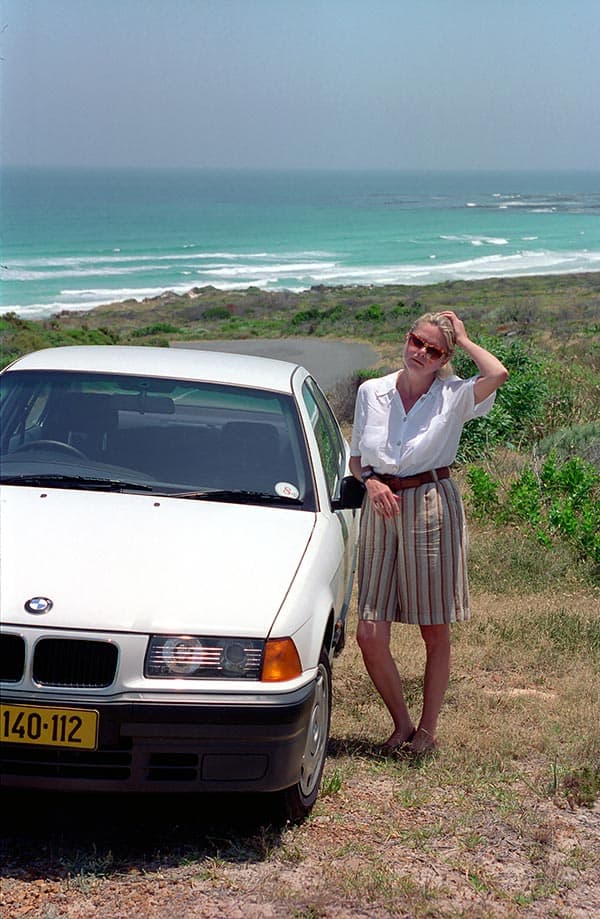
On the beautiful coasts of the Garden Route, steep rocky cliffs alternate with picturesque bays, extensive sandy beaches with dense, evergreen rainforest. Numerous rivers originate in the adjacent Outeniqua and Tsitsikamma mountains, which meander in wide arcs through green coastal plains and finally flow into the Indian Ocean.
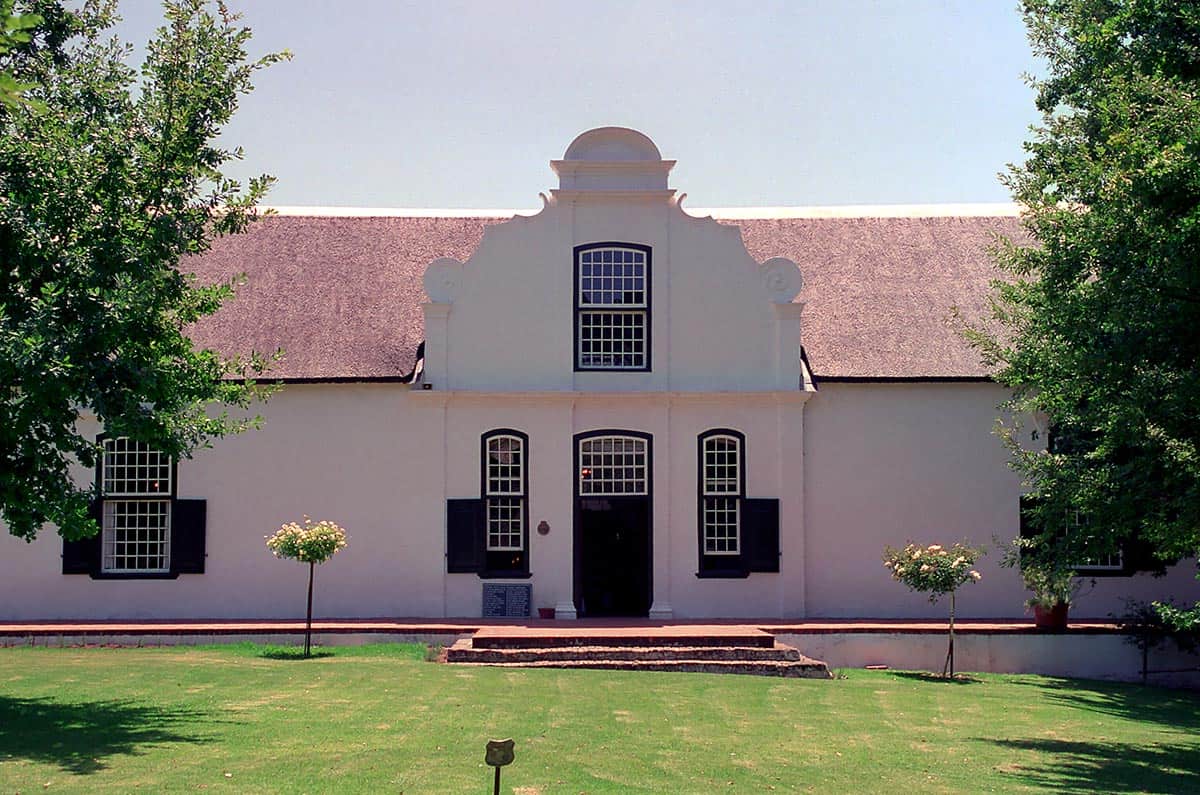
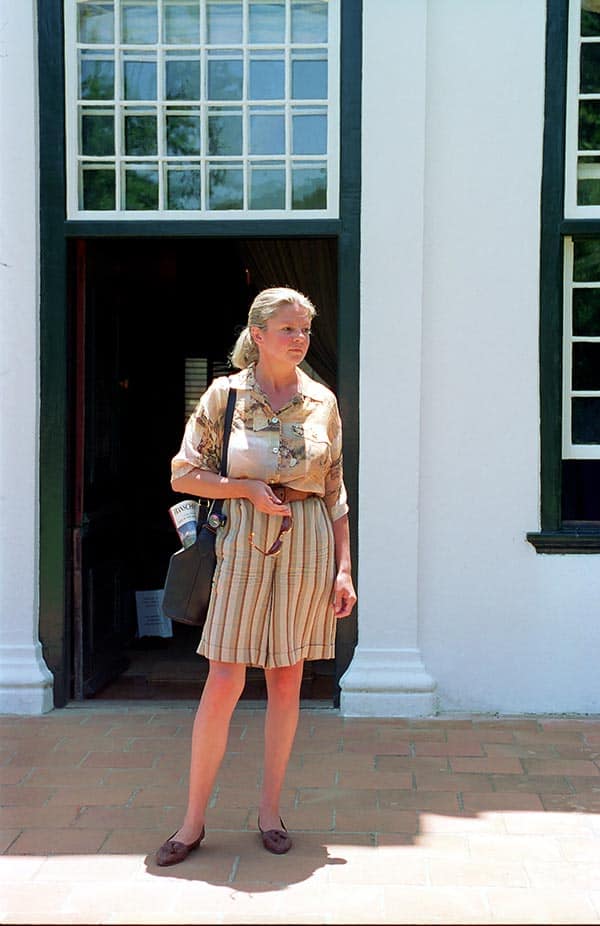
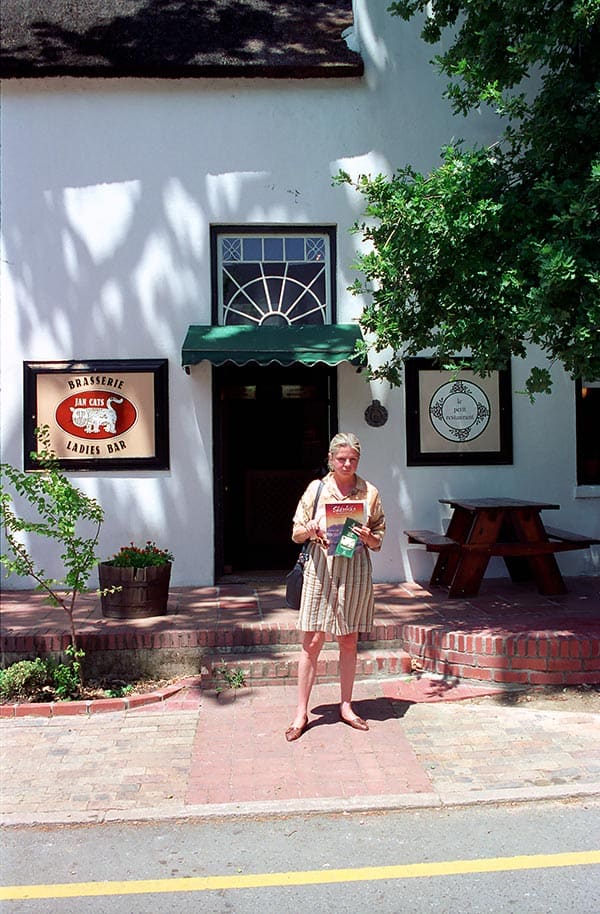
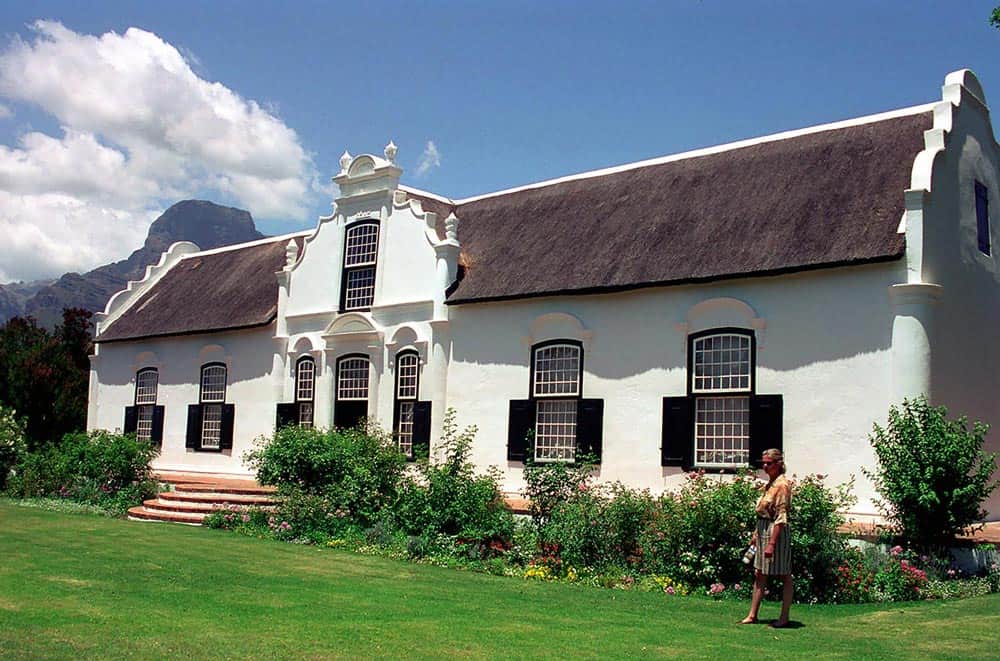
Our route takes us via Stellenbosch, which is about 50 km from Cape Town. Stellenbosch is the second oldest settlement in South Africa after Cape Town. You are on historic ground here. This can be felt and seen everywhere in Stellenbosch. The historic ambience as well as the charm of the over 300-year-old city invite you to relax and linger and, of course, to drink wine. Stellenbosch is a romantic town of 50,000 inhabitants, endless oak avenues, well-kept parks and gardens. The city centre has countless examples of Victorian, Georgian and Cape Dutch architecture.
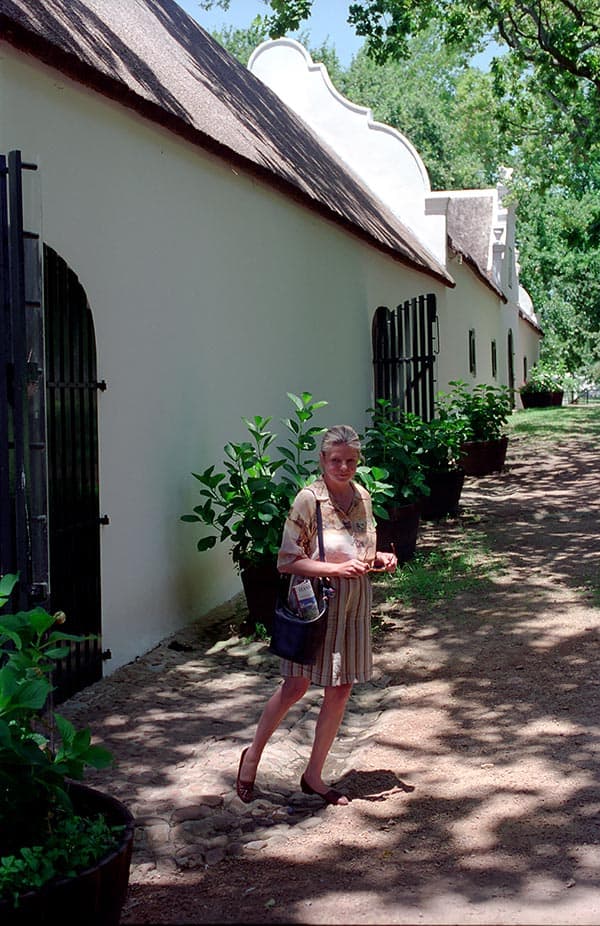
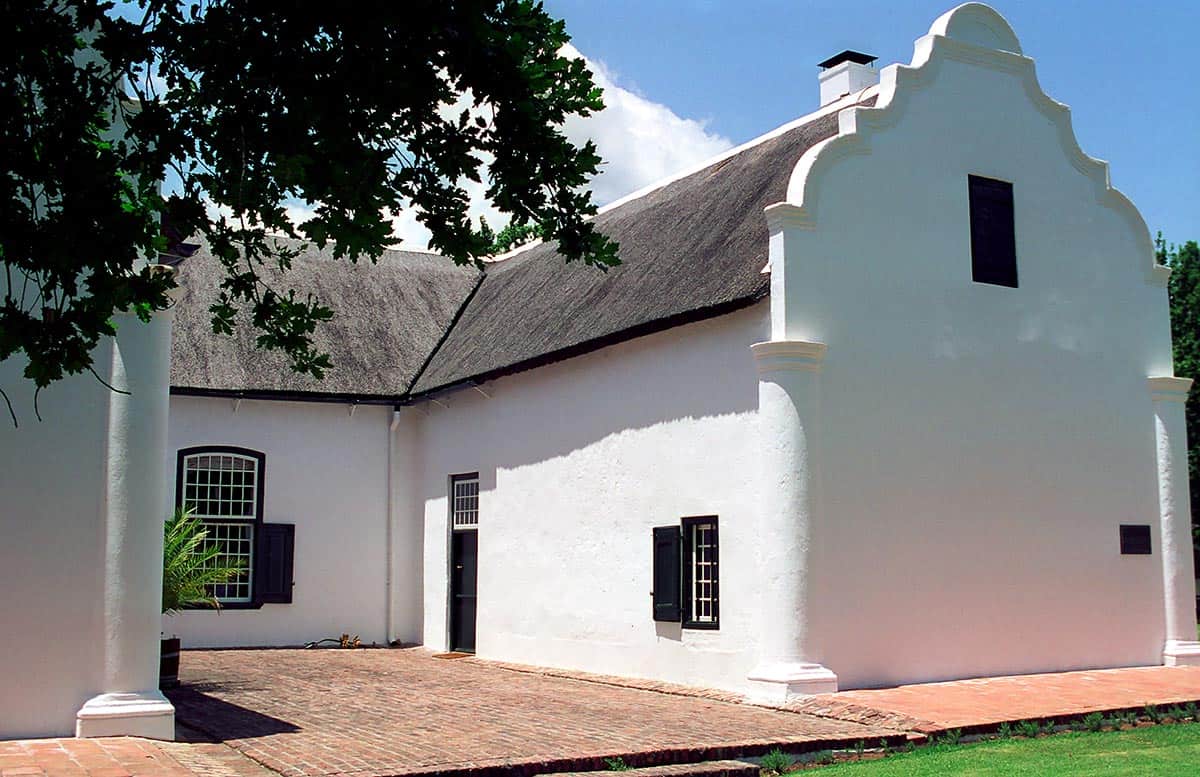
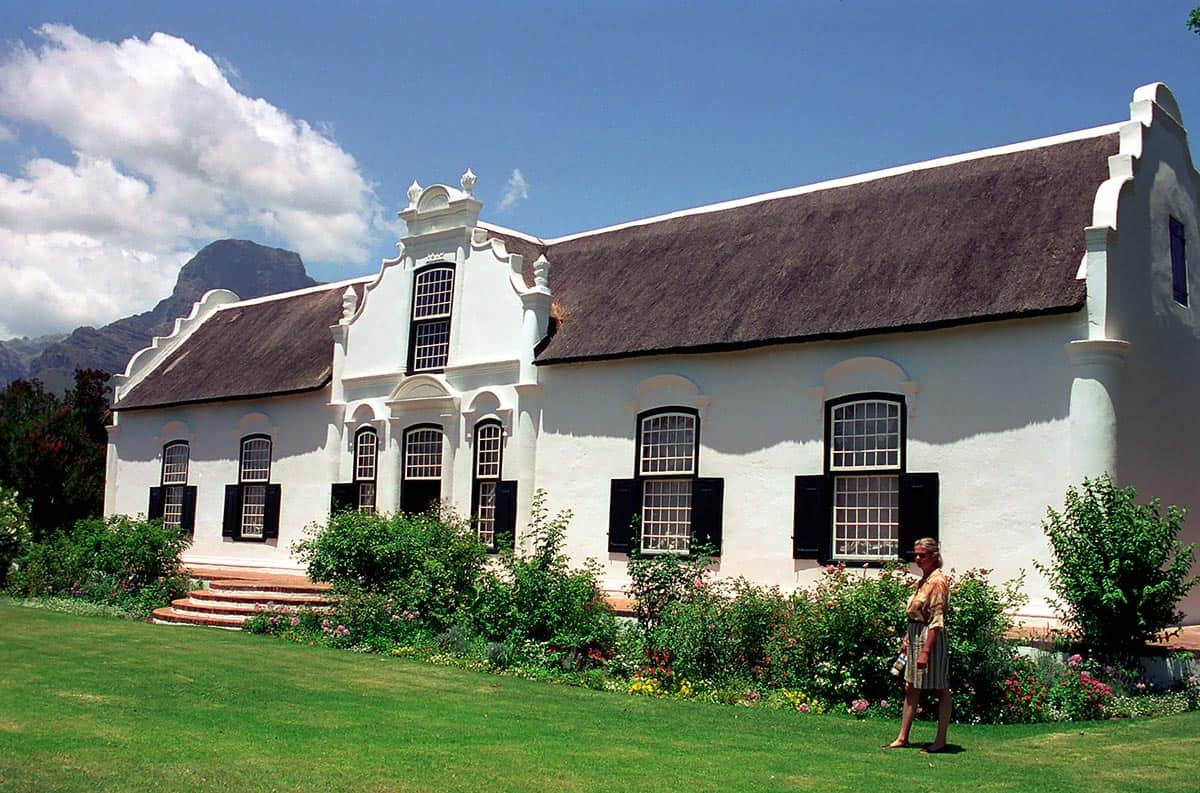
In the old core of Stellenbosch, you can find these whitewashed houses with curved gables and white wrought-iron or wooden balconies and garden fences everywhere. Catastrophic fires hit the city several times. However, most of the historic buildings have been carefully restored, so that Stellenbosch is now one of the best preserved towns from the founding period of the Cape Colony. In the small rustic restaurants you can eat excellently and of course enjoy the excellent and famous South African wine grown here.
The name Garden Route dates back to the time of settlement in this region. To the first explorers, explorers and settlers, this green, fertile area seemed like the Garden of Eden. This impression is still given to the traveller today when he travels through the region with his eyes open. Here you can experience rugged mountains, cliffs, lonely white sandy beaches, deep forests and semi-desert in a small area. Along the coast there are many small seaside resorts that invite you to linger.
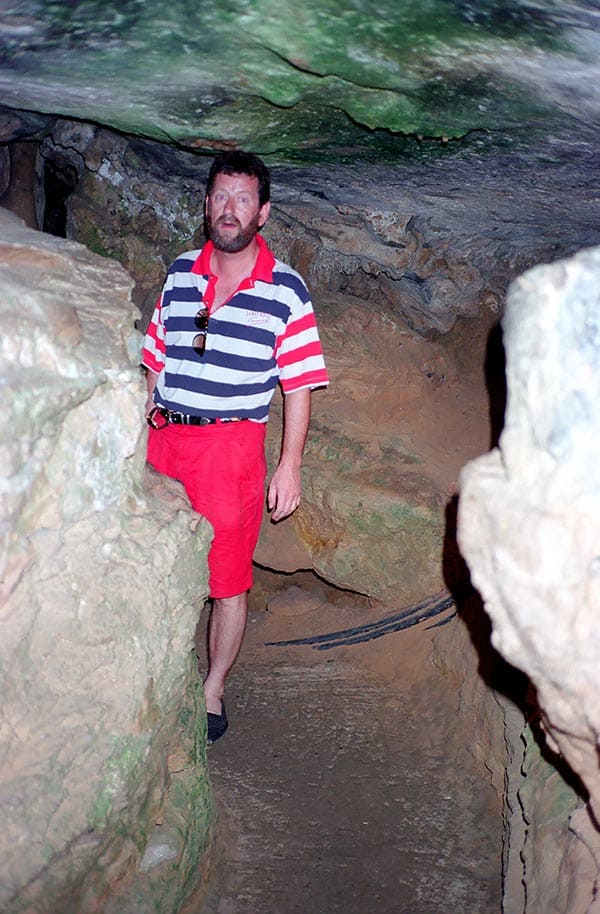
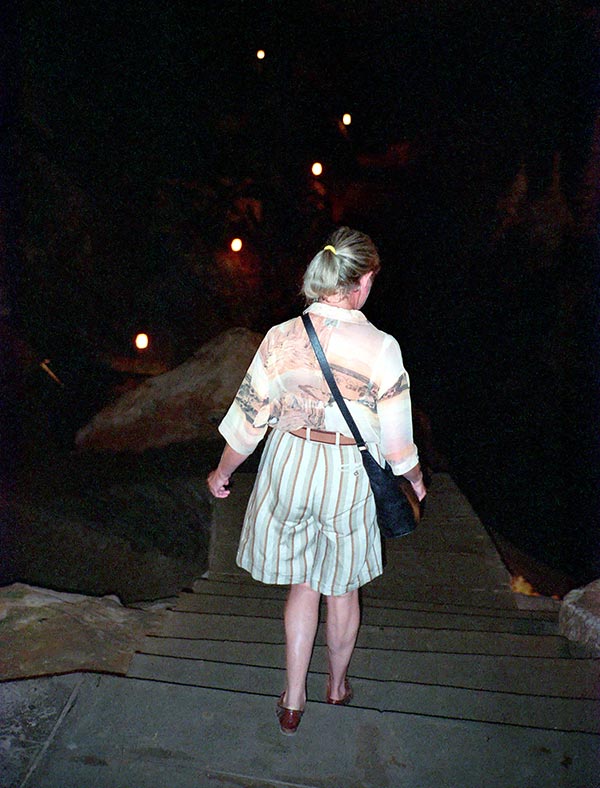
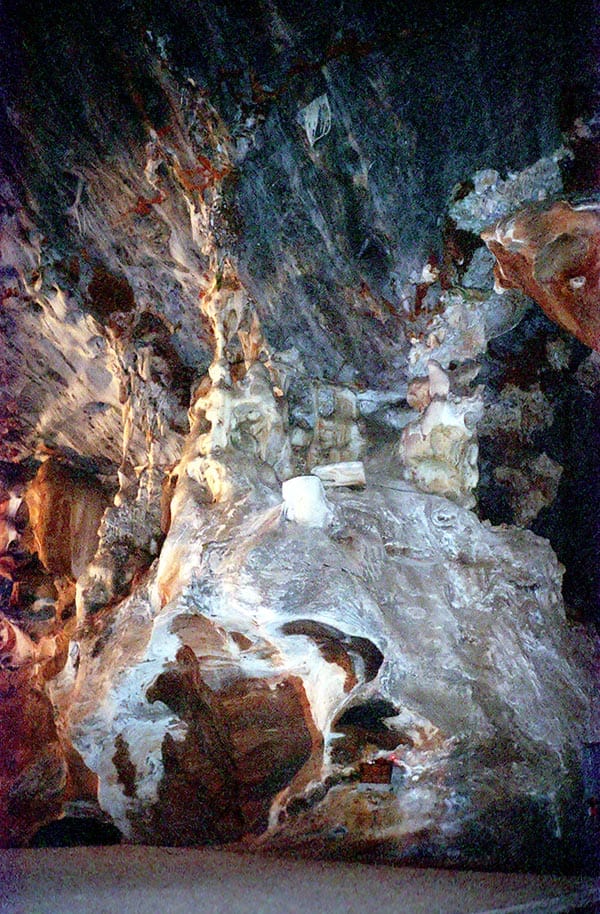
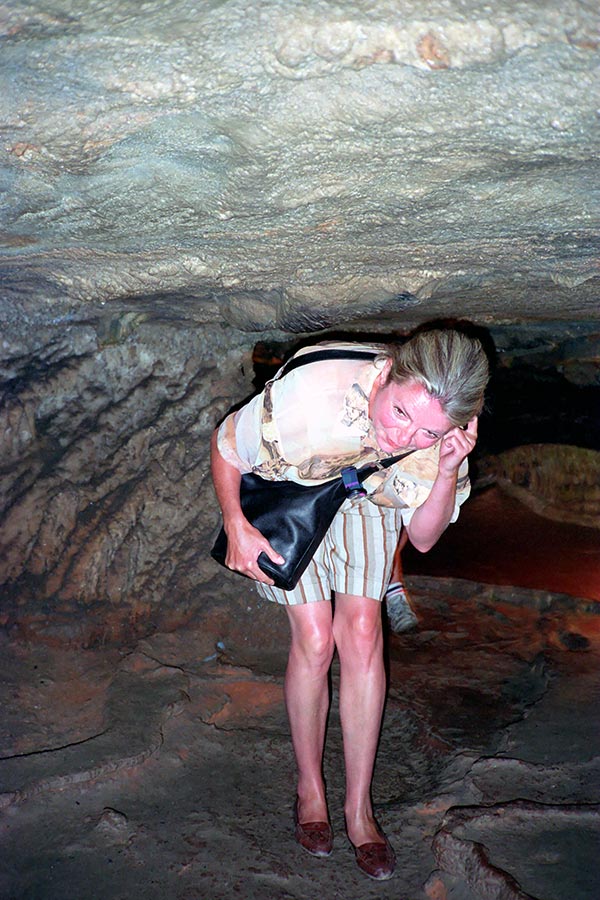
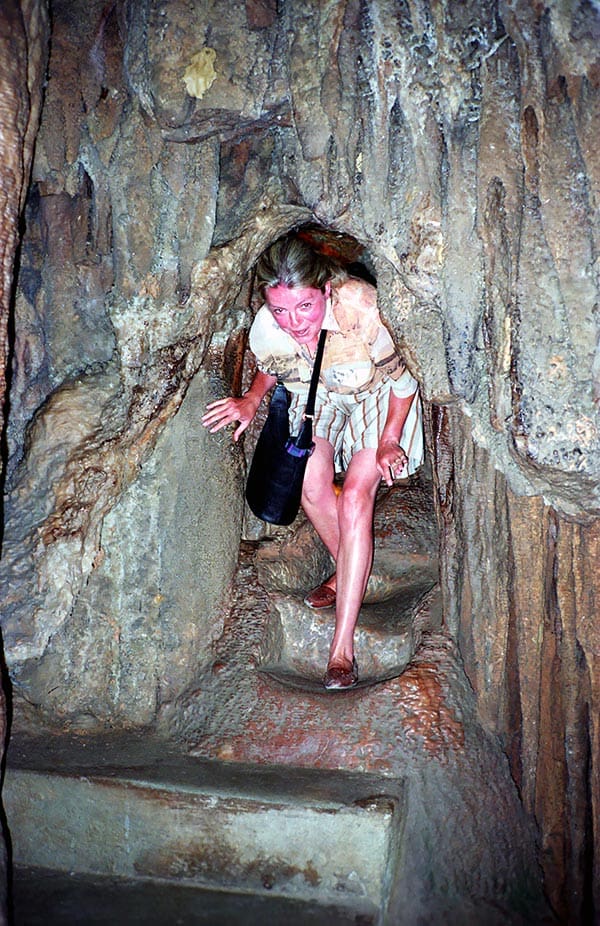
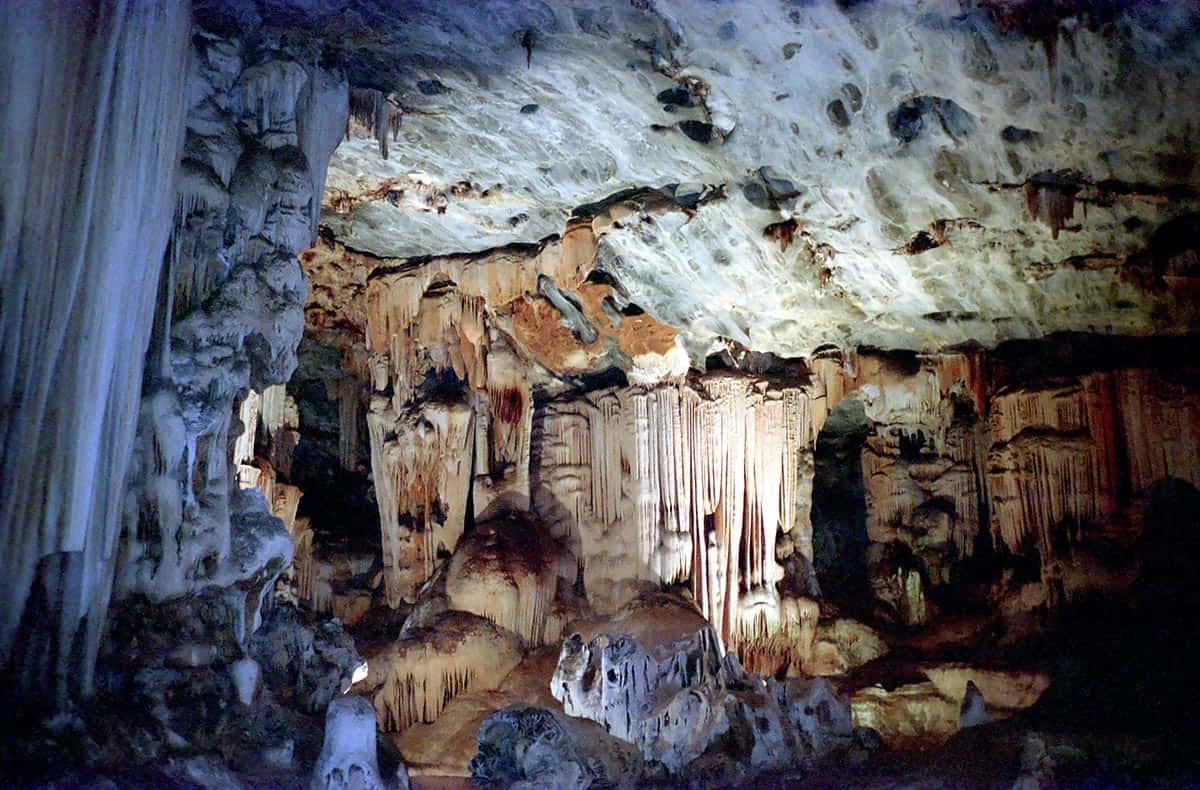
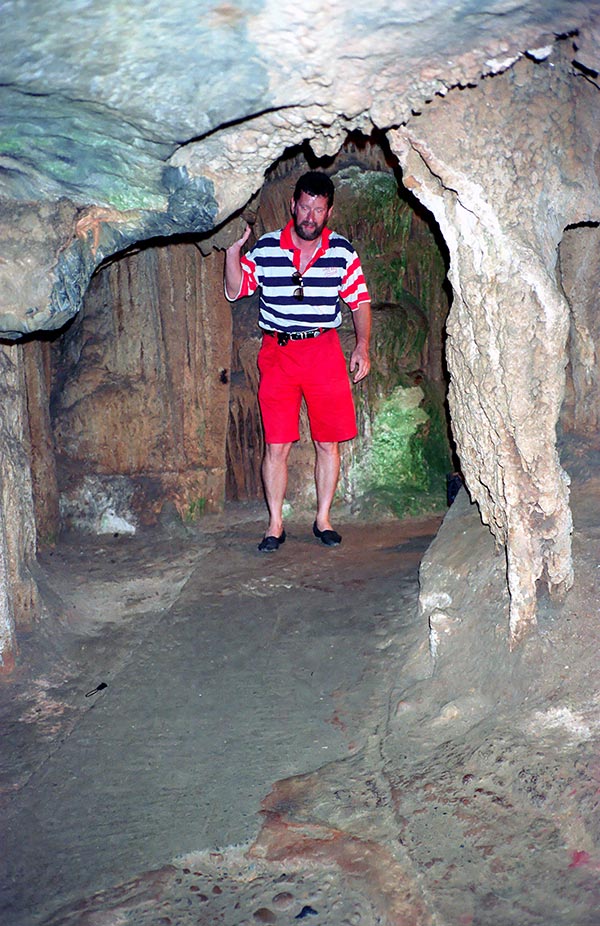
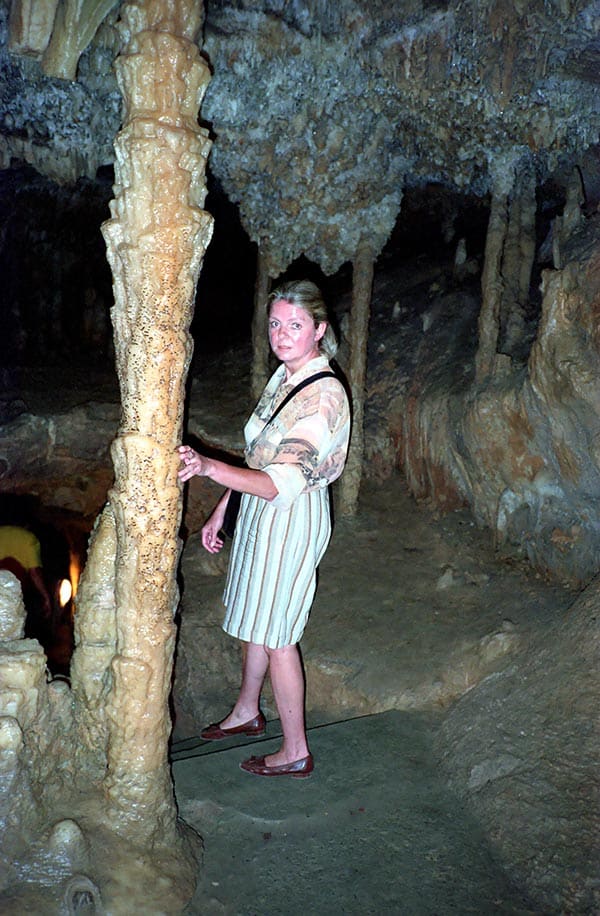
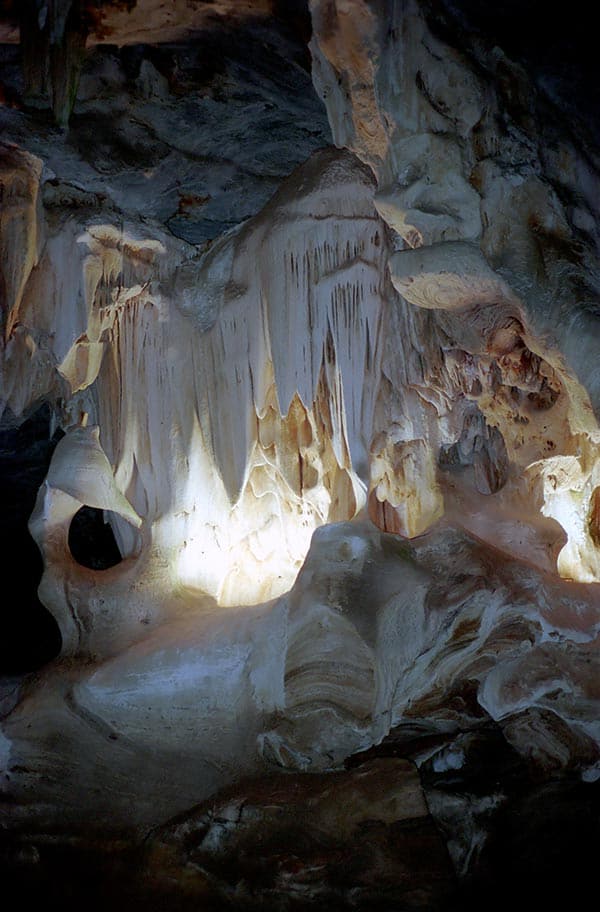
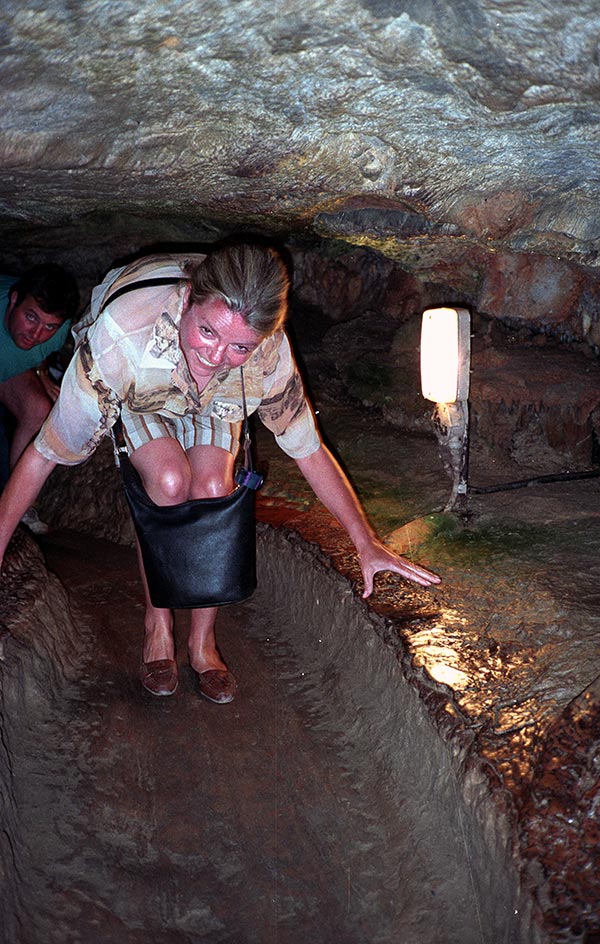
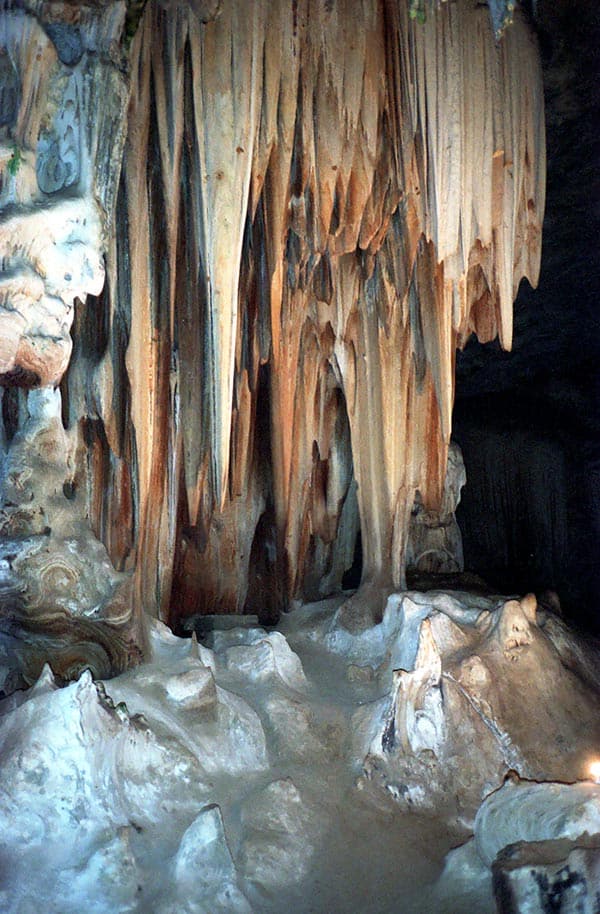
The Cango Caves near Oudtshoorn are among the largest stalactite caves in the world. In the widely ramified underground facilities you can take guided tours. The stalactite formations are partly colourfully illuminated. The bizarre stalactite formations in the caves consist mainly of calcium carbonate. They are formed when calcareous water drips down from the rock and evaporates. The structures growing downwards from the cave ceiling are called stalactites, the structures growing upwards from the ground are called stalagmites. When both stalactite formations combine to form columns, these are called stalagnates. The way into the cave system is a bit tedious and not recommended for those who have damaged intervertebral discs, but you are amply compensated for the effort.
It is an impressive experience to be able to see the huge formations that have been built up over centuries up close. Done, the exit is reached again. On the way to our further route, we always find a place on one of the many lonely beaches to take a break in untouched nature.
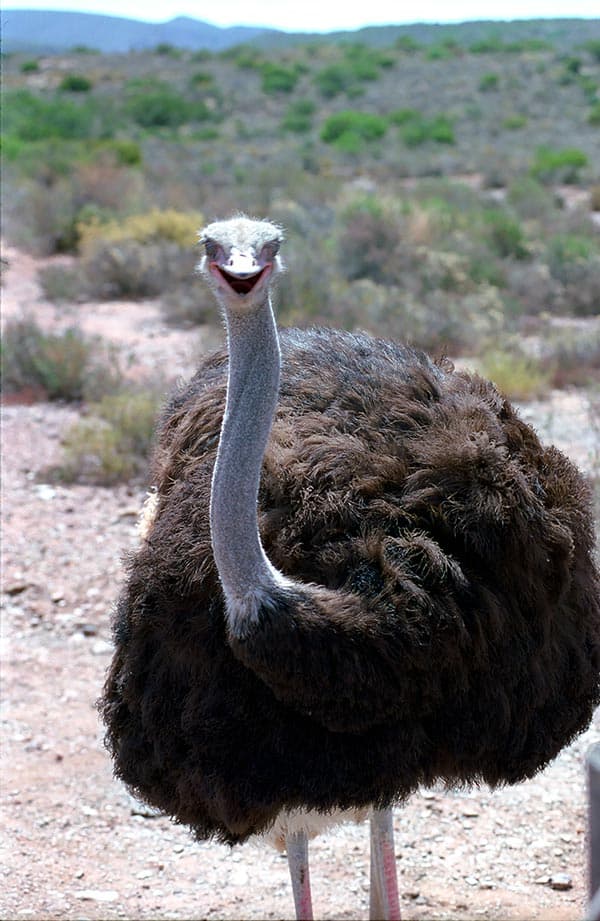
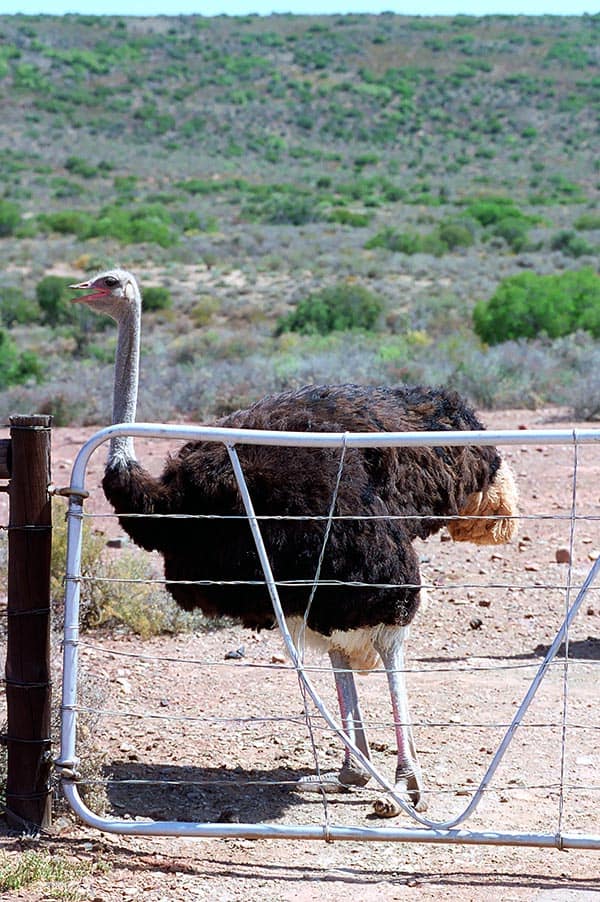
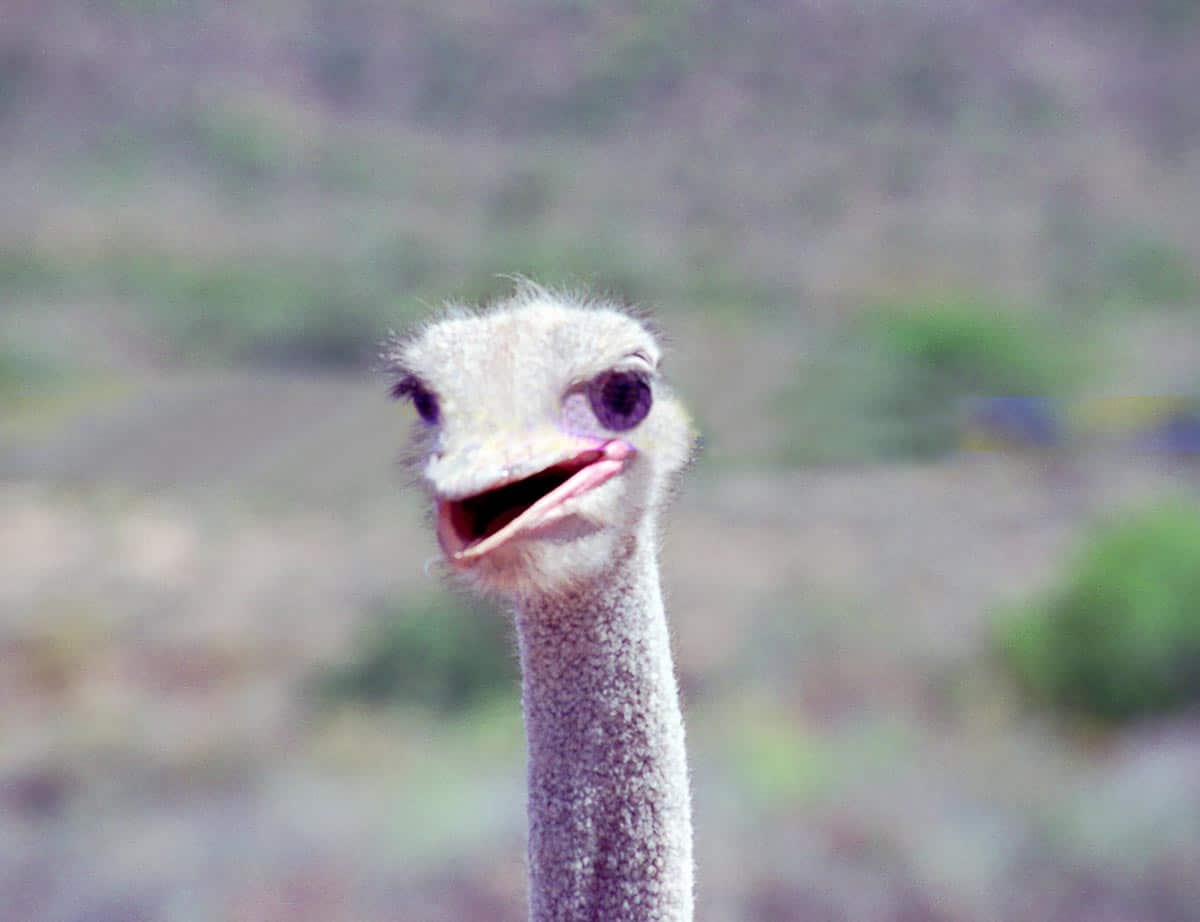
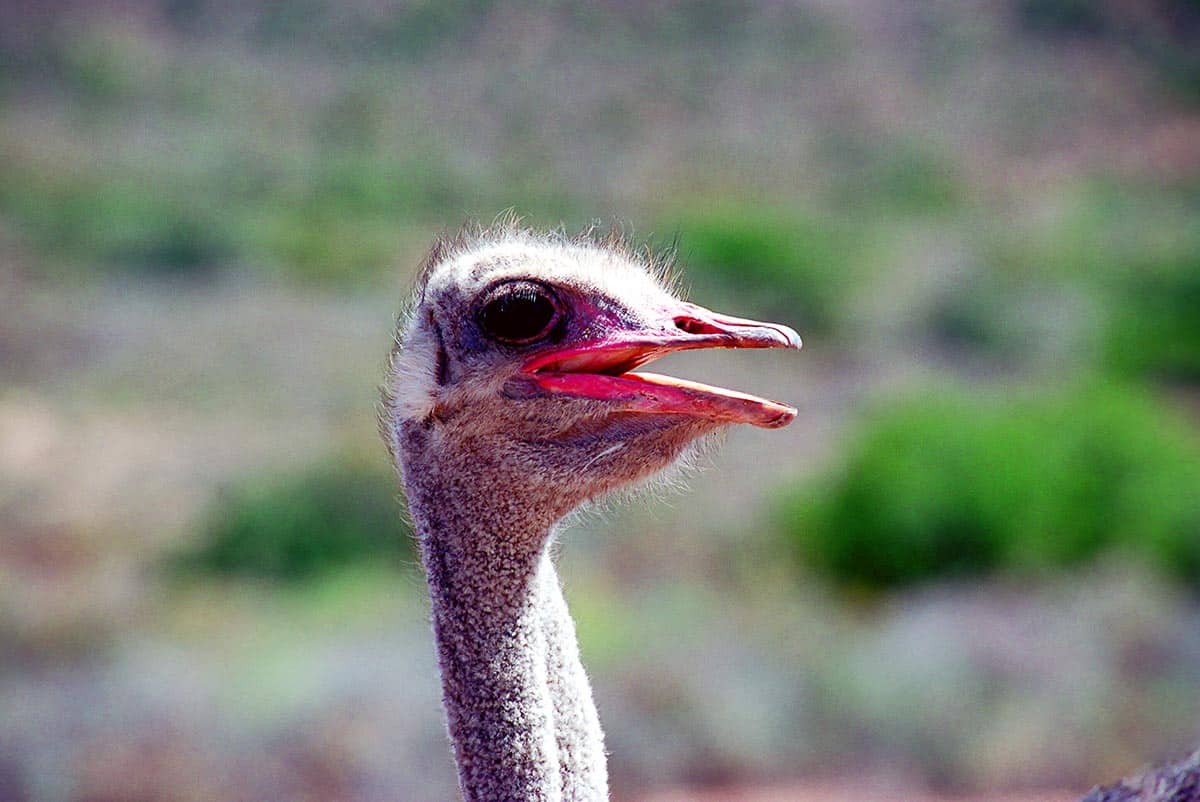
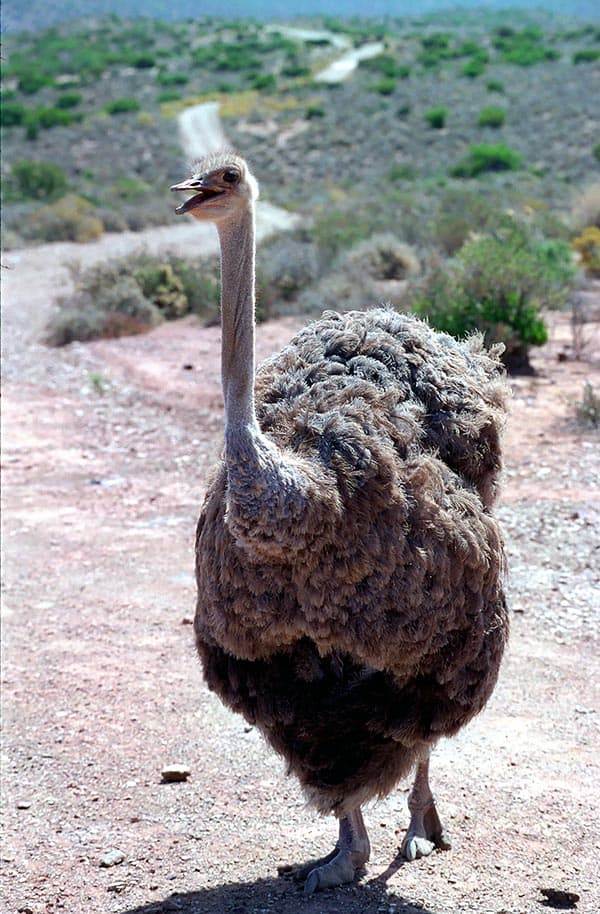
On our route we also visit one of the huge ostrich farms. Ostrich breeding around Oudtshoorn developed during a long period of drought in the region. When the needy farmers discovered that ostriches were thriving quite well despite the drought, the farms were established. The meat is very tasty and is now exported all over the world. The breeding animals are sexually mature after two or three years. Mating takes place all year round. However, the main mating season is from April to September. The male scrapes a sufficiently large nest hollow in the ground. After that, the female lays an egg every day until there are about 10 to 15 eggs. After that, the breeding season begins, which lasts about 42 days. Males and females take turns. The males almost always take over the “night shift” because they are better camouflaged due to their darker plumage. The ostrich eggs are the largest bird eggs in the animal world. An average egg is about 15 cm long, 12 cm wide and weighs about 1.5 kg. Although the shell is only 2 mm thick, the egg can support a weight of up to 120 kg.
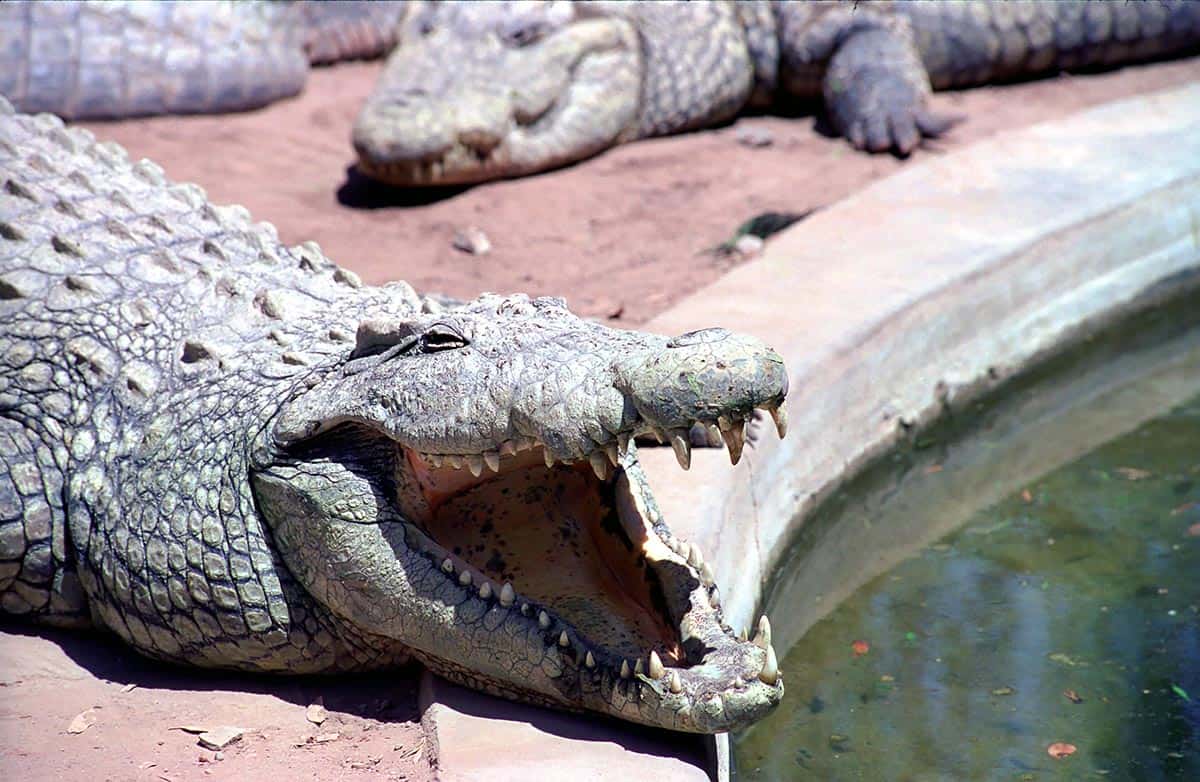
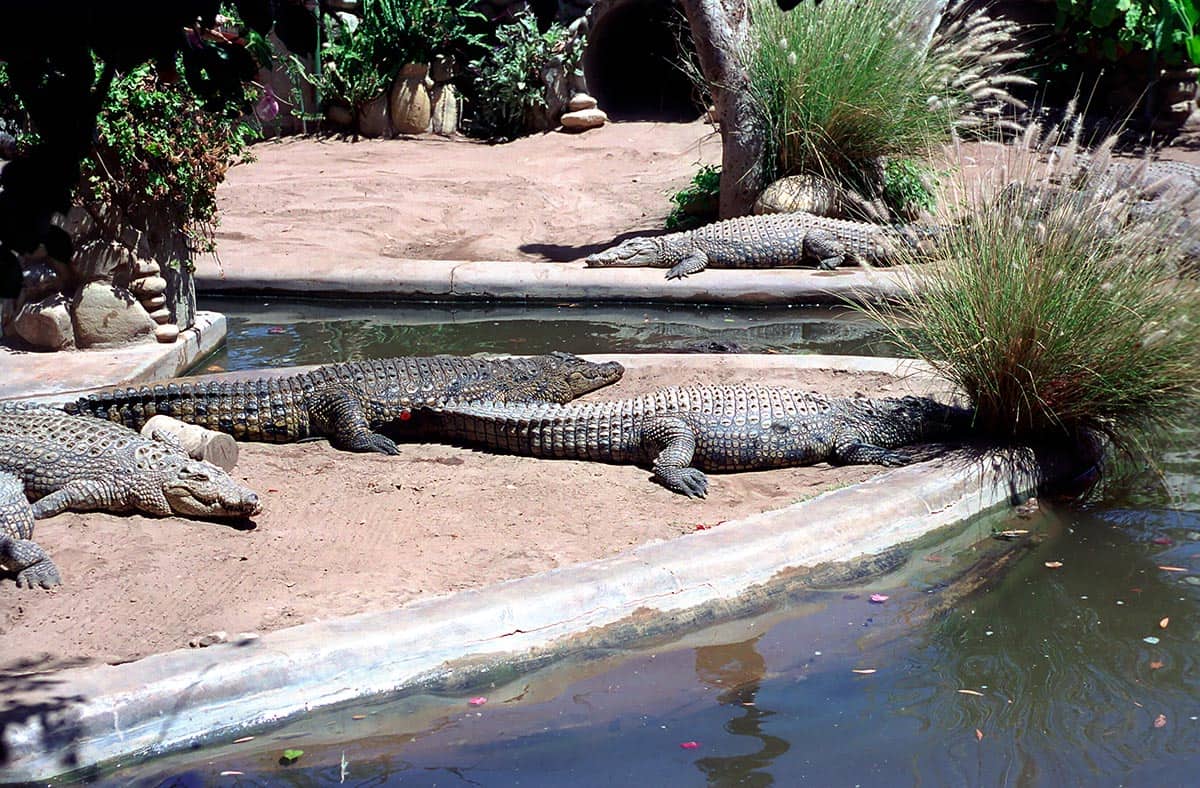
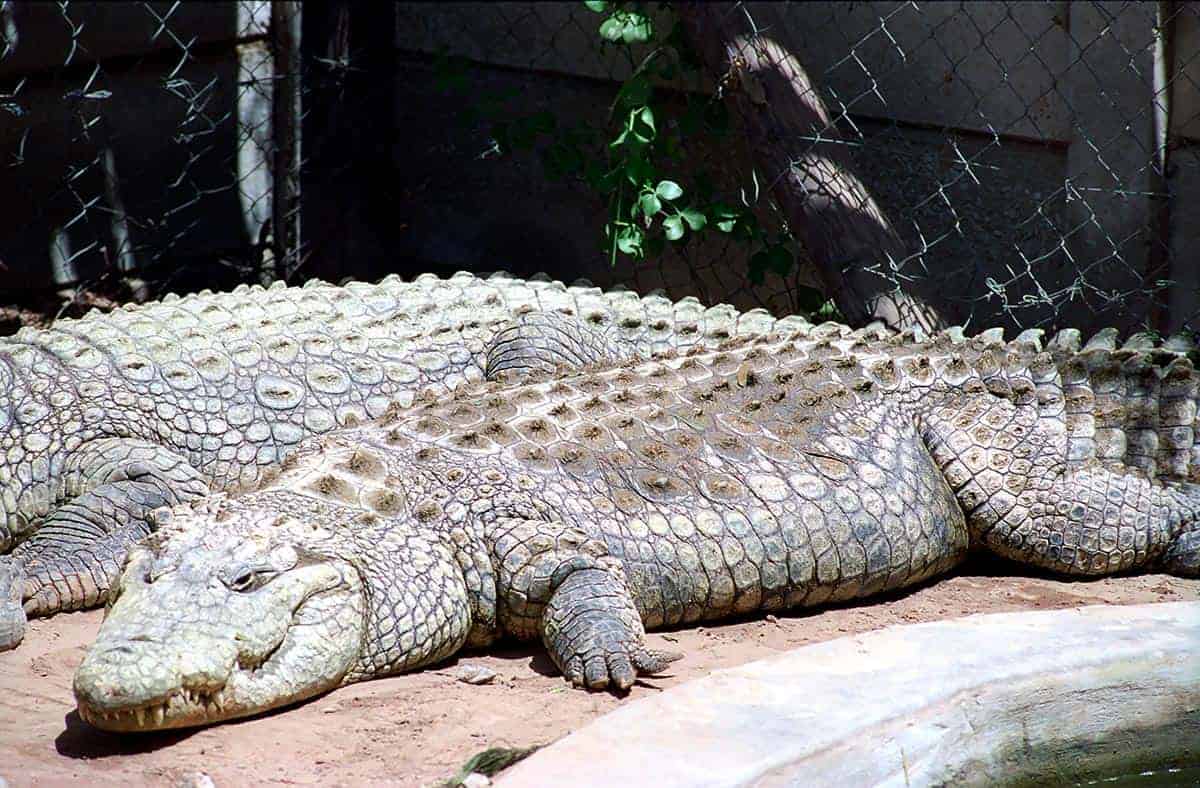
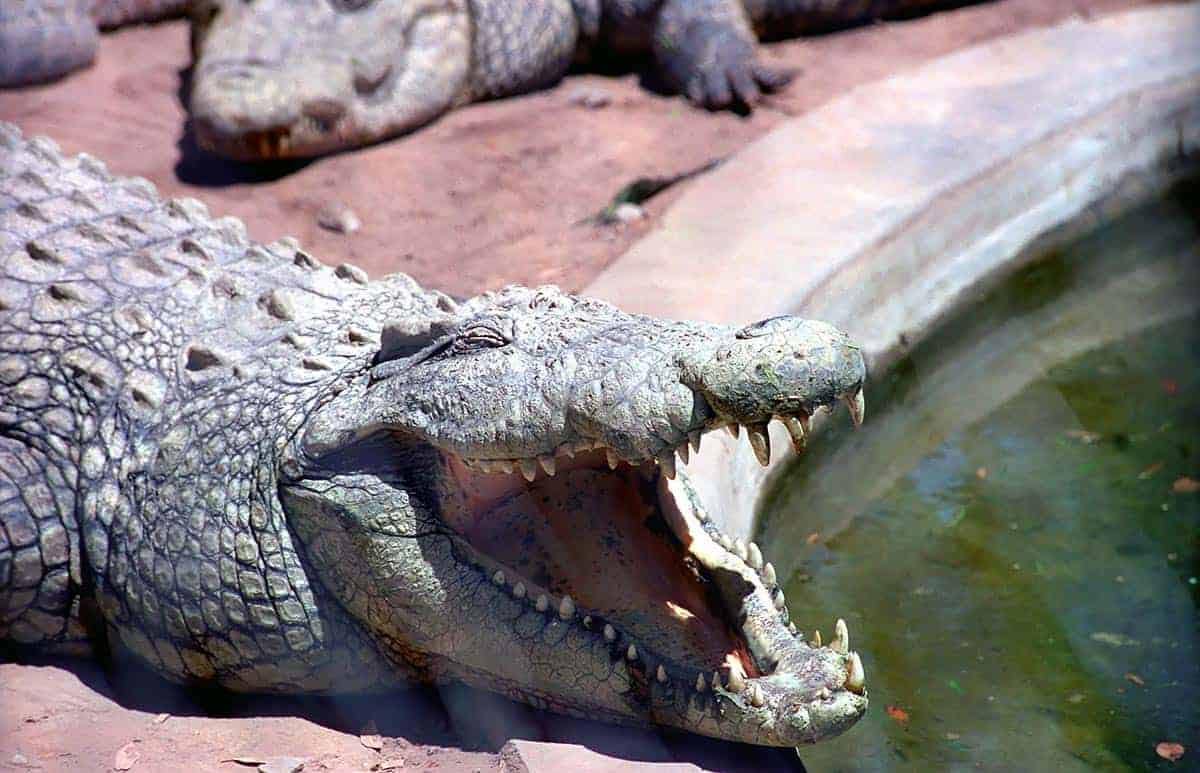
On a neighboring farm we find another species of animals. The impressive specimens of the crocodiles can be observed during a feeding…….then they doze in the sun. We describe our further path on the Garden Route on the following pages.
Photos South Africa Garden Route