Bali – Temple – Travelogue 2
There are about 20,000 temples in Bali! But every house also has a small sacrificial altar or temple. Brahman is the supreme of the gods. Vishnu is the god of good, the sun. Shiwa is the god of evil, of night. There are also many other gods, e.g. Dewi Sri, the goddess of fertility and Dewi Lakshmi, the goddess of luck.
Since the gods move from temple to temple, according to the Hindu calendar, a large temple festival takes place in each temple every 210 days. According to Hindu belief, life takes place between two poles (good – evil or day – night) and in three worlds (upper world = gods = head, middle world = people = body, underworld = demons = feet).
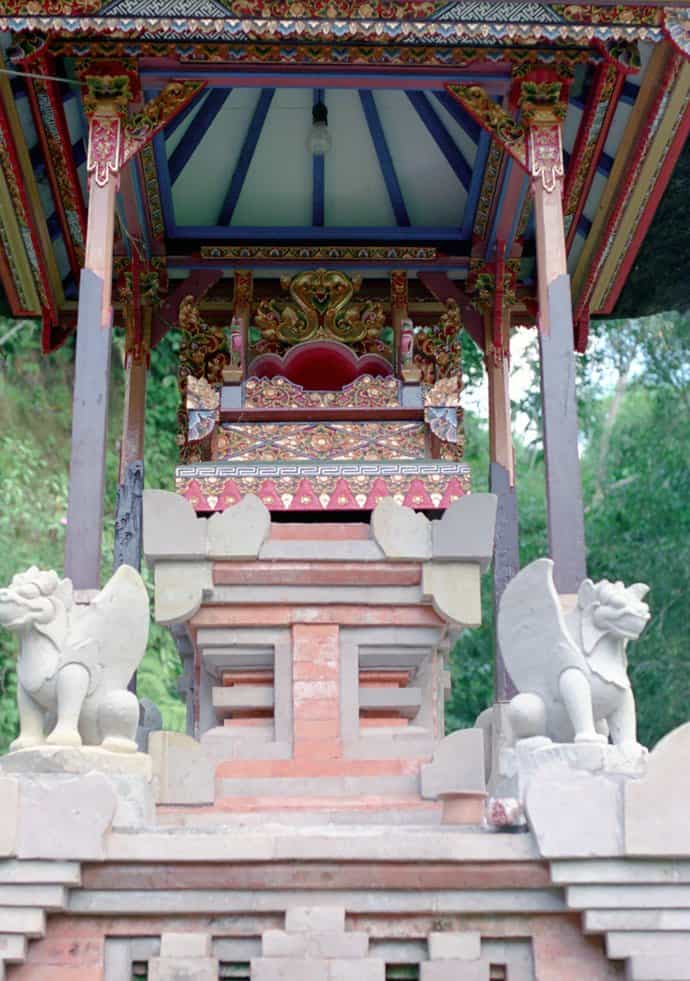
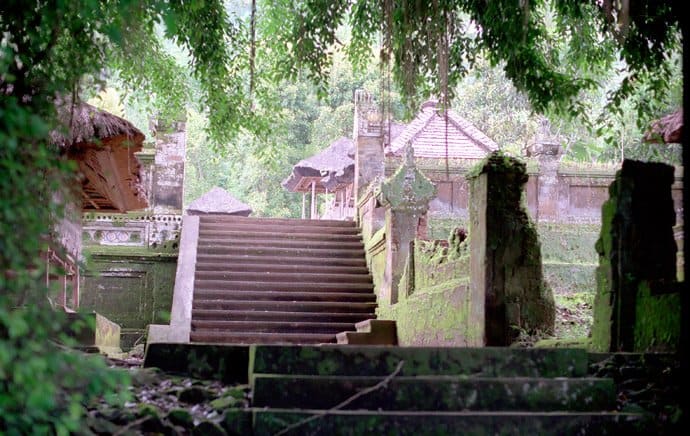
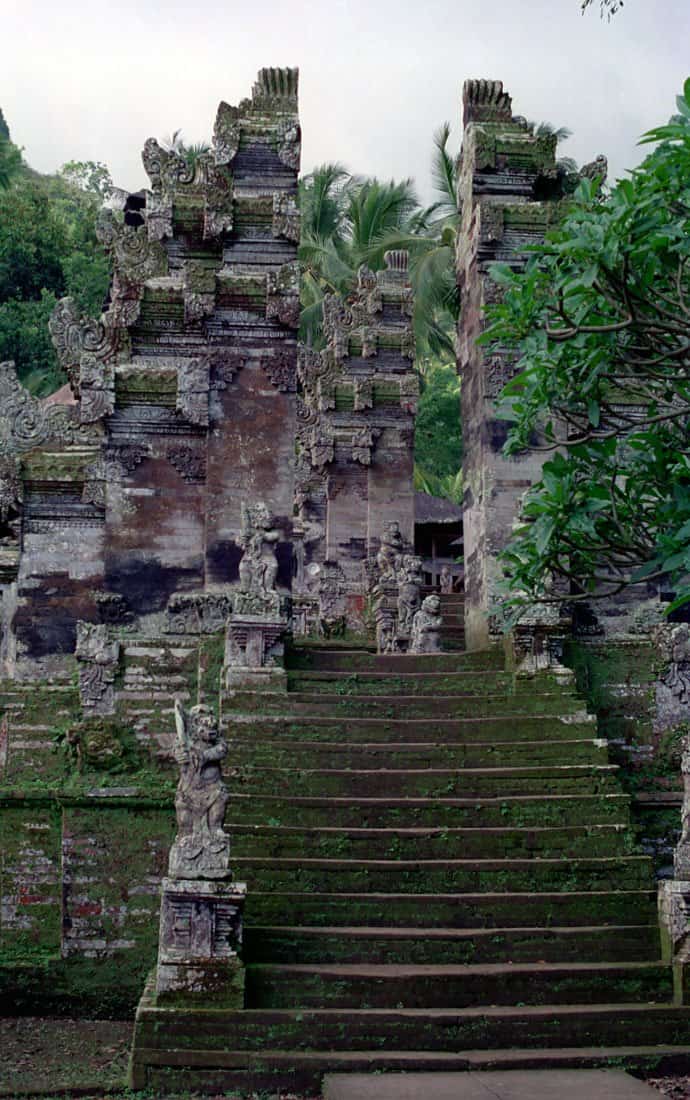
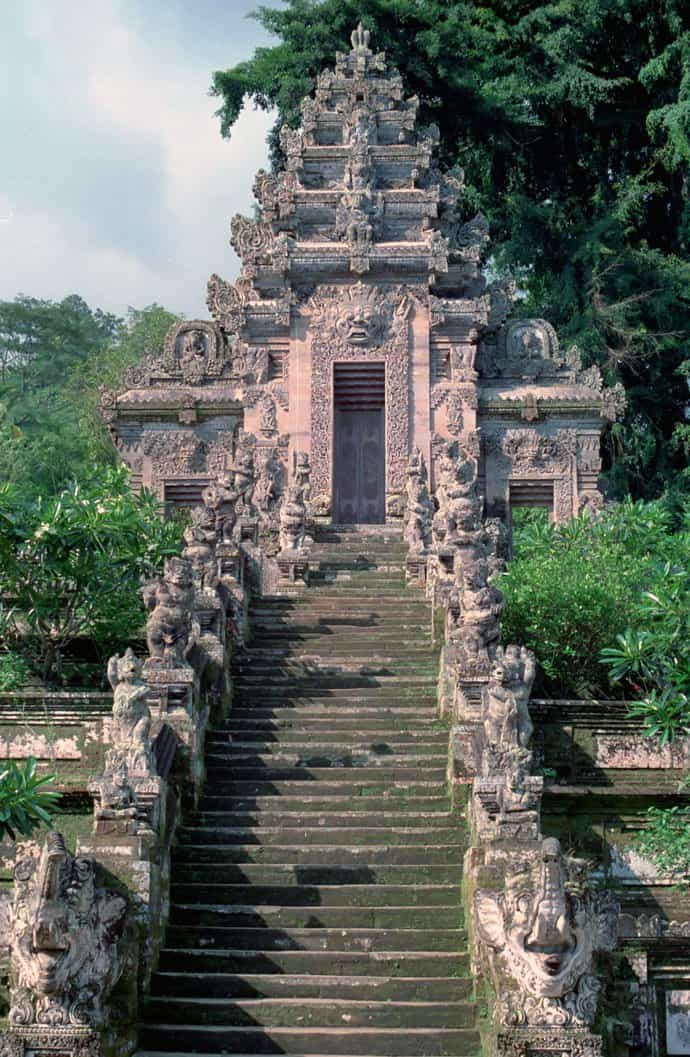
We drive via Butabulan to Klungkung, the former princely capital of Bali. The richly decorated open court hall Kerta Gosa is worth seeing. The religious court in Bali punishes the perpetrators of serious crimes with the death penalty by stoning. On the slope of the 3,100 m high volcano Gunung Agun lies the Pura Besaki temple, the main temple of Bali. It is a huge temple complex consisting of about 200 buildings arranged in five courtyards on top of each other on the mountainside.
Here you can also see the ritual of fights. Cockfighting is originally a religious ritual and the rooster killed in battle is sacrificed to the god Shiwa. This custom dates back to pre-Hindu times. The blood that flows into the earth during cockfighting is said to appease all demons. In any case, when visiting Bali, you should see the dances, which go back to old mythical traditions of the Balinese from the time of the Hindu kingdoms. The most famous is certainly the Kecak dance.
The dancing and singing of about 100 men dressed in sarongs around the story of Rama and Sita is absolutely worth seeing. Rama, the incarnation of Vishnu, defies evil in the form of Ravana, who has kidnapped his wife Sita. An army of monkeys helps him.
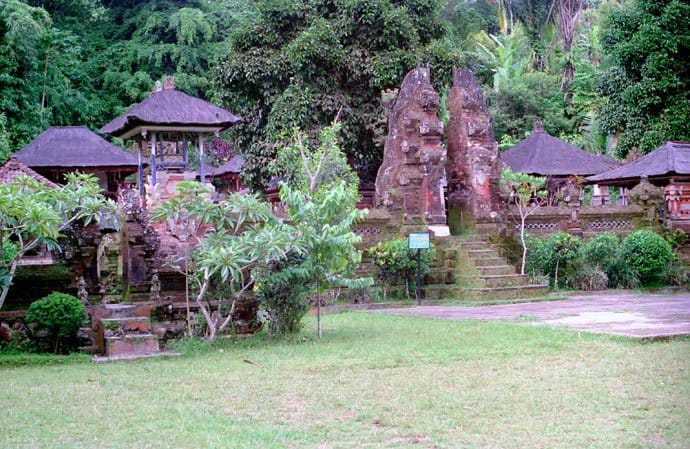
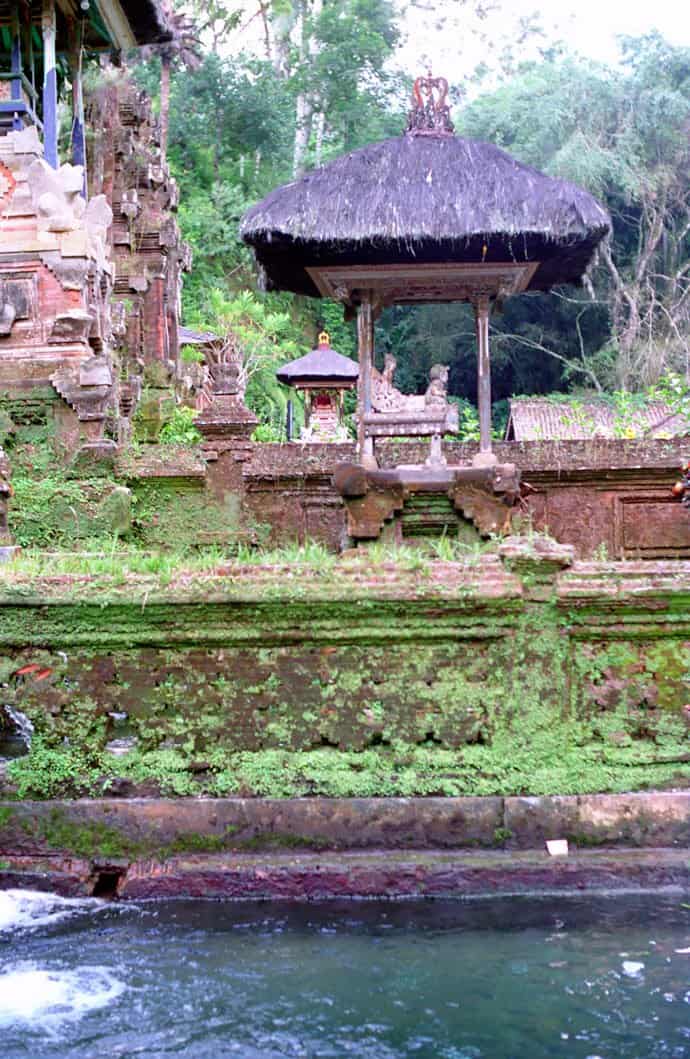
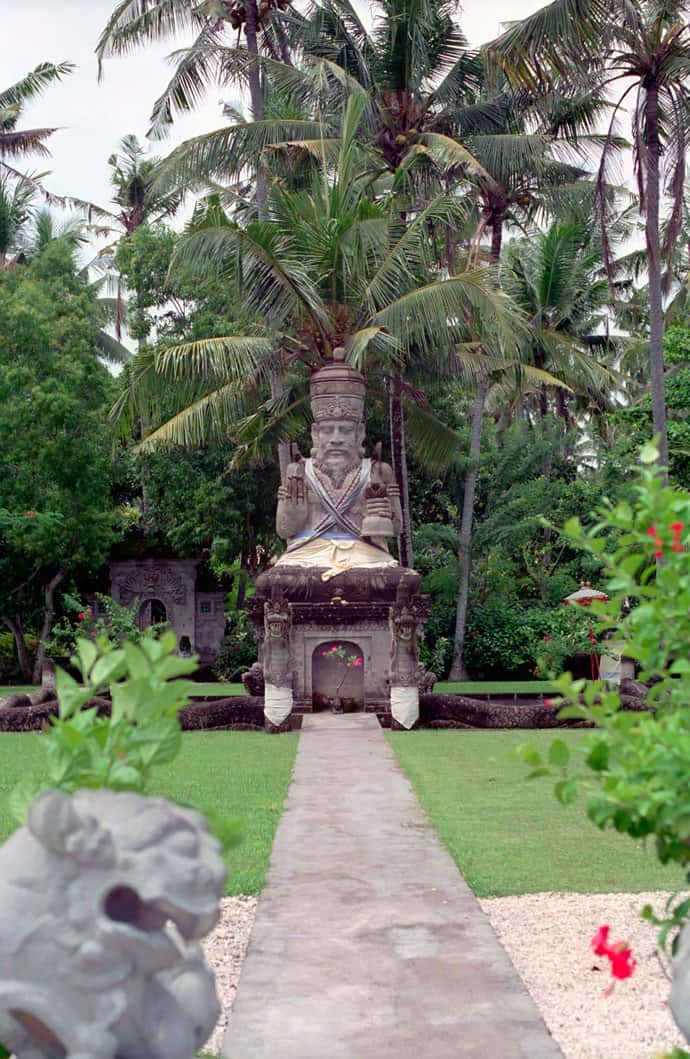
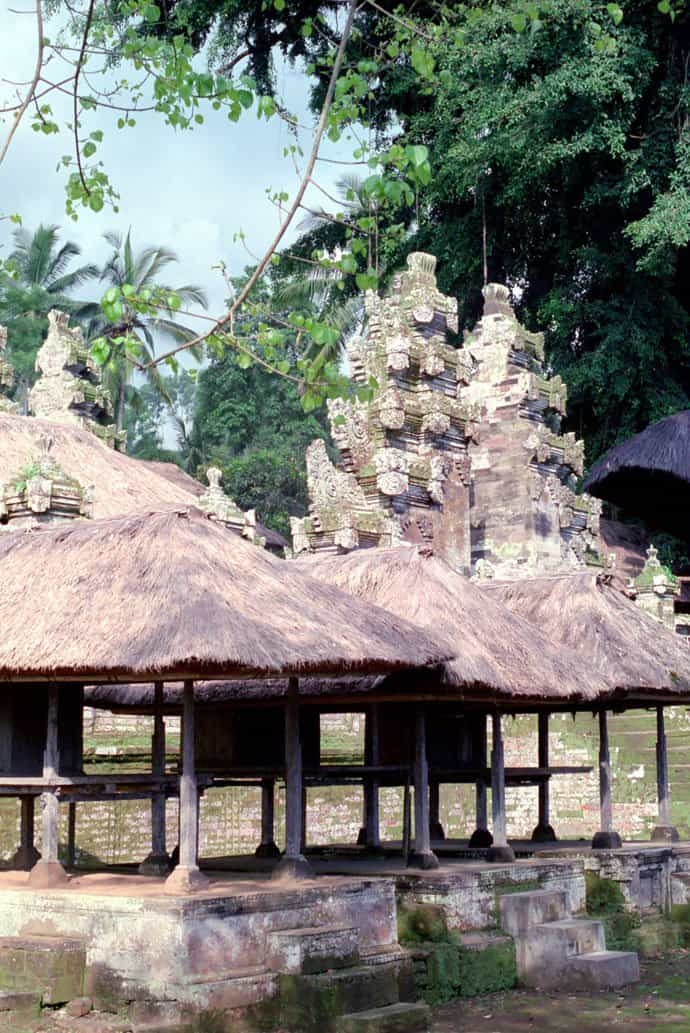
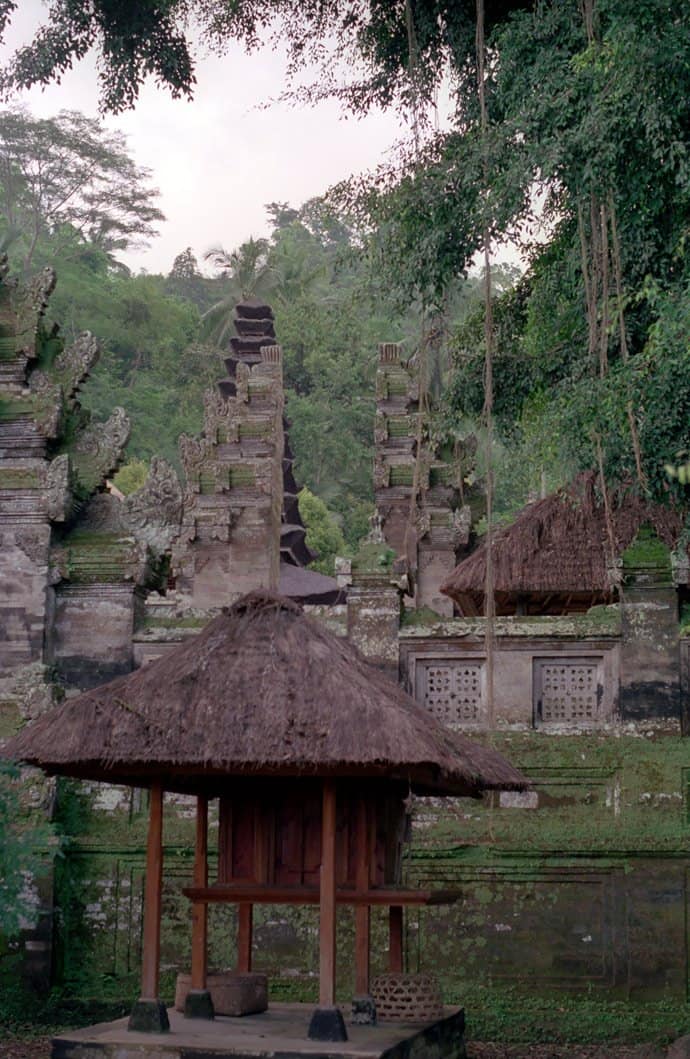
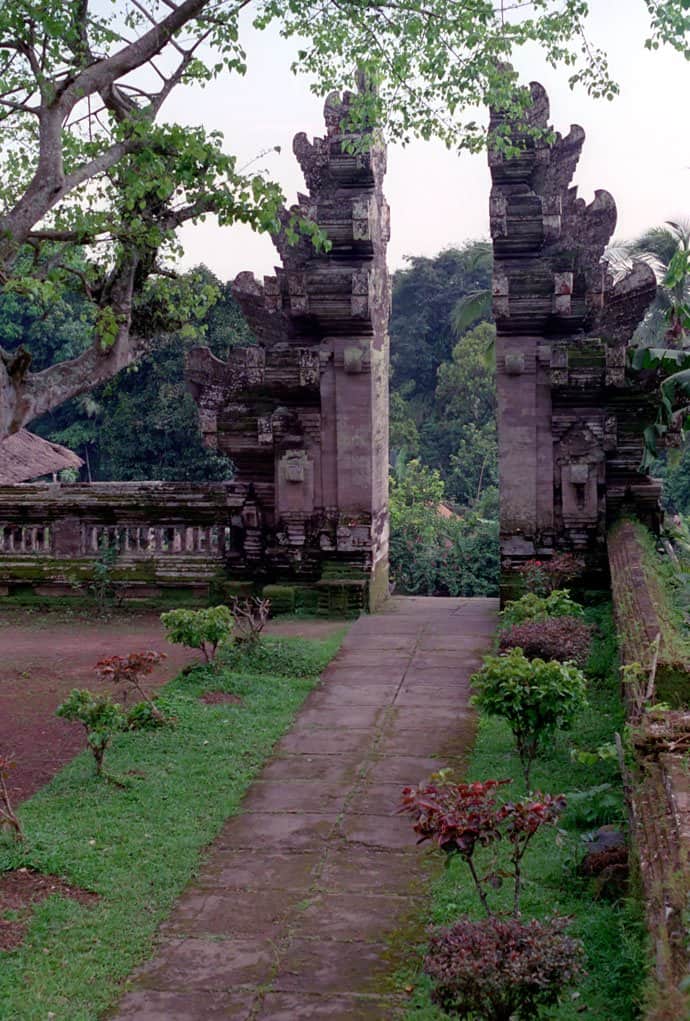
Temple complex on the island of Bali
Also worth seeing is the monkey temple of Alas Kedaton, where you are constantly chased by pushy, thieving and playful monkeys. The monkey plays an important role in Hindu mythology (Monkey King Hanuman). The so-called “monkey path” is intended to lead people to knowledge.
A tourist must-see is the Tanah Lot Sea Temple. The temple is located on a rocky outcrop in the surf. There are snakes in the rock caves. The serpent is a sacred animal. Shiwa is often depicted with a snake. The serpent spirits (nagas) dwell in the underworld of demons.
During our journey we also see a cremation of the dead again and again according to a traditional ritual. Usually, the entire village takes part in the ritual. If you join the celebration (possible without any problems) you will feel a little of the culture and faith in Bali. Before the actual funeral ceremony, the streets are decorated with flowers and garlands.
Then a big feast takes place in the family home. In the middle of the assembly lies the corpse wrapped in white cloths. The dead person is then placed on an altar and led in a procession of relatives and villagers to the place where the dead are burned. The family receives an urn from some of the ashes of the deceased. The remaining ash is poured into the sea. According to the Hindu belief in rebirth or ascent to nirvana, death is nothing sad for the Balinese. The cremation of the dead is therefore more of a celebration.
Photos Bali

Questions about Bali
In the Asia forum you will get the answers !

Author: Joe OnTour
Autor + Reise-Blogger