Maldives – Diving
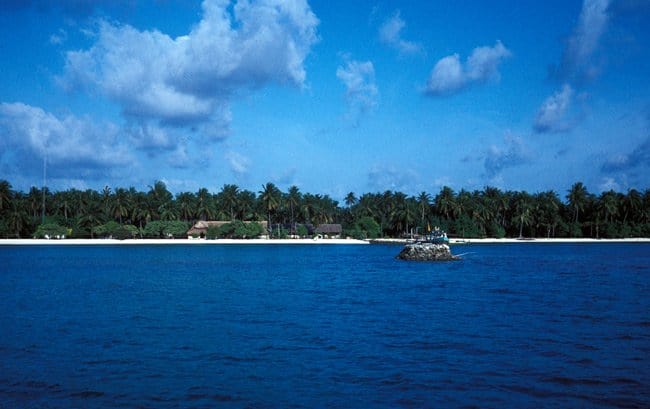
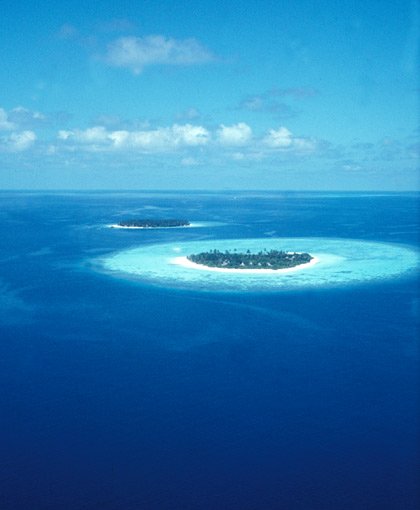
The Maldives is located in the Indian Ocean and consists of 1090 individual palm islands that stretch from north to south along a 900 km long atoll chain. The islands are located about 500 km south of Sri Lanka and India. Individual islands are surrounded by a house reef, while the outer reefs of the archipelagos form the atoll. The highest elevation of the islands rises about 1.5 meters from the sea. There are about 250,000 inhabitants living in the Maldives. The common language is Dhivenhi, which comes from Hindhi and Sinhalese. The main religion is Islam. Tourism began in 1972 on the island of Kurumba near the main island of Male. The time difference is +3 hours (based on CET Daylight Saving Time). The average annual temperature is 29 degrees, the water has an average temperature of 25 degrees.
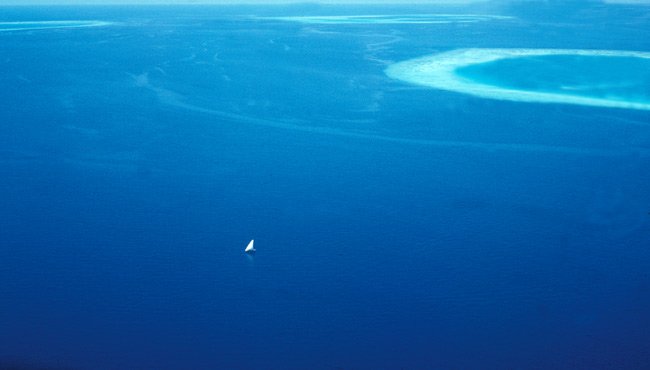
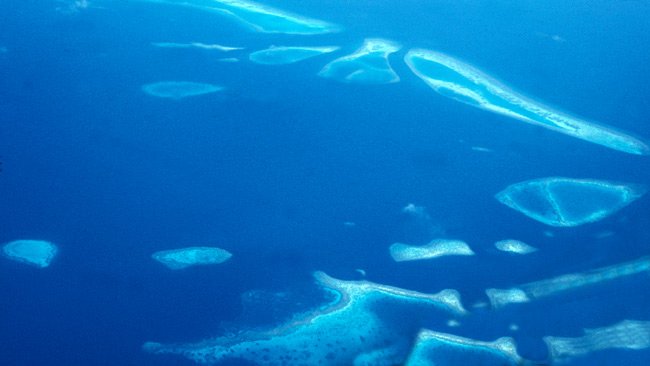
This is the second time we have approached the Maldives. We had our first stay in December 1979. From the plane, the islands look like grains of sand scattered by magic. We have chosen the island of Meerufenfushi in the North Male Atoll as our destination and want to explore part of the North Male Atoll from here.
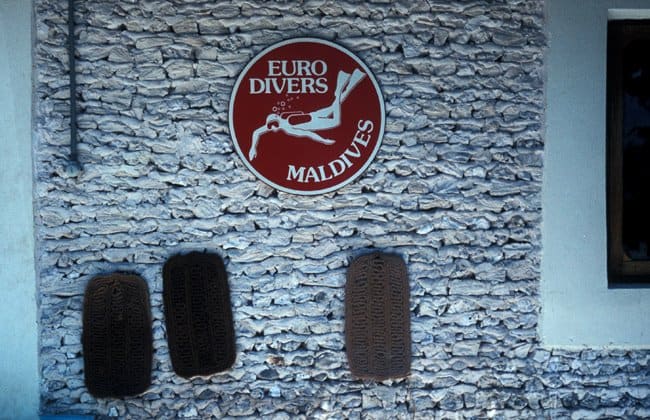
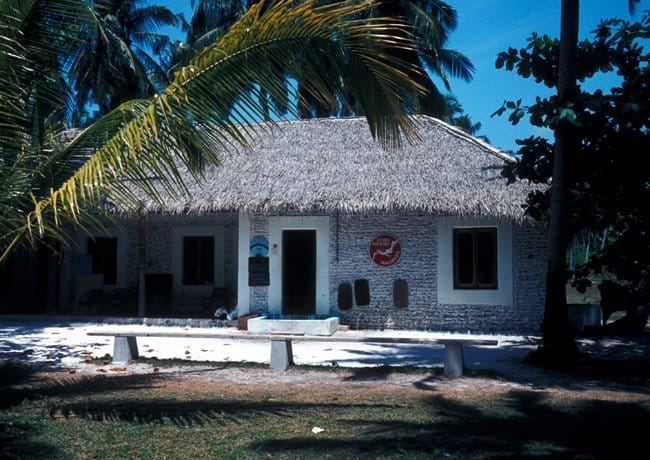
In contrast to the first stay, this time we want to explore the world of the Maldives under water. We brought all our diving equipment with us. As we have learned, there has already been a dive center on the island for a year. We already know the dive guide from another diving trip. He wrote to us that the diving sites are fantastic and we are looking forward to some eventful weeks. The islands were still largely undeveloped last time. There was only a small landing site on an island off the main island of Male, which could only be approached by regional aircraft from Sri Lanka.
That has already changed now, three years later, in 1982. In the hope of the Maldives’ most harmonious economic sector, tourism, the extension of the runway for intercontinental flights was expanded. For example, the large aircraft with up to 240 people on board can now land directly in the Maldives and no longer have to take the much more “time-consuming detour” via Sri Lanka. We are skeptical whether this has not had an effect on the untouched nature of the islands. Well, we’ll see.
During the last stay in 1979, there were only a handful of islands developed for tourism, most of which had only minimal comfort by European standards. In the last three years, many more islands have already been developed and developed into more or less luxurious resorts. From the Landing Island, you will take a dhoni to Meerufenfushi Island in a 3-hour ride.
On the way we are accompanied by dolphins and flying fish. When we arrive, we find out that the new dive center has actually established itself on the island. We are greeted stormily by our dive guide. The accommodations are still characterized by minimal comfort. We are not angry about this, as we appreciate the remoteness of this far northern island. After a hearty dinner and a night spent with the doors open under our mosquito nets, we are already dreaming of sharks and manta rays.
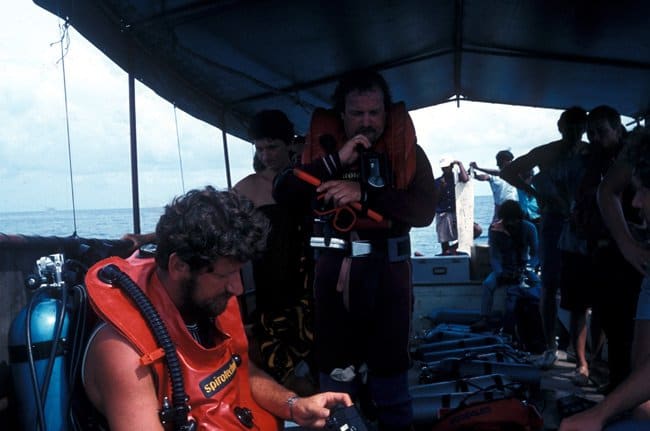
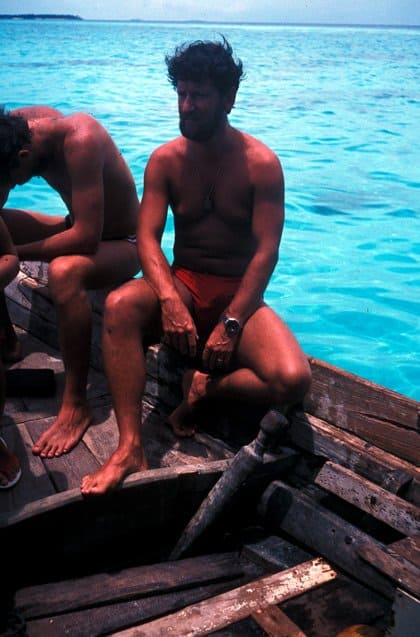
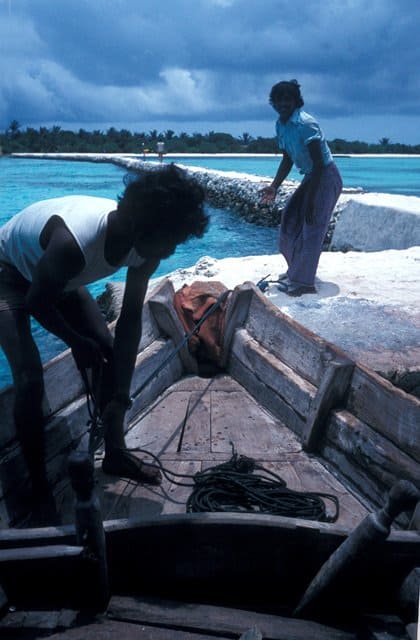
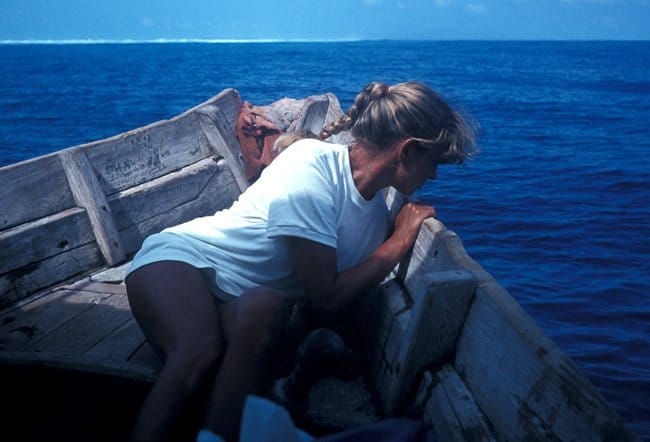
The next morning we go to the house reef for the first exploratory dive. Our dive guide wants to get to know our diving skills first, as there are also some other guests on board, unknown to him. So we set off with an adventurous old fishing boat. Brigitte is very skeptical whether we will arrive safely with this old barge, especially since the main equipment consists of several large buckets to remove the penetrating water.
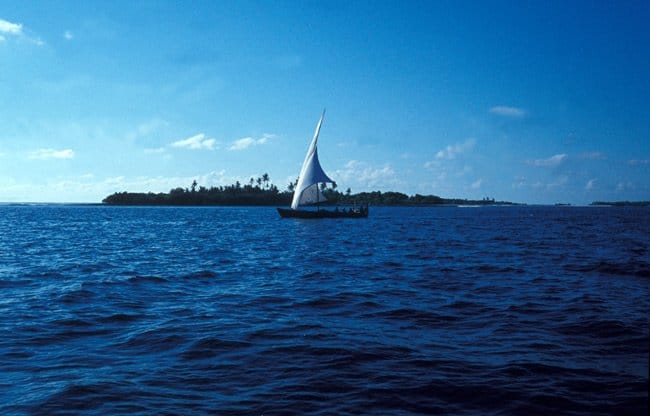
But then we learn that the small boat only serves as a feeder to the slightly larger submersible. As it turns out, this is a converted dhoni and also at least 100 years old.
Three years ago, we explored the underwater world with diving goggles and snorkel and free-diving. Most of the reefs were fantastically untouched and characterized by a great abundance of fish. Small baby sharks and rays even ventured into the shallow water on our beach.
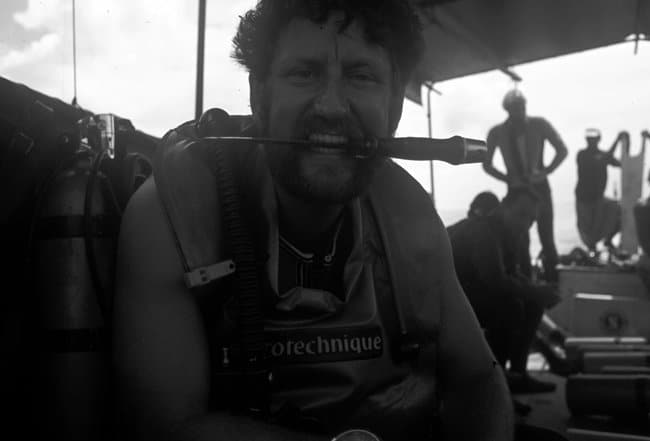
On the reef edges, we saw a variety of reef sharks and huge manta rays or devil rays during our snorkeling sessions. Now, of course, we are curious to see how everything has developed. The anticipation is great. Jürgen is already encouraging himself and tries the emergency, so this is how a shark attack is averted?
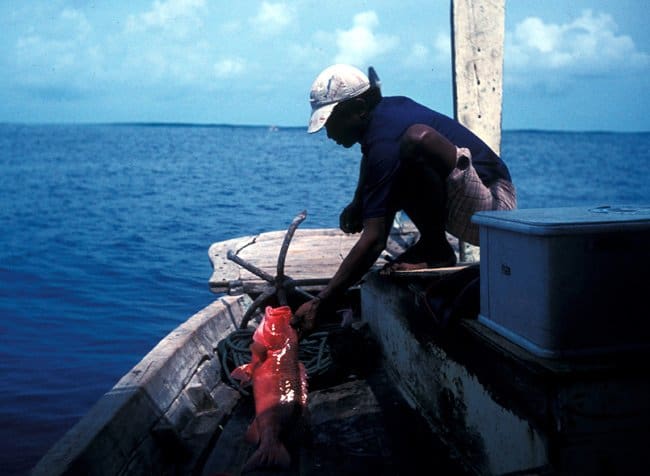
Our boat driver uses the time and in the meantime ensures that there is enough food, because the dives are exhausting and exhausting. The sea still provides an incredible abundance of food here. Due to the almost always strong currents in the reef channels, countless schools of fish cavort here. As soon as the fishing line is lowered into the water, the catch can already be pulled out.
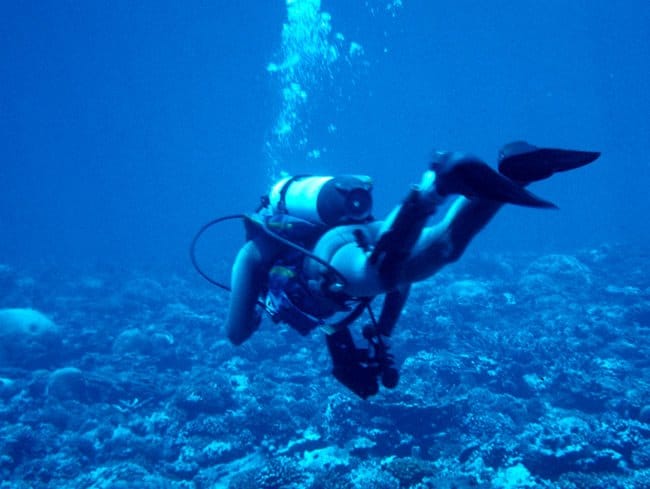
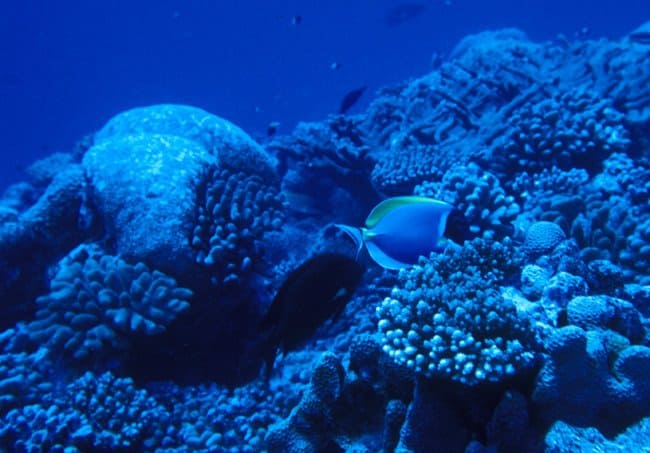
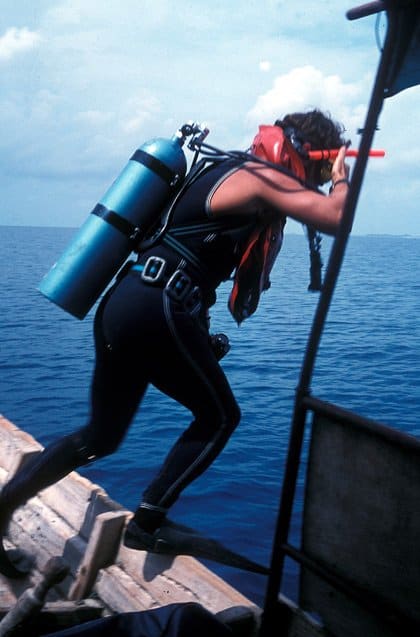
But now it starts. Diving tank, regulator, depth gauge and other equipment are once again thoroughly checked for functionality. Do the diving goggles fit correctly? Ok, then let’s get ready to jump into the depths. My diving partner Rüdiger is already downstairs. We have agreed not to stray too far from each other. The water is very clear. Visibility is about 100 meters. The current is not very strong here on the house reef, so we expect a leisurely dive. We are greeted by huge coral banks with a wide variety of formations.
On the dying corals, new corals grow again and again in an intact reef, so that the reefs grow steadily. While everything was still a bit loud and hectic up on board, a special peace welcomes us down here, which is only broken by the sound of the regulator. So we slowly float along the sloping reefs and enjoy the always impressive flora and fauna of the underwater world.
Rüdiger is once again on an exploratory tour and is looking for a moray eel he has discovered in a small cave. The bites of adult specimens are not without danger. Therefore, very careful tactics are called for. In the distance we see the first blacktip sharks, which are reef sharks at a depth of 1 to 270 meters.
In some places, the first effects of the expansion frenzy on the islands can already be seen. The building material for the huts and bungalows consists mainly of corals that are broken from the reefs. The damage can still only be seen in a few places. However, we fear that the very sensitive underwater ecosystem will suffer lasting damage in the long run. Our air supply is slowly coming to an end and so we start to surface after about an hour. We weren’t particularly deep this time and didn’t dive further than 20 meters. This saves us the otherwise lengthy decompression times when we surface.
Back on the boat we are satisfied with our first successful dive. The dive guide promises us much more spectacular dives for the next few days. The next day we are supposed to go to a remote, previously undived and completely untouched outer reef. The trip by boat there, he says, is about 2 hours. But we are still in the process of processing what we have just experienced. The equipment is checked again. The camera has remained tight and everything else is fine. The first long-awaited pictures are in the can. After a short drive, the island quickly comes into view again. We are all pretty exhausted and are already looking forward to the dinner that our boat driver has caught for us.
Pictures Maldives


Questions about Maldives
In the Asia forum you will get the answers !

Author: Joe OnTour
Autor + Reise-Blogger