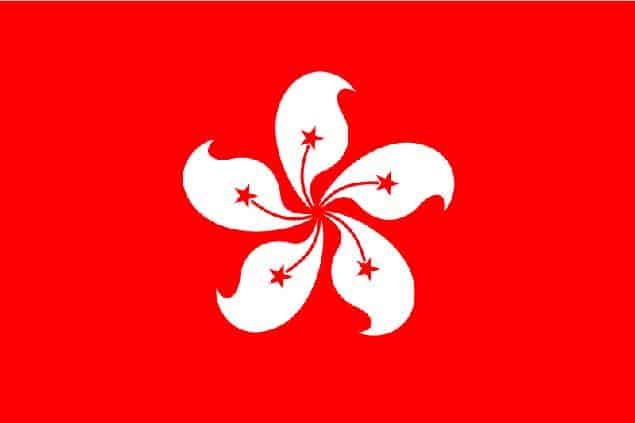
Hong Kong – General information
Geography: Hong Kong is located in Southeast Asia on the southern Chinese mainland, south of the Tropic of Capricorn. The former British colony consists of the island of Hong Kong (about 80 km²), other smaller islands, the Kowloon Peninsula and the New Territories on the Chinese mainland. The island of Hong Kong is located about 32 km east of the Pearl River estuary and about 135 km southeast of Guangzhou (Canton); it is separated from the mainland by a natural deep-water harbor, Victoria Harbour. Today, the entire territory covers about 1,110 km².
Population: around 7.4 to 7.8 million inhabitants (as of 2026) with one of the world’s highest population densities (over 7,000 inhabitants per km²).
Form of government: Special Administrative Region (SAR) of the People’s Republic of China since July 1, 1997, according to the principle of “one country, two systems”. Parliament: Legislative Council (LegCo). Hong Kong also sends deputies to the National People’s Congress of China. Head of State (President of the People’s Republic of China): Xi Jinping, in office since 2013. Chief Executive of Hong Kong: John Lee Ka-chiu, in office since July 1, 2022 – a former senior police officer and security minister who is considered a political hardliner. Unlike in the past, the circle of eligible or eligible persons for office has been significantly limited to candidates and electoral bodies close to Beijing since an electoral reform in 2021. The former British crown colony was returned to the People’s Republic of China on 1 July 1997; Hong Kong’s Basic Law formally guarantees the territory a high degree of autonomy until 2047, as well as independent legal, economic and administrative systems.
Languages: Cantonese is the most widely spoken language, English is widely spoken, especially in business circles. Both languages are recognized as official languages; Mandarin (Putonghua) has been gaining importance in education and in contact with mainland China for several years.
Religions: Buddhism, Taoism, Confucianism; Christian, Muslim and Hindu minorities.
Local time: CET + 7 hours, CEST + 6 hours (Hong Kong Time, UTC+8, all year round excluding daylight saving time).
Mains voltage: 220 V, 50 Hz. Three-pin British plug types (Type G) are used.
Phone: International direct dialing is standard. Country code: 852.
Mobile/Internet: Prepaid SIM cards are available at the airport and in the city at a reasonable price and without complications (e.g. from CSL, SmarTone, 3 Hong Kong, China Mobile Hong Kong); network coverage, including fast mobile Internet, is excellent nationwide. Free Wi-Fi is available in many public places (including “Wi-Fi.HK”).
Vaccinations: Vaccinations are not required to visit Hong Kong. All visitors are strongly advised to take out international health insurance before traveling, as Hong Kong does not have free healthcare for tourists and all medical treatment – except for acute first aid services in government hospitals – must be paid for.
Hong Kong – Entry and Visa
German, Austrian and Swiss nationals can enter Hong Kong for tourism and business purposes without a visa for up to 90 days, provided that no gainful employment is planned locally. The prerequisite is a passport valid for at least 6 months upon entry; an exit or onward ticket may be required.
Important: Hong Kong is not identical to mainland China in terms of customs and entry law. A stay in Hong Kong does not automatically entitle you to enter mainland China (a separate China visa is usually required for this), and conversely, a China visa does not automatically entitle you to enter Hong Kong.
Important note on the current legal situation: Since the Hong Kong National Security Law came into force in 2020 and supplementary local security legislation, the legal framework in Hong Kong has changed noticeably. The law covers a very wide range of criminal offences – including secession, subversion, terrorism and cooperation with foreign states – and provides for penalties up to life imprisonment. According to the German Federal Foreign Office, actions and statements made outside Hong Kong are also prosecuted, regardless of the nationality of the person concerned. Travellers should be aware of these changed legal conditions, especially with regard to public political expressions, and consult the current travel and security advice of the Federal Foreign Office before travelling.
Hong Kong – Clothing
What you pack depends heavily on the season. For the hot months of May to October, many light items made of cotton or blended fabrics are recommended. Shorts, T-shirts and comfortable shoes are important, especially if you spend a lot of time outdoors.
From November to April, temperatures can change significantly from one day to the next, so a light sweater, raincoat or cape, umbrella and warm socks are recommended.
Regardless of the season, Hong Kong traditionally dresses for dinner: for elegant restaurants or private evening invitations, well-groomed formal clothing is recommended. Some discos and nightclubs don’t let anyone in with sneakers, jeans or shorts in.
A word about air conditioning: Restaurants, hotels and offices can be uncomfortably cool and air-conditioned even on the hottest summer days – so in the summer months, a light sweater or thin jacket for indoors is worthwhile. Spectacle wearers and wearers of hard contact lenses should also note that lenses and lenses can fog up quickly when switching from air-conditioned interiors to the humid outside air.
Hong Kong – Climate
Hong Kong is located just south of the Tropic of Cancer. The climate is subtropical with four distinct seasons.
Winter: From the end of December to February it is sometimes mild, sometimes cool with fog and rain. Temperatures are usually between 13 and 20 degrees Celsius, occasionally there are short, cooler periods near freezing at higher altitudes.
Spring: From March to mid-May, rainy, cloudy weather often prevails; days can pass before the sun shines again. The average daily temperature in March is around 17 degrees and rises to about 28 degrees by May.
Summer: From the end of May to mid-September, temperatures and humidity reach high, sometimes oppressive values when the southwest monsoon determines the weather. In the afternoon, the thermometer climbs slightly to 33–35 degrees. Thunderstorms and occasional typhoons are not uncommon during this time.
Autumn: The northeast monsoon brings cooler, drier air from Central Asia. From the end of September to the end of December, there are usually clear skies and pleasant temperatures between 18 and 29 degrees – the most popular time to travel.
Best time to visit: The best time to travel to Hong Kong is from October to early December, when pleasant, often sunny temperatures are around 20-25 degrees and rain or thunderstorms are less common.
Heavy rainfall and typhoons usually occur between June and September, when the monsoon season begins. However, there is usually no need to fear tropical storms: severe, devastating typhoons with major damage are comparatively rare, even though Hong Kong is regularly affected by signal warnings that can lead to temporary closures of shops and public life – travelers should keep an eye on the local weather forecast during the summer months. In between the rain showers that occur again and again in summer, good sun protection is important when the sun is shining, as UV radiation is easily underestimated in this climate zone.
Snow or frost is practically never found in Hong Kong. The average daytime temperature is around 20 °C between October and December, around 30 °C in June; the average night temperature is around 13 °C in December and around 25 °C in June.
Note: All information on population figures, political offices and entry requirements is subject to change and has been researched to the best of our knowledge as of August 2026. For up-to-date, binding information – in particular on the legal situation and security assessment – it is advisable to take a look at the travel and security advice of the Federal Foreign Office and the website of the Hong Kong Immigration Department before travelling.
Questions about HongKong
In the Asia forum you will get the answers !

Author: Joe OnTour
Autor + Reise-Blogger