Hawaii – Kauai – Hanalei
Kaua’i is also known as the Garden Island. No wonder, because it blooms and greens in all corners and ends of the island. Large parts of the island of Kauai are even still overgrown with primeval jungle. The small village of Hanalei is worth seeing, which has retained the charm and originality of the turn of the century to this day.
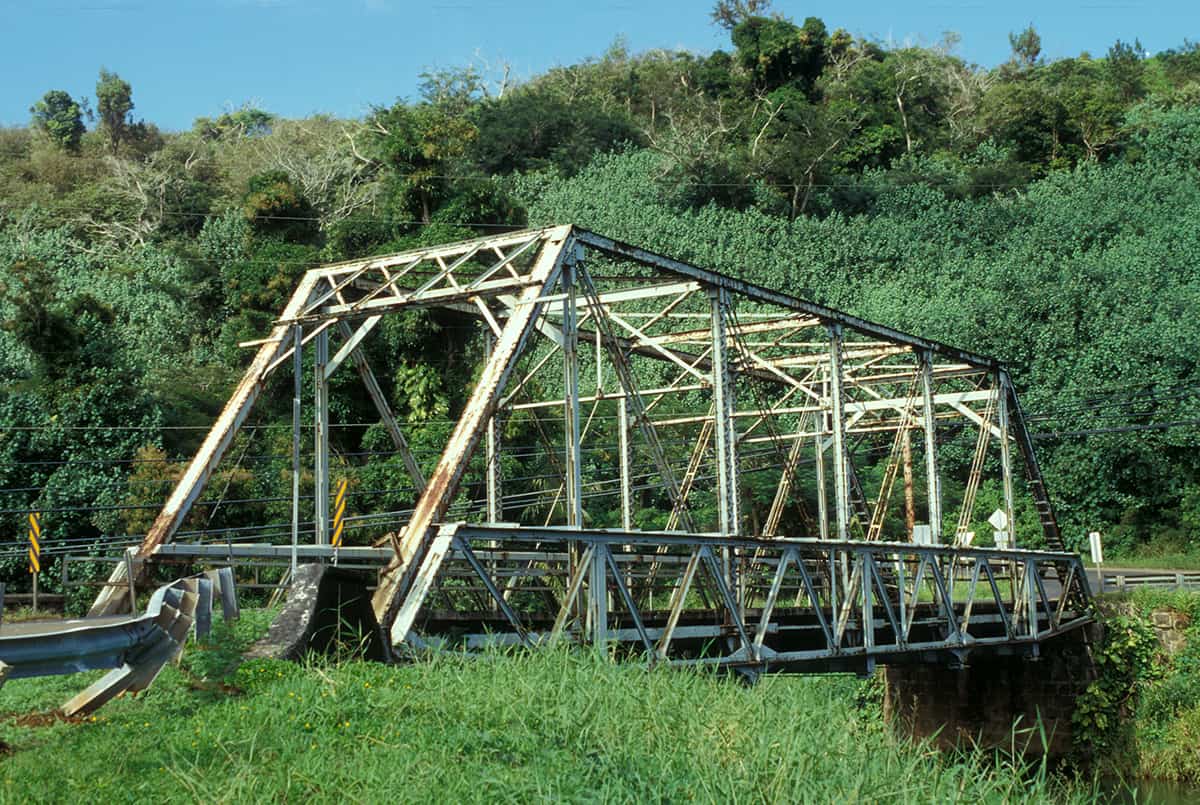
On the second day on the island, we first get a wheeled vehicle. To get in the mood, we chose a first route to Hanalei and on to Ke ́e Beach. The road ends there in a dead end and is not to be driven on, as the steep cliffs of the Na Pali Coast start from here. Shortly after Princeville, before the entrance to Hanalei, we cross an adventurously old single-track railway bridge from 1912. On the way to Hanalei you have a beautiful view of the Hanalei Valley on the left, which is characterized by dark green taro fields. Further away you can see the mountain ranges of the two volcanic mountains Waiáleále and Kawaikini, both of which are about the same height at 1570 meters above sea level. From there, the rained rich masses of water pour into the sea in several rivers, some of which are navigable.
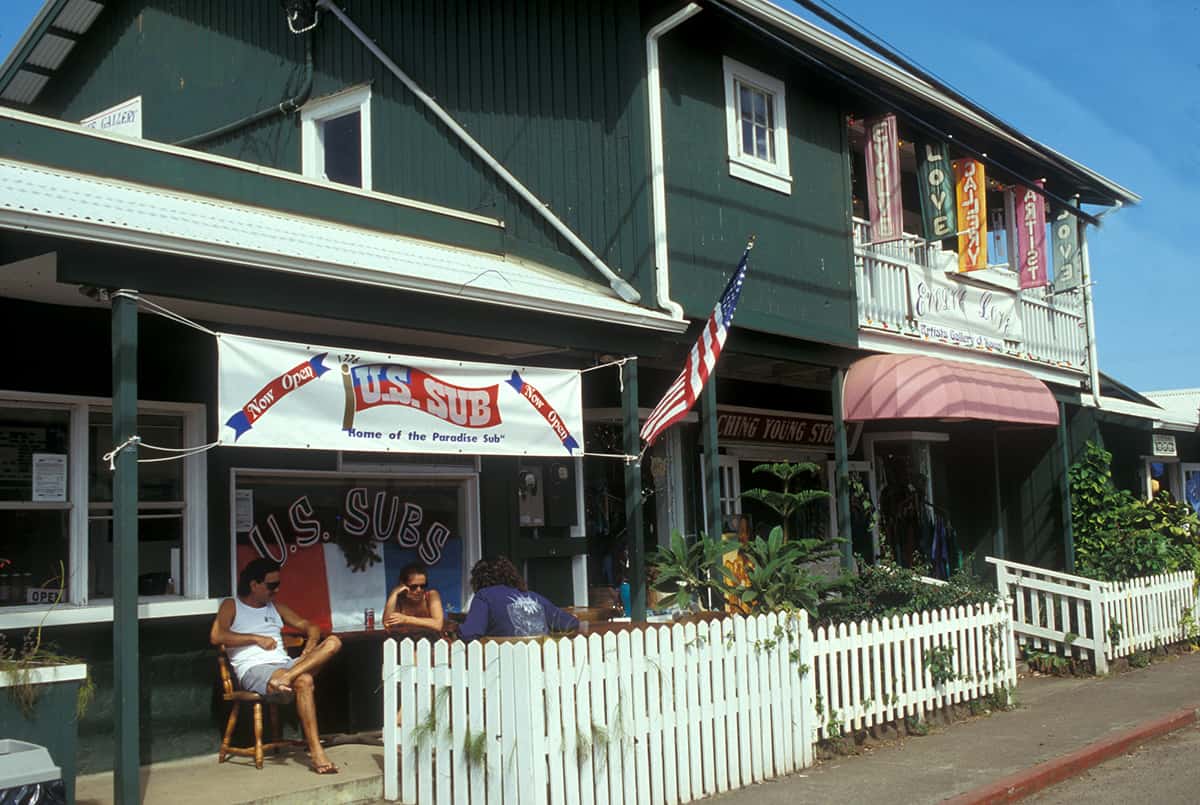
Hanalei is a small dreamy village with mainly single-storey wooden houses, most of which are built on stilts. Time seems to have stood still here at the turn of the century. There is no hectic pace and everything goes smoothly. There are some shops for daily needs, a small post office and several restaurants. In addition to the local population, many temporary dropouts have settled here. The young audience and also the “young at heart” will find excellent conditions for all kinds of water sports in this quiet spot on earth. First and foremost, of course, is surfing. A little further behind the village of Hanalei towards Ha ́ena, another small village, the surf scene has fully established itself.
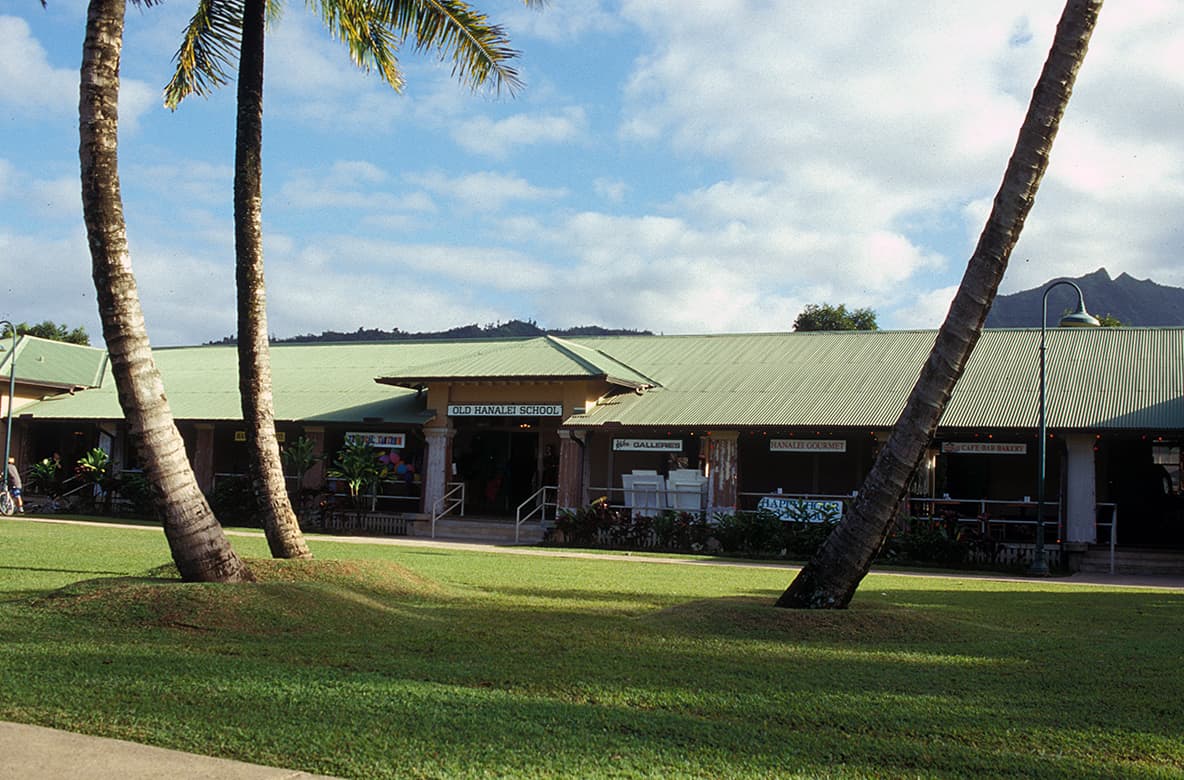
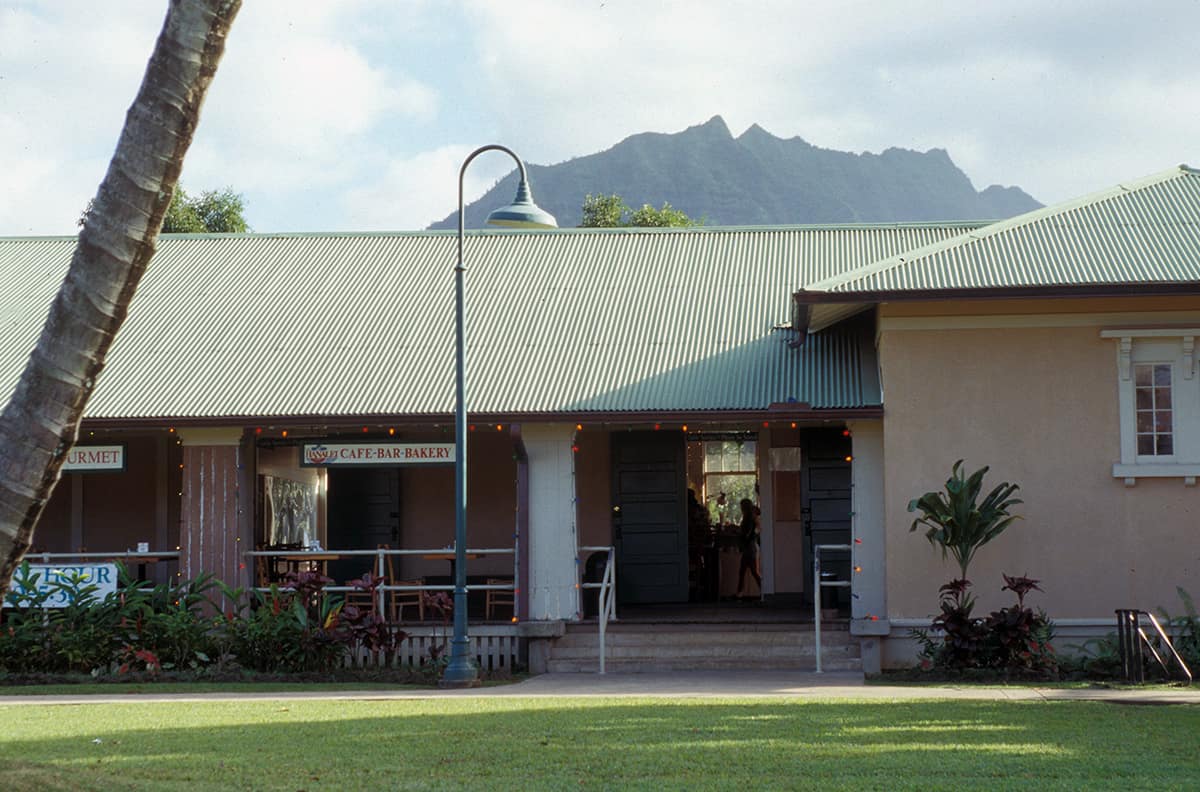
The Old Hanalai School with its integrated small shopping centre forms the centre of the village and characterises the streetscape with its striking, elongated building. There are also some shops for daily needs here. The semi-circular Hanalei Bay is bordered by a fine sandy white sand beach. Further west, it connects to Makahoa Point, behind which is Lumahai Beach.
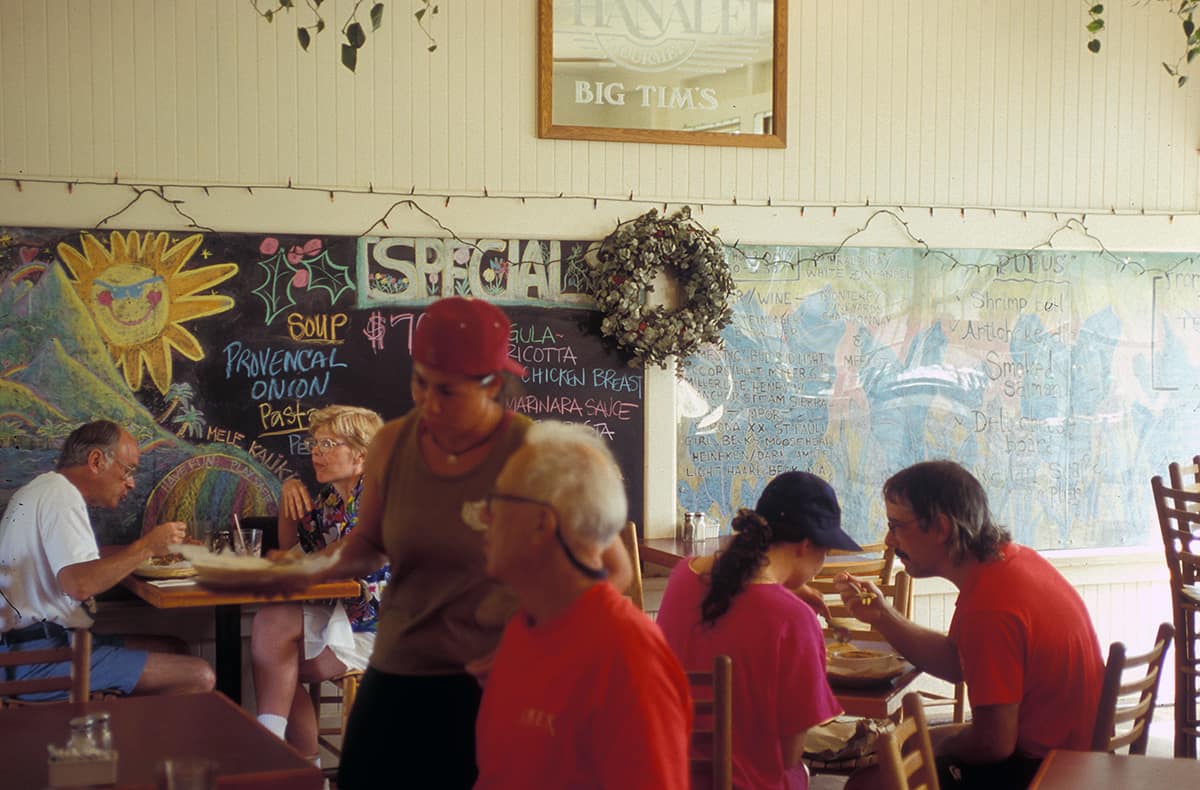
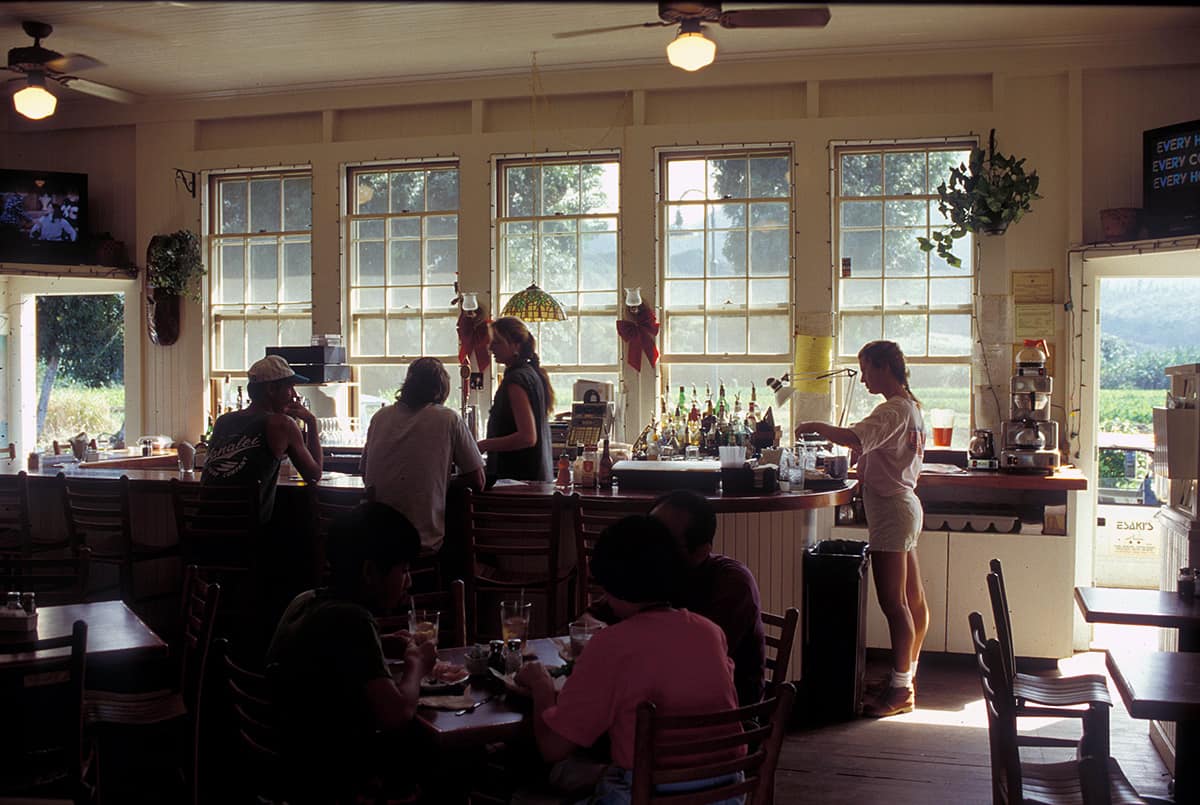
The film South Pacific was filmed here. In the 60s, many hippies settled in the neighboring valleys. A little of this can still be felt in Hanalei today. The 400 souls of the village, including many old hippies and artists, have successfully resisted to this day against replacing the old single-lane bridge at the entrance to the village with a new two-lane bridge. This means that the large coaches are denied access and mass tourism remains outside Hanalei. In this way, the inhabitants have preserved their own little South Sea paradise. After every hurricane, the crooked wooden huts are rebuilt and in their opinion it should stay that way. The old school building also houses the Hanalei Gourmet, a small café that serves good sandwiches, salads and soups. You immediately feel at home in the cozy atmosphere and the friendly service also contributes to this. The “old hippies” feel just as comfortable here as the artists of the village and the surfer scene. One or the other traveler or golfer from Princeville can also be found. Overall, however, there are very few tourists to be found, probably due to the circumstances described above.
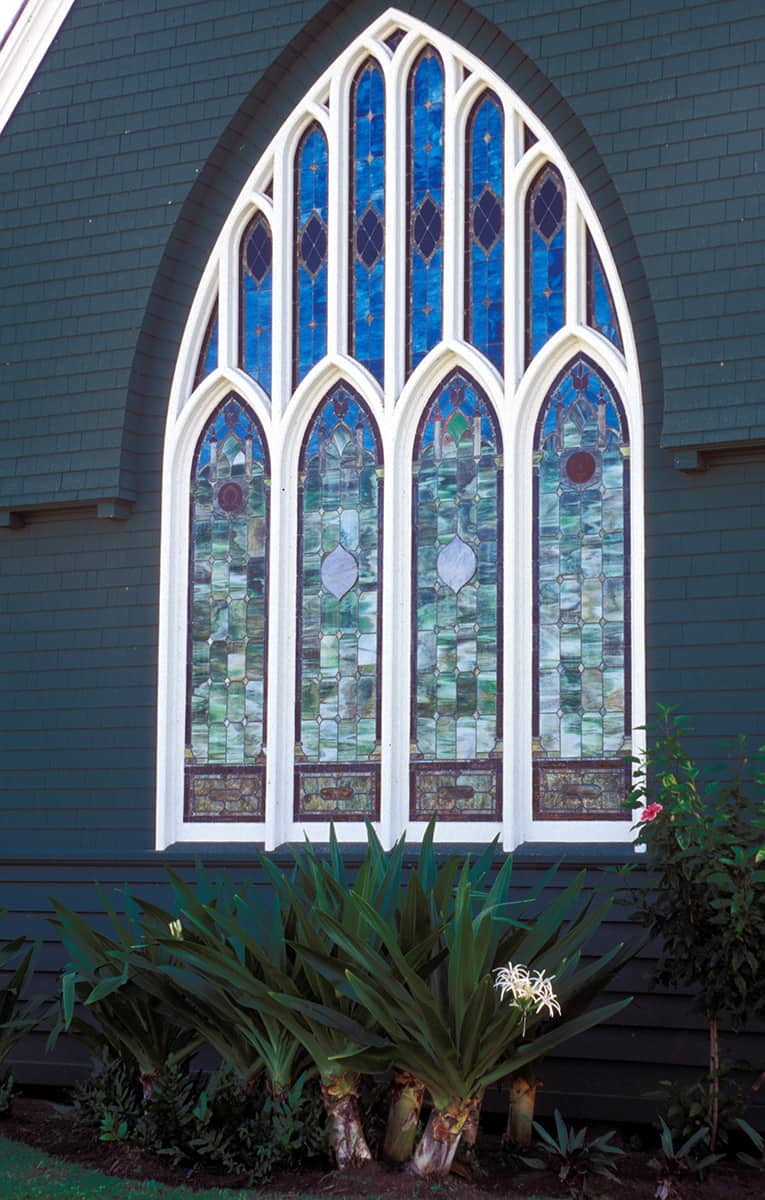
In the months from December to April, boat trips for whale watching can be made from Hanalei. You can also watch the whales from Kee Beach. A special view has been set up here, the Laka’s Hula platform, which is located 3o meters above the beach park. With a little luck you can see the common humpback whales. In the town of Hanalai, splashy 4-hour inflatable boat tours along the Na Pali coast are offered. In the winter months, however, these are only recommended in calm weather. A special experience are the helicopter tours around the Na Pali Coast, which start from the airfield near Princeville and last between 30 and 60 minutes. We report on this on our separate page “Na Pali Coast”. Worth a visit is the Wai ́oli Mission House, a small museum that can be found directly behind the green-painted mission church. The house was built in 1837 by the missionary couple Alexander in the New England style. It is equipped with original furniture from the Wilhelminian period and gives an idea of the lifestyle of the time.
The landscape around Hanalei has probably remained unchanged for generations. Taro has been cultivated in the Valley since time immemorial. Taro is a Polynesian natural plant and was introduced and cultivated by the first immigrants from the Maquesas Islands. The plant is very rich in vitamins and has a high mineral content. The red tubers of the taro root are crushed and mixed into a pulp, the poi. The whole tastes quite bland, but has been proven to be extremely healthy and is even recommended for allergy sufferers. The entire alluvial area of the Hanalei River is a refuge for wildlife. The many water birds as well as herons and ducks, which have been placed under nature conservation, cavort here. The small cheeky cardinal birds with their red heads have become cultural followers and lurk at the tables for falling breadcrumbs.
Pictures Hawaii – Kauai – Hanalei




Questions about the destination Hawaii?
In the Oceania & South Seas forum you will get the answers!

Author: Joe OnTour
Autor + Reise-Blogger